Haplogroup I1a1b1a1

– 5 min read


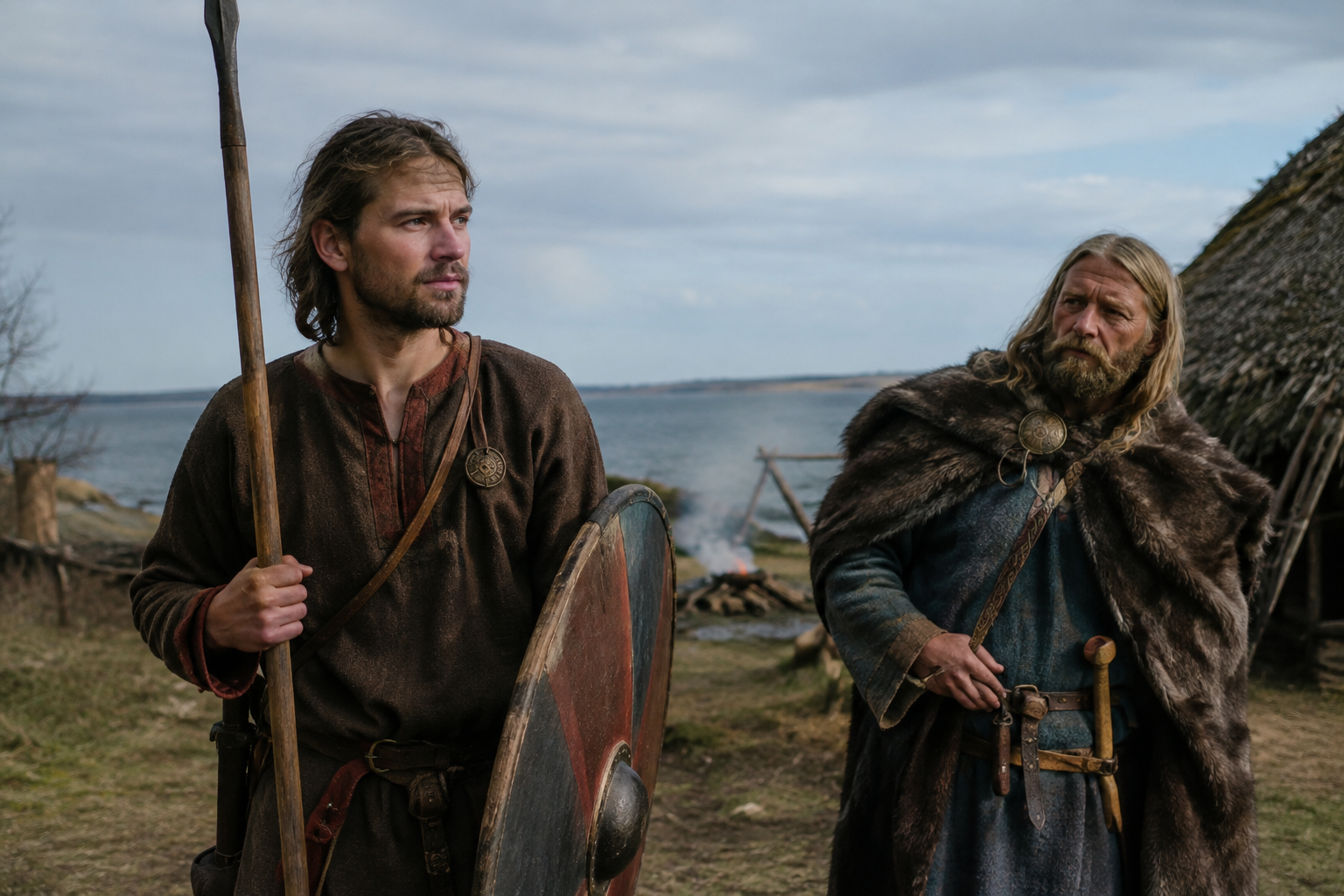
At Gdansk in Pomerania, an individual dated to around AD 200 and labeled PCA0480 places haplogroup I1a1b1a1 in a part of the Baltic world that was anything but isolated. This was the era of the Wielbark culture, a famous archaeological horizon of the southern Baltic coast, often discussed because it sits right in the historical conversation about movement, exchange, and identity between Scandinavia and the continental shore.
That matters because I1 is a well-known northern European Y-DNA lineage, and I1a1b1a1 is a narrower branch within it. Y-DNA tracks one direct paternal line only, not a person's whole ancestry, but even so, a lineage found in both Iron Age Pomerania and later Viking Age or Vendel-period Baltic settings can illuminate where male lines persisted, moved, and reappeared in historically important zones.
The sample PCA0480, described as Iron Age Pomerania from Gdansk and dated to about AD 200, belongs to a region that has long drawn attention from archaeologists. Pomerania was a coastal meeting ground, tied into amber routes, Baltic seafaring, and the shifting social worlds north of the Roman frontier. A Y-line such as I1a1b1a1 appearing here fits that broader picture of strong northern connections without letting us collapse archaeology into ethnicity.
The crucial point is not that one burial can solve the old arguments about Goths, Germans, or Baltic populations. It cannot. But it does show that a paternal branch associated with the wider northern European I1 world was present on the southern Baltic coast in the Roman Iron Age, in exactly the sort of region where archaeologists have long suspected dense traffic of people and ideas.
A genetic study of this broad region and period has helped sharpen the picture of how complex these communities were, especially when archaeology and ancient DNA are read together rather than forced into simple ethnic labels. For readers interested in that wider setting, the discussion of mixed Gothic-associated communities in eastern Europe is a useful companion piece: research on Late Antique and Migration-period populations.
Goths as a Multi-Ethnic Community
One of the persistent mistakes in popular history is to treat the southern Baltic coast as a vague borderland waiting for "real history" to arrive from Rome or Scandinavia. In fact, places like Gdansk sat in a lively corridor. Goods moved through it, styles moved through it, and, as the DNA now keeps showing, people moved through it as well.
That is where a lineage like I1a1b1a1 becomes interesting. Not because it proves a tribal name from a classical text, but because it hints at continuity and connection in a region often caught between tidy national stories. The male line seen in PCA0480 belongs to a bigger northern pattern, yet it appears here in a local archaeological context on the Polish coast. That is exactly the sort of evidence that resists neat labels.
Readers who want a broader look at ancient mobility and ancestry in this same broad zone may also find this useful:
The second striking appearance of I1a1b1a1 in your evidence comes from VK549, dated to about AD 725 and described as Vendel Age Saaremaa Salme II-J. Salme, on the island of Saaremaa in present-day Estonia, is one of the most evocative sites in the eastern Baltic for the centuries just before the classic Viking Age burst fully into view.
Even without adding details not securely given here, the site name alone signals an important maritime setting. Saaremaa was not peripheral. It stood within the web of travel, raiding, exchange, and political contact linking Sweden, the eastern Baltic islands, and the coastal mainland. A paternal lineage from the wider I1 family appearing at Salme is therefore historically resonant: it places this branch in the seaborne arena of the northern Baltic at a time when elite mobility was intensifying.
That does not mean PCA0480 and VK549 were closely related, nor that one descended from the other. Ancient Y-DNA does not work like a tidy family tree across five centuries and multiple coasts. What it does show is that the branch was present in two important Baltic contexts: one on the southern shore in the Roman Iron Age, another in an island setting during the Vendel period, on the eve of the Viking Age proper.
An ancient DNA preprint examining Viking Age mobility and population structure has been especially influential in framing this wider maritime world, even where one must be careful not to over-claim sample-by-sample detail from a single citation. In that broader sense, research on Viking Age genomes and mobility helps explain why Baltic island finds matter so much.
Early Medieval Baltic Connections
It is tempting to make this branch stand for "the Vikings" or "the Goths" or some other large, dramatic label. That would be too crude. I1a1b1a1 is a specific paternal subclade inside the wider I1 haplogroup, and the evidence here is still sparse: one Iron Age individual from Pomerania and one Vendel Age individual from Saaremaa.
Yet sparse does not mean trivial. These are not random places. Gdansk Pomerania and Saaremaa both sit in the Baltic interaction zone, and both matter historically for the circulation of people across sea lanes and coastal communities. When the same narrow Y-DNA branch turns up in such settings, it strengthens the impression that this paternal line belonged to the northern world of Baltic mobility rather than to an isolated inland pocket.
This is also where ancient DNA has changed the tone of the conversation. Older scholarship often argued in large blocks: a culture, a tribe, a migration. Archaeogenetics has not abolished those questions, but it has made them messier in a productive way. A single lineage can travel through different archaeological cultures, while one cemetery can contain men from more than one paternal background.
For someone researching I1a1b1a1 today, the most responsible historical reading is not a grand origin myth but a well-placed corridor. The currently visible ancient evidence points toward the Baltic and north-central European sphere, especially the maritime and coastal zones where Scandinavia, the southern Baltic shore, and the eastern islands met.
That makes this branch historically interesting in a very concrete way. It appears in a Roman Iron Age context at Gdansk and again in a Vendel-period context at Saaremaa. Those are two different centuries, two different shores, and two different archaeological settings, yet both belong to the same broader world of Baltic contact.
If that wider Scandinavian and island context interests you, this related article is well worth a look:
The distinctive value of haplogroup I1a1b1a1 in the ancient record, at least from the evidence here, is that it appears in two historically charged Baltic settings: Iron Age Pomerania and Vendel Age Saaremaa. That does not prove a named people, a dynasty, or a single migration route. But it does place this paternal line in the northern Baltic world where coastlines, islands, and sea crossings mattered enormously. If this is your Y-DNA branch, the strongest supported story is one of connection to that wider northern maritime sphere, visible not in legend but in excavated individuals such as PCA0480 and VK549.



Comments