Haplogroup I1a1a1b

– 5 min read


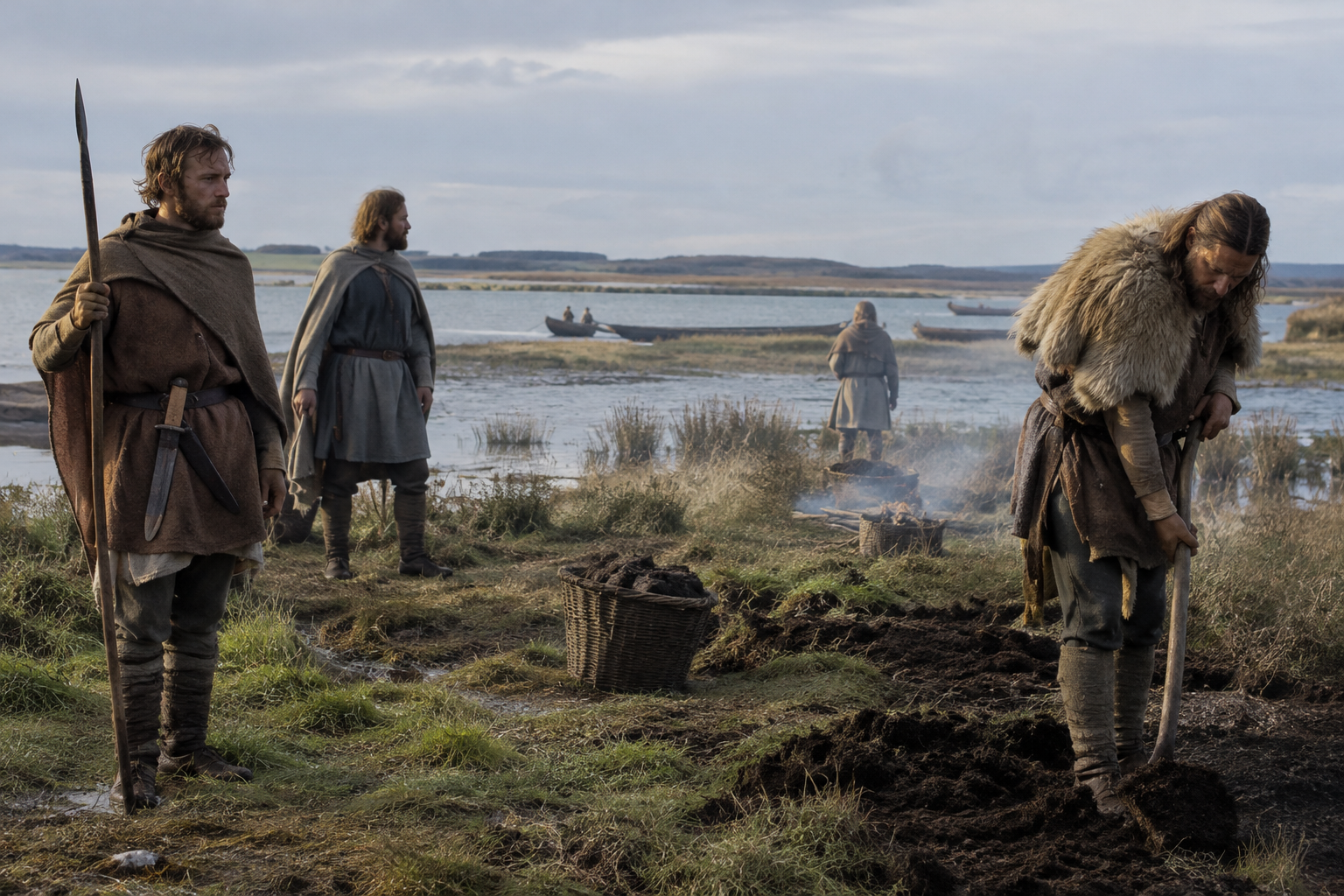
At Alken Enge in eastern Jutland, archaeologists uncovered one of the most unsettling assemblages in early northern European archaeology: the disarticulated remains of men deposited in a lake-edge landscape during the Roman Iron Age. One of the individuals from that violent horizon, dated here to around AD 107 and identified as CGG019210, is associated with the Y-DNA branch I1a1a1b. That matters not because a single skeleton can stand for a whole people, but because it places this paternal line inside a very specific historical world: the militarised communities of southern Scandinavia in the centuries when Rome loomed large to the south, even if its legions never occupied Denmark.
Two other ancient men in the material supplied here point in the same broad direction. CGG106531, from Strandby in Jutland and dated to around AD 119, and CGG107036, from Flatanger in Trondelag, Norway, dated to around AD 528, suggest that I1a1a1b belongs to a northern European paternal landscape already visible before the Viking Age. In other words, this is not a lineage that first appears with longships and saga fame. It is present earlier, in Iron Age Denmark and in pre-Viking Norway, in the quieter but historically crucial centuries when Scandinavian societies were taking shape.
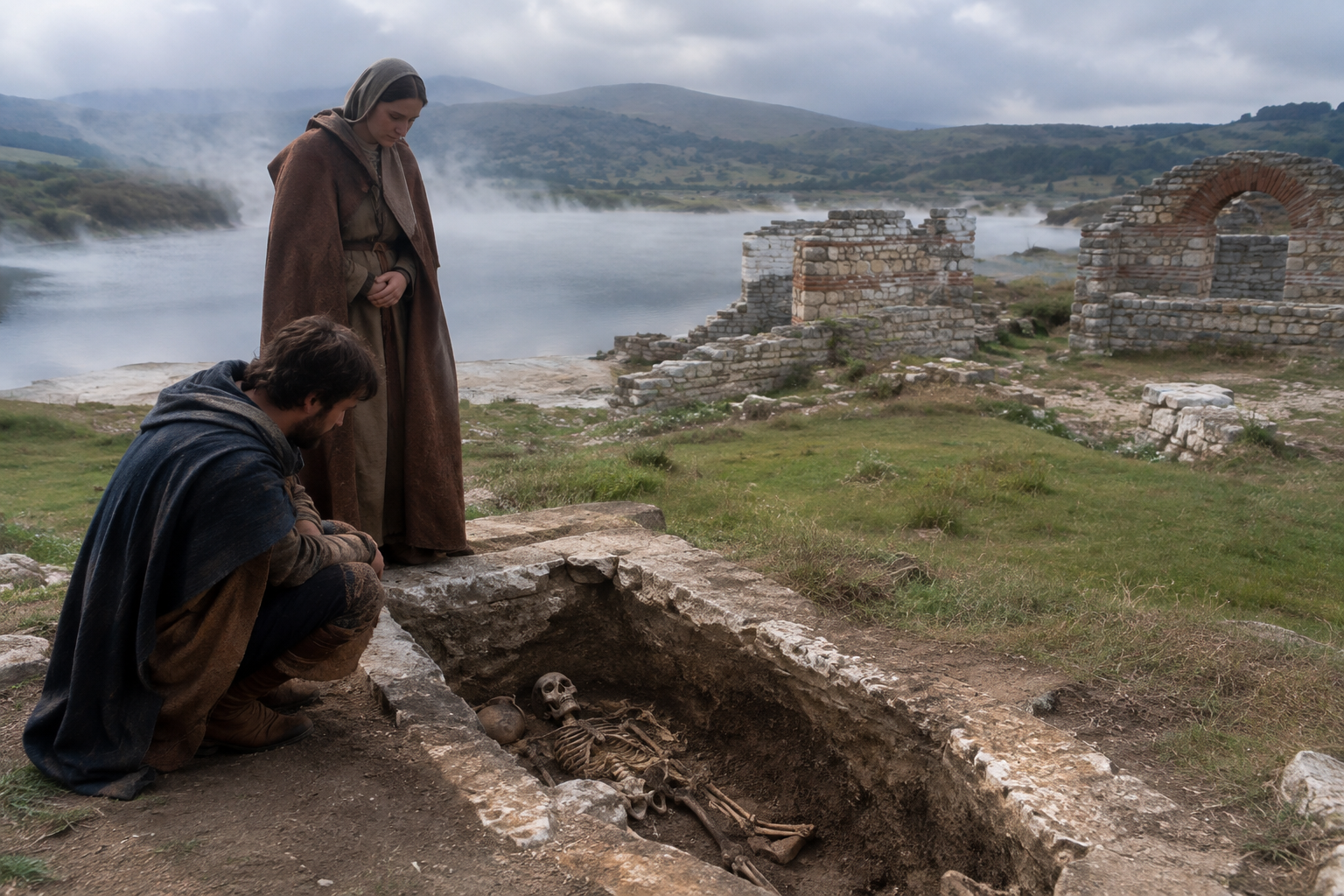
Alken Enge has become famous because it does not offer the tidy image of an ordinary cemetery. It is a place where human remains were handled, deposited, and preserved in wetland conditions after a large episode of violence. The sample CGG019210, associated with haplogroup I1a1a1b, comes from this grim context in Jutland around the early 2nd century AD.
That setting is important. A Y-DNA result from a wetland war deposit tells us that this paternal branch was present among men caught up in organised conflict in Iron Age Denmark. It does not tell us whether they were all close kin, nor whether this branch dominated the region. But it does anchor I1a1a1b in a real archaeological landscape of war bands, alliances, and competition at the edge of the Roman world.
For readers interested in the wider genomic discussion around language spread and Germanic-speaking regions, this earlier post provides useful background.
A genetic study of ancient Scandinavian-related populations is one of the research leads associated with these sample records. Even without overclaiming details beyond the supplied evidence, the broader value of such work is clear: it helps place individual Y-chromosome branches into the archaeological map of Iron Age northern Europe.
The second Danish sample, CGG106531, comes from Strandby in Jutland and is dated here to around AD 119. On first glance, that may seem almost too close in date to Alken Enge to add anything new. But in fact it does. It shows that the appearance of I1a1a1b in Denmark is not confined to one dramatic deposit or one unusual site.
That is often how ancient DNA becomes historically useful: not through one glamorous find, but through repetition across nearby places and slightly different archaeological settings. Jutland in the early Roman Iron Age was not politically unified in any modern sense, yet it was a connected world of settlements, exchange routes, martial display, and local power. Finding the same paternal branch in more than one Danish context strengthens the impression that I1a1a1b formed part of that regional male-line background.
We should be careful with labels here. Calling these men "Jutes" may be a convenient historical shorthand in later writing, but archaeology and genetics do not automatically map onto the named tribes of much later texts. What the evidence securely gives us is early 2nd-century Jutland, not a complete tribal passport. Still, for anyone with this haplogroup today, Jutland is a serious and concrete point of reference rather than a vague northern mist.
That regional background sits well alongside broader discussions of long-term population history in Denmark.
The third sample, CGG107036, comes from Flatanger in Trondelag, Norway, and is dated to around AD 528. Chronologically, this is a useful jump. We are no longer in the Roman Iron Age but in the centuries after the western Roman Empire had fallen, before the classic Viking Age began. Scandinavia in this period was changing fast, with new political formations, shifting trade links, and increasingly visible regional elites.
The importance of Flatanger is not that it proves a migration from one named Danish site to one named Norwegian site; the evidence here is not that fine-grained. Its value is that I1a1a1b appears on both sides of the Skagerrak-Kattegat world in periods separated by roughly four centuries. That points to durability. Some paternal lines flash briefly in the record; others seem to belong to longer-running northern populations. On present evidence, I1a1a1b looks more like the second kind.
Trondelag is also historically significant because it was one of the central regions of later Norwegian state formation, though this sample long predates medieval kingdoms in their familiar form. In that sense, the Flatanger individual helps remind us that the paternal landscape of Viking and medieval Scandinavia had deeper Iron Age roots.
For a later Scandinavian comparison, especially as burial customs and Christianisation began to reshape society, this related post is worth a look.
The crucial point is that I1a1a1b is a very specific branch inside the wider I1 paternal haplogroup. Y-DNA follows a direct father-to-son line, so it captures one narrow thread of ancestry rather than a person's whole genetic background. That narrowness is precisely why it is so useful for questions of paternal continuity, but it also means we must not load the branch with every cultural story ever told about I1 as a whole.
Even so, these samples do allow one sober conclusion. This branch was present in southern Scandinavia during the Roman Iron Age and in central Norway before the Viking Age. That is a historically meaningful distribution. It places I1a1a1b within the northern European world from which later Scandinavian expansions emerged, without pretending that every carrier was a Viking, a chieftain, or part of one single tribe.
That distinction matters particularly in popular history. Language, identity, burial practice, and Y-DNA can move together, but they are not the same thing. A man carrying I1a1a1b in Iron Age Jutland may have shared some ancestry with later Scandinavian populations, yet his life was shaped above all by the local conditions of his own community, not by our retrospective labels.
Ancient DNA articles often tempt us into chasing the oldest possible origin. But with I1a1a1b, the more interesting story here is not extreme antiquity. It is historical placement. The branch appears in exactly the centuries when southern Scandinavia was becoming archaeologically more visible as a zone of warfare, mobility, and regional interaction, and then remains visible further north in pre-Viking Norway.
That makes these men useful witnesses to continuity across change. Rome rose and receded as a political force. Exchange networks shifted. The social worlds of Jutland and Trondelag evolved. Yet this paternal branch still appears within that northern arc. It is a small finding in one sense, but a rather elegant one.
Those interested in how Scandinavia contributed to later North Sea movements may also enjoy this broader piece.
If your paternal line belongs to I1a1a1b, these ancient samples give you something better than fantasy: a plausible archaeological horizon. So far, the branch is represented here by men from Roman Iron Age Jutland and pre-Viking Norway, suggesting a firm place in the long development of Scandinavian paternal history. Not a royal guarantee, not a saga costume, but a real foothold in the human landscape of Iron Age northern Europe.



Comments