Haplogroup I1a1a1a1a1

– 5 min read


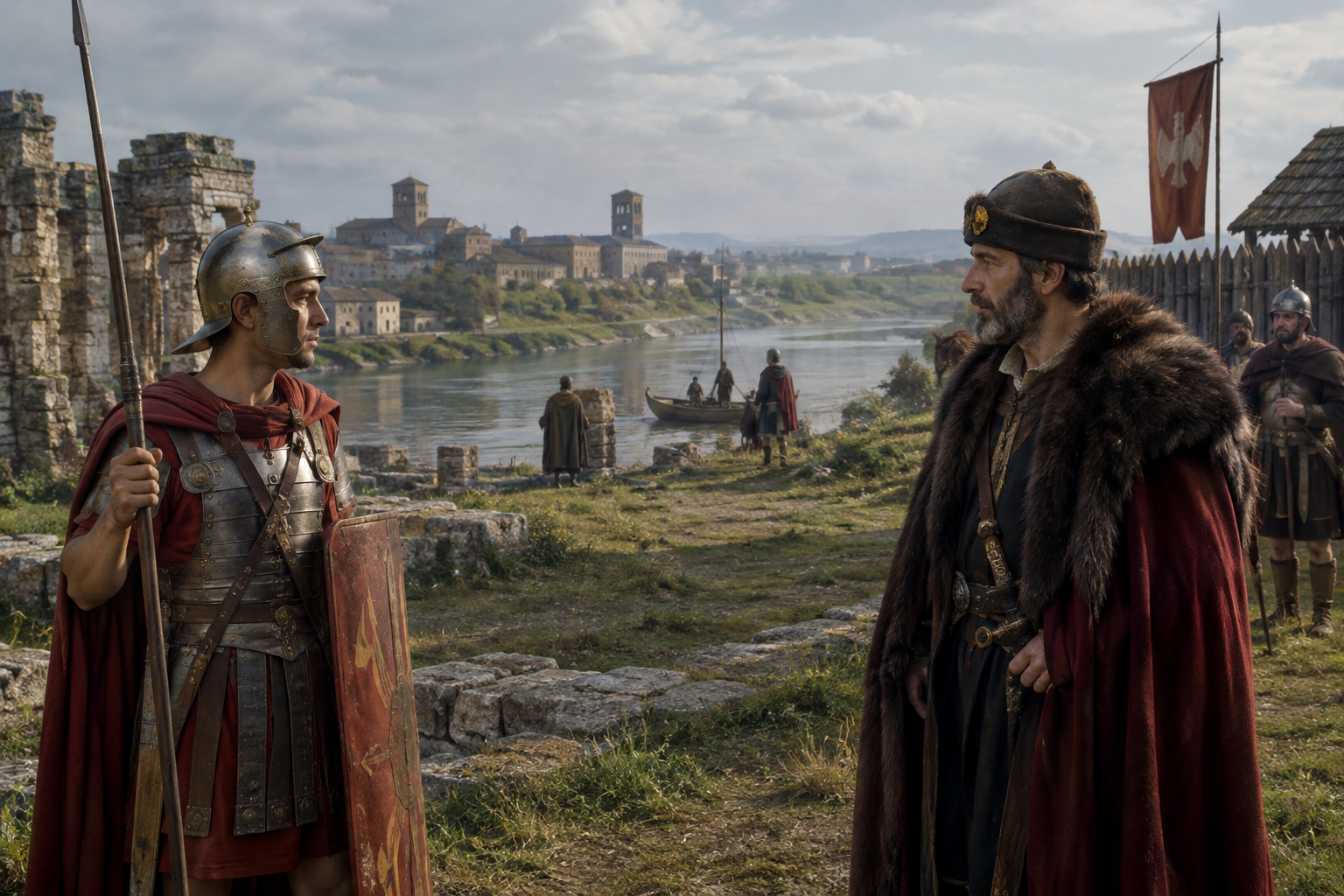
At Sirmium in Serbia, one late medieval man identified as R3906 brings an unexpectedly long story into focus. He dates to 1556 AD, a moment when this old Roman city on the Sava had already lived many lives: imperial capital, frontier stronghold, Christian center, and then a place caught up in the violent rearrangements of the Ottoman age. His reported Y-DNA association with haplogroup I1a1a1a1a1 matters not because one burial can explain a whole region, but because it places a very specific paternal line in a city that had been a crossroads for centuries.
The other anchor point is older and farther north: R10636 from Roman-era Weklice in Poland, dated around 300 AD. Set beside Sirmium, Weklice suggests that the branch discussed here was present in very different historical landscapes: one in the northern reaches of the Roman-era world and one in the late medieval Balkans. That is already enough to make I1a1a1a1a1 archaeologically interesting. Y-DNA follows one direct paternal line only, not a person's whole ancestry, but even that narrow line can show how men, families, and local communities moved through changing political worlds.
The sample R10636 comes from Weklice in Poland and is dated to about 300 AD, in the Roman era. Weklice belongs to a zone that archaeologists have long treated as deeply connected to the wider Baltic and Central European world, while also lying beyond the formal frontier of the Roman Empire. That makes it exactly the sort of place where a paternal lineage can become historically suggestive without becoming historically simple.
A man carrying a lineage associated here with I1a1a1a1a1 in that setting does not automatically tell us his language, tribe, or political loyalties. What it does show is that this branch, or at least a line closely tied to it in the reporting, had reached the southern Baltic sphere by late antiquity. In practical terms, that places the haplogroup in a world of exchange, mobility, and regional interaction rather than in a sealed ethnic box.
This matters because the lands north of the Roman frontier were anything but static. Material culture, burial customs, and long-distance contacts all show populations reacting to Rome without being absorbed by it. A paternal line turning up in Roman-era Poland is therefore best read as evidence of participation in that connected northern world, not as a neat label for a single people.
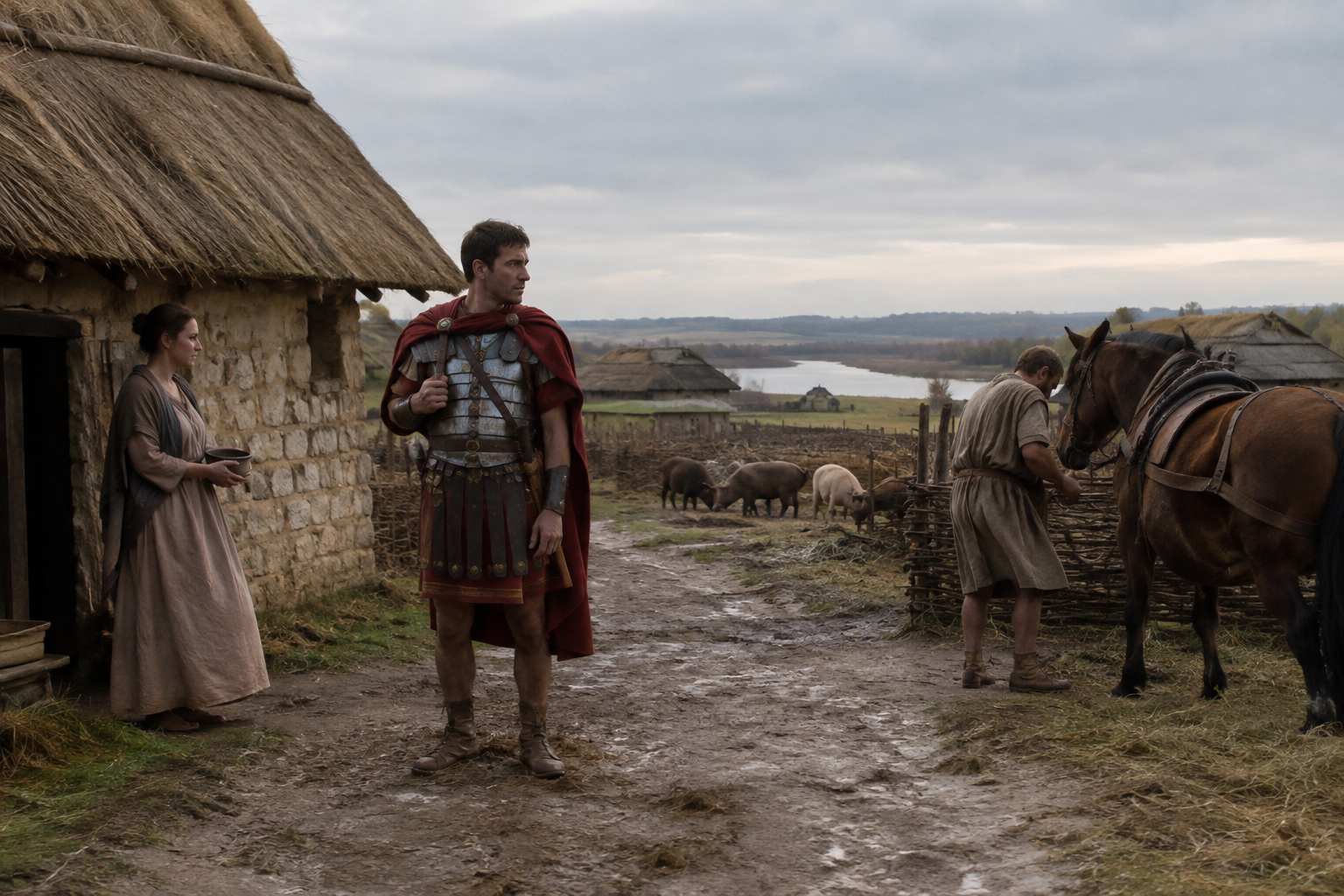
R3906 from Sirmium is separated from Weklice by more than a millennium, yet the site itself makes the comparison worthwhile. Sirmium was one of the great cities of the later Roman Empire, but by 1556 AD it belonged to a Balkan landscape reshaped by medieval kingdoms, frontier warfare, shifting confessions, and Ottoman expansion. Finding the same narrow paternal branch associated with this city underlines continuity of male lines through repeated historical rupture.
That is one of the great lessons of ancient DNA when it is used carefully: cities change names, empires collapse, churches rise, armies pass through, but some paternal lines remain in circulation through all of it. The presence of I1a1a1a1a1 in late medieval Sirmium does not mean a man there was descended in any documented way from the Roman-era individual in Poland. It does suggest that this branch belonged to the kind of northern and central European male-line variation that could persist and spread across a very wide historical zone.
The Balkan setting is especially useful because it resists tidy storytelling. Sirmium was never a single-culture place. Anyone studying a Y-line found there has to think in terms of layered populations, military corridors, trade links, resettlement, and long-term regional continuity, not one dramatic migration event.
Deep Balkan Roots and Medieval Admixture
The wider lineage behind this label is haplogroup I1, a branch well known in northern Europe, especially in discussions of Scandinavian and north-central European paternal history. But the article's focus is not on I1 in general. It is on the much narrower branch I1a1a1a1a1, and that distinction matters. A parent haplogroup can be widespread for thousands of years while one of its sub-branches may have a much more specific and less easily mapped history.
With only two ancient individuals supplied here, caution is essential. We should not pretend we can reconstruct the exact birthplace, founding date, or migration path of this subclade from these samples alone. What we can say is that the branch appears here in two archaeological contexts that are both historically connected to the broader European north: Roman-era Poland and late medieval Serbia.
That pattern fits a lineage moving through the busy middle of Europe rather than staying confined to one isolated homeland. It also reminds us that paternal history often survives in fragments. One burial from Weklice and one from Sirmium are not a dynasty, not a tribe, and not a population average. They are two fixed points showing that this branch had a footprint across very different centuries and regions.
At first glance Weklice and Sirmium seem too far apart to compare. Yet historically they are linked by the great connective tissue of Europe: the rivers, exchange routes, military zones, and migration corridors that tied the Baltic, the Carpathian Basin, and the Balkans together. These were not empty channels with peoples shooting through them like arrows. They were inhabited landscapes where newcomers mixed with locals and local families adapted to new political orders.
That is why a narrow Y-line turning up in both regions is more interesting than it looks. In Roman-era Poland, it appears in a northern community living in the shadow of imperial trade and diplomacy. In late medieval Serbia, it appears in a city with a Roman past and a complicated post-Roman afterlife. The historical settings differ, but both sit on major contact zones.
Research on ancient populations in these broader regions increasingly shows exactly this kind of complexity. A study of the ancient Balkans and adjacent areas available at this research preprint reflects the sort of large-scale archaeogenetic work that has made such comparisons possible, even when individual sample histories remain concise in public summaries. The important point is not to overread one paper or one lineage, but to place single burials in the wider map of regional population change.
There is something salutary about a haplogroup article built on only a few firm points. It forces us to avoid fantasy genealogies. No royal house is needed here, no invented clan founder, no castle pressed into service as proof. Instead we have two securely named archaeological individuals, R10636 and R3906, occupying two very different historical worlds.
That is enough to say something useful. I1a1a1a1a1 appears in the record not as a purely modern testing artifact, but as a real paternal line carried by men living in Europe between late antiquity and the late medieval period. The spread from Roman-era Poland to 1556 AD Sirmium hints at durability and movement within the broad northern and central European sphere, with one later appearance deep in the Balkans' historic crossroads.
If your paternal line falls within I1a1a1a1a1, the ancient evidence presented here points toward a branch with documented presence in Europe's northern and southeastern historical contact zones rather than in one neatly bounded ethnic past. The best-supported insight is not a romantic origin story, but a durable one: this was a male line present in real communities from Roman-era Poland to late medieval Serbia, surviving through centuries of upheaval and regional mixing.
That is often the most rewarding result in archaeogenetics. Not a single grand answer, but a firmer map of where a paternal line genuinely appears in the past.
Comments