Haplogroup H1a2a

– 4 min read


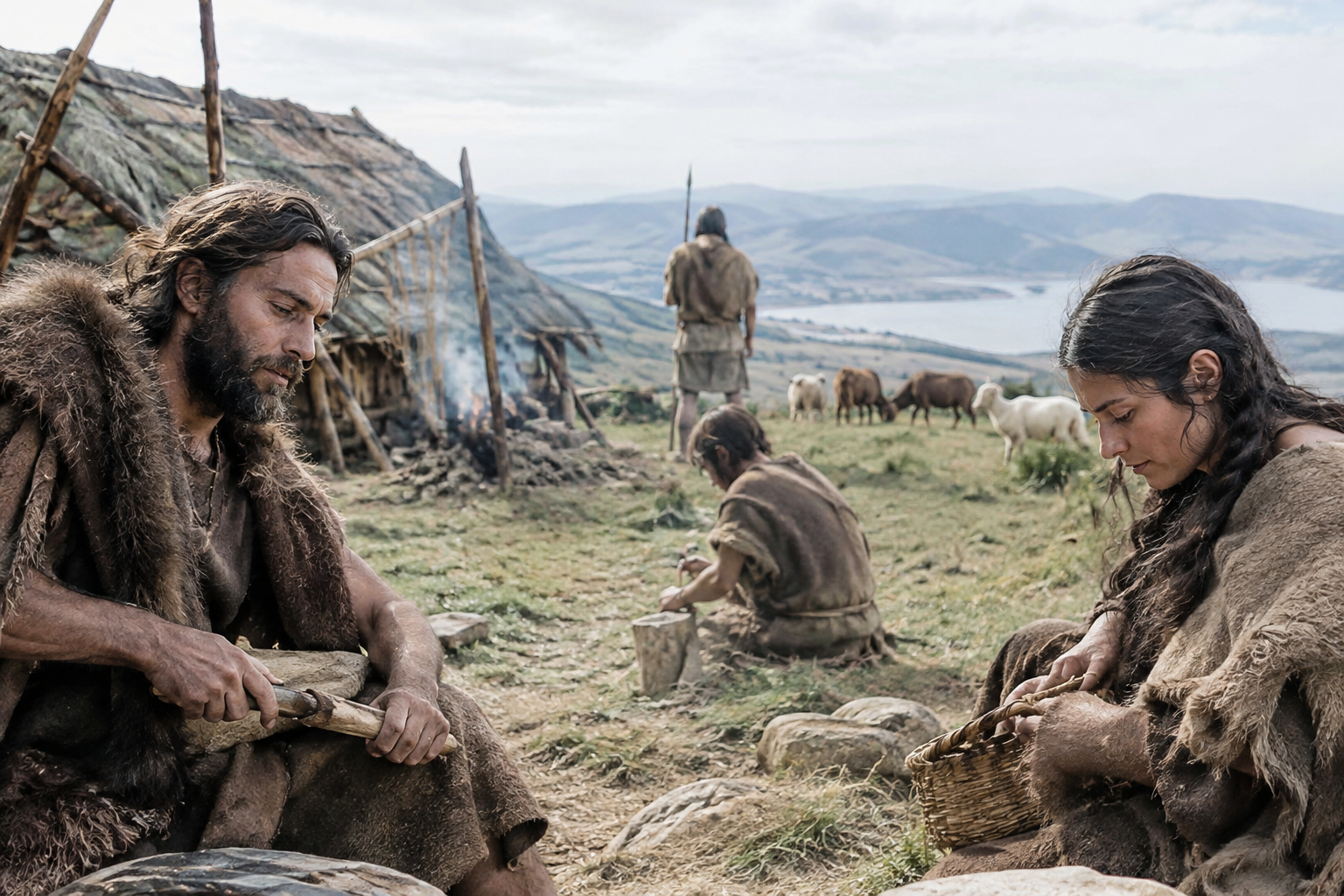
One of the few ancient signposts for H1a2a comes from Iron Age northern Iberia: sample I2469, dated to around 875 BC and associated with El Sotillo in the Basque Country. That is already enough to make the find interesting. A lineage that today sits inside the wider Y-chromosome haplogroup H turns up not in South Asia, where the deepest branches of haplogroup H are often discussed, but in an Iron Age community on the Atlantic side of Europe.
That is precisely why this sample matters. Y-DNA traces one direct paternal line only, not a person's whole ancestry, language, or identity, but a securely reported ancient male line can still tell us something important about where particular branches had reached by a given date. In this case, H1a2a is not just an abstract label on a modern test result. It is anchored, however sparsely, in the archaeology of pre-Roman Iberia.
El Sotillo belongs to a region that has become increasingly important in archaeogenetics because it sits at a crossroads that was never quite a crossroads in the obvious imperial sense. The Basque Country was connected to the wider Iberian world, of course, but it also preserved strong regional continuities across later historical upheavals. A man from around 875 BC carrying the paternal line reported here gives us a glimpse into that earlier landscape, before Rome, before Visigothic rule, and long before modern ethnic narratives hardened around the region.
What makes I2469 especially valuable is not lavish archaeological storytelling - we should resist inventing that - but its position in time and place. An Iron Age male from the western Pyrenean zone provides a fixed point for H1a2a in a part of Europe where population history is often discussed through broader shifts: the spread of farming, Bronze Age transformations, and later regional persistence.
A genetic study of ancient Iberian populations, available as research published on bioRxiv, helped open this wider picture by showing just how complex the peninsula's prehistoric and protohistoric population history really was. Even when one sample cannot stand for an entire people, it can still show that a paternal branch was genuinely present in a documented archaeological setting.
For readers with this result in a modern DNA test, the first point is taxonomic. H1a2a is a narrow branch inside the much larger Y-haplogroup H. Those are not the same thing historically. The wider haplogroup has a deep and complicated history across Eurasia, but it would be sloppy to transfer all of that automatically onto this one European sub-branch.
What we can say more safely is that the El Sotillo individual shows that a paternal line identified with H1a2a, or reported in connection with it, existed in Iron Age Iberia. That matters because ancient Y-chromosome evidence is often patchy. Some lineages appear repeatedly in the record and dominate discussion; others surface only rarely, which makes each secure appearance more informative.
Rarity in the ancient record is not the same as insignificance. It may reflect local survival, limited sampling, later demographic replacement, or simply the accidents of preservation and publication. In other words, H1a2a in ancient Iberia is best treated not as a grand civilizational banner, but as a real paternal thread running through a very specific community.
The Basque region often attracts simplified claims: either it is imagined as perfectly isolated, or else as just another zone repeatedly overwritten by outside migrants. The ancient DNA evidence increasingly suggests something more interesting than either caricature. There is continuity in parts of the region, but continuity does not mean stasis, and local populations could preserve distinctive features while still participating in wider Iberian changes.
That makes the presence of H1a2a at El Sotillo particularly suggestive. It sits comfortably within a picture in which Iron Age communities of northern Iberia were neither sealed off from history nor reducible to later labels. A paternal lineage may persist in one place for a long time, disappear locally, or survive elsewhere through branching descendants. Ancient DNA gives us snapshots, not uninterrupted films.
This is also why regional studies of later Basque-area populations are useful context. They do not prove direct descent from any one Iron Age man, but they help frame the long-term demographic background of the western Pyrenean world.
There is a temptation, whenever an ancient Iberian sample appears, to attach him neatly to a named people from classical texts. That is usually too confident. Around 875 BC, the historical landscape of northern Iberia was shaped by local Iron Age communities whose identities cannot simply be read backwards from Roman-era descriptions.
So the real value of I2469 lies in chronology. He belongs to a period before Roman political integration and before literate outsiders began classifying Iberian peoples in ways that still influence modern imagination. That makes his Y-DNA especially useful for anyone interested in the deeper prehistory of paternal lines in the peninsula.
In that sense, H1a2a at El Sotillo belongs to a larger story seen across ancient DNA work in Iberia: local populations were built from earlier prehistoric layers, then reshaped again and again without ever becoming genetically or culturally uniform. The Basque Country was part of that history, not outside it.
Early Medieval Iberian Diversity
Some haplogroup articles can draw on a string of royal burials or dozens of cemetery finds. H1a2a, at least from the evidence here, asks for a different sort of discipline. One documented ancient individual is not a dynasty, not a migration map, and not a shortcut to ethnicity. But it is still an archaeological fact, and archaeological facts matter.
For members of the MyTrueAncestry community, that is often the most valuable kind of connection: not a fantasy pedigree, but a real man in a real place at a real point in time. Sample I2469 shows H1a2a in the Iron Age Basque Country, placing this paternal branch inside the human landscape of northern Iberia centuries before Rome's full arrival. That does not tell every chapter of the lineage's history, but it gives the branch an ancient foothold that is both modest and remarkably concrete.
The most distinctive thing we can responsibly say about H1a2a from the evidence here is that it is not merely a modern genetic label floating free of history. It is attested in at least one ancient male, I2469 of El Sotillo, in the Iron Age Basque Country around 875 BC. For anyone researching this paternal line today, that makes H1a2a part of the documented archaeological story of pre-Roman Iberia: local, ancient, and far more grounded than myth.
Comments