Haplogroup B2b

– 5 min read


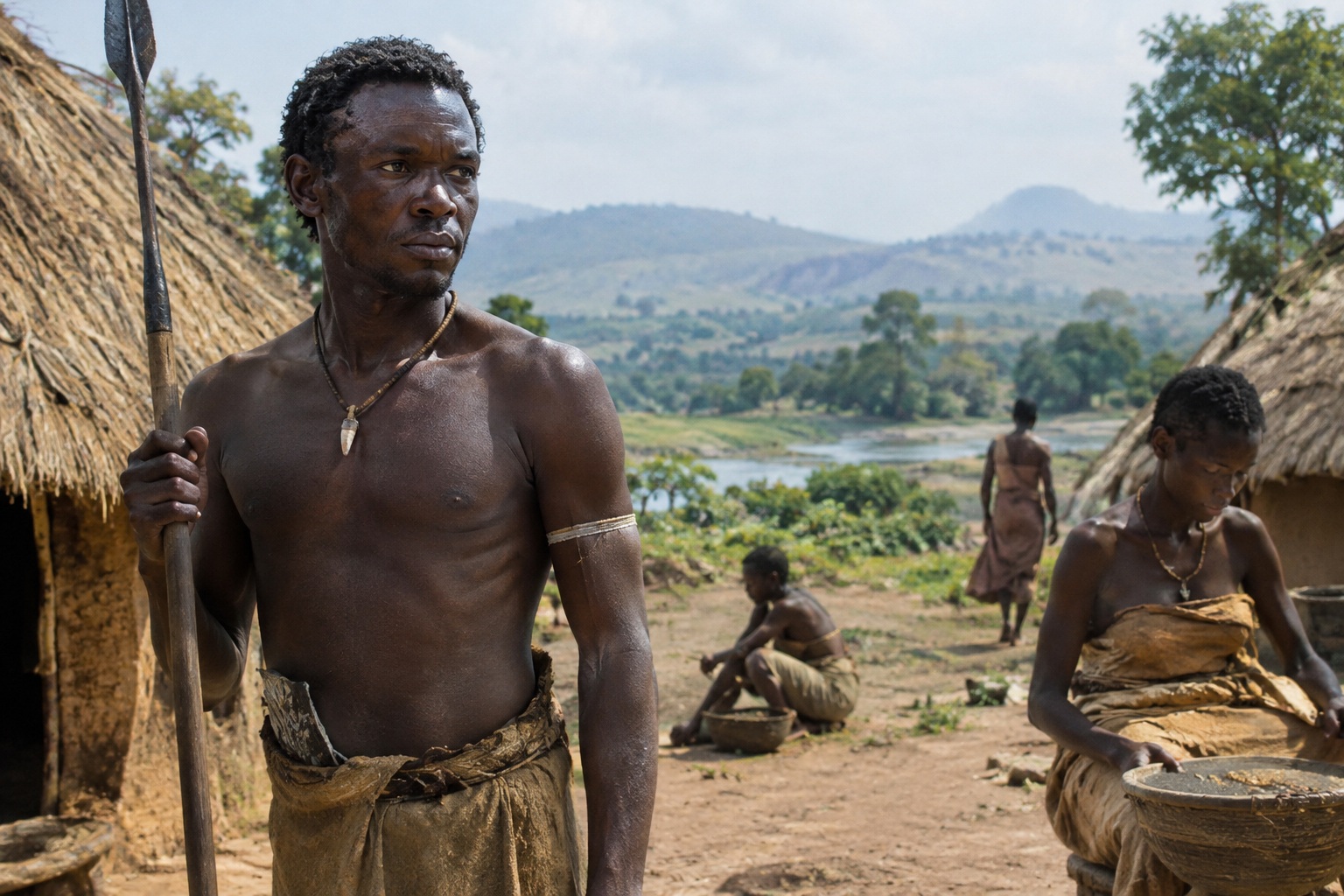
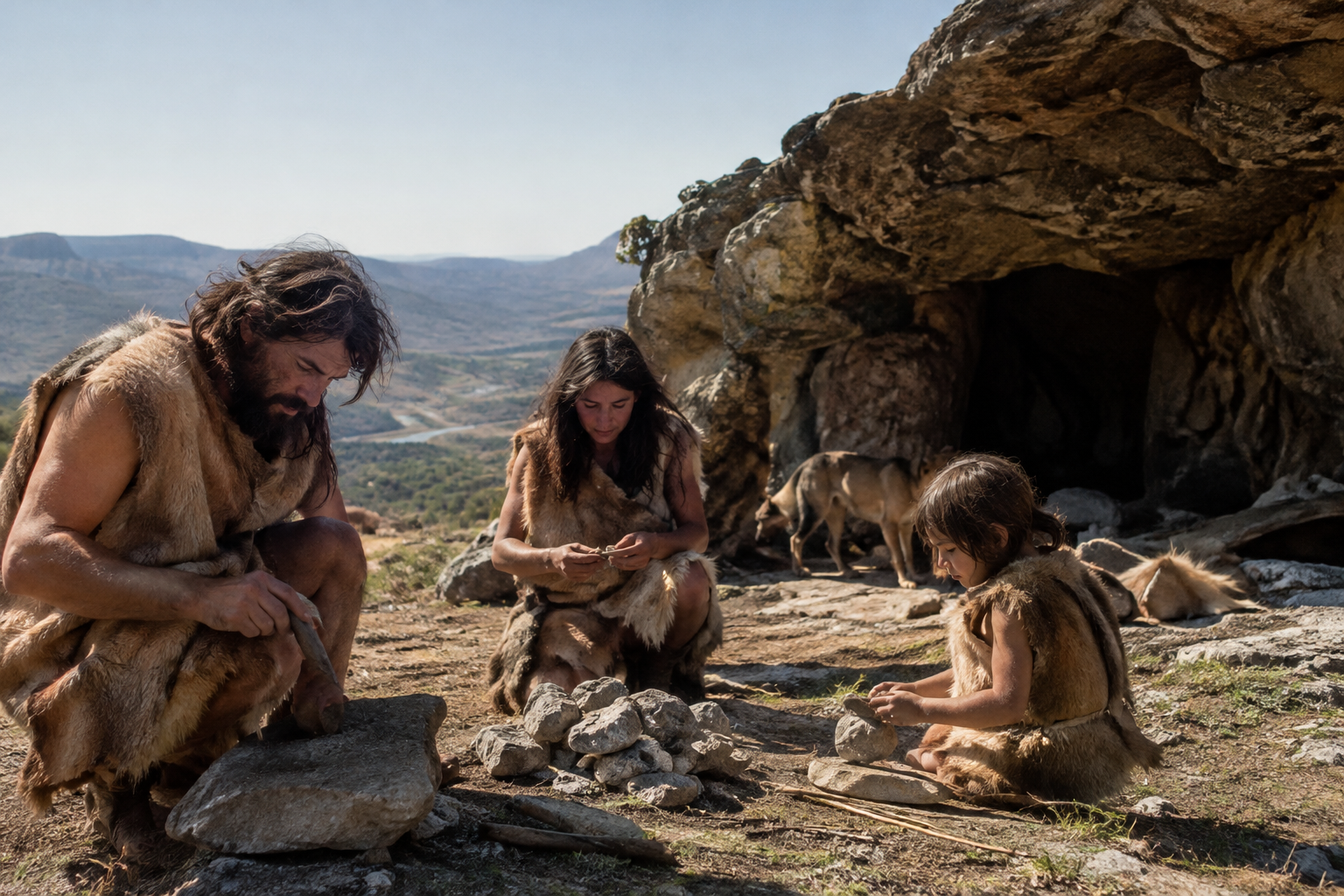
At Shum Laka in western Cameroon, one ancient male identified as I10873, dated to around 1200 BC, has become an important point of reference for the Y-DNA haplogroup B2b. The site is famous well beyond genetics: it is a rock shelter with a long archaeological sequence, and it has figured prominently in debates about the deep population history of Central and West-Central Africa. That matters here, because B2b is not one of those lineages that turns up everywhere in the ancient DNA record. When it appears in an excavated individual from a well-known African site, even a single data point deserves careful attention.
For people researching this haplogroup today, the key point is simple. Y-DNA traces one direct paternal line only: father to son to son across many generations. It does not describe a person's whole ancestry. But when a lineage like B2b is found in an ancient individual from Shum Laka, it gives us something precious all the same: a securely dated paternal line anchored to a real archaeological place.
Shum Laka is not just a name in a spreadsheet. It is one of the most discussed archaeological sites in the Cameroon Grassfields, a region long considered important for understanding population movements in western Central Africa. The shelter preserves evidence from multiple periods, which is exactly why genetic results from there carry weight: they are tied to a site already central to larger historical arguments.
In the case of I10873, the reported association with B2b places this paternal line in Cameroon in the later second millennium BC. That is already historically significant. It shows that B2b was part of the human landscape of this region long before the written histories of the area and long before any modern ethnic labels can sensibly be projected backward onto the site.
An ancient DNA study examining Shum Laka helped draw attention to just how complex this region's past was, and how unsafe it is to treat any one site as the simple origin-point of later populations. The research record associated with the site can be followed through this supporting study material, which is linked to the ancient individual discussed here.
African DNA population history
B2b belongs within the wider haplogroup B family, one of the deepest-rooting Y-chromosome lineages in humanity. That broader family has long been associated with African population history, especially with lineages that preserve very old branches of the human paternal tree. But it is important not to overclaim. The presence of B2b in one ancient man from Shum Laka does not mean every man at the site carried that lineage, nor does it map neatly onto one language, one culture, or one later community.
Still, this is exactly the kind of evidence that makes archaeogenetics so useful. Haplogroups such as B2b are often discussed in abstract terms, as though they float free of people and places. I10873 reminds us that every lineage belonged to an actual person living in a particular landscape, among particular communities, at a particular moment in time.
That can sound obvious, but it is worth insisting on. Once we attach B2b to Shum Laka around 1200 BC, the discussion becomes historical rather than merely classificatory. We are no longer talking only about branching trees and labels. We are talking about a paternal line present in the Grassfields of Cameroon during later prehistory.
One of the enduring problems in popular history is that later prehistoric Africa is too often treated as vague background until kingdoms or colonial archives appear. Sites such as Shum Laka make that view impossible to sustain. By 1200 BC, people in this region were already part of long, local histories shaped by settlement, subsistence, mobility, and changing social worlds, even if those worlds are not illuminated by written texts.
The genetic evidence adds another layer to that picture. A lineage like B2b surviving in the record at Shum Laka suggests continuity of deep African paternal diversity in the region, rather than a past that can be reduced to a single recent migration event. That does not mean there was no movement; prehistoric Cameroon was almost certainly dynamic. It means only that the paternal story was already old and regionally complex.
This is one reason Shum Laka has attracted so much attention in broader discussions of African population history. Ancient DNA from the region has repeatedly complicated older, simpler models. If you are interested in how genetics can overturn tidy historical assumptions, that wider lesson is very much in keeping with MyTrueAncestry's coverage of ancient DNA and the rise of archaeogenetics.
How archaeogenetics changed history
With haplogroups that are sparsely represented in published ancient DNA, there is always a temptation to squeeze too much out of too little. The sensible approach is more restrained. I10873 gives us a secure association between B2b and an archaeological site in Cameroon around 1200 BC. That is already valuable. It provides a time-depth anchor for the lineage and ties it to a region with major significance in African prehistory.
What it does not do is identify a named tribe, prove descent from a famous dynasty, or establish one continuous unbroken local population from the Bronze Age to today. Africa's demographic history, like Europe's or Asia's, includes movement, mixture, replacement, and survival in varying proportions across different times and places. A single Y-chromosome result fits into that history; it does not solve it by itself.
Yet one sample can still reshape perspective. For many readers with African-associated paternal lines, ancient DNA has seemed frustratingly thin compared with the immense published record from Europe. Finds like this begin to correct that imbalance. They provide dated evidence from African contexts themselves, rather than forcing all discussion back onto modern distributions alone.
Some haplogroup articles can roam across dozens of excavated men, aristocratic pedigrees, and medieval burials. B2b, at least from the evidence here, asks for a different kind of discipline. The value lies not in pretending abundance where there is scarcity, but in understanding why a single ancient association is so meaningful.
Shum Laka stands out because it is archaeologically important in its own right, because I10873 is dated to a deep prehistoric horizon, and because the result connects B2b to a real Central African setting rather than to modern inference alone. That combination is powerful. It turns B2b from a code on a phylogenetic tree into part of the human past of Cameroon.
There is also a broader methodological lesson here. Ancient DNA works best when it is kept in conversation with archaeology, not used as a shortcut around it. At Shum Laka, the haplogroup matters because the site matters. Without the archaeological context, B2b would be just a label; with it, we begin to glimpse a paternal line within the lived history of a major African region.
For B2b, the most distinctive ancient clue presently highlighted here is the man from Shum Laka, Cameroon: I10873, around 1200 BC. That does not give a neat royal pedigree or a simple migration tale. It gives something better: evidence that this paternal line formed part of the deep and complicated human history of western Central Africa. If B2b is your lineage, this find responsibly suggests that your direct paternal story belongs to an ancient African branch with real archaeological roots in a region that has become central to understanding the continent's past.
Comments