Haplogroup R1b1a1a2a1a2c1e2b3a1

– 5 min read


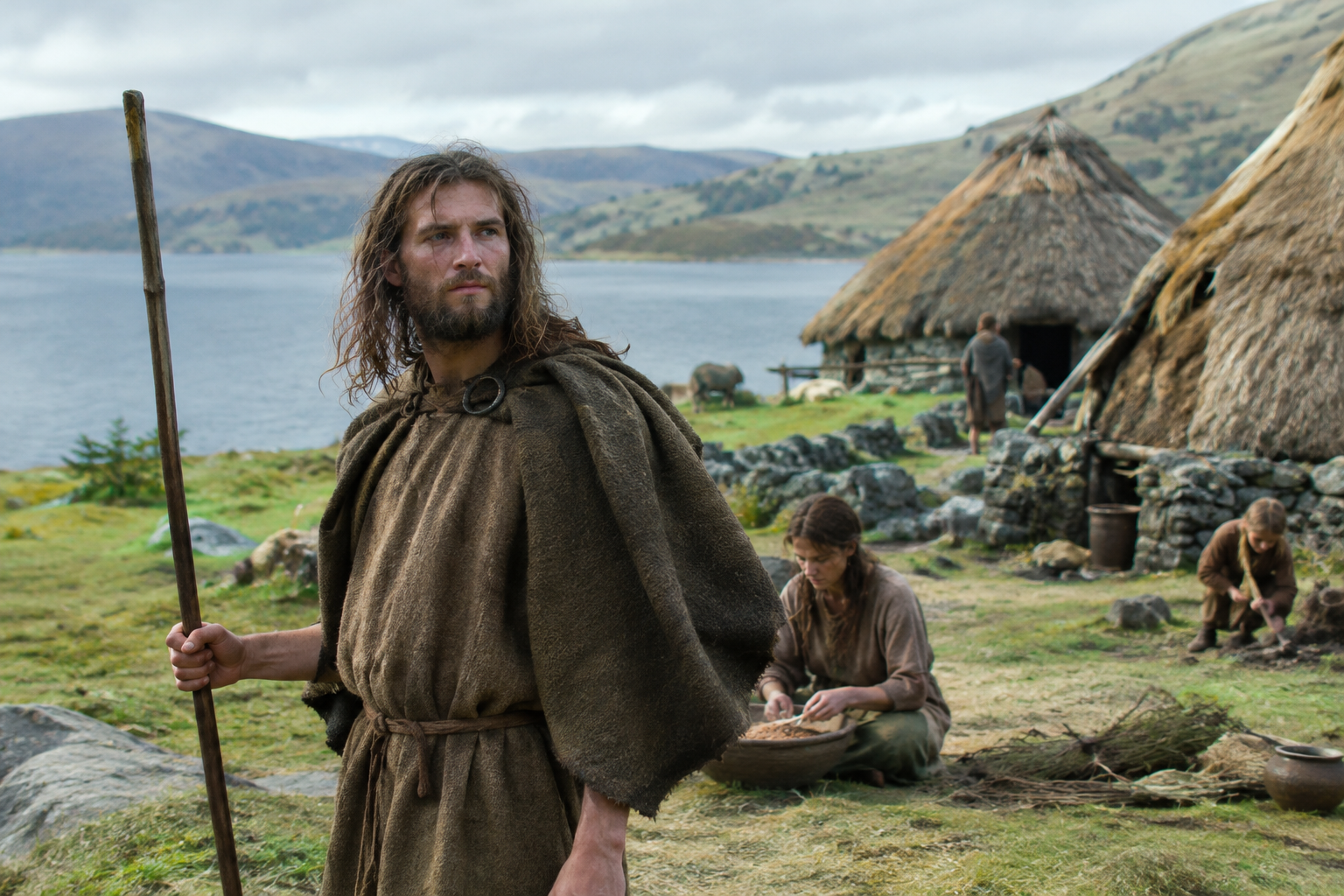
One of the few ancient signposts for the Y-DNA haplogroup R1b1a1a2a1a2c1e2b3a1 comes from Bronze Age Scotland: sample I2653, dated to around 1450 BC. That is already enough to make the find interesting. We are not looking at a medieval surname world, nor at a later clan society, but at a man who lived in northern Britain during the Bronze Age, long before written history in Scotland and long before anyone would have called the region by its later political names.
The result matters because this very specific paternal branch sits inside the much larger R1b family, a major Y-chromosome lineage in western Europe. Y-DNA traces one direct male line only - father to son to son - so it does not describe a person's whole ancestry. But when a branch this narrow turns up in an ancient burial, it gives us a rare anchor point: a real man, in a real landscape, at a real archaeological moment.
With I2653, the important thing is not to pretend we know more than we do. The information securely in hand is limited but useful: a Bronze Age male from Scotland, around 1450 BC, associated in MyTrueAncestry's classification with R1b1a1a2a1a2c1e2b3a1. Even such a minimal record tells us something substantial. By the middle of the second millennium BC, a paternal line within the wider R1b world was present in Scotland, embedded in the communities that inhabited Britain after the great demographic changes of the late Neolithic and early Bronze Age.
This places the lineage in a period when metalworking, exchange networks, and new burial customs had long since transformed Britain. By 1450 BC, the first Beaker-associated expansions were already centuries in the past. So I2653 does not represent the arrival of R1b in Britain as such; rather, he belongs to a later chapter, when those male lines had already become part of established Bronze Age societies.
An ancient DNA study on Beaker and Bronze Age population change in northwestern Europe, published in Nature, is central to understanding that broader setting. The larger lesson from research of this kind is that the rise of R1b lineages in Britain was tied to major prehistoric migration and replacement processes, not to a single tribe, kingdom, or surname-bearing family.
The sheer length of the name R1b1a1a2a1a2c1e2b3a1 tells its own story. This is not a broad umbrella label but a highly derived sub-branch, many steps downstream from the better-known parent haplogroup R1b. That distinction matters. It would be careless to take the grand history of all R1b lineages - from steppe expansions to Bell Beaker movements - and simply assign the whole drama, unchanged, to this one tiny twig.
What we can say more carefully is this: the branch belongs to a paternal family tree that became extremely important in later prehistoric western Europe, and one ancient representative of a lineage associated with this branch is present in Bronze Age Scotland. That is a modest claim, but a solid one. It places the haplogroup in the archaeological world of later prehistoric Britain without turning one burial into a sweeping origin myth.
For readers following ancient DNA and language debates, that is also a useful reminder that genetic branches, archaeological cultures, and languages are different things. A Y-line can spread through many kinds of communities over long periods. It does not arrive carrying a neat label saying "Celtic," "British," or anything else that later historians might wish to attach to it.
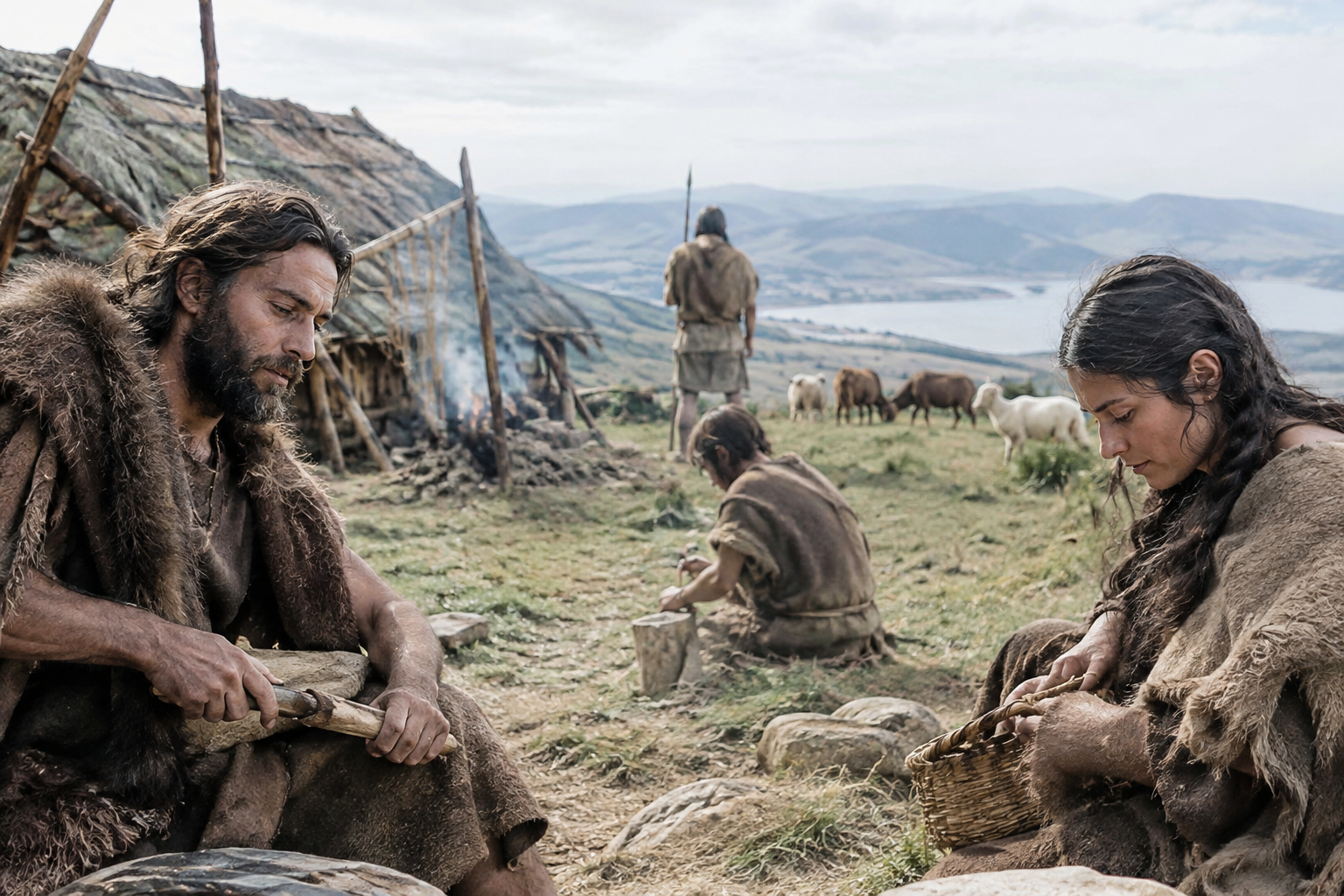
A date around 1450 BC belongs to the middle Bronze Age, a time when Scotland was dotted with farming communities, burial monuments old and new, and regional traditions that varied from place to place. Some landscapes still carried the memory of much earlier Neolithic monuments; others were being reorganized through field systems, settlement patterns, and newer ritual practices. Men like I2653 lived in that layered world, where ancestry, land use, and memory were already deeply entangled.
That is what makes a Y-chromosome result from this period so evocative. It is not simply a marker on a genetic map. It is evidence that one paternal line associated with this haplogroup was part of the human fabric of Bronze Age Scotland, in a society already many generations removed from the first newcomers who had transformed Britain's gene pool in the earlier Bronze Age.
In other words, this lineage was not merely passing through. At least in this one documented case, it was established enough to appear in a local burial context centuries after the initial population shifts that brought many R1b-rich male lines into Britain.
To understand why I2653 is significant, it helps to set him against the longer prehistoric backdrop. Britain saw one of the clearest large-scale population turnovers in European prehistory during the Beaker and early Bronze Age transition. Ancient DNA has shown that many earlier Neolithic genetic patterns were heavily replaced, and paternal lineages in the R1b family became prominent.
By the time of I2653, however, the story had shifted from upheaval to inheritance. The dramatic movement had already happened. What we see in middle Bronze Age Scotland is the afterlife of that transformation: descendants living ordinary local lives, farming, burying their dead, and transmitting paternal lines through generations. A narrow subclade such as R1b1a1a2a1a2c1e2b3a1 is valuable precisely because it lets us glimpse that later continuity within the broader western European pattern.
This also helps explain why a single Bronze Age sample can matter so much to modern testers. Deep subclades are often most informative when they bridge the gap between famous big-picture migrations and the smaller, more regional histories that followed. They suggest that the paternal line had already become woven into local communities rather than remaining only a trace of some distant continental movement.
Scotland is especially important in popular imagination because later history there became crowded with kingdoms, lordships, and clans. But the genetic evidence here reaches much deeper. I2653 belongs to a world well before those medieval identities emerged. That is useful corrective history. A paternal lineage found in Scotland is not automatically "clan DNA," and Bronze Age evidence should not be retrofitted into later genealogical romance.
At the same time, prehistoric Scotland was anything but isolated. Sea routes, exchange networks, and regional contacts connected communities across Britain and beyond. So a Scottish Bronze Age R1b lineage may speak both to local continuity and to the wider Atlantic-facing world of later prehistoric Europe.
For that reason, this haplogroup fits neatly into the broader pattern explored in work on Britain's long-term genomic development. If you want to follow how ancient DNA reshapes the story after prehistory as well, the later transformations of the island are usefully explored in studies of Roman and early medieval Britain.
For someone who belongs to R1b1a1a2a1a2c1e2b3a1, the strongest evidence here is not a claim of royal descent or a neat ethnic badge. It is something better grounded: at least one ancient man associated with this paternal branch, sample I2653, was living in Bronze Age Scotland around 1450 BC. That places the lineage within the settled human history of prehistoric Britain, in the centuries after the great Beaker-era changes had remade the island's population.
It is a small piece of evidence, but a vivid one. This branch is not floating abstractly in a phylogenetic tree; it has an archaeological foothold in the Bronze Age north of Britain, where one man carried it into the historical silence before chronicles began.
Comments