Genetic origins and isolation of the Agotes in the Basque region

– 3 min read


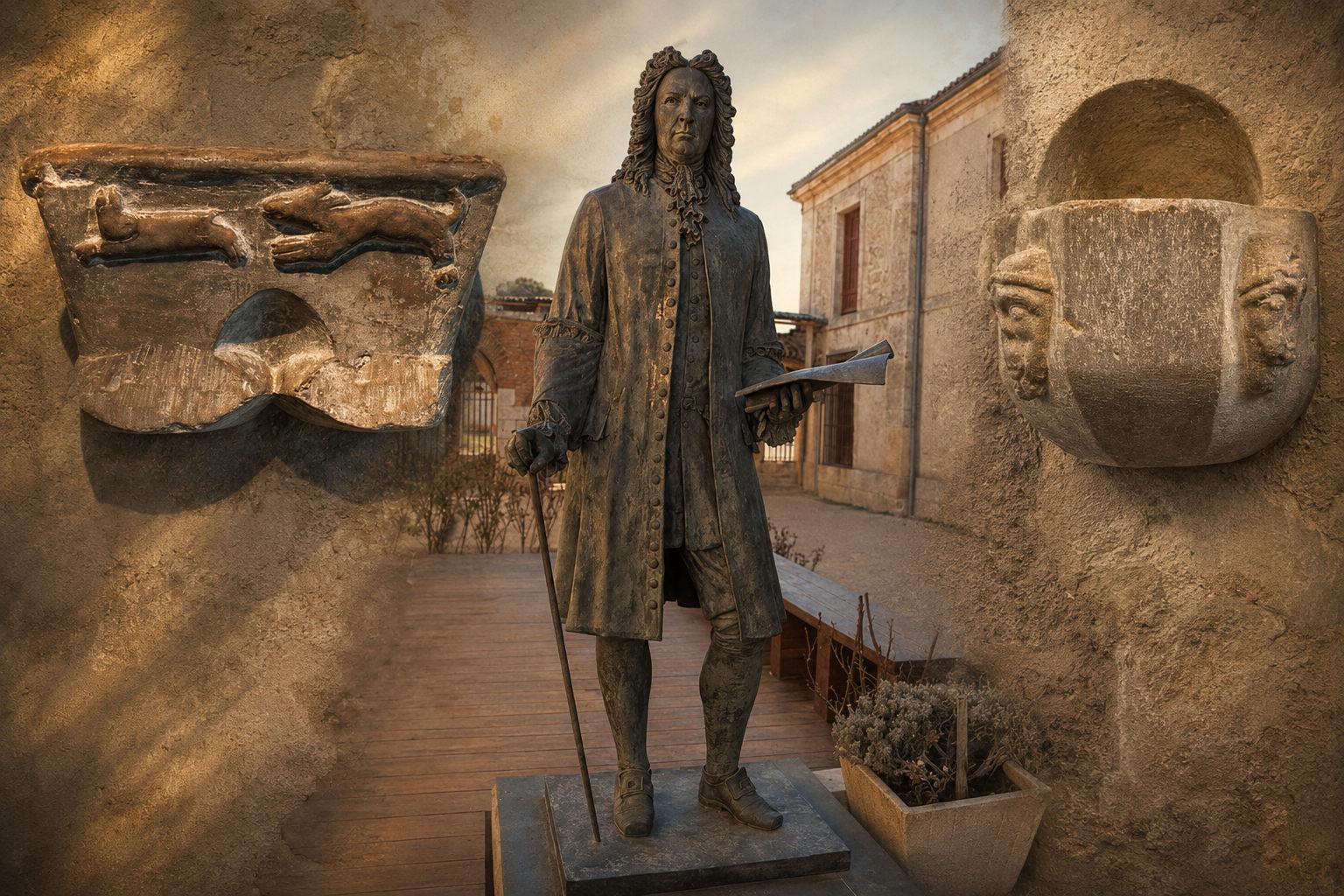
In the Baztan Valley of northern Navarre lies Bozate, a small settlement where centuries of exclusion, fear, and survival played out. This is where the last descendants of the Agotes endured as a distinct community — not among grand ruins, but in lanes and houses that form a social border made physical.
The Agotes remain one of history's most haunting mysteries. For centuries, neighbours treated them as polluted and dangerous, despite being visibly indistinguishable from anyone else. They spoke the same language, shared the same mountain world — yet were pushed to village margins and subjected to astonishing cruelties: forced to wear identifying marks, ring warning bells, use separate church entrances, and occupy segregated cemetery sections.
Once marked as different, a community attracts endless explanations. The Agotes were variously claimed to descend from Jews, Muslims, Vikings, Goths, heretics, or lepers — each theory revealing more about its inventors than its subjects. Medieval thinkers reached for whatever their age feared most: if the era feared heretics, the Agotes became heretics; if it feared disease, they became diseased.
The most historically compelling theory links them to the Cathars, persecuted in southern France during the thirteenth-century Albigensian Crusade. The Pyrenean borderlands were places of flight and fractured loyalties — if groups fled or converted under pressure and that difference hardened into inherited stigma, the theory gains real plausibility. The leprosy theory chills for different reasons: medieval lepers faced physical and symbolic segregation that mirrors the Agote experience precisely.
These legends form a catalogue of obsessions — heresy, impurity, disease, bloodline — projected onto a community that firm knowledge had abandoned from the start.
The most striking finding is also the simplest: the Agotes appear to be entirely local. When Agote family inheritance patterns were compared with surrounding populations, they clustered firmly with western European and Pyrenean groups — not with distant foreign colonies. Their strongest affinities were with the Baztan Valley itself and neighbouring Basque populations on both sides of the border.
This dismantles centuries of legend. The Agotes were not merely living in the valley — they were of the valley. The divide was social, not biological. Neighbours who shared common ancestry manufactured radical difference and maintained it for generations. The Agotes were, in essence, kin made strange.
If local in origin, how did the Agotes become so distinct? The answer lies in long social isolation. Restricted from marrying outsiders, confined to marked settlements, barred from trades — over generations, these pressures narrowed the circle of family connections dramatically. The Agotes show unusually high levels of shared ancestry within the community: the demographic imprint of exclusion made visible in family history.
Evidence also suggests the group's population shrank over time — exactly what one expects from a small community under sustained pressure. Yet more recent mixing shows the boundaries eventually softened. Two time depths emerge: deep long-term isolation, followed by gradual reopening. Behind the patterns are generations of ordinary people raising families within a constrained world, buried in separate ground, persisting despite everything.
The Agotes cannot be separated from the wider western Pyrenees — a borderland of shifting allegiances, heresy hunts, and refugee movements. Bozate is the last visible chapter of a larger lost geography stretching across both sides of the mountains.
Future inquiry may lie in funerary archaeology: burials can reveal diet, disease, mobility, and kinship, while cemetery layouts expose patterns of segregation. Yet descendants are understandably sensitive about ancestral graves, and rightly so. Any future investigation demands extraordinary care and consent. The descendants are not footnotes — they are custodians of the memory.
The Agote story ultimately joins the intimate and the immense. It proves that the deepest exclusions require no foreignness whatsoever — they can be created among neighbours and maintained for centuries. The old legends have been cut down to size. What emerges is richer and more unsettling: a people of the Pyrenean world itself, made alien entirely by history.
https://www.cell.com/action/showPdf?pii=S2589-0042%2826%2902607-6



Comments