Haplogroup G2a2b2a3

– 5 min read



At Asparn-Schletz in Lower Austria, archaeologists uncovered one of the starkest scenes from Europe's early farming age: human remains scattered in and around a ditched settlement, dating to around 5000 BC. Among the ancient men from this site, samples I24892, I27778, I24891, and I24276 have been associated here with the Y-DNA haplogroup G2a2b2a3. That matters because G lineages, in broad terms, are among the paternal signatures most closely tied to the spread of early Neolithic farming into Europe, and Asparn-Schletz shows that these first farming communities were not living in some timeless pastoral calm. They could also die violently.
The striking thing about G2a2b2a3 in this small sample set is not huge geographic range, but concentration in a very particular world: the Neolithic communities of the middle Danube and nearby Balkans. Y-DNA traces one direct paternal line only, not a person's whole ancestry, but in archaeology even that single line can be revealing. Here it places this branch in villages, frontiers, and human upheaval during the centuries when farming had already taken root in central and southeastern Europe.
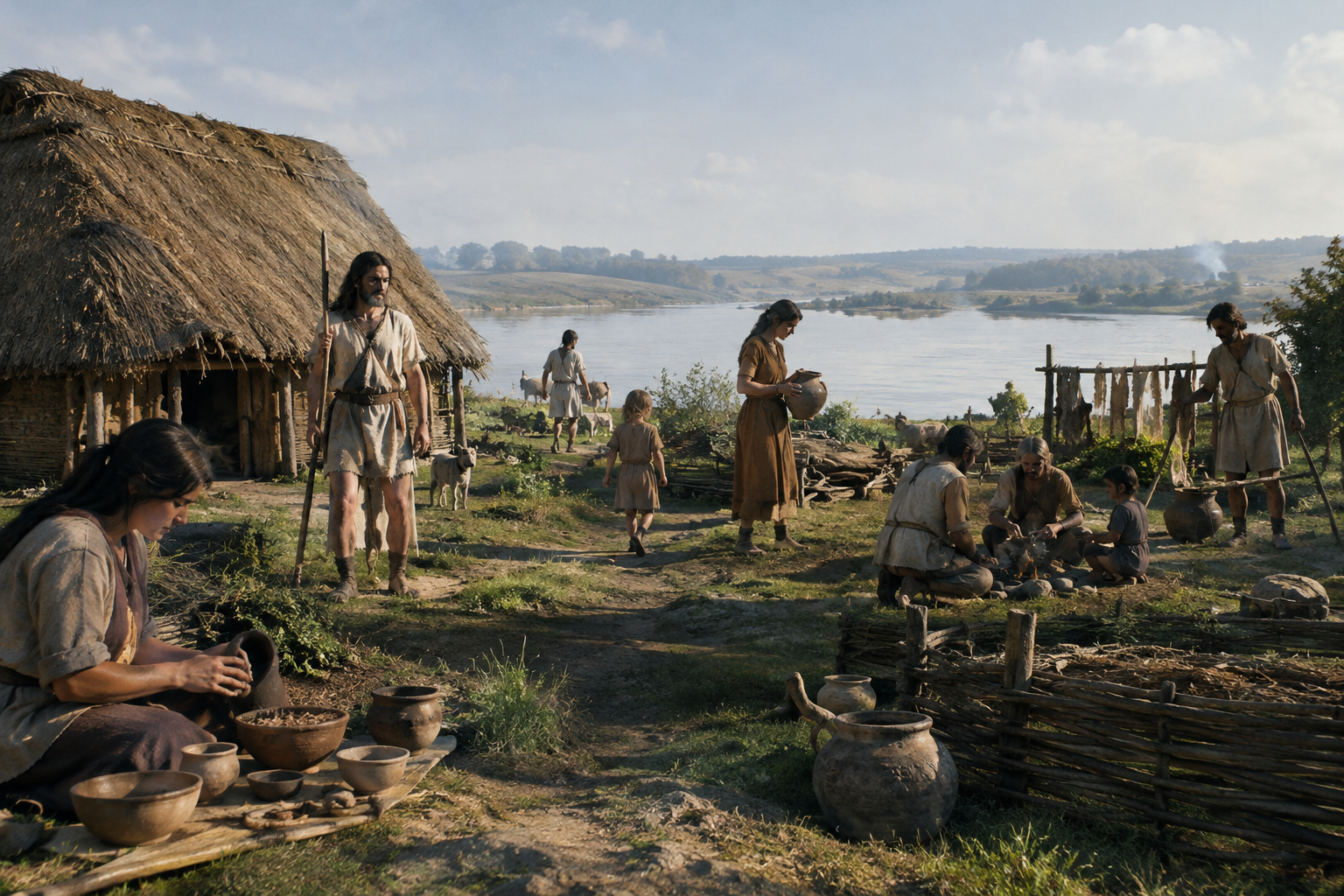
Asparn-Schletz is usually discussed as part of the early Neolithic landscape of central Europe, in the orbit of the Linear Pottery tradition, or LBK. These were among the continent's first large farming settlements: timber longhouses, cultivated fields, domesticated animals, and communities that were reshaping both land and diet. But the site is remembered above all because many of its dead appear to belong to a violent episode, making it one of the best known massacre contexts of the European Neolithic.
That is where the four Austrian samples become so interesting. I24892, I27778, I24891, and I24276 suggest that a branch placed here under G2a2b2a3 was present not at the edge of the Neolithic story, but inside one of its most revealing episodes. These were not abstract "first farmers." They were men living in a real settlement system that could flourish, defend itself, fracture, and fail.
Research on early European farmers has repeatedly shown the importance of G-associated paternal lines in Neolithic populations, even if fine-scale subclade assignments can be more difficult and sometimes depend on later refinement. A major ancient DNA study of Neolithic and later European populations, published in Science, helped frame this broader pattern by showing how strongly the first farming horizon differed from later Bronze Age paternal landscapes.
In other words, if your paternal line falls under G2a2b2a3, these Austrian men are a reminder that such a lineage belongs to one of the foundational chapters of European prehistory: the establishment of farming societies before the rise of the later steppe-dominated Y-chromosome patterns that became common across much of Europe.
The parent haplogroup G has a long and complicated history, but the crucial point here is modest and specific. In Neolithic Europe, G lineages are frequently found among early farming populations arriving from Anatolian and southeastern European pathways. That does not mean every branch of G followed the same route, nor that every later carrier of G2a2b2a3 descends from a single dramatic migration event that can be mapped village by village. It does mean this paternal background fits very comfortably within the demographic world of Europe's first farmers.
For that reason, G2a2b2a3 stands out historically. Many modern men with European paternal ancestry belong to lineages that expanded strongly in the Bronze Age and after. A branch like this instead points us back to an older layer: the age of clearance, cultivation, and village-building, when agriculture was still a comparatively recent arrival in the Danube basin.
There is also a useful caution here. A haplogroup can survive through time in scattered lines even when the wider male population around it changes dramatically. So G2a2b2a3 is not a label for an ethnicity, language, or culture by itself. What the ancient evidence shows is that this branch belongs, at least in part, to a paternal world already established in Neolithic central and southeastern Europe.
The fifth sample in this set, I17915 from Podlokanj in Serbia, dated here to around 4175 BC, adds an important second setting. If Asparn-Schletz shows this lineage amid the stresses of early farming in Lower Austria, Podlokanj places it farther southeast in the Balkans, still within the broad Neolithic-Chalcolithic sphere that linked communities across the Danube and its tributaries.
That matters because the Balkans were not merely a corridor to somewhere else. They were one of the core regions in which Europe's farming societies took shape, mixed, diversified, and persisted over long periods. A G2a2b2a3-associated male at Podlokanj suggests continuity of this paternal background within southeastern Europe after the earliest wave of expansion had already passed.
We should be careful not to overstate what one Serbian sample can prove. It does not, by itself, map a migration from one named village to another, and it does not establish an unbroken dynasty from Serbia to Austria. But taken together with the Austrian evidence, it gives this haplogroup a coherent archaeological setting: not a random scatter, but a cluster in the Neolithic and Copper Age societies of the Danube-Balkan zone.
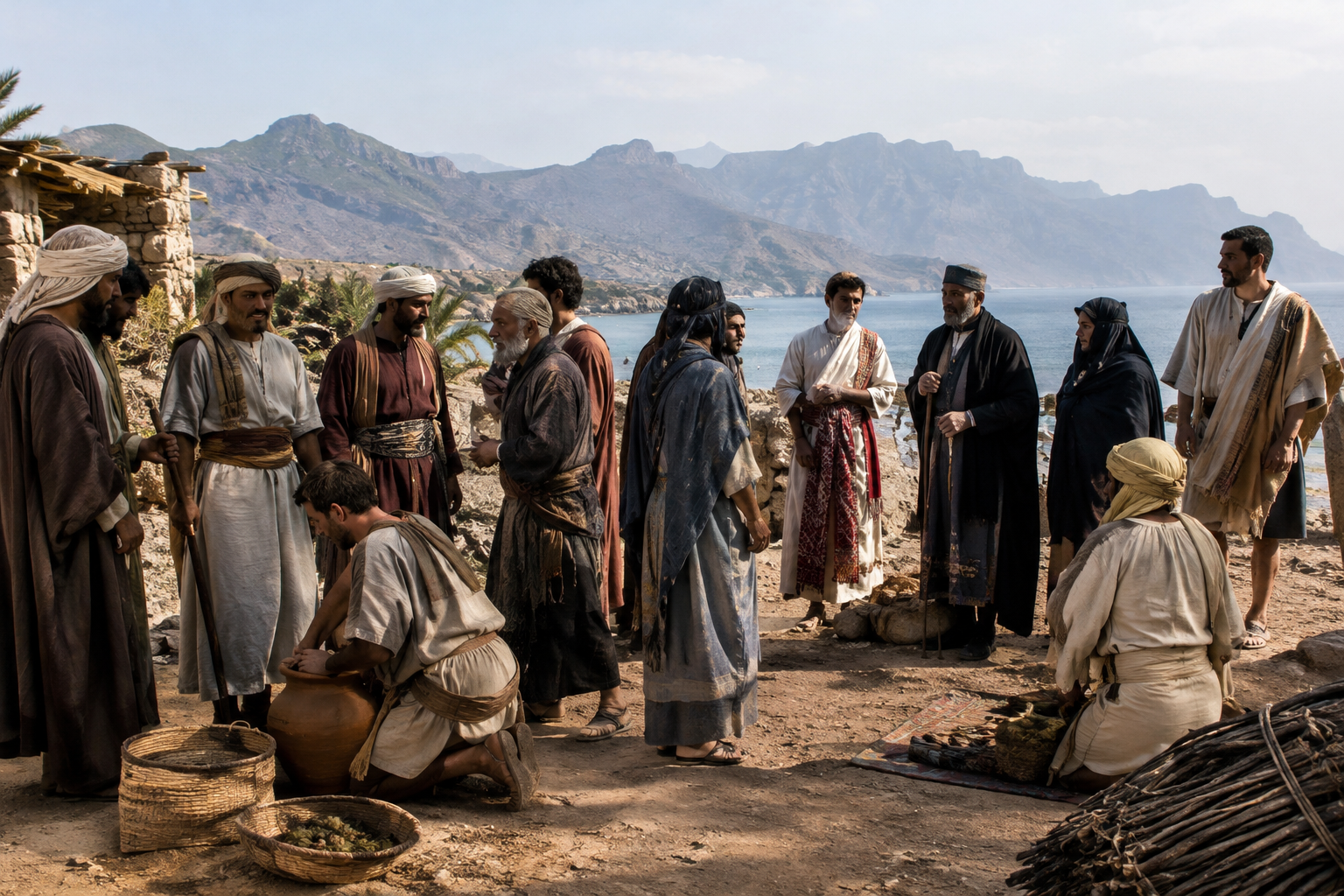
Balkan Deep Population History
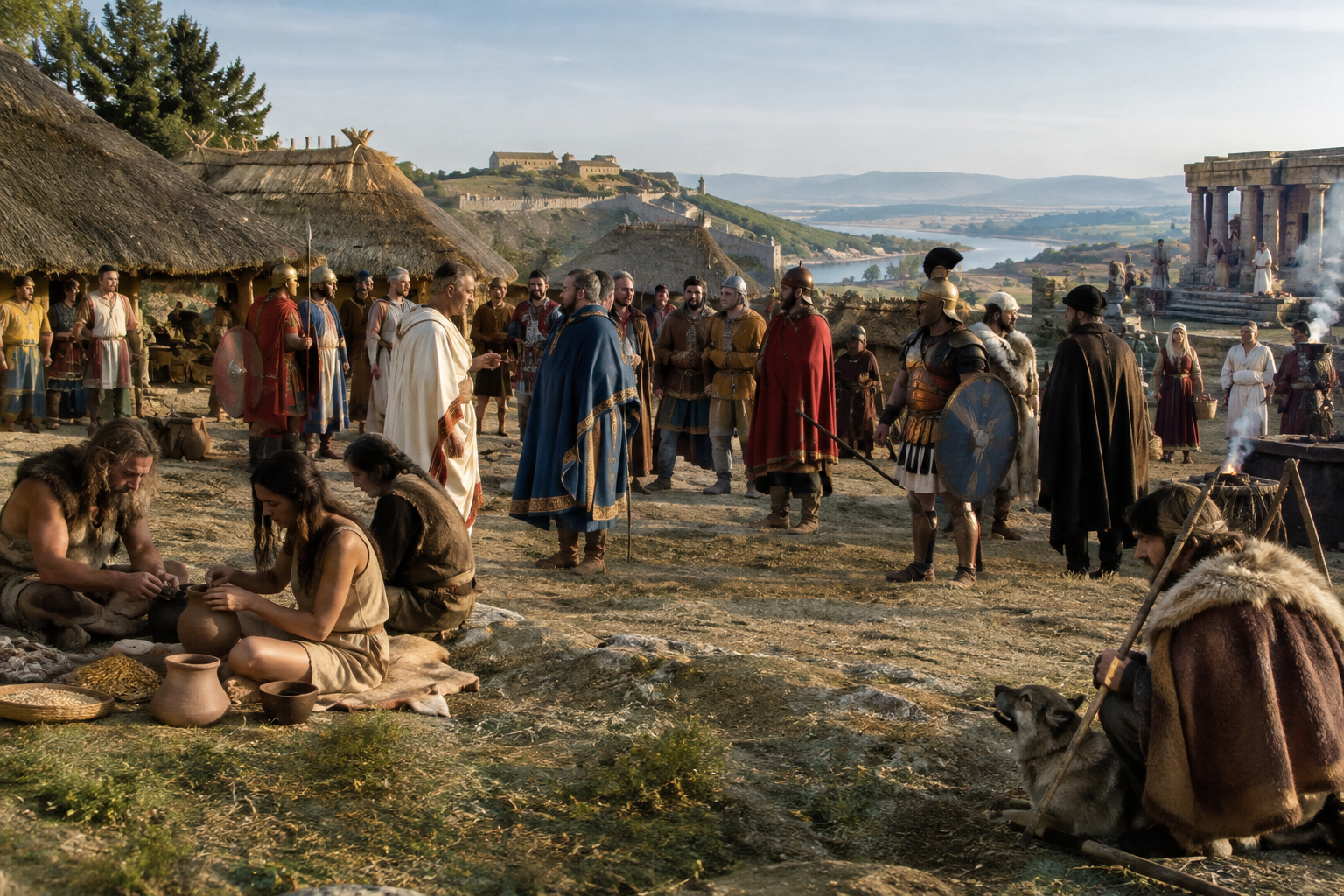
One reason Asparn-Schletz deserves emphasis is that it complicates an older, gentler picture of the Neolithic. Early farming villages were once imagined rather too neatly as stable communities spreading crops, livestock, and polished stone tools across an empty landscape. Archaeology has long since made that picture harder to sustain. Enclosures, trauma, disrupted burials, and abandoned settlements show that conflict was part of the story.
For G2a2b2a3, then, the best ancient context presently available is not some hazy mythic ancestor, but a very concrete archaeological reality: men living in defended or bounded settlements, in communities with kinship structures and inherited paternal lines, exposed to both growth and catastrophe. The Asparn-Schletz individuals do not tell us the whole history of the branch, but they do fix it in a world of real human risk.
An additional line of research on kinship and population structure in prehistoric Europe has sharpened this wider picture. A more recent study available through bioRxiv explored prehistoric population relationships in the broader region, helping place such individuals within networks of ancestry and community rather than treating each burial as an isolated curiosity.
Put the Austrian and Serbian finds together and a pattern emerges. G2a2b2a3 is associated here with communities along the great middle Danube sphere and its southeastern connections, exactly the sort of landscape through which farming, people, and ideas moved in the Neolithic. Rivers were not just scenery. They were routes, boundaries, and lifelines linking settlements that could be close in contact while still remaining socially distinct.
That is why these few samples are more informative than their number might suggest. Four from Asparn-Schletz and one from Podlokanj do not define the entire haplogroup, but they do anchor it in a very old historical layer: Europe's settled farming populations before later prehistoric transformations changed the paternal map so extensively.
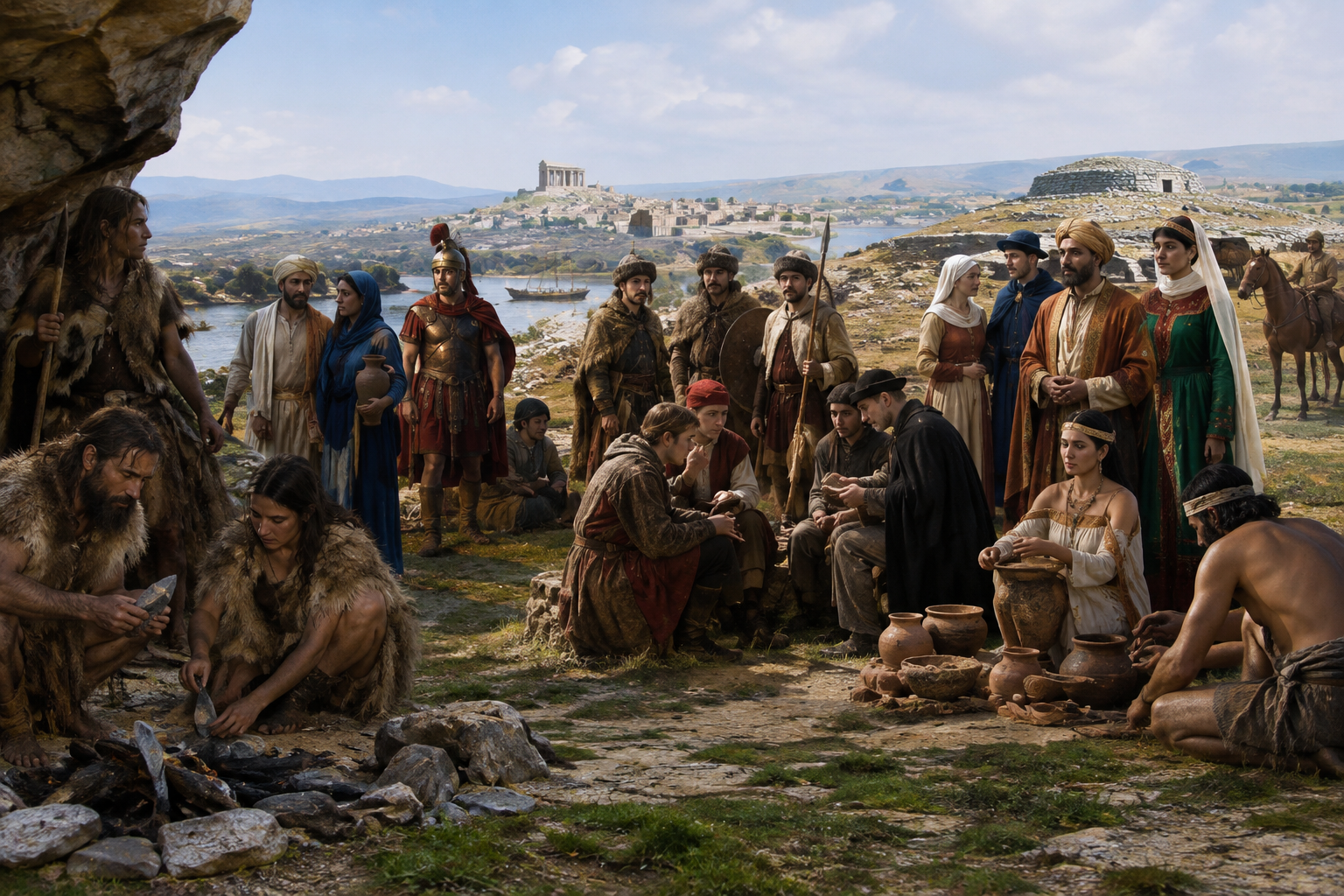
Mesolithic to Neolithic Transition
They also fit a pattern familiar from other Neolithic DNA work. Early farmers often show a degree of paternal concentration that later periods do not. That does not mean every man in a region belonged to the same close family, but it does hint that some male lines were especially successful within founding village populations.
If you belong to Y-DNA haplogroup G2a2b2a3, the most defensible takeaway from these ancient finds is that your direct paternal line reaches back into the world of early European farmers, with documented appearances in Neolithic Austria and Serbia. The strongest picture is not one of kings or heraldry, but of village communities in the Danube-Balkan zone during the fifth millennium BC, including one community remembered because it ended in violence.
That is, in its way, more valuable than a grand legend. G2a2b2a3 is a line tied here to the making of early agricultural Europe: settlement, continuity, and, at Asparn-Schletz, the brutal evidence that even the first farmers lived in a contested world.
Comments