Haplogroup G2a2b2a1a1c1

– 5 min read



At Motya on the western coast of Sicily, a Middle Bronze Age man identified as I22238 pushes this Y-chromosome line far earlier than the island's famous Phoenician and Carthaginian chapters. Dated to around 1755 BC, he matters because haplogroup G2a2b2a1a1c1 appears here not first in an imperial port or colonial cemetery, but in a deeper prehistoric setting. That is the first useful clue: this is a paternal line seen in the central Mediterranean before the better-documented movements of the first millennium BC.
That early Sicilian trace becomes more intriguing when later men linked to Punic, Phoenician, and Roman-period contexts on Sicily and Sardinia also turn up in the same branch or an associated reporting of it. Rather than suggesting one simple ethnic story, the evidence points to something more Mediterranean and more historical: a paternal line present in prehistoric southeastern Europe and then visible again in the trading worlds of islands, colonies, and mixed communities.
Y-DNA follows one direct paternal line only: father to son, back through time. It is powerful for tracking a lineage, but it is not the whole ancestry of any ancient person, still less a label for language, culture, or political identity. In this case, the important distinction is between the wider haplogroup G, which has a long and complicated history across West Eurasia, and the much narrower branch G2a2b2a1a1c1, which must be discussed only through the actual samples tied to it here.
The pattern in those samples is strikingly insular and coastal. Most come from Sicily and one from Sardinia, in settings connected with Phoenician and Punic networks. But one much earlier example, from Chalcolithic Romania, shows that the paternal background behind this branch cannot be reduced to "Punic" or "Phoenician" alone.
The sample I22238 from Motya belongs to a Hellenic Middle Bronze Age context in Sicily, though the date given, around 1755 BC, clearly places the individual long before the historical Greek city-states of the island. That matters because place labels in ancient DNA summaries often reflect excavation geography or later regional framing, not the political world of the buried individual himself. Historically, we are in Bronze Age western Sicily, centuries before Phoenician foundations transformed the nearby coast.
Motya itself would later become one of the best-known Phoenician settlements in Sicily, but I22238 shows that men carrying this paternal line were present in the region well before that urban phase. So if a later Punic-era individual from western Sicily belongs to the same Y-line, we should not rush to imagine a newcomer stepping ashore from a single homeland. Some paternal lines in colonial settings may already have had older local roots.
This is one reason island archaeology is so revealing. Ports and colonies often look, from the texts alone, like neat episodes of foundation. The DNA usually makes them messier and more interesting. A genetic study of ancient Italian island populations published in Nature has helped underline just how layered these island histories were, with mobility, continuity, and mixture all present at different times.
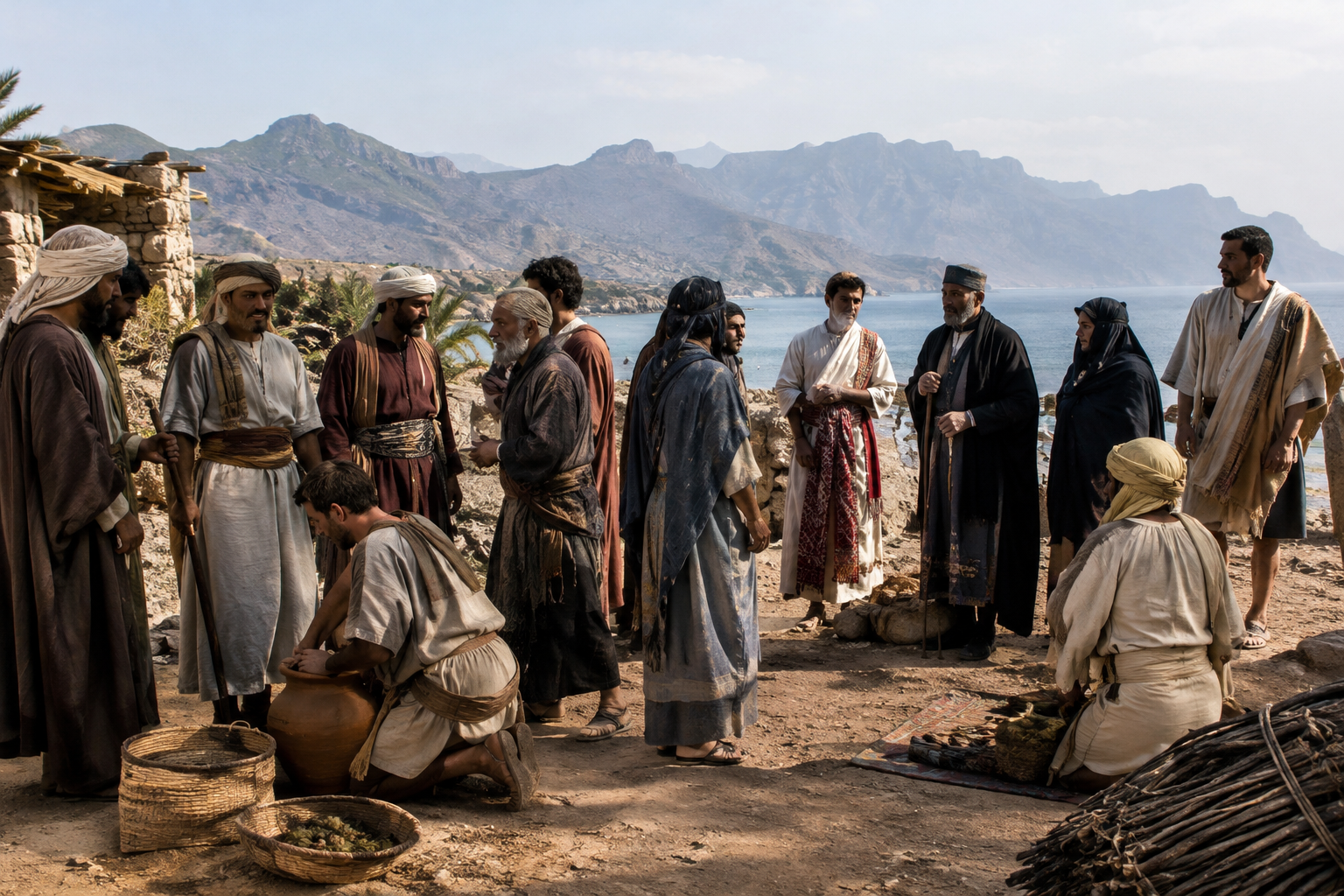
Several later samples place this haplogroup in the Punic world of western Sicily. I7261 comes from Marsala Lilybaeum and is dated to around 350 BC in a Punic context. I21857, dated to around 267 BC, is described as Carthaginian-era Mozia, western Sicily, Lilybaeum. These are not random inland finds. They come from one of the most contested and connected coastal zones in the central Mediterranean.
By the fourth and third centuries BC, Motya and Lilybaeum sat in a landscape shaped by Phoenician settlement, Carthaginian power, Greek rivalry, and eventually Roman expansion. A Y-line like G2a2b2a1a1c1 appearing here does not tell us that all these men were colonists from one city, nor that they were close paternal kin. What it does suggest is that this branch circulated within communities participating in Punic Sicily's maritime world.
That world was anything but isolated. Goods, people, soldiers, merchants, and families moved constantly between North Africa, Sicily, Sardinia, and other Mediterranean shores. An ancient DNA study of Punic-associated populations in the central and western Mediterranean, published in Science, has drawn attention to exactly this diversity: Punic communities were often genetically mixed rather than simple transplanted populations.
Seen in that light, this haplogroup's Sicilian cluster is especially useful. It is not merely "from Carthage" or "from Sicily." It appears in a region where local Bronze Age inheritance and first-millennium BC mobility could meet in the same family histories.
The branch also turns up beyond western Sicily proper. Sample I22115 comes from Phoenician-era Tharros in Sardinia, dated to around 675 BC. Tharros was one of the major Phoenician and later Punic centres of the island, a place embedded in the same sea-lanes that linked Sardinia to Sicily and North Africa. That connection broadens the picture: this was not a lineage confined to one settlement, but one present across the island networks of the central Mediterranean.
Then there is I21850, a Roman-period Carthaginian outlier from Palermo in Sicily, dated around 18 BC. Even the phrase "Carthaginian outlier" is revealing. By the late first century BC, Carthage had been destroyed and refounded under Rome, while Sicily had long been under Roman rule. Yet individuals with distinctive ancestry profiles connected to earlier Punic or North African-linked populations could still be identified in Roman settings.
Palermo, ancient Panormus, was exactly the sort of city where such complexity belongs. It had Phoenician roots, Punic importance, and a Roman future. A man there carrying this paternal line in the Roman period fits the broader historical truth that Roman cities were not blank slates laid over emptied landscapes; they were crowded inheritances, full of old families, newcomers, and people whose ancestry did not match any single political label.
The oldest sample in this set is I15620 from Bodrogkeresztur, Urziceni in Romania, dated to around 4000 BC. That is a very different world from Punic Sicily: Chalcolithic communities in the Carpathian Basin and lower Danube region, long before classical antiquity and long before Phoenician expansion.
This one sample matters because it stops us telling a lazy story. If G2a2b2a1a1c1, or a reported association with that branch, appears in Chalcolithic Romania, then the later island cases belong to a much deeper Eurasian prehistory. The branch may have reached the central Mediterranean through many intervening generations, local survivals, and regional movements that we cannot reconstruct from six men alone. But the broad outline is plain enough: this is a lineage with prehistoric depth that later surfaces in highly connected maritime societies.
That combination is a familiar pattern in archaeogenetics. Ancient ports often contain lineages with surprisingly old regional roots, because mobility does not replace everyone at once. It accumulates on top of earlier populations. In the case of G2a2b2a1a1c1, the evidence presently leans toward continuity mixed with circulation, not a neat one-off migration tale.
For anyone researching haplogroup G2a2b2a1a1c1, the most distinctive feature of the current ancient evidence is its concentration in Sicily and the wider Punic-Phoenician island world, combined with a much older prehistoric appearance in Romania. That is a rather good reminder that paternal ancestry can preserve both deep time and historical mobility at once. Your direct male line may connect, not to a single people in the simplistic sense, but to the long-lived human traffic of the Mediterranean, where prehistoric inheritance and later colonial exchange were constantly meeting.
Comments