Haplogroup G2a2b2a1a1b1a1a1a1b4b

– 5 min read


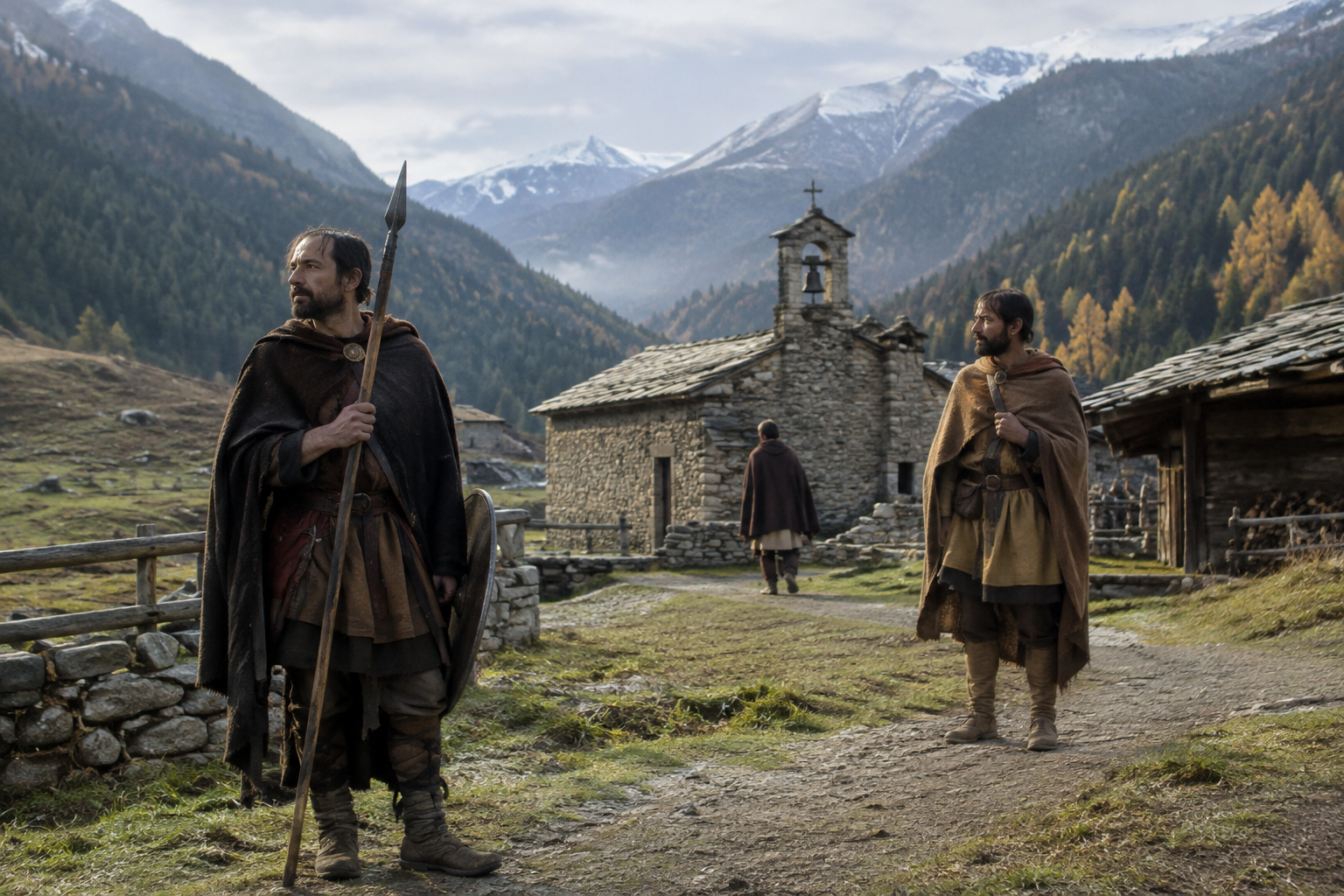
At Malles Burgusio Santo Stefano in South Tyrol, two men dated to around AD 450 stand out for a very specific reason. The ancient individuals identified as 2427_13 and 2427_33 are both associated here with the Y-DNA haplogroup G2a2b2a1a1b1a1a1a1b4b, placing this otherwise very narrow paternal line inside a sharply defined archaeological setting: the Alpine world at the end of Roman rule in northern Italy.
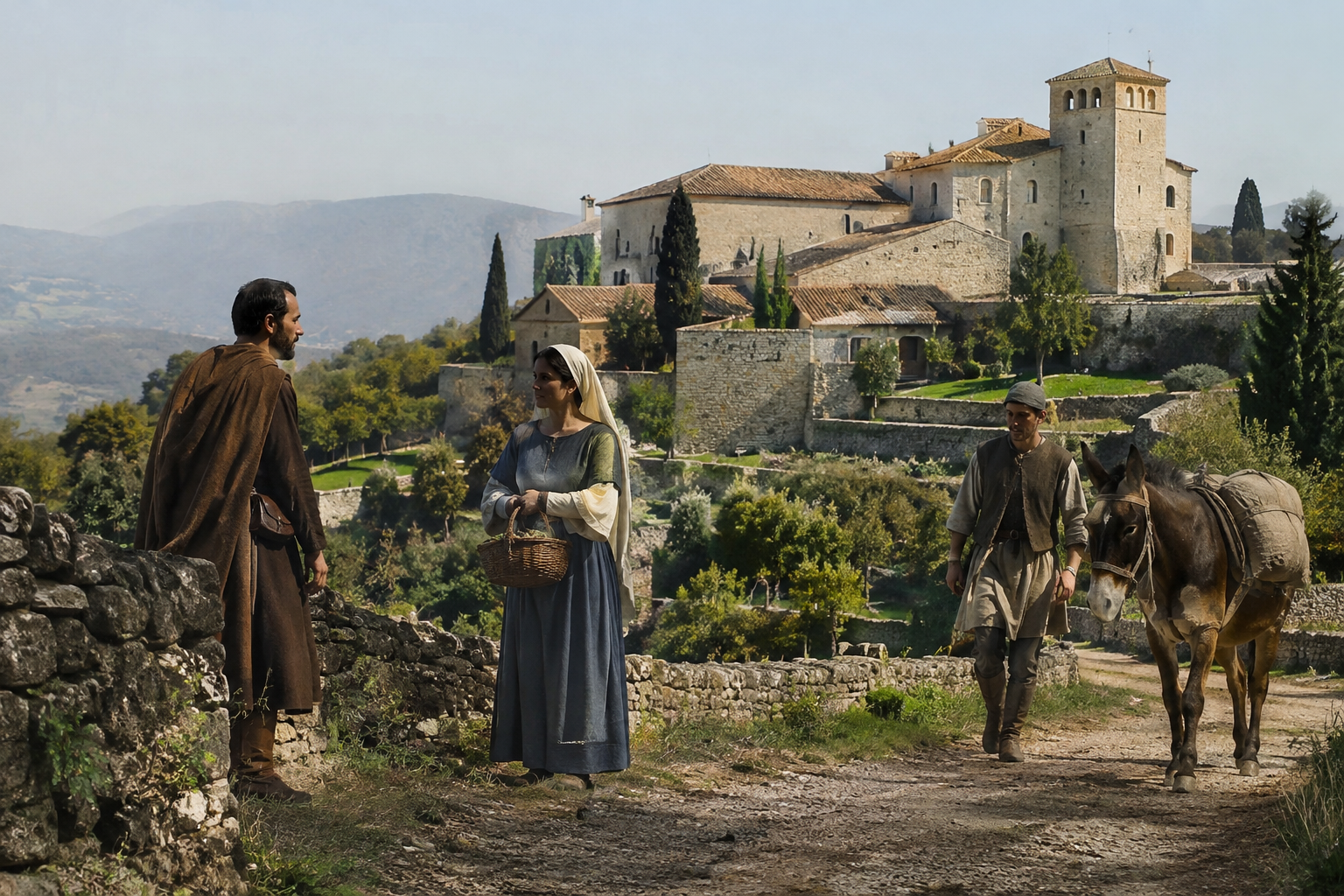
That setting matters. South Tyrol was not some remote corner cut off from events. It sat on one of the great north-south corridors through the Alps, a place where soldiers, farmers, clerics, traders, and migrants passed between the Italian peninsula and the transalpine regions. A tiny paternal lineage found here in the fifth century does not tell us everything about these men's ancestry, but it does anchor one direct male line in a frontier landscape where Late Antiquity was giving way to the early Middle Ages.
The site name alone tells you something about the complexity of the place. Malles and Burgusio belong to the Upper Vinschgau valley, close to routes linking the Adige basin with the central Alpine passes. By around AD 450, the western Roman Empire was in visible retreat, yet communities in the Alpine arc did not simply vanish into historical fog. Cemeteries, churches, settlements, and reused local landscapes show continuity as well as change.
That is why the pairing of 2427_13 and 2427_33 is so interesting. We are not looking at a single isolated male whose lineage might be dismissed as an accident of sampling. Two men from the same site, in the same broad period, linked here to the same very narrow paternal branch, suggest that this line was genuinely present in the local or regional population.
An ancient DNA study of Alpine populations, including material from near the Tyrolean world, helps place such finds into a wider frame of long-term continuity and movement across the mountain zone: research on ancient genomes from the Alps. For a branch as specific as G2a2b2a1a1b1a1a1a1b4b, that broader context is indispensable, because a subclade this fine-grained only becomes meaningful when tied to real places and periods.
G2a is one of the best-known old European Y-DNA families in archaeogenetics. It appears repeatedly in Neolithic contexts connected with early farming, and for that reason it often carries a slightly misleading air of antiquity-as-destiny. But the article haplogroup here is not simply "G2a." It is the much narrower branch G2a2b2a1a1b1a1a1a1b4b, an extremely specific twig on a very large paternal tree.
That distinction is crucial. A man carrying this branch in AD 450 was not automatically a direct social representative of the first Neolithic farmers, nor can we infer his language, identity, or legal status from Y-DNA alone. Y-chromosome data follows one paternal line only. What it does reveal, when securely tied to archaeology, is that some male lines with deep roots in European prehistory remained present in the Alpine zone even during the violent and mobile centuries around the fall of the western Empire.
There is a temptation, when confronted with very precise haplogroup strings, to treat them as if they must represent a famous clan or a dramatic migration event. Usually they do not. More often, what they reveal is persistence: the survival of local or regional paternal lines through periods that written history tends to describe mainly in terms of invasions, collapses, and ethnonyms.
That is exactly the value of 2427_13 and 2427_33. Even without inventing kinship or burial detail we do not have, the duplication of the same narrow lineage at Malles Burgusio Santo Stefano suggests that G2a2b2a1a1b1a1a1a1b4b was not a one-off curiosity there. It belonged to real men living in a community shaped by Alpine geography, Roman inheritance, and the unsettled politics of the fifth century.
This is especially useful in a region like South Tyrol, where later identities can easily be projected backwards. The fifth-century Alps were not neatly "Italian," "Germanic," or "Roman" in any simple ethnic sense. They were all of these things at once in different registers: administratively inherited from Rome, geographically tied to transalpine traffic, and culturally entangled with incoming as well as long-settled populations.
South Tyrol is one of those places where archaeology resists tidy stories. The valleys are routes, but also homes. People moved through them, but populations also endured within them. So when a narrow paternal lineage turns up in two men from around AD 450, we should think less in terms of a single "origin story" and more in terms of layered population history.
The broader G lineages have deep associations with early farming populations across parts of Europe, including regions south of the Alps. Yet the fifth century was also a time when military service, resettlement, marriage networks, ecclesiastical connections, and local continuity could all bring different ancestries together in one burial ground. The significance of Malles Burgusio Santo Stefano is therefore not that it proves one migration route, but that it captures a real paternal thread inside this mixed historical landscape.
That wider pattern is echoed in other early medieval genetic studies from western and central Europe, where communities once labeled in blunt cultural terms turn out to have been biologically varied and historically complex.
One of the most useful lessons from ancient DNA is that large political change does not erase all local genetic structure. Empires fall noisily; paternal lines often continue quietly. The men 2427_13 and 2427_33 lived at a moment when imperial institutions in the west were fragmenting, but their Y-DNA suggests a male line that had already passed through many earlier centuries before reaching this fifth-century cemetery.
That does not make them relics. On the contrary, it makes them excellent witnesses to transition. Their branch shows that the making of early medieval Europe involved not just newcomers moving into former Roman territories, but also long-established local families and communities carrying forward their own lineages into a changed world.
This is one reason the old opposition between "Romans" and "barbarians" has become harder to sustain archaeologically. In frontier and corridor regions, lived reality was more granular. A cemetery can contain evidence of continuity, mixture, and adaptation all at once.
Germanic Languages and Genomics
If your own direct paternal line falls under G2a2b2a1a1b1a1a1a1b4b, these South Tyrolean individuals offer something better than a grand myth. They offer a documented foothold. Around AD 450, this branch was present among men buried in the Alpine borderlands of northern Italy, in a community living through the long transformation from Roman province to early medieval society.
That is the distinctive insight here: not a royal claim, not a tribal label, but a rare glimpse of a very specific paternal line surviving in one of Europe's most important historical crossroads. For family historians, that kind of evidence is modest, concrete, and immensely valuable.
Comments