Haplogroup G2a2b2a

– 6 min read



Some Y-DNA haplogroups arrive in the ancient record with the air of conquerors. Others appear more quietly, but in some ways more intriguingly, across very different places and periods. Haplogroup G2a2b2a belongs to that second category. It turns up in early farming contexts, in Bronze Age communities, in Iron Age burials, in Roman-era cemeteries, and again in the unstable centuries after Rome. Not as the banner of one single people, language, or kingdom, but as a durable paternal thread moving through the Mediterranean, the Balkans, and central Europe.
That is exactly what makes it historically interesting. Y-DNA tracks one direct paternal line only: father to son to son across time. It does not represent a person's whole ancestry, still less a whole nation's. But because it is so narrowly focused, it can preserve startlingly old patterns. In the case of G2a2b2a, ancient DNA suggests a lineage with deep roots in the worlds of early farmers and later regional populations, surviving through enormous social change.
Haplogroup G is one of the old and important branches of the Y-chromosome tree in western Eurasia. Broadly speaking, branches of G are especially well known from the story of the Neolithic expansion, when farming spread into Europe from Anatolia and neighboring regions. But one must be careful here: the full history of haplogroup G is not automatically the full history of the narrower branch G2a2b2a. Specific subclades often had their own regional trajectories, local survivals, and later movements.
What the supplied ancient samples show is not a neat single migration map, but something more historically believable: presence in multiple connected zones of prehistoric and historic Europe and the eastern Mediterranean. We find this lineage in Albania, Austria, Ukraine, Greece, Crete, Sardinia, France, Germany, Serbia, Italy, and even Lebanon. That spread suggests that G2a2b2a was part of the complicated human traffic linking the Balkans, the Aegean, the central European plain, and the Mediterranean islands over thousands of years.
Explore the Neolithic Expansion
The earliest clues in this dataset point toward the Neolithic and Copper Age world. I24281, from the Neolithic Massacre Austria Asparn Schletz dated to 5000 BC, places this paternal line in one of the most unsettling archaeological settings in early European farming history. Schletz is remembered not for calm village life but for violence on a frightening scale. To find G2a2b2a there is a reminder that early farming Europe was not merely a story of peaceful spread and village stability. These lineages belonged to real communities exposed to conflict, competition, and collapse.
Another early sample, I13838 from Neolithic Tren Cave Albania dated to 4250 BC, anchors the haplogroup in the Balkans, a region crucial to the movement of people and ideas between the Aegean and the European interior. Then there is I2110 from Trypillian Verteba Cave Ukraine dated to 3800 BC, linking the lineage to one of eastern Europe's great prehistoric farming traditions. The Trypillian world, with its large settlements and long-distance contacts, is exactly the sort of environment in which paternal lines could spread, divide, and survive in new regional forms.
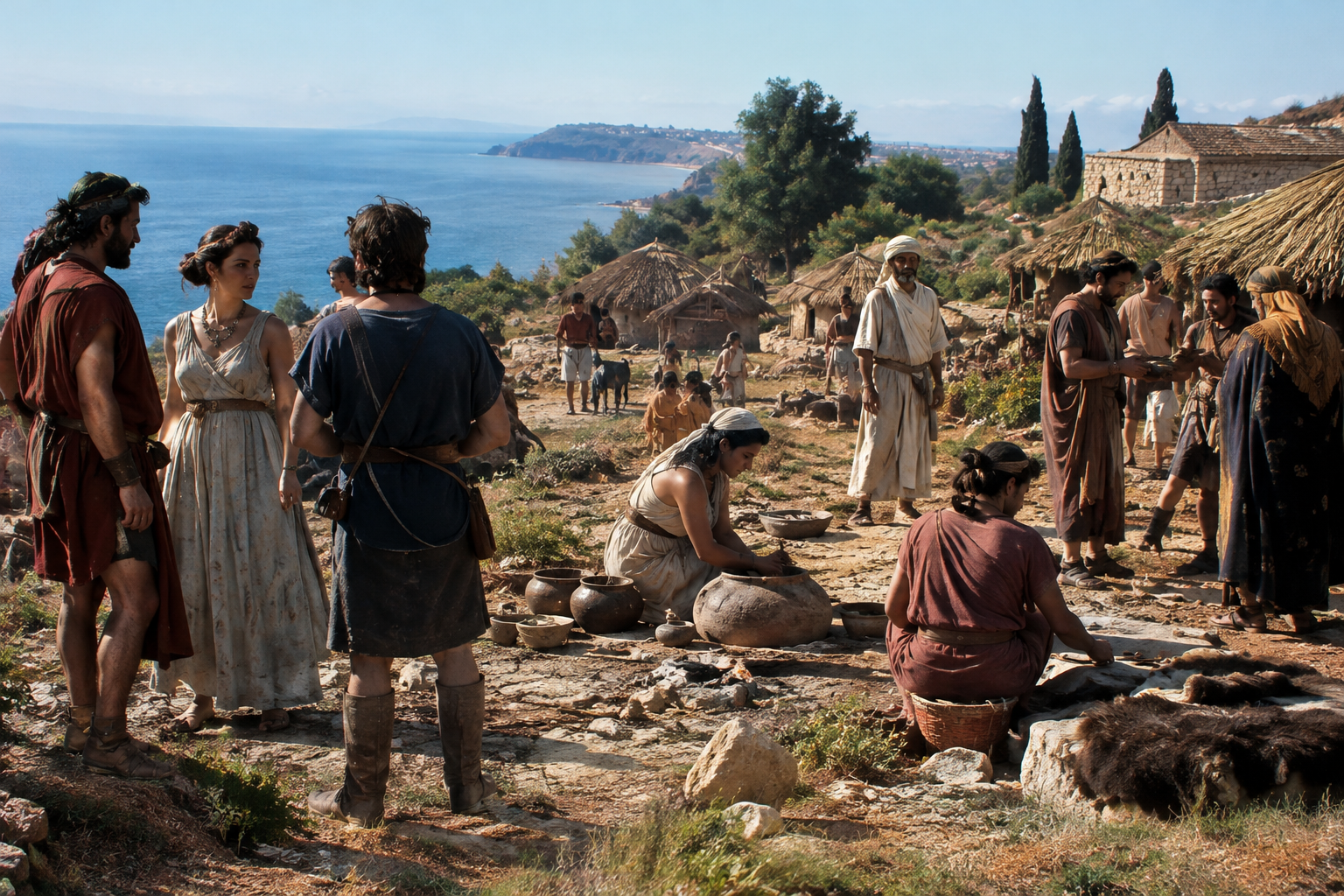
By the Bronze Age the picture becomes even wider. G62, from Early Bronze Age Greece Corinthia Perachora dated to 2200 BC, shows the lineage in the Greek mainland. XAN014, from Minoan Period Crete Chania dated to 1575 BC, takes it to Minoan Crete. LON003_LON004, from Early Bronze Age Sardinia dated to 2200 BC, and MIG012, from Early Bronze Age Mikulovice Czech dated to 1700 BC, show it both on a western Mediterranean island and in central Europe.
And then there is MAJ003, from Early Bronze Age Ukraine Mayaki Yamnaya dated to 2669 BC. That does not mean G2a2b2a was somehow "the Yamnaya haplogroup" - far from it. But it does show that this paternal branch could be present in communities tied to the steppe horizon as well as in older farming landscapes. That is an important warning against tidy stories. Ancient populations were mixed, mobile, and often more locally varied than popular summaries allow.
Discover Prehistoric Aegean DNA
By the Iron Age, G2a2b2a appears in settings that would once have been treated as entirely separate historical worlds. MBG012, from the Elite Celtic Burial Germany Magdalenenberg Villingen-Schweningen dated to 530 BC, places the lineage in an elite burial context associated with the Celtic world of southwest Germany. This is particularly striking because it shows the line not merely surviving but appearing in a socially prominent context.
To the west, I21400 from Gallic Chemin de Coupetz Marne France dated to 250 BC places it in Iron Age Gaul. To the south, I22090 from Carthaginian Sardinia Tharros dated to 400 BC shows the same paternal branch in a Punic colonial and commercial setting. These are not proofs of one continuous aristocratic bloodline stretching across Europe and the Mediterranean. They are something more interesting historically: evidence that the same paternal lineage could be carried by men living in very different cultural and political worlds.
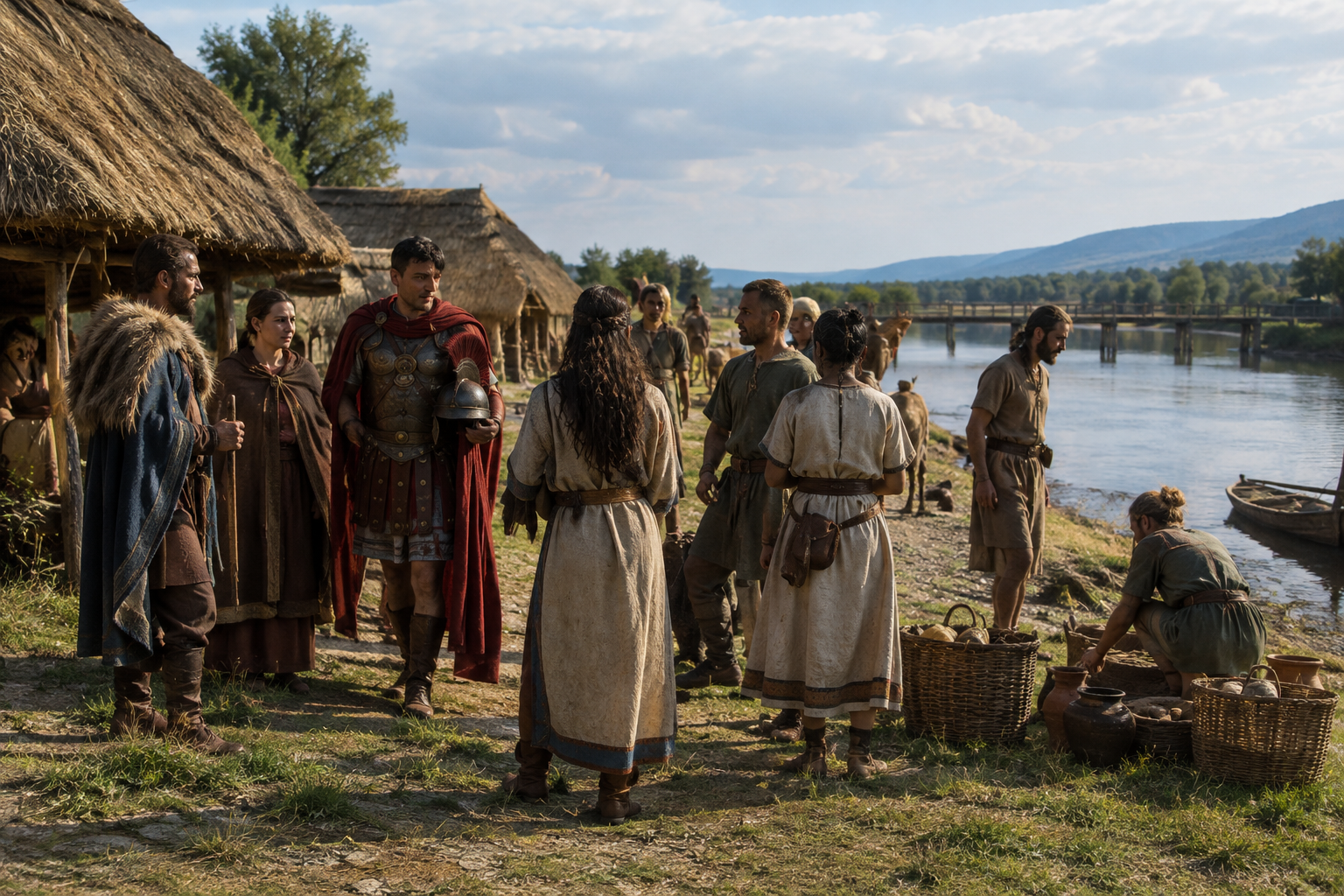
The Roman period continues the story of mobility. I15516, from the Late Roman Empire Viminacium Serbia Pirivoj Necropolis dated to 225 AD, belongs to one of the great frontier zones of the Roman Balkans, where soldiers, merchants, local families, and imperial administrators met. SFI-11, from Saifi Roman Republic Lebanon dated to 46 BC, reminds us that this branch also belonged to the eastern Mediterranean, not only to Europe.
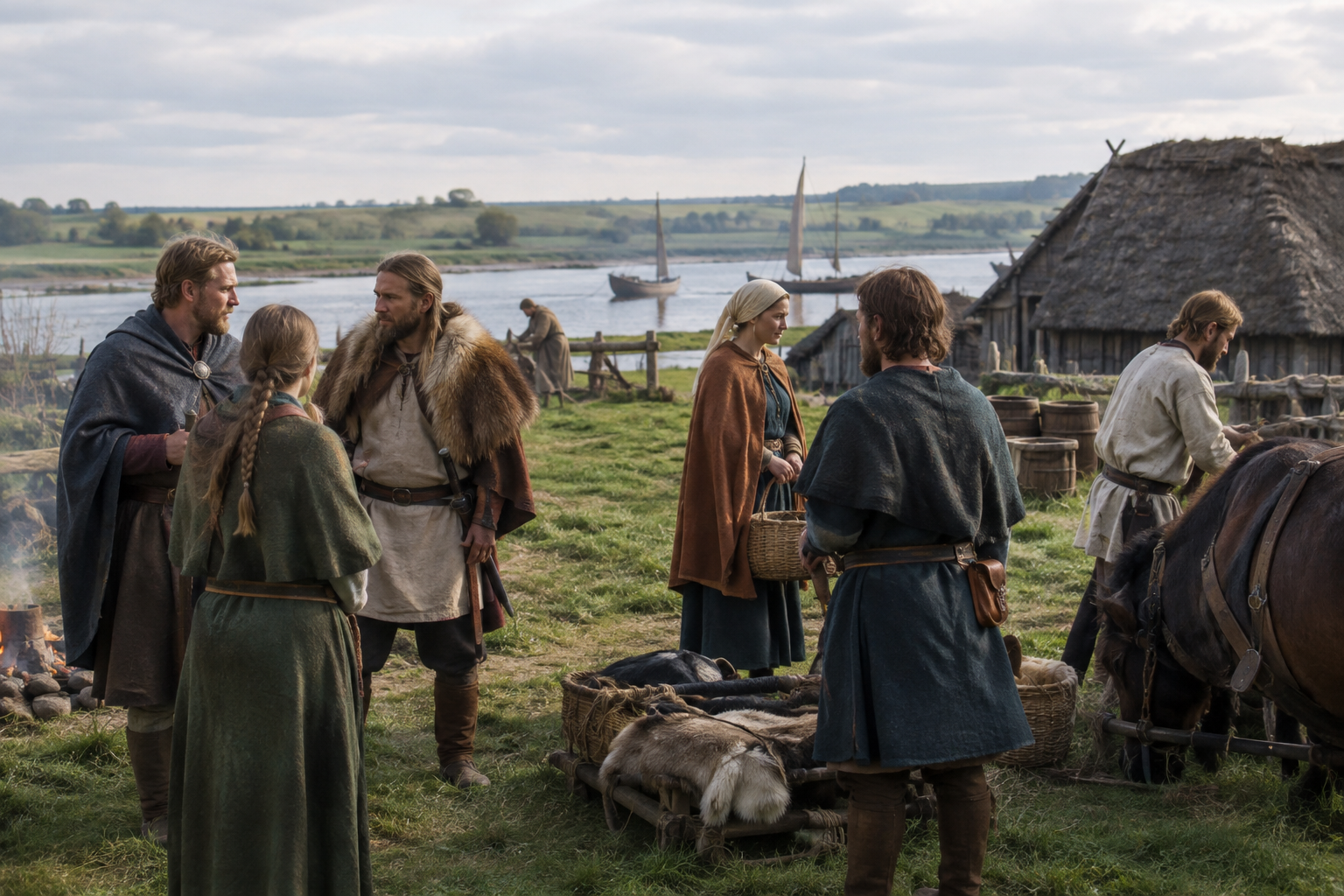
After Rome, the pattern does not vanish. IND015, from Post Roman Era North Rhine-Westphalia Germany Alt-Inden dated to 600 AD, and VEN022, from Early Medieval Venosa Italy dated to 736 AD, show continuity into the early medieval period in both the Rhineland and southern Italy. In other words, G2a2b2a was still there when Roman institutions had fractured and new regional societies were taking shape.
Explore the Roman-German Frontier
The most responsible way to connect an ancient Y-DNA lineage like G2a2b2a to the later historical world is not to leap straight to claims about famous surnames. It is to think geographically and structurally. Noble families, castles, and dynasties emerged in regions already inhabited for millennia by paternal lines such as these. Medieval lordship did not spring from nowhere. It took shape on landscapes where older lineages, newer migrants, soldiers, farmers, clerics, and local elites had long been mixing.
That matters because people often imagine genetics and genealogy as doing the same job. They do not. A written pedigree may take a noble house back a few centuries with confidence. Ancient DNA can take us far deeper, but usually in broader strokes. If a later family is historically associated with regions such as the Rhineland, the Balkans, northern Italy, southern Germany, or the Mediterranean islands, the presence of G2a2b2a in ancient individuals from those same zones provides context, not proof. It tells us that this paternal branch formed part of the long human background from which medieval societies emerged.
So if one thinks of castles and ancestral seats in these regions - stone fortresses above river valleys, hilltop strongholds, administrative manors, cathedral towns turned noble centers - they should be seen as chapters in a much longer history of settlement. The castle is late; the landscape is old. The documents may begin in the Middle Ages, but the paternal lines beneath them can be far older.
Read About Roman to Medieval Italy
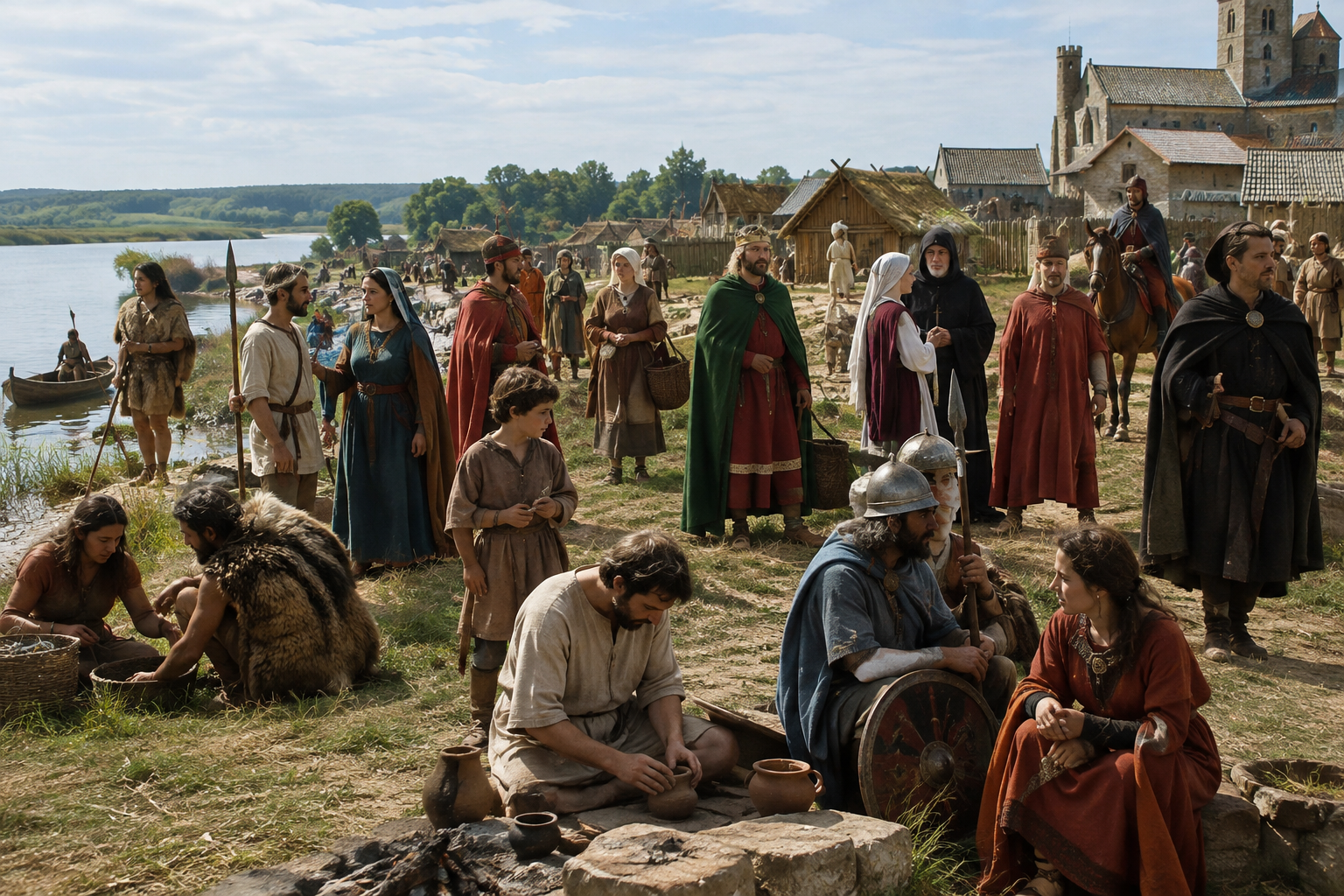
What makes G2a2b2a so revealing is not that it belongs to one dramatic empire or one famous migration. It is that it helps us see continuity across disruption. Early farmers in Austria and Albania. A Trypillian cave in Ukraine. Bronze Age mainland Greece, Crete, Sardinia, and the Czech lands. Celtic and Gallic burials. Roman Serbia and Roman Republic Lebanon. Post-Roman Germany and early medieval Italy. The same paternal branch appears again and again, not unchanged in social meaning, but persistent in human reality.
That is one of the great lessons of archaeogenetics. Ancient DNA does not flatten history; it complicates it. A haplogroup is not an ethnicity. A subclade is not a kingdom. And sharing a Y-DNA branch with an ancient individual does not prove direct descent from that person, still less membership in a noble dynasty. But it can place your paternal line inside a very old historical map, one drawn not by legend but by excavated graves, caves, necropoleis, and settlements.
If this mix of central European, Balkan, and Mediterranean evidence interests you, you may also enjoy looking at how language and mobility intersect in Ancient DNA Reveals Central European Origins and Spread of Celtic Languages.
Explore Ancient Celtic Origins
Haplogroup G2a2b2a shows how a single paternal line can pass through caves, villages, elite burials, Roman necropoleis, and medieval landscapes without belonging to just one people or one story. MyTrueAncestry lets you explore those deeper connections by comparing your DNA with ancient samples from the archaeological record. The results can offer remarkable historical perspective, even though they do not by themselves prove direct descent from a specific ancient individual or noble family.
Comments