Haplogroup G2a2a

– 5 min read


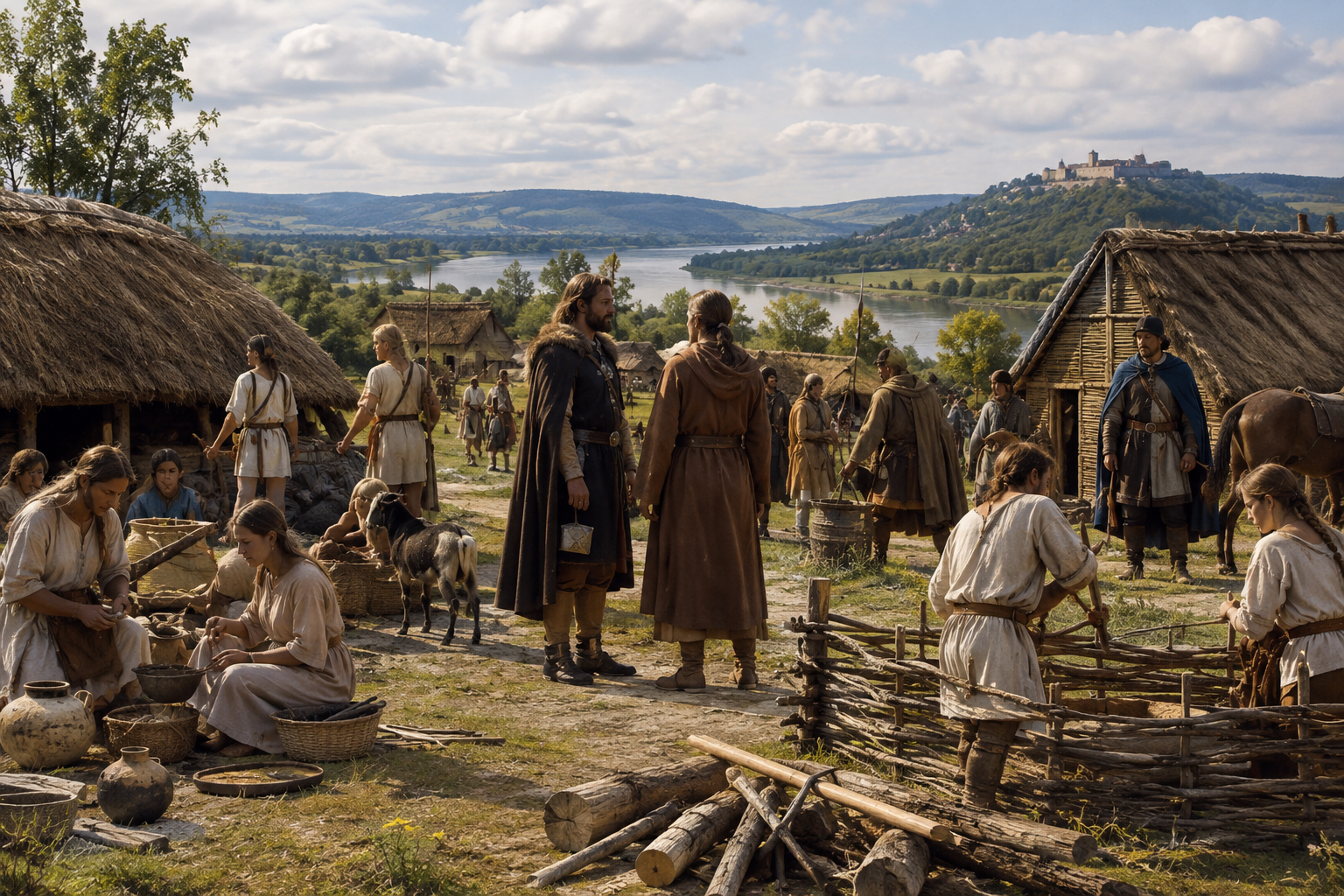
At Fellbach-Oeffingen in Baden-Wuerttemberg, several men buried in the Linearbandkeramik, or LBK, horizon around 5100 BC carry the same Y-chromosome branch: G2a2a. Their sample IDs - FO146, FO47, FO127, and FO131 - are a useful reminder that some paternal lineages are not defined by a single glamorous grave, but by repetition across an early farming community. In this case, the pattern matters: G2a2a appears not on the fringes of Neolithic Europe, but right inside one of its best-known early agricultural worlds.
That makes G2a2a historically interesting. Y-DNA follows one direct male line only - father to son across generations - so it does not describe the whole ancestry of any person or population. But when the same branch turns up in multiple early Neolithic burials, then later in Copper and Bronze Age Switzerland, on Minoan-period Crete, in Bronze Age Italy, and again in a Longobard-period context in Pannonia, it begins to sketch a stubbornly durable paternal history across the Mediterranean and central Europe.
The strongest concentration here comes from early farming Germany. Alongside the Fellbach-Oeffingen men, G2a2a is also reported at Niederpoering in Bavaria with sample NP410, dated around 5200 BC, and at Halberstadt-Sonntagsfeld with samples I0056 and I0048, dated around 5052 BC. These are not all the same site, nor should they be treated as one family, but together they place the haplogroup squarely within the spread of early Neolithic farmers north of the Alps.
That matters because the LBK phenomenon was one of the great social reorganizations of European prehistory: new domestic plants and animals, new house forms, new settlement patterns, and, quite often, new people arriving with them. A major ancient DNA study of early European farmers helped establish how strongly these first agricultural populations were connected to migrations from Anatolia into southeastern and then central Europe, rather than farming being adopted locally without much movement of people; see this ancient DNA research on Europe's first farmers. G2a lineages have long been associated with that early farmer horizon, and these G2a2a cases fit that broader picture well.
It is worth being careful with the scale of the claim. These German burials do not mean every LBK man belonged to G2a2a, and they do not make G2a2a the only paternal line of Europe's first farmers. What they do show is that this particular branch was established early, repeatedly, and in communities central to the Neolithic transformation of Europe.
The branch also appears farther southeast and southwest in the early and later Neolithic record. Sample I11270 from ancient Bulgaria, near Veliko Tarnovo and dated around 5725 BC, places G2a2a in the Balkan sphere very early indeed. That is exactly the kind of region one would expect to matter in the movement of farming populations from the Aegean and Anatolia into continental Europe.
Then the evidence becomes especially dense again in Switzerland. At Aesch, a Late Neolithic site, a remarkable cluster of individuals - Aesch7, Aesch22, Aesch12, Aesch1, Aesch21, Aesch20, Aesch19, Aesch13, Aesch23, Aesch17, Aesch4, and Aesch14 - is associated with G2a2a, dating broadly between about 3015 BC and 2820 BC. Additional Swiss examples include MX219 from Oberbipp, around 3300 BC, and MX298 from Wartau, around 2510 BC.
This is not just more of the same. By the late 4th and 3rd millennia BC, central Europe was changing fast, with shifting burial customs, regional networks, and increasing interaction between farming communities and populations carrying more steppe-related ancestry. The Swiss G2a2a cases suggest that paternal lines rooted in the earlier farming world did not simply vanish when new cultural horizons appeared. They could persist locally, sometimes in substantial numbers, through centuries of social change.
Research on Swiss Late Neolithic human remains has helped illuminate those communities from both biological and archaeological angles, including mobility and diet, and the Swiss material here is best read in that wider regional frame rather than as an isolated genetic curiosity; one relevant study can be found here.
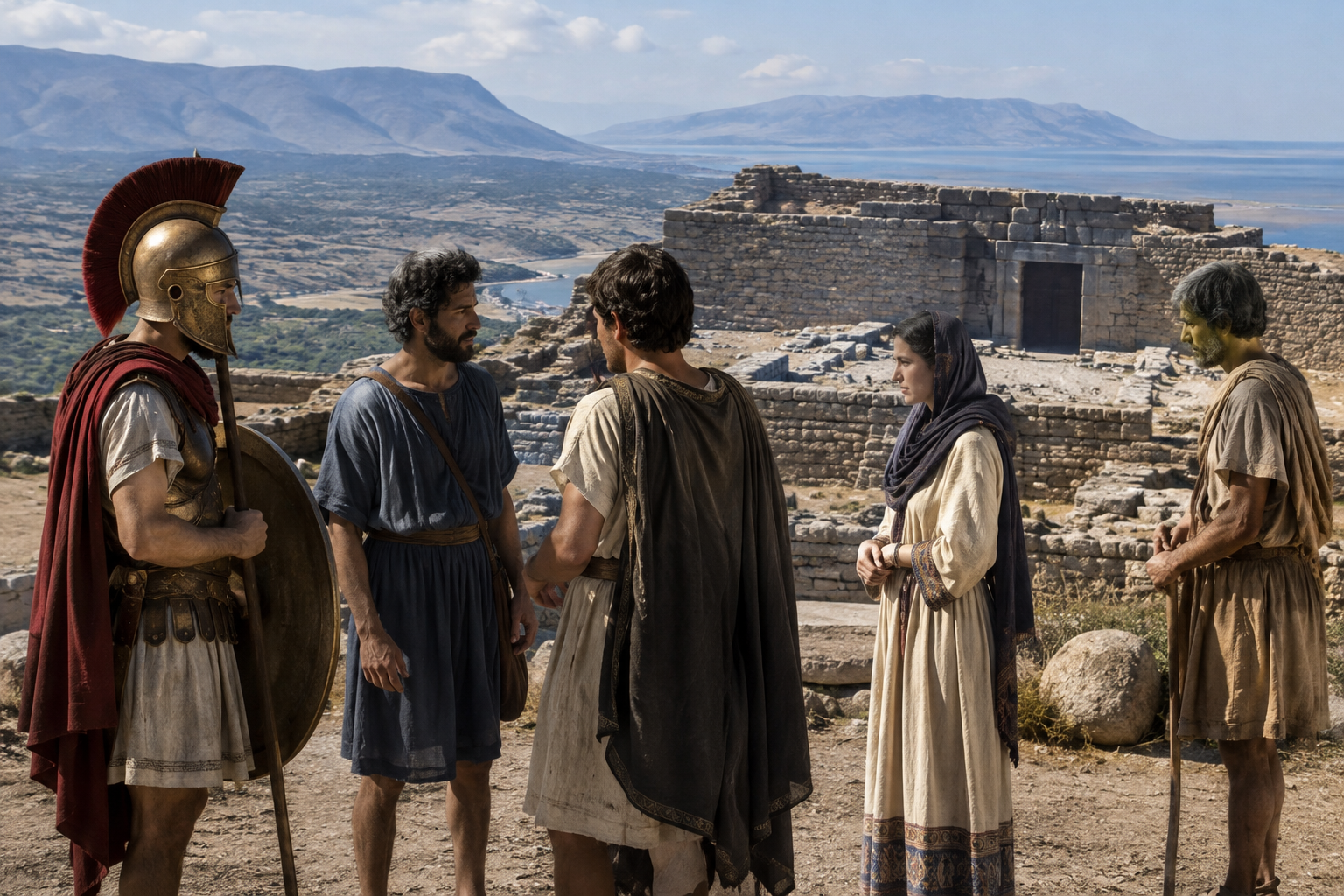
One of the most intriguing appearances of G2a2a in this group is XAN051 from Chania on Crete, dated to the Minoan period around 1575 BC. That does not make G2a2a a specifically "Minoan" haplogroup, still less a marker of Minoan ethnicity. But it does show that this paternal branch was present within the Aegean world long after the first Neolithic expansion.
That continuity is historically plausible. Farming spread into Europe through the Aegean long before the palaces of Bronze Age Crete rose to prominence, and some paternal lines from those early agricultural populations persisted in the eastern Mediterranean for millennia. A man from Minoan-period Chania carrying G2a2a is therefore not an exotic exception so much as a glimpse of deep demographic layering beneath later Bronze Age societies.
Italy offers another angle. Sample GCP002 from Grotta Regina Margherita, associated with an Italic tribal context and dated around 1550 BC, places the branch in Bronze Age peninsular Italy. Again, caution is needed: a site label or regional archaeological attribution does not turn a Y-lineage into an ethnic badge. Still, taken together with Crete and the central European finds, the Italian sample shows G2a2a moving through a world of farmers, herders, and regional communities linked by trade, migration, and long local continuity.
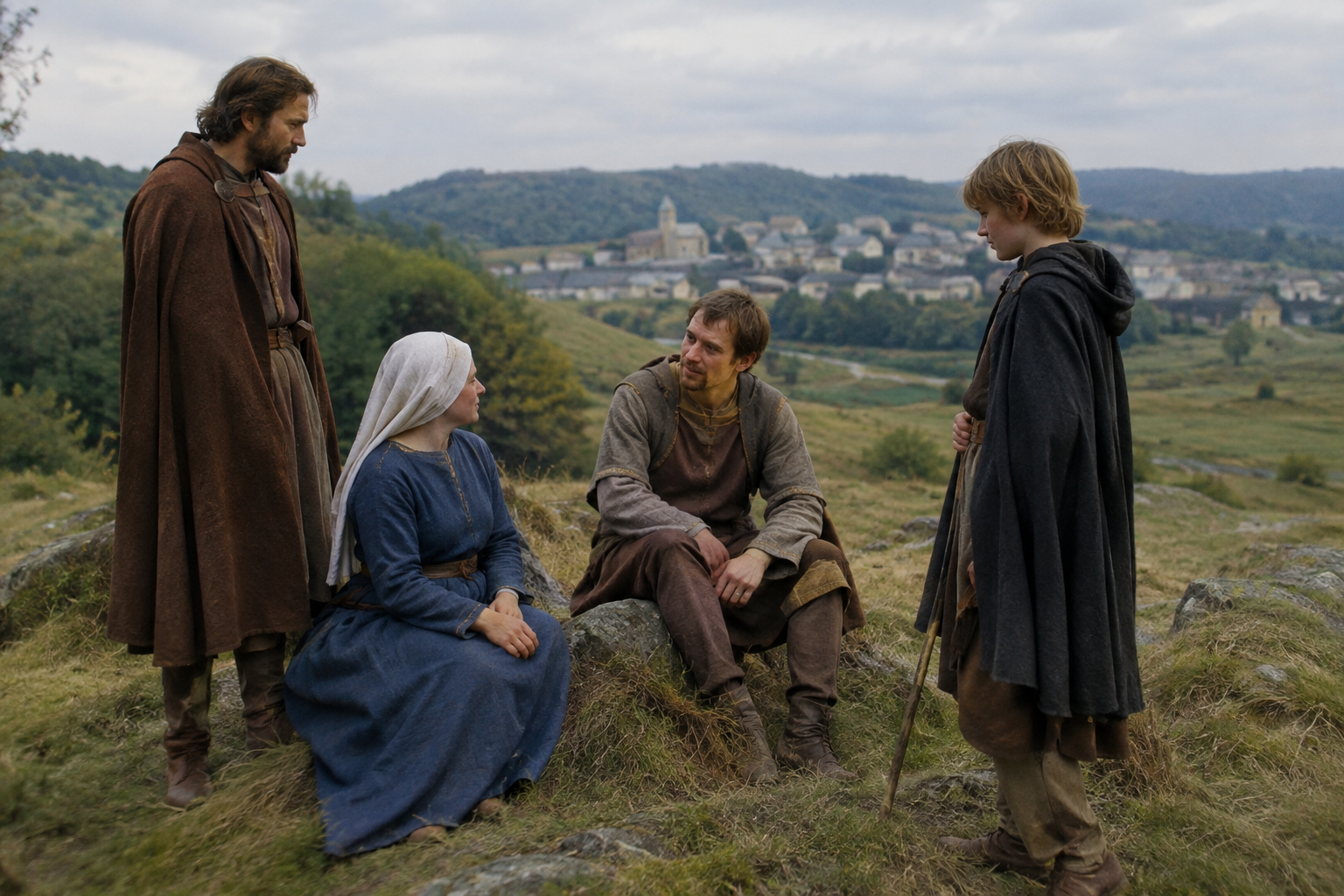
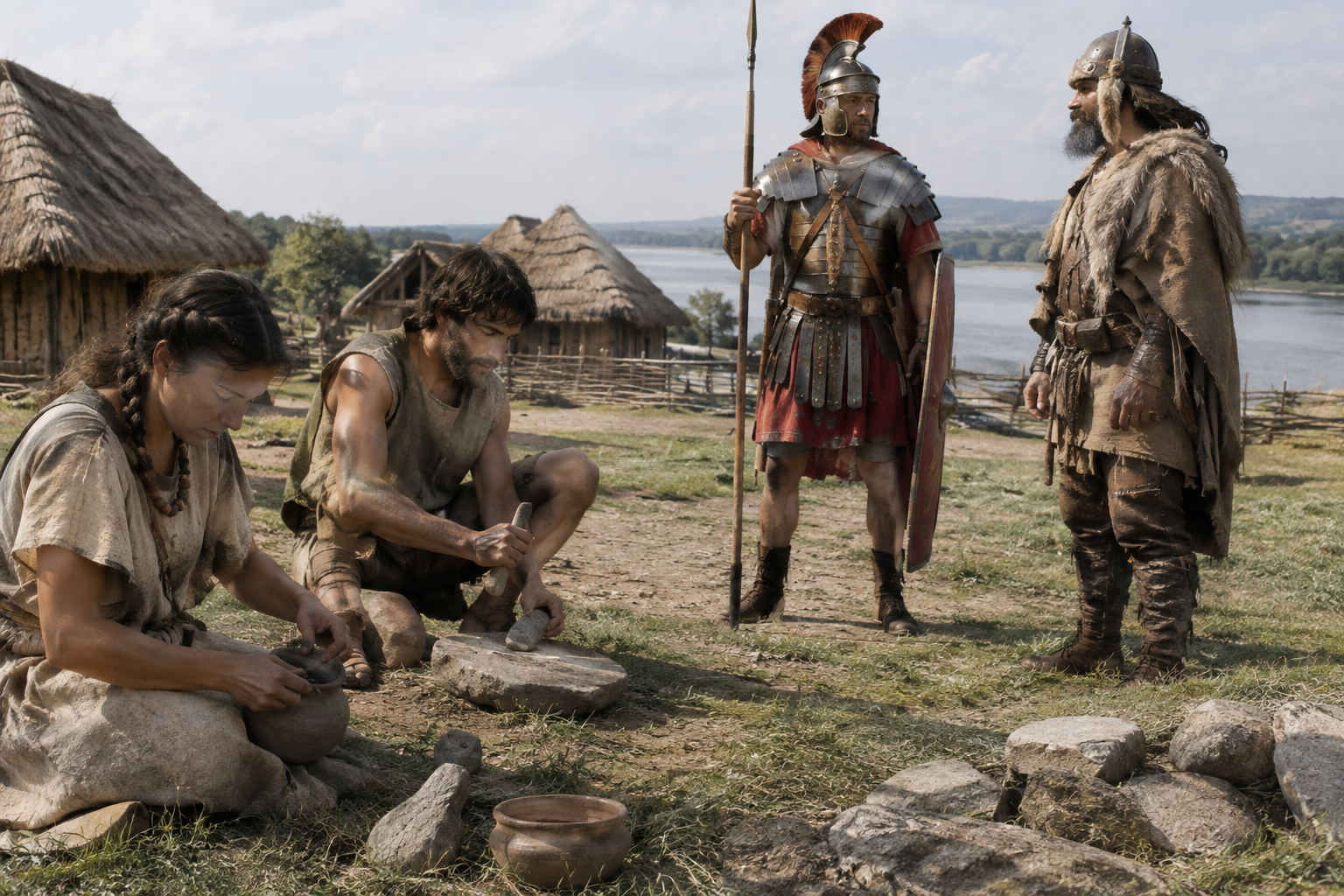
The latest sample in this set, MFC001, comes from Arrabona-Menfocsanak in Hungary, in the Roman borderlands of Pannonia, dated around AD 550 and described in a Longobard Barbaricum context. This is a very different world from LBK villages or Swiss Late Neolithic cemeteries. By the 6th century AD, the middle Danube was a frontier zone shaped by the collapse of Roman power, military mobility, local continuity, and the movement of groups conventionally labeled "barbarian" in late antique sources.
That is precisely why MFC001 is so useful. G2a2a does not disappear after prehistory; it survives into the early medieval period in a region famous for mixed populations and layered identities. A Longobard-period burial carrying this lineage should not be read as proof of some simple, unbroken tribal descent from Neolithic farmers. But it does show that very old European paternal lines could remain part of the human landscape even in periods usually narrated through migration and conquest.
Ancient DNA work on post-Roman populations in the Carpathian Basin has increasingly emphasized this complexity: frontier communities were often blends of locals, newcomers, and people with diverse family histories. In that setting, a G2a2a lineage is less a neat ethnic label than evidence of depth beneath historical change.
If one theme runs through these samples, it is persistence. G2a2a appears early among some of Europe's first farmers in Germany and the Balkans; it remains visible in Alpine Late Neolithic communities; it turns up in Bronze Age Crete and Italy; and it is still present in the post-Roman middle Danube. That is a long career for a paternal branch.
For someone researching G2a2a today, the most responsible historical suggestion is not a single tribe, kingdom, or famous house. It is something older and, in its way, more interesting: a paternal line with deep roots in the Neolithic farming expansions of Europe, yet one that remained part of later Mediterranean and central European populations for thousands of years.
Comments