Haplogroup G2a1a1a1a1a1a1a1a1

– 5 min read


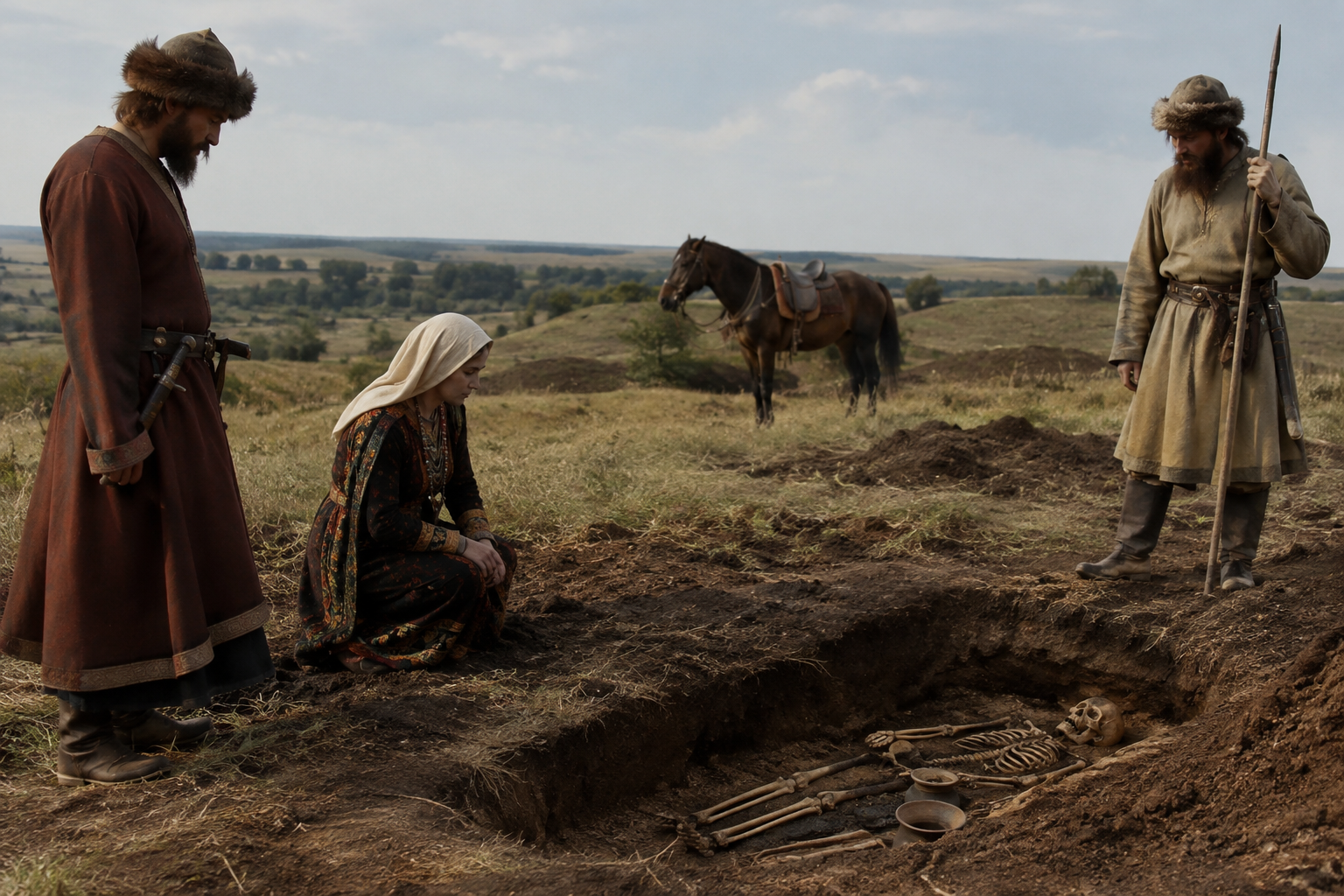
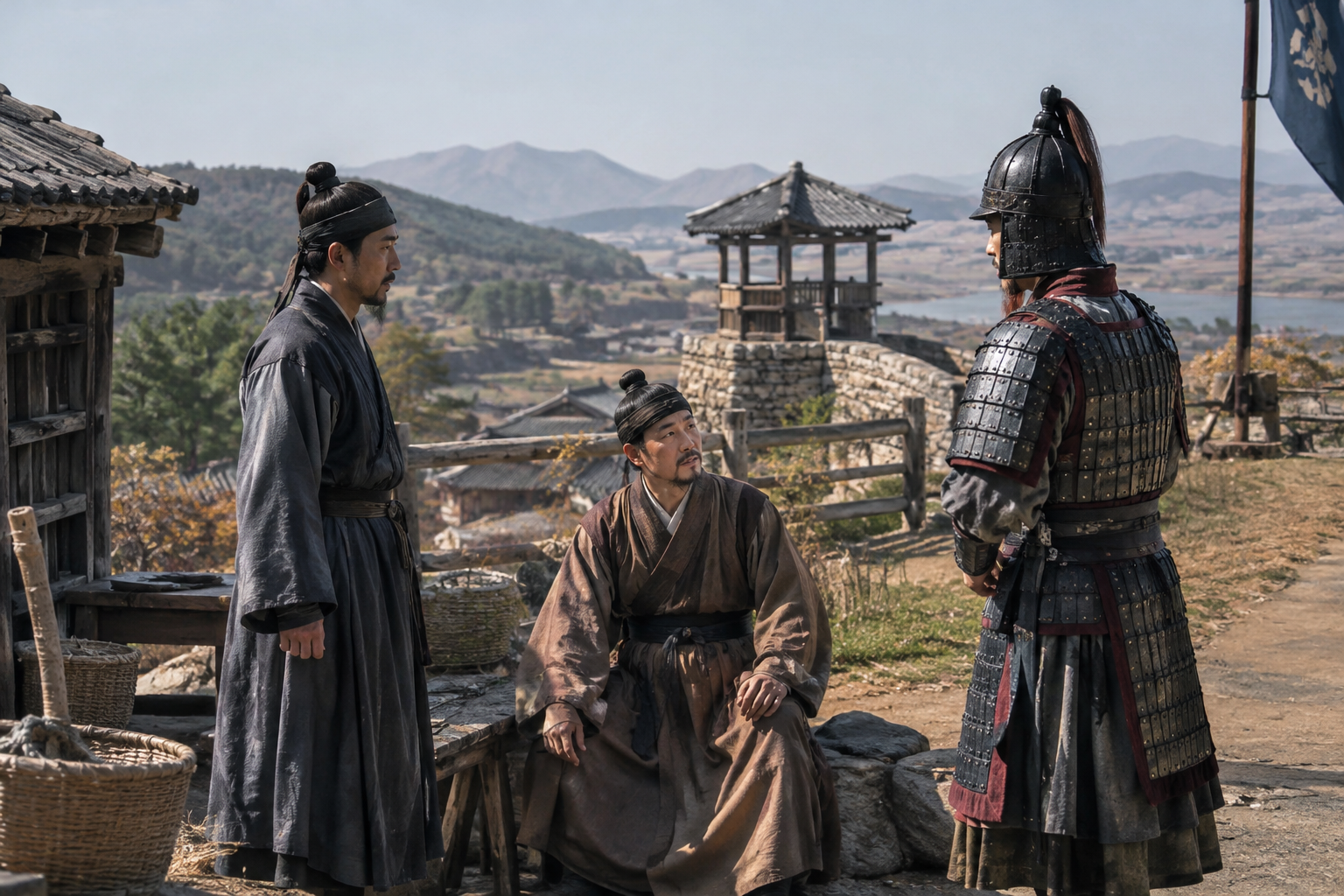
At Podgorovsky Cemetery in the Belgorod region of Russia, one early medieval man - sample DA190, dated to around AD 665 - offers a very specific glimpse into the paternal history carried today by men in haplogroup G2a1a1a1a1a1a1a1a1. He belonged to the Khazar-era world often associated with the Saltovo-Mayaki horizon, a frontier zone where steppe powers, farming settlements, traders, and mobile communities met each other in uneasy and productive proximity.
That matters because this is not one of those haplogroups that appears in the record with a neat, single-story label attached to it. G lineages are old and widespread across western Eurasia, but a very narrow branch like G2a1a1a1a1a1a1a1a1 is something much more precise: a direct paternal line, not a whole people, language, or kingdom. In the case of DA190, that line appears in a historically mixed borderland rather than in some tidy ethnic box.
The most important thing to keep in view is the setting. Podgorovsky Cemetery belongs to the wider northern fringe of the Khazar sphere, in the forest-steppe zone north of the Caucasus and north of the Black Sea interaction network. By the seventh century AD, this was a region of movement and negotiation, not a sealed tribal homeland. Archaeology from Saltovo-Mayaki contexts regularly shows exactly that sort of complexity: communities linked to steppe political structures, but also to local agricultural landscapes and long-distance exchange.
Within that world, DA190 is valuable precisely because he is so specific. He is not a literary stereotype such as "a Khazar" in the sweeping way medieval texts liked to categorize people. He is one excavated man from one cemetery, at one place and time, carrying one paternal branch. That is how ancient DNA is most useful: it narrows grand historical claims back down to real human evidence.
Saltovo-Mayaki frontier graves
A research project associated with these ancient genomes can be found at https://www.ebi.ac.uk/ena/browser/view/PRJEB20658. Even without turning that into more certainty than the evidence allows, the broader lesson is clear enough: early medieval frontier cemeteries in this region were not genetically uniform, and paternal lineages found there should be read as part of a mixed historical landscape.
There is a temptation with any rare-looking subclade to imagine a lost tribe, a forgotten royal house, or a dramatic migration route. Usually the evidence is less theatrical and more interesting. Haplogroup G2a as a wider family has deep roots in West Eurasia and is especially well known in ancient DNA because some early farming populations in Europe carried branches of G in substantial numbers. But that broad history does not automatically explain this much narrower lineage in seventh-century Belgorod.
So it is better to be exact. G2a1a1a1a1a1a1a1a1 identifies a paternal line descending through many branching generations from the larger G family. It traces one father-to-son chain among thousands of other ancestral lines any person would have had by AD 665. What DA190 shows is that this branch was present in a Khazar-era Saltovo-Mayaki-associated context in southwestern Russia. That is already significant, because it places the lineage inside a documented early medieval frontier society rather than leaving it floating in abstraction.
The Saltovo-Mayaki archaeological horizon has long interested historians because it sits at the intersection of steppe empires, Caucasian populations, and eastern European settlements. Material culture from such sites has been linked with groups under Khazar political influence, including Alanic and other frontier populations, though archaeology does not simply map one-to-one onto ethnicity. Ancient DNA fits that picture rather well: not by giving us a single "Khazar genome," but by showing that these cemeteries often contain people of varied backgrounds.
That makes a G-lineage here entirely plausible, and historically quite telling. The northern Black Sea and Caucasus-connected zone had been a corridor for movement for centuries before the Khazars emerged as a major power. Men carrying different paternal lines could be incorporated through alliance, local continuity, resettlement, service, marriage networks, or political integration. A burial in a Khazar-era cemetery does not mean the paternal line originated with the Khazar ruling elite; it means the line was part of that world.
That is one of the recurring lessons from steppe-border archaeology. Political confederations often gathered people who did not share one recent origin, one language, or one paternal ancestry. If your own Y-DNA falls into this branch, the most responsible historical parallel is not a claim of simple descent from "the Khazars," but an awareness that your paternal line was present in the human mosaic of the Khazar frontier.
Modern maps can make Belgorod seem peripheral, but in the seventh century this was part of a connected zone stretching between the Don basin, the Caucasus approaches, and the wider Pontic steppe. Empires and trading systems repeatedly drew this region into larger histories. That is why a single cemetery there matters. Podgorovsky was not an isolated curiosity; it was part of a corridor where mobility could leave genetic traces long before modern borders existed.
The result is that DA190 speaks less to isolation than to entanglement. A man buried in this region around AD 665 may have belonged to a local community shaped by generations of contact with incoming steppe groups, neighboring agricultural populations, and Caucasus-linked networks. His Y-DNA branch, G2a1a1a1a1a1a1a1a1, becomes historically interesting not because it proves a romantic origin story, but because it sits in exactly the kind of setting where lineages were being folded into new political and social worlds.
With only one named ancient individual here, caution is part of the story. We cannot honestly turn DA190 into the founder of a dynasty, the representative of an entire cemetery, or the emblem of all Saltovo-Mayaki populations. Nor should we assume that the exact ultra-fine terminal placement has been equally secure in every publication or database pipeline; ancient Y-DNA resolution can depend on coverage and later reanalysis.
Still, one good sample is not nothing. In haplogroup articles, the key question is often whether a branch can be anchored to a real archaeological context at all. For G2a1a1a1a1a1a1a1a1, DA190 provides that anchor: a seventh-century male from the Khazar-era Belgorod region, buried in a cemetery associated with one of early medieval eastern Europe's most hybrid frontier zones.
Mixed origins in 7th-century burials
What makes haplogroup G2a1a1a1a1a1a1a1a1 distinctive, on the present evidence, is not grandeur but placement. Its clearest ancient appearance here is in a man from Podgorovsky Cemetery living in the Khazar age, in a region where steppe power and local society were constantly being remade through contact. For someone researching this paternal branch today, that suggests a lineage with roots in the broader G family but a documented foothold in the early medieval north Pontic frontier - a place where ancestry was rarely simple and history was rarely still.
Comments