Haplogroup G2a1a1

– 5 min read


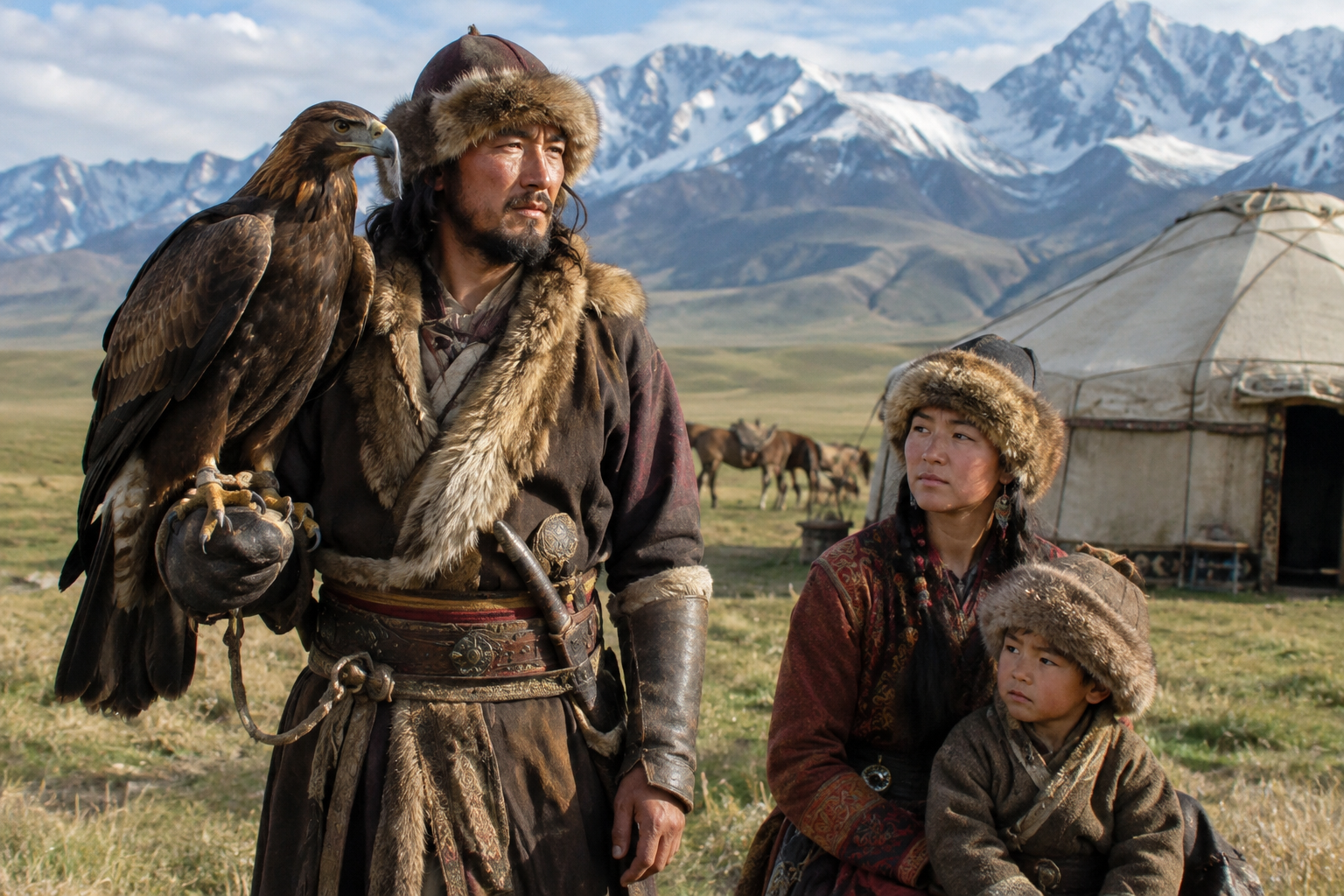
One of the more arresting appearances of Y-DNA haplogroup G2a1a1 in the ancient record comes from medieval Kyrgyzstan, where an individual labeled DA117 has been described as a medieval Turkic-speaking nomad dated to around AD 1250. That is already enough to make the case interesting. G lineages are often associated in popular discussion with much earlier farming populations of western Eurasia, so finding a branch like G2a1a1 in a nomadic setting in Central Asia reminds us, very briskly, that paternal lines do not stay neatly parked in the period that made them famous.
DA117 matters because he sits in a historical landscape that was anything but isolated. Thirteenth-century Kyrgyzstan belonged to a world of mountain corridors, steppe routes, seasonal movement, and long-range political upheaval. A single Y-chromosome does not tell us his language, status, or full ancestry, but it does show that the direct paternal branch G2a1a1 was present in this mobile Inner Asian environment during the high medieval period.
Y-DNA follows one very specific line: father to son, and then father to son again. That makes haplogroups wonderfully sharp for tracing one thread of descent, but only one. A man carrying G2a1a1 could have had a family tree full of ancestors from many different populations, languages, and regions. The haplogroup is therefore not a synonym for ethnicity.
It is also important to distinguish G2a1a1 from the broader parent haplogroup G, and from the wider G2a family. The larger G2a umbrella is well known in ancient DNA because it appears repeatedly among early farming populations in parts of western Eurasia. But that broad pattern should not simply be pasted onto a narrower branch such as G2a1a1 without direct evidence. In the case of DA117, the secure point is not a grand migration map drawn in thick marker, but a documented medieval appearance in Central Asia.
That, in itself, is historically valuable. It shows how old paternal branches could persist, travel, and become absorbed into very different social worlds from those in which archaeologists first noticed their wider haplogroup relatives.
Ancient DNA of the Mongolian Steppe
To place DA117 properly, one has to think less in terms of isolated tribes and more in terms of interconnected zones. Medieval Kyrgyzstan lay within a crossroads linking the Tianshan, the eastern steppe, the Ferghana region, and routes running toward both China and the western steppes. Populations here could be locally rooted yet still deeply entangled in wider movements of people, goods, and alliances.
The label "Turkic-speaking nomad" is a cultural and historical description, not a genetic one. It tells us about the likely linguistic and social setting assigned to the burial context, not that one paternal lineage somehow defines all Turkic peoples. In fact, one of the most consistent lessons from ancient DNA is that steppe confederations and mobile societies were often genetically mixed, incorporating men from quite different paternal backgrounds.
This is precisely why G2a1a1 is interesting here. It hints at the survival or incorporation of a paternal line that had become part of a medieval Inner Asian nomadic population. That might reflect deep regional continuity in some families, movement across Central Asian corridors, or the long-term absorption of diverse male lines into Turkic-speaking communities. What it does not justify is a tidy claim that G2a1a1 was somehow "the" lineage of medieval nomads in Kyrgyzstan.
A broad ancient DNA study of Inner Asia, published in Nature, helped establish just how dynamic these eastern steppe and mountain-border populations could be across time. Even where we cannot pin every historical detail onto one individual, the larger archaeological-genetic picture makes DA117 easier to understand: not as an anomaly, but as part of a region where ancestry streams repeatedly met and recombined.
There is a temptation, when only one directly relevant ancient man is available, to shrug and move on. Archaeologically, that would be a mistake. Singular finds often matter because they expose a pattern we were not expecting, or because they preserve evidence from places and periods still thinly sampled.
DA117 does both. First, he broadens the known historical setting in which G2a1a1 can be discussed. Second, he draws attention to medieval Kyrgyzstan as a region where paternal diversity deserves close attention. Too often, public conversations about Inner Asia reduce the past to a simple sequence of replacement by one named people after another. The actual evidence is much messier, and much more human. Lineages persist. Communities absorb outsiders. Languages spread without requiring a single male ancestry. Political identities shift faster than chromosomes.
That is why even a lone Y-DNA data point can be useful when treated properly. It becomes a fixed pin in the map: by AD 1250, a man associated with a Turkic-speaking nomadic context in Kyrgyzstan carried G2a1a1.
Central Asia is particularly good at upsetting tidy genetic stories. Over the long term, it has seen the rise and fall of Iranian-speaking groups, steppe confederations, Turkic expansions, Mongol imperial networks, oasis civilizations, and mountain communities with their own local histories. A paternal branch can pass through all of this while the cultural world around it changes repeatedly.
For that reason, G2a1a1 in medieval Kyrgyzstan should be read as evidence of continuity through change. Not continuity of states or ethnic labels, but continuity of biological descent lines moving through new historical settings. The man behind sample DA117 may have belonged to a society that spoke Turkic, moved seasonally, and participated in a medieval steppe world shaped by large imperial forces. Yet his direct paternal line belonged to a branch with a much deeper history than those thirteenth-century politics.
This is one of the most useful correctives provided by ancient DNA. Historical identities are real and powerful, but they are not the same thing as Y-chromosome labels. A medieval nomad could carry a lineage with far older roots; equally, men sharing a language or political allegiance might belong to very different paternal branches.
Readers who enjoy this wider northern Eurasian setting may also want to compare how other frontier and steppe communities are now being re-examined through archaeology and genetics.
If your paternal line belongs to G2a1a1, the most responsible historical takeaway is not a single named people or dynasty, but participation in a very long and mobile Eurasian story. The appearance of DA117 shows that this branch was present in medieval Central Asia within a Turkic-speaking nomadic context. That gives the lineage a firmly documented place in the history of the region.
For family historians, that is often the real value of ancient DNA: it does not hand out a costume and a tribe, but it does place a paternal line in a real human landscape. In this case, G2a1a1 belongs not only to the deep past of Eurasia, but also to the lived medieval world of Kyrgyzstan's mobile societies, where old biological lines and changing cultural identities met on the steppe.

Comments