Haplogroup E2a

– 4 min read


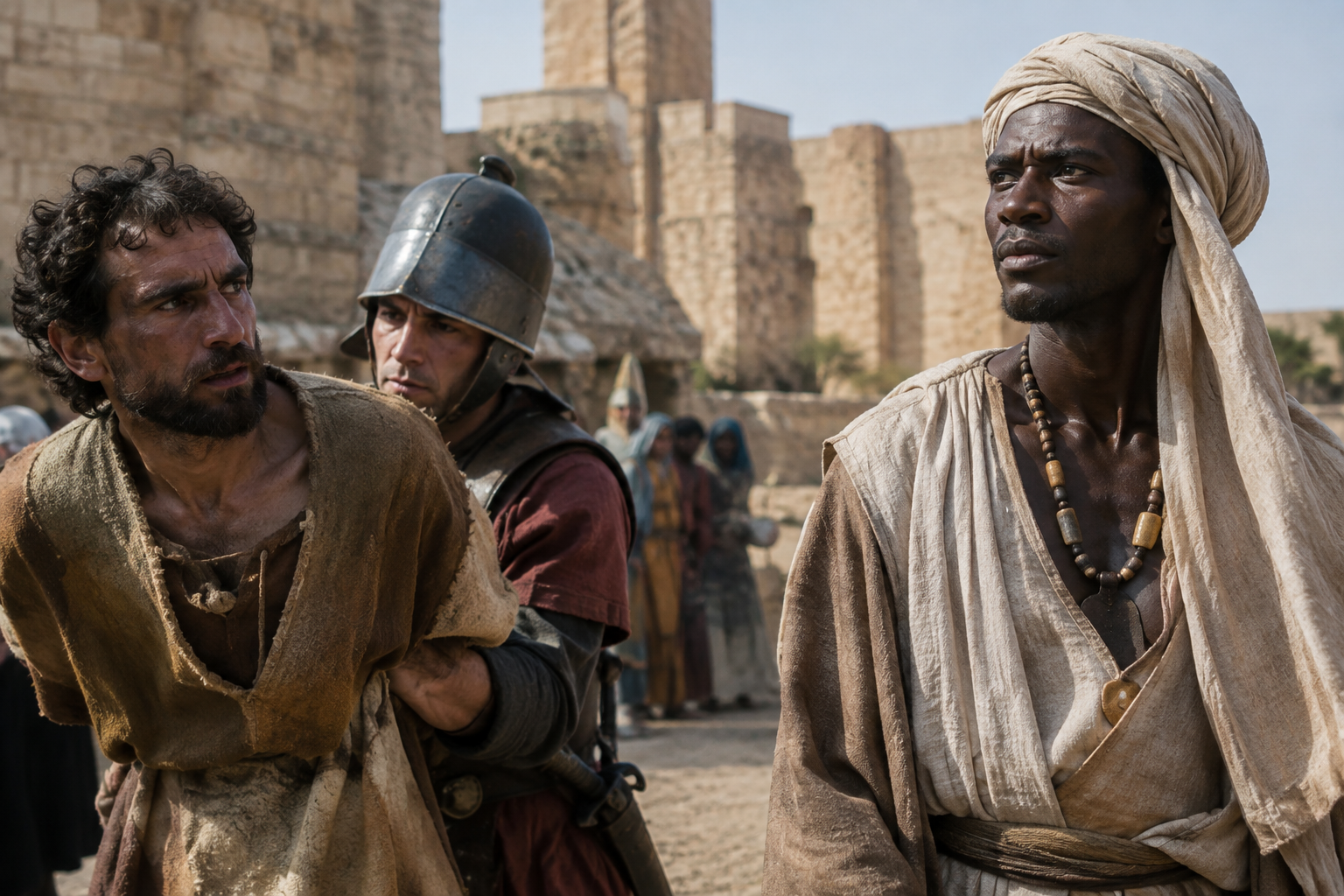
In 1348, in the Catalan town of Tàrrega, violence struck the Jewish community with devastating force. One of the men recovered from the burial ground at Les Roquetes, identified as ROQ7, belongs in this story not because a single Y-chromosome can explain the tragedy, but because it fixes haplogroup E2a in a real medieval community, at a real historical moment, and in remains tied to one of the best documented pogroms of the Black Death era.
That matters because E2a is not one of the paternal lines most readers will see constantly in European ancient DNA summaries. Yet here it appears in a fourteenth-century Jewish context in northeastern Iberia, and again in a very different world: Christian-period Nubia, at Kulubnarti, where sample I6332 dates to around 830 AD. Two individuals do not give us a grand map of E2a. What they do provide is something more useful: sharply different archaeological settings showing how a paternal line can turn up across long-connected zones of Africa and the Mediterranean world.
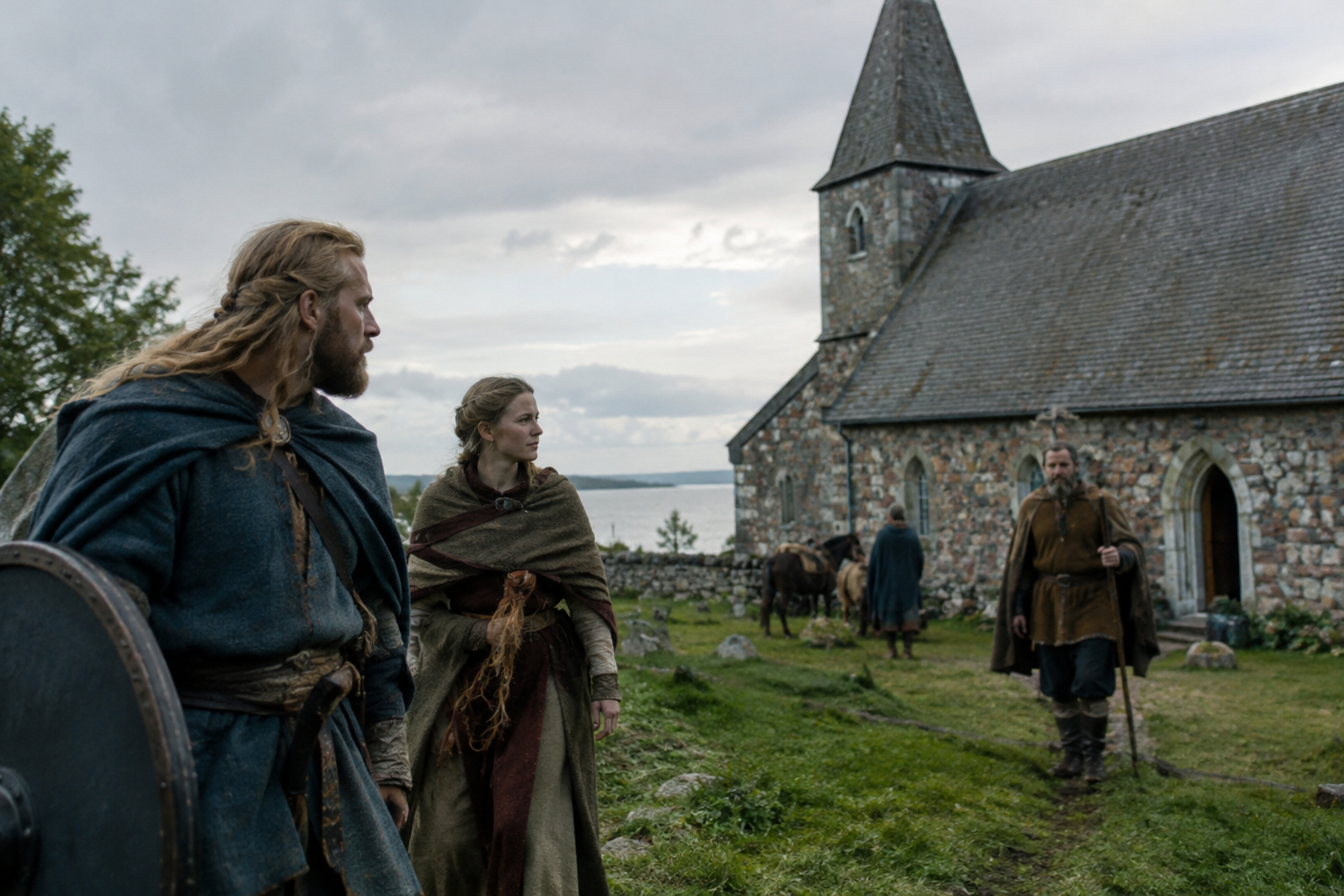
The Tàrrega evidence is unusually powerful because the historical event is independently known. In 1348, as plague spread through Europe, Jewish communities were targeted in outbreaks of persecution and murder. Archaeological and genetic work at Les Roquetes has helped anchor that history in excavated human remains rather than chronicles alone. A university report on the site describes how ancient DNA contributed to identifying victims from the medieval Jewish community of Tàrrega, linking genetics, burial archaeology, and anti-Jewish violence in a very concrete way: research on the Tàrrega burials.
Within that setting, ROQ7 is important precisely because he should not be turned into a stereotype. A Y-DNA lineage traces one direct paternal line only; it does not define a person's full ancestry, religion, or cultural identity. But it can show that haplogroup E2a was present among medieval Iberian Jews, a reminder that Jewish communities in the western Mediterranean were never biologically uniform and were shaped by centuries of movement, marriage, conversion, trade, and regional contact.
Tàrrega also matters for another reason. Medieval Iberia was a meeting ground of Latin Christian, Jewish, and Islamic societies, and its genetics reflect that complexity. A lineage such as E2a appearing there in 1348 is perfectly compatible with the long history of Mediterranean mobility, including movements tied to North Africa, the Levant, and earlier imperial networks, without allowing us to force a single route or origin story for one man.
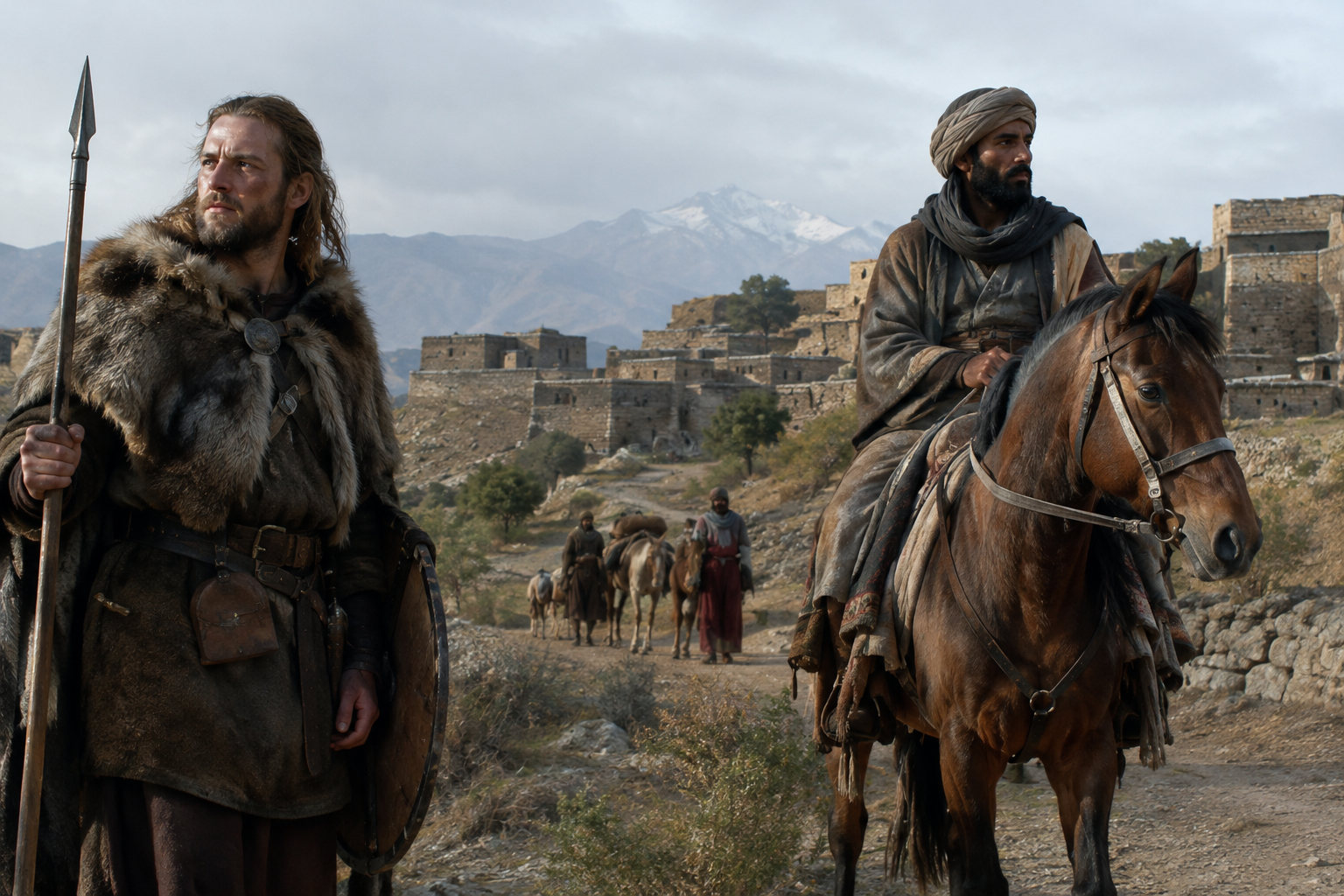
The second sample, I6332, comes from Kulubnarti in Makurian Nubia, around 830 AD. This is a very different archaeological world from plague-stricken Catalonia. Kulubnarti lies in Nubia, along the Nile, in a region that during the early medieval period belonged to Christian kingdoms with deep local roots and long-distance ties reaching into Egypt, the Red Sea, and beyond.
An ancient DNA study examining individuals from Kulubnarti circulated as a preprint here: research on ancient people from Kulubnarti. Even without inflating its claims, the site is valuable because it places E2a in a Nile Valley population where African continuity and interregional connection went hand in hand. Nubia was not an isolated backwater. It was a corridor of kingdoms, monasteries, river travel, diplomacy, and shifting frontiers.
That makes I6332 a useful counterweight to simplistic readings of Y-DNA. If a reader encounters E2a today, these ancient cases do not point to one exclusive homeland or one ethnic label. Instead, they place the lineage in at least two historically connected but socially distinct settings: medieval Jewish Iberia and medieval Christian Nubia.
It is worth being exact here. The article haplogroup is E2a, and that should not be casually expanded into claims about every branch of haplogroup E, still less into a complete account of a person's ancestry. Genetic databases and ancient sample summaries sometimes preserve broader or narrower levels of Y-chromosome resolution unevenly, and with the material here it is wiser to stay at the reported branch rather than invent deeper subclades.
Even at that level, though, E2a has a historical interest all its own. It belongs to the wider E family of Y lineages, which is strongly associated with African population history, but the narrower branch E2a must be discussed on its own evidence. These two medieval samples suggest that E2a could appear in populations connected to African and Mediterranean worlds that were already deeply entangled by trade, religion, migration, and empire long before modern national borders tried to tidy them up.
This is where archaeology is so helpful. The line itself is only a marker. The meaning comes from context: a massacre burial in Catalonia, and a Nile Valley settlement in medieval Nubia. Those are not interchangeable data points. They are two different social histories into which the same paternal branch happened to enter.
It is tempting to imagine one neat route for E2a, perhaps a march from one region to another that explains everything. History is rarely so obliging. Medieval Iberia had centuries of contact with North Africa and the eastern Mediterranean, while Nubia was tied northward to Egypt and outward through commerce and political exchange. A lineage found in both zones may reflect layers of movement spread over very long periods rather than one episode anyone could name.
That broader picture matches what ancient DNA keeps showing elsewhere: historical populations were often more mixed, mobile, and locally varied than older narratives allowed. In Iberia especially, Roman rule, post-Roman change, Islamic-period movements, Jewish diasporic networks, and later Christian polities all contributed to a population history that was anything but static.
For that reason, ROQ7 should not be made into a stand-in for all Iberian Jews, and I6332 should not be turned into a mascot for all Nubians. But together they are exactly the sort of evidence archaeogenetics does best: modest, specific, and quietly disruptive of easy assumptions.
If your paternal line falls under E2a, the most responsible lesson from these finds is not a promise of one identity but an invitation to think historically. This branch appears here in communities shaped by religion, trade, diaspora, violence, and riverine kingdoms. In other words, it belongs to human worlds that were connected, multilingual, and anything but simple.
The Tàrrega man ROQ7 and the Kulubnarti individual I6332 do not give us a complete biography of E2a. They do, however, show that the lineage was present in medieval settings stretching from Catalonia to Nubia, and that its history is best understood through archaeology as much as genetics.
Comments