Haplogroup E1b1b1a1b1a9

– 5 min read


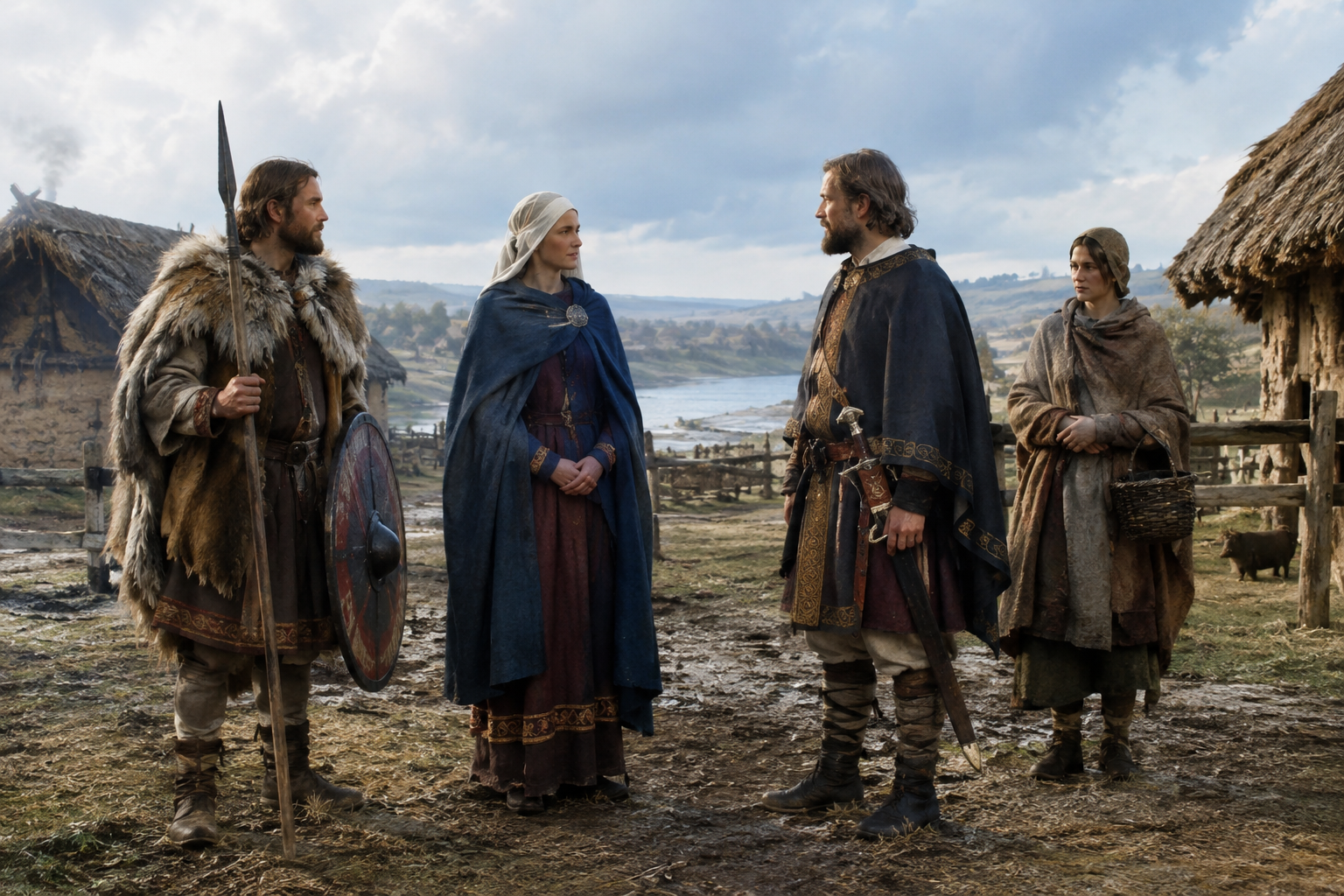
In around AD 505, one man buried at Weilheim in Bavaria entered the genetic record as sample Wh60. Another, from Buettelborn in Germany and dated to about AD 600, appears as Btb189, a man from the Merovingian-period Frankish world. They are not famous kings, not named in chronicles, and not wrapped in heroic legend. Yet for anyone carrying the Y-DNA haplogroup E1b1b1a1b1a9, they are exactly the sort of evidence that matters: real early medieval men, in documented archaeological settings, showing that this paternal line was present in the shifting societies of post-Roman western Europe.
That is the first important point. A Y-DNA haplogroup tracks one direct paternal line only: father to father to father. It does not define a person's whole ancestry, language, or identity. But when a branch such as E1b1b1a1b1a9 turns up in early medieval Bavaria and among Merovingian Franks, it places that paternal line inside the lived history of frontier provinces, collapsing Roman structures, and new political communities forming north of the Alps.
The Weilheim sample, Wh60, is assigned to an Early Medieval Danubian context in Bavaria and dated to about AD 505. That date matters. It sits in the unsettled generations after the western Roman Empire had fragmented, when the Danube corridor and the lands south of it were being reorganized through movement, local continuity, military service, marriage, and new political allegiances.
In plain terms, Wh60 tells us that a paternal line within the wider E1b1b1a family was part of this early medieval population in southern Germany. That should not be treated as exotic in itself. The late Roman and post-Roman world moved people around on a considerable scale, especially along military and administrative routes. Some lineages that modern people assume belong neatly to one region often appear, archaeologically and genetically, in much messier settings.
This is one reason early medieval DNA has become so valuable. It shifts the discussion away from old textbook labels and toward actual communities. A broader ancient DNA study of central European populations in this era, published in Nature, is part of that larger effort to understand how burial grounds, local ancestry, and mobility interacted in the centuries after Rome.
The second sample, Btb189, comes from Buettelborn in Germany and is dated to around AD 600, explicitly within the Merovingian Period Frankish world. That is a slightly later landscape than Wh60's, but still one shaped by the long aftermath of Rome. By AD 600, Frankish kingdoms dominated much of former Roman Gaul and exerted influence deep into neighboring regions. Archaeologically, Merovingian cemeteries often show exactly the sort of mixed local and supra-regional histories that genetic evidence now confirms.
Btb189 is valuable because it puts E1b1b1a1b1a9 in a recognizably Frankish-period setting rather than an isolated or ambiguous one. That does not mean the haplogroup was "Frankish" in any ethnic sense. It means a man carrying this paternal line lived and was buried within a Merovingian community. In historical terms, that is more interesting than any simplistic label, because Merovingian society itself was a composite world, bringing together people of varied local backgrounds under new political structures.
When we look at early medieval cemeteries across regions once tied to Rome, a recurring lesson appears: political identity and paternal lineage are not the same thing. A Frankish-period burial can contain lineages with deeper roots elsewhere in Europe or the Mediterranean, because kingdoms were built out of people, not tidy genetic packages.
The nomenclature here is easy to overread, so it is worth slowing down. E1b1b1a1b1a9 is a very specific downstream branch within the larger E1b1b1a grouping. The wider family has a long and complex history across parts of Africa, the Mediterranean, and Europe, but that broad background should not be carelessly pasted onto this narrower branch as though its exact route were already proven.
What the two early medieval samples do show is that this paternal line, or a reported association with it, had reached central-western European populations by the fifth to seventh centuries AD. That finding sits comfortably within what historians already know about the late antique and early medieval world. Roman military recruitment, provincial settlement, trade, intermarriage, church networks, and post-Roman mobility all helped create populations that were far less isolated than older nationalist histories once imagined.
So if you belong to E1b1b1a1b1a9, the strongest historically grounded reading is not a single grand migration story with one arrow on a map. It is a record of paternal continuity through societies that were themselves deeply entangled: Roman, post-Roman, local, and mobile all at once.
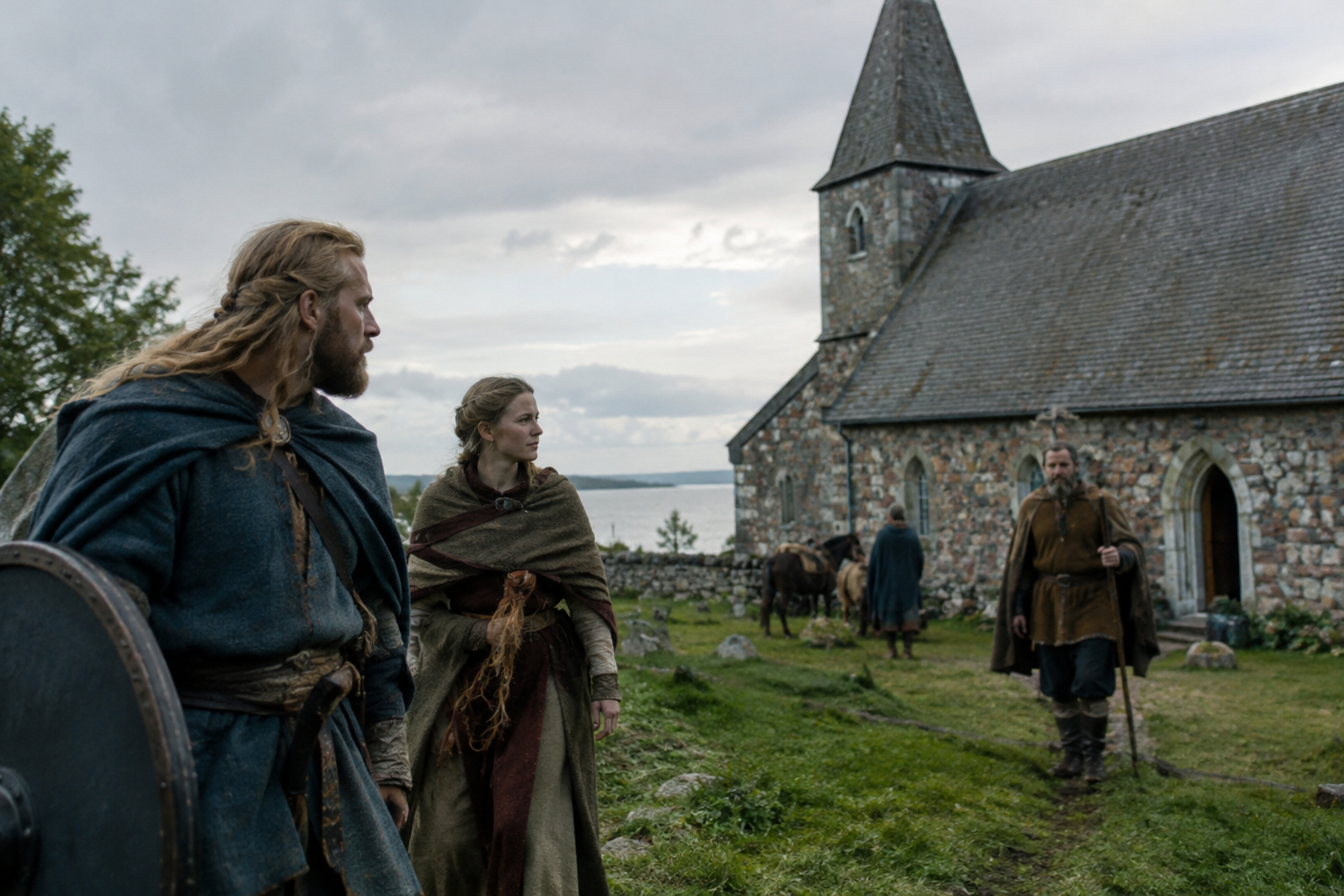
Bavaria in the early sixth century was not a blank barbarian frontier. It was a region living in the shadow of Rome, shaped by older provincial structures and by new powers emerging around the Alps and Danube. A man like Wh60 belonged to that transitional world. Even without a biography, his lineage reminds us that the population history of southern Germany was already layered before the high medieval duchies and kingdoms took shape.
This matters because many readers approach haplogroups looking for a single people or tribe to claim. Archaeology is less accommodating, and much more interesting. A paternal branch found in Bavaria around AD 505 could reflect older imperial-era movements, local family survival through political change, or more recent arrivals into the region. The honest answer is not one dramatic certainty, but a historically rich range of possibilities bounded by evidence.
Two ancient men are not a dynasty, a tribe, or a complete map of a haplogroup. But neither are they trivial. In Y-DNA history, well-placed ancient samples are often more illuminating than large numbers of vague modern matches. Wh60 and Btb189 anchor E1b1b1a1b1a9 in two adjacent but distinct early medieval settings: one Danubian and Bavarian, one Merovingian and Frankish.
Together they suggest a paternal line moving, surviving, and reproducing within the broad zone where late Roman institutions gave way to early medieval kingdoms. That is exactly the kind of context in which many European paternal lines become visible in the record: not as neat ethnic markers, but as threads woven through changing local communities.
The same caution applies in reverse as well. A haplogroup found in an early medieval cemetery does not prove that everyone in that cemetery, region, or kingdom shared the same paternal past. Ancient DNA works best when it narrows possibilities and sharpens context, not when it is made to carry more certainty than the evidence allows.
The distinctive lesson of E1b1b1a1b1a9, from the evidence here, is not royal glamour or mythic antiquity. It is something better grounded: this paternal branch appears in real early medieval graves from Germany, in communities formed during one of Europe's great periods of political and demographic recombination. If you descend from this haplogroup today, your direct male line was part of that mixed and mobile world, where Roman inheritances and new medieval identities overlapped in the same landscapes.
Comments