Haplogroup E1b1b1a1b1a11a
– 4 min read


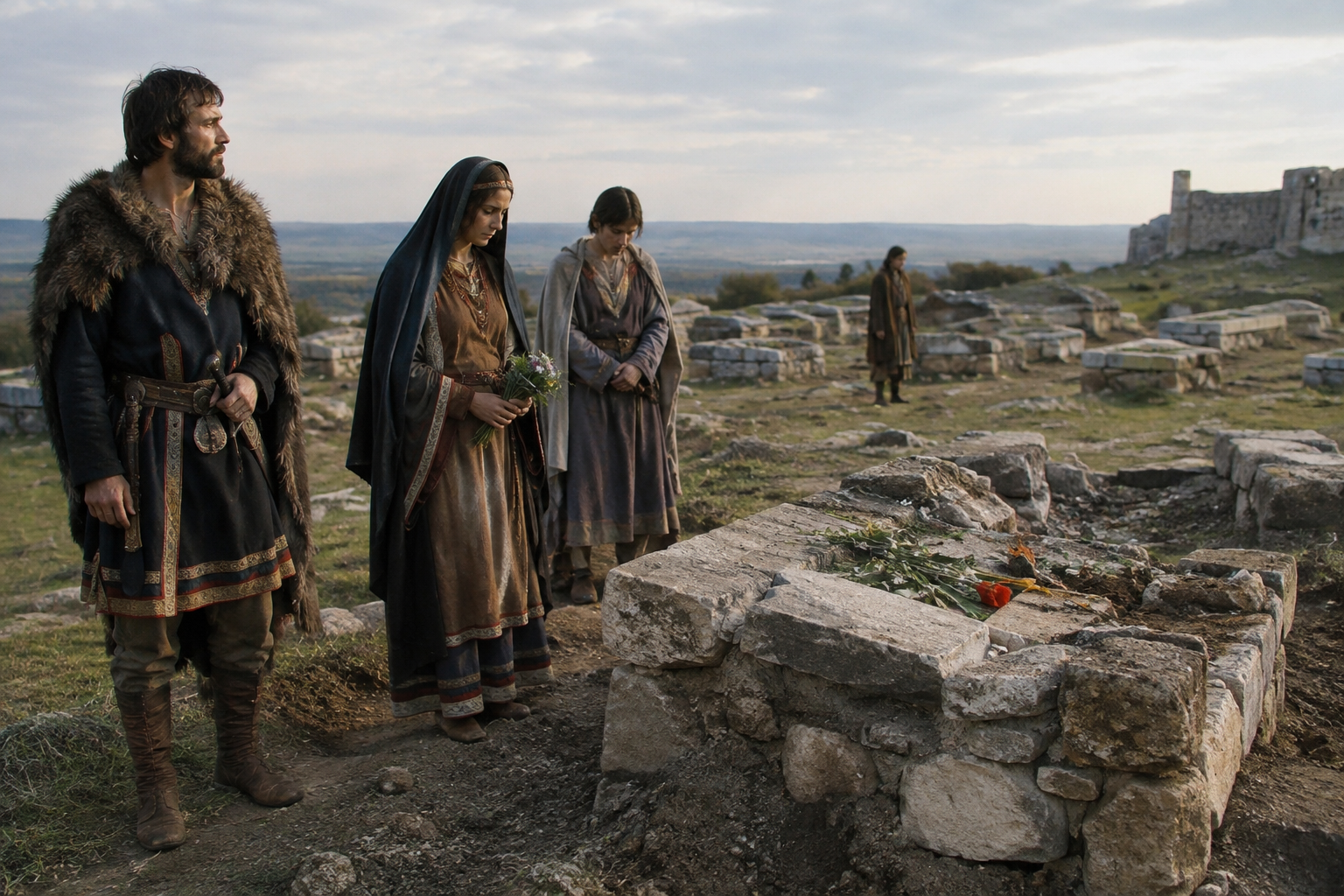
At the Pirivoj necropolis of Viminacium in Serbia, one man buried around AD 290 now carries an unexpectedly wide historical resonance. The ancient individual labeled R3931, described as a Goth-era burial from this major Roman frontier center, has been associated with the Y-DNA haplogroup E1b1b1a1b1a11a. That matters not because one grave can stand for a whole people, but because Viminacium was exactly the sort of place where imperial military life, trade, migration, and local families met face to face.
Viminacium was no obscure outpost. It was one of the great cities of the Danubian frontier, a provincial capital and legionary base in the Roman Balkans. So when a paternal line usually discussed in broad Eurasian or Mediterranean terms appears here in a late Roman burial context, the interesting question is not whether this man was simply "Roman" or "Gothic," but how mixed and mobile those categories had already become.
Modern Serbia's Viminacium sat in the zone where the Roman Empire watched, traded with, recruited from, and fought against peoples beyond the Danube. In the third century AD, that frontier was under pressure, but it was also intensely connected. Soldiers, camp followers, merchants, captives, settlers, and officials all moved through such places, leaving behind cemeteries that can look deceptively tidy until genetics reveals how varied their human backgrounds could be.
That is the real importance of R3931. The burial comes from the Pirivoj necropolis, and its dating around AD 290 places it in the troubled decades before the formal division of the empire into eastern and western halves. A paternal lineage like E1b1b1a1b1a11a, recorded here in this late Roman setting, reminds us that frontier communities were not sealed ethnic blocks. They were social worlds built from many family histories.
Research on these Viminacium burials has circulated in an ancient DNA study of the region, published at this research preprint. Even without pretending that one paper or one grave can settle every question, the broader lesson is firm enough: the late Roman Balkans were biologically and culturally mixed in ways older textbook labels often flatten.
Y-DNA follows one direct paternal line only: father to son across many generations. So haplogroup E1b1b1a1b1a11a is not a complete portrait of R3931's ancestry, still less of his language, legal status, or self-identity. A man with this paternal line could belong to a community that was culturally Roman, connected to Gothic groups, rooted in the Balkans, or shaped by several of those influences at once.
It is also important to be precise about scale. The article haplogroup here is a narrow terminal branch, while the wider E1b1b complex has a much deeper and broader history across parts of Africa, the Mediterranean, and western Eurasia. One should not lazily project the entire story of the larger haplogroup onto this exact subclade without direct evidence. What the Viminacium burial gives us is not a universal origin myth, but a securely interesting data point in a frontier cemetery.
The sample description calls R3931 a Goth-era individual, and that phrase is useful so long as we handle it carefully. In archaeology, "Goth-era" often marks a historical horizon or a burial milieu linked to the age of Gothic activity in the Balkans and Danubian world. It does not automatically mean that every individual in such a cemetery belonged to a single tribe in the old-fashioned sense, or that their paternal ancestry had one recent source.
That distinction matters enormously in the third and fourth centuries. Gothic groups on Rome's frontiers were themselves composite, drawing in people through alliance, service, household formation, and migration. Roman provinces were no less mixed. So a Y-line like E1b1b1a1b1a11a appearing in this setting fits a picture that ancient DNA has been making harder to ignore: these frontier societies were built through incorporation as much as descent.
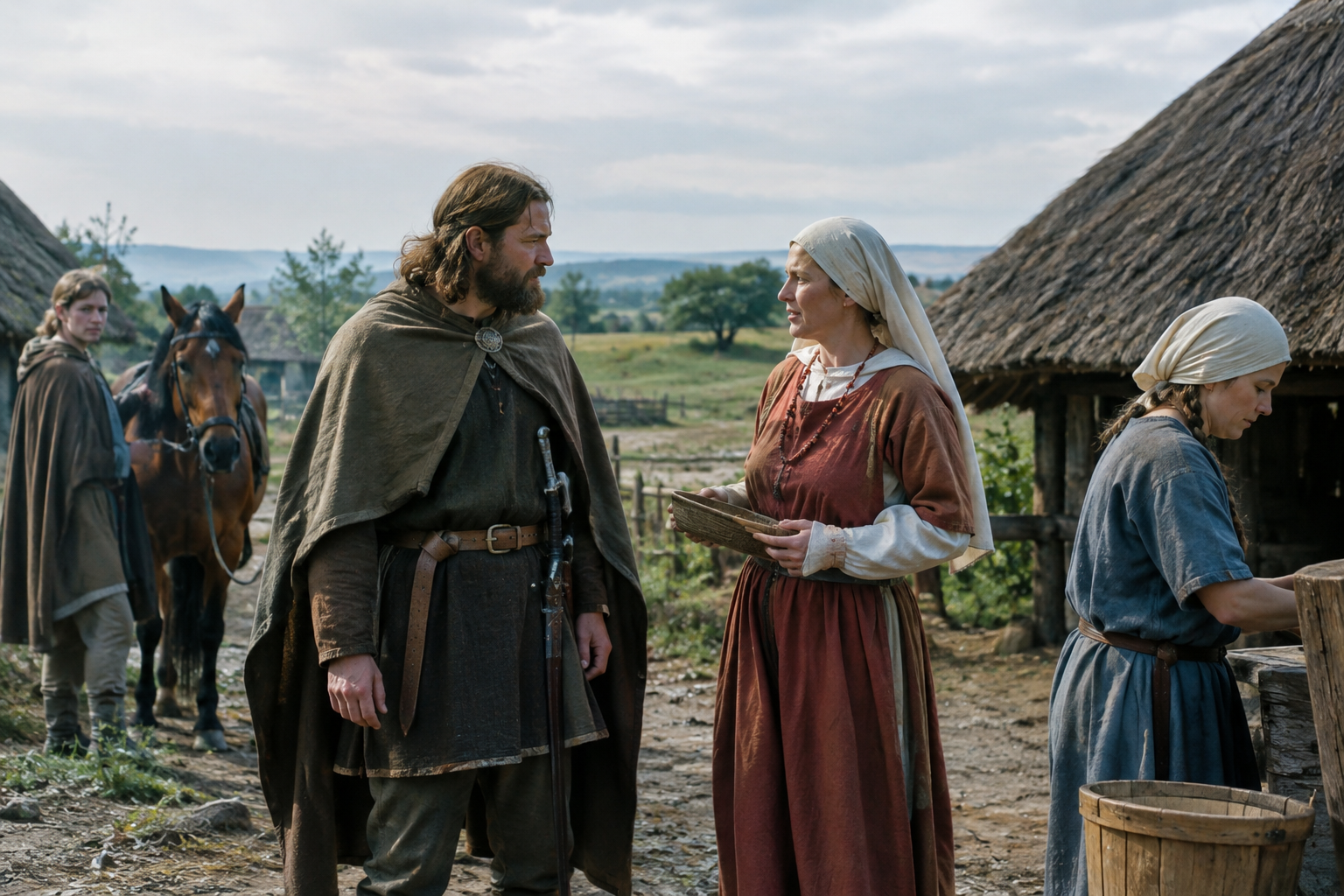
Goths as a Multi-Ethnic Community
If there is one region where such a finding should not surprise us, it is the Balkans. This was a corridor between the Mediterranean, the Carpathian Basin, the Pontic world, and the Near East. Armies passed through it; farming populations had been reshaped there since the Neolithic; imperial administration drew in outsiders; and late antique upheavals only intensified movement rather than inventing it from scratch.
For that reason, a paternal branch found at Viminacium can be read as part of a much longer Balkan pattern: continuity in place mixed with repeated arrivals from elsewhere. Ancient DNA from southeastern Europe increasingly shows exactly that combination. Local roots and foreign links are not opposites here. They are often the same story viewed at different timescales.
For people researching their own paternal ancestry, the appeal of a subclade like E1b1b1a1b1a11a is obvious. It can feel wonderfully specific. But ancient evidence is most useful when it is read historically, not romantically. R3931 does not prove descent from Goths, Romans, or any named ancient population in a simple one-to-one way. What he does show is that this paternal line was present in a major late Roman frontier environment in the central Balkans around the end of the third century AD.
That single fact has weight because Viminacium was not peripheral. It was a place where imperial power and everyday mobility met. A lineage found there belongs, at minimum, to the lived reality of a cosmopolitan frontier town: the kind of place where identities were negotiated, households were mixed, and ancestry did not line up neatly with the labels in later chronicles.
The distinctive thing about E1b1b1a1b1a11a in this article is not a grand claim of empire or tribe, but its appearance in one very telling burial: R3931 from Goth-era Viminacium. It places this paternal line in a real late Roman community on the Danube, where categories like Roman, provincial, migrant, and barbarian were already deeply entangled. For someone tracing this branch today, that is the valuable insight: not a tidy badge of ethnicity, but a link to the crowded and complicated human world of the Balkan frontier.
Comments