Haplogroup DF19

– 5 min read


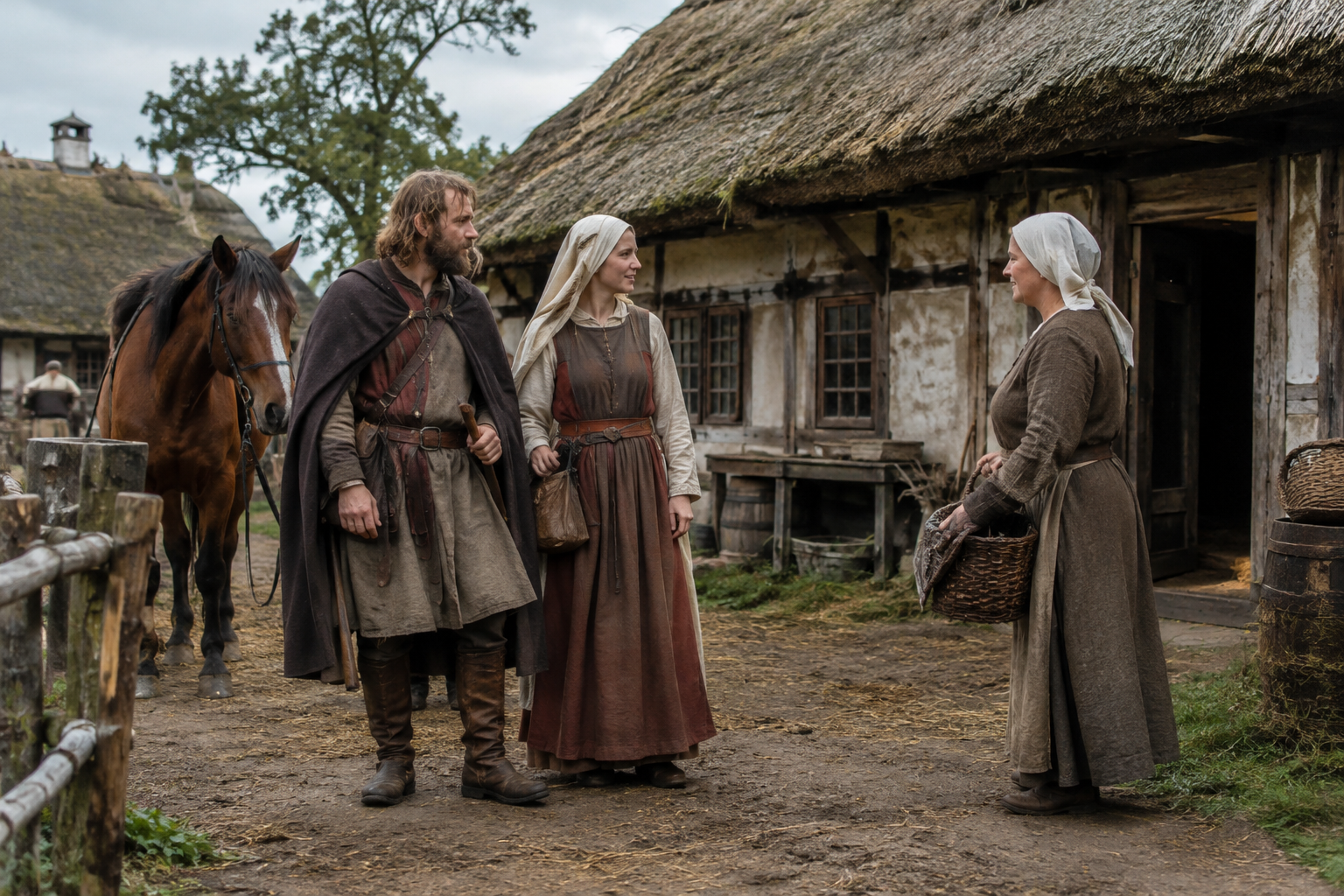
At Odense Sankt Jorgensgarden in Denmark, a post-Viking burial dated to around AD 1270 produced a male individual identified as KH150844_KH150845. He was not excavated from a royal mound or a warrior grave, but from a medieval hospital cemetery associated with leprosy. That is exactly why he matters. Haplogroup DF19 appears here not in saga-land glamour, but in the hard archaeological world of disease, charity, Christian burial, and the movement of ordinary people through medieval Scandinavia.
This is a useful reminder of what Y-DNA can and cannot do. A Y-chromosome lineage like DF19 traces one direct paternal line only, not a whole identity, ethnicity, or social role. Still, when a branch turns up in a securely dated medieval cemetery, it gives us a real historical foothold: a man, a place, and a moment when that paternal line was living in a recognizably documented world.
Odense's Sankt Jorgensgarden was part of the institutional landscape of medieval care. Across Christian Europe, leprosy hospitals and their cemeteries stood slightly apart from the urban core, creating places where the sick were both excluded and cared for. The Odense burial ground belongs to that world. Its significance lies not only in pathology, but in the fact that it preserves people who often vanish from conventional written history.
The individual KH150844_KH150845 is associated in your ancient DNA results with DF19. Because the evidence provided here names a single site and one male burial, the responsible story is necessarily focused and local. We can say that a DF19 paternal line was present in medieval Funen in the later 13th century. We cannot leap from that to a sweeping tale of a dynasty, a tribe, or a uniquely Danish origin for the branch.
An ancient DNA study examining medieval European leprosy has helped place such burials in a broader biological context, looking at both disease and host genetics in the people buried in these cemeteries. The relevant research can be found here: Ancient DNA study provides clues to leprosy susceptibility in medieval Europe. Even without forcing conclusions beyond the available evidence, the Odense burial shows DF19 in a historically specific population touched by one of the most feared diseases of the Middle Ages.
Early Christian DNA in Scandinavia
DF19 is not a stand-alone prehistoric people. It is a named branch within the much larger Y-chromosome tree, and its historical meaning depends entirely on where and when it is actually observed. That sounds obvious, but it matters. A narrower subclade cannot simply inherit every grand migration story told about its parent haplogroup.
With the evidence in hand, the safest historical reading is modest but valuable. DF19 was present among men living in medieval northern Europe, and one such line is now documented in post-Viking Denmark through KH150844_KH150845. The burial context suggests a settled Christian society, one connected to institutions of care and to the dense local networks of town, church, and countryside that shaped life in the 1200s.
That also means this sample belongs to a world after the Viking Age, not to the age of longships and early raids. Medieval Denmark in the 13th century was a kingdom of dioceses, market exchange, monasteries, legal reform, and increasingly formal parish life. A DF19 line in this setting is part of that later Scandinavian history.
One of the most interesting things about a burial like this is that it sits in a region famous for movement. Odense, on Funen, was well placed within the Danish islands and the wider Baltic-North Sea zone. By the 13th century, people, goods, ideas, and pathogens all moved through these routes. A hospital cemetery is therefore not a marginal footnote; it is evidence for how connected medieval society really was.
That broader point fits well with work on migration and ancestry in early medieval northern Europe. Genetic studies from nearby regions have repeatedly shown that the world around the North Sea and the Rhineland was full of mobility, mixture, and local continuity existing side by side. Medieval burial grounds do not neatly sort people into the tidy ethnic boxes once loved by older historiography.
That is especially important for anyone tempted to read DF19 as a badge of one fixed identity. The medieval evidence points in a different direction. Paternal lines endured, but they endured inside changing social worlds: Christianization, urban growth, trade, disease exposure, and long-distance contacts across Germanic-speaking and Scandinavian regions.
There is a temptation, with any northern European Y-lineage, to jump straight from genetics to the spread of Germanic languages. That can be suggestive at a very broad level, but archaeology insists on greater discipline. A 13th-century man in a Danish leprosy cemetery is not direct proof of how languages spread centuries earlier. What he does show is that this paternal line formed part of the population living in a mature medieval Scandinavian kingdom.
That matters because ancient DNA is at its best when it gives us lived history rather than mythic ancestry. KH150844_KH150845 was a real person who died in a real town and was buried in a real institutional setting. If DF19 appears in him, then DF19 was part of the human fabric of medieval Denmark: not abstractly, but concretely.
Germanic Languages and Genomics
This sort of evidence is often more illuminating than a glamorous but poorly grounded claim. Grand labels such as "Viking," "Germanic," or "noble" can flatten the past. A cemetery like Sankt Jorgensgarden restores some texture: illness, exclusion, care, prayer, and the routines of burial in a Christian community.
Leprosy cemeteries have become increasingly important in archaeogenetics because they tie together bones, institutions, and disease history. They can reveal not just who people were in a genetic sense, but the biological pressures medieval populations faced. The men buried there were not representatives of an idealized ancestral stock; they were people whose bodies had been marked by a chronic infection and whose communities responded in specific social ways.
For a DF19 result, that is unexpectedly powerful. It places the lineage inside one of the clearest social histories we possess from medieval Europe: the management of sickness, stigma, and salvation. The paternal line did not travel through time as a heroic abstraction. It passed through fathers and sons who lived amid hunger, faith, labor, commerce, and disease, and sometimes ended up in cemeteries like this one.
Leprosy and Migration in Medieval Germany
For now, the clearest ancient anchor for DF19 in this material is the man from Odense Sankt Jorgensgarden, KH150844_KH150845, buried around AD 1270 in post-Viking Denmark. That does not turn DF19 into a specifically Danish lineage, and it does not prove descent from any famous house. What it does provide is something better: a firm archaeological glimpse of this paternal branch in the everyday, mobile, Christian society of medieval Scandinavia. If you carry DF19 today, this sample suggests that at least one branch of your direct paternal line was present in that northern European world of towns, churches, and hospital cemeteries.


Comments