Haplogroup C2a1a1b1a2a1

– 6 min read


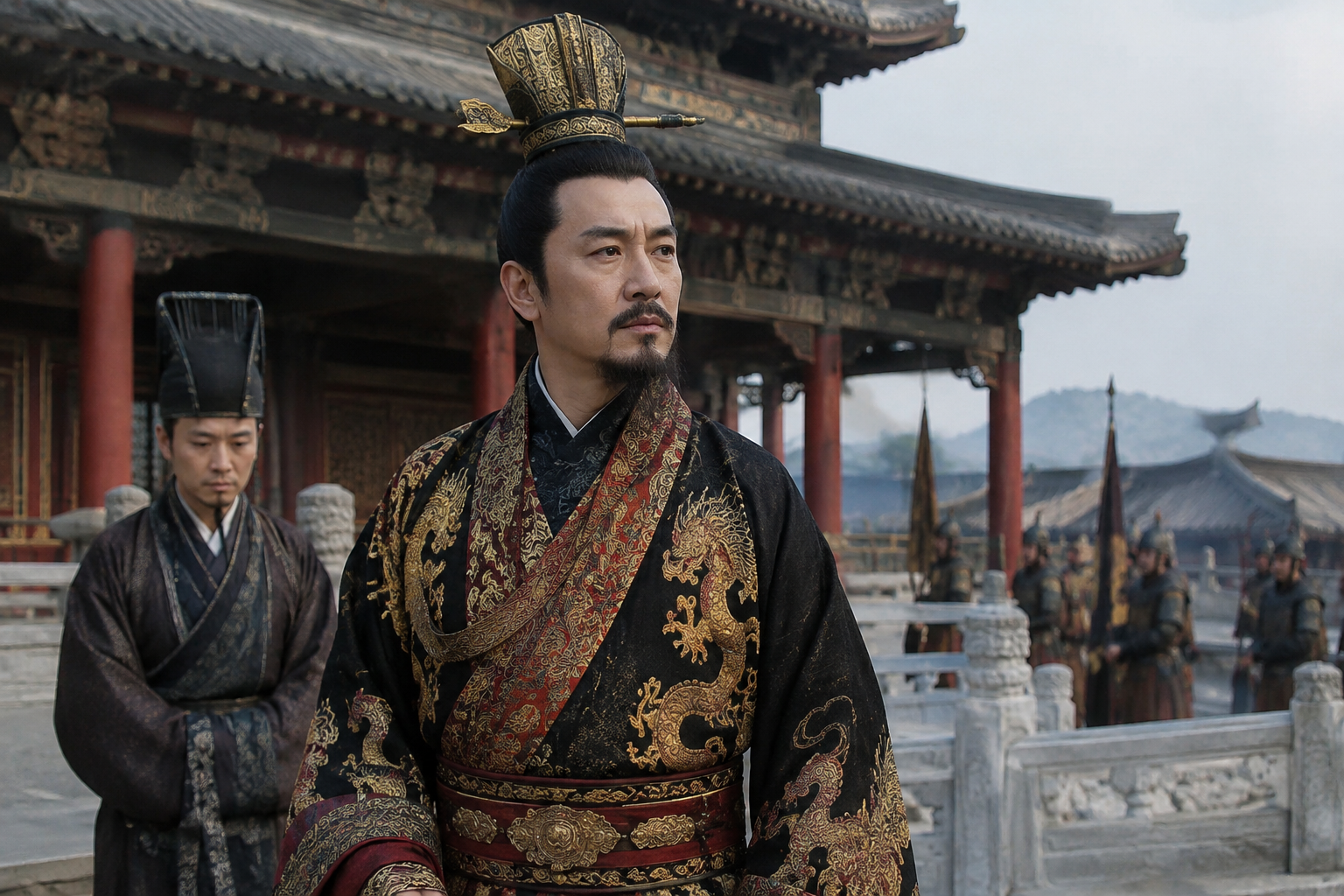
In around AD 560, one of the most politically important men in northern China was buried with the rank and ceremony appropriate to an emperor. Ancient DNA has now added a new kind of evidence to that historical world: the remains identified as Emperor Wu of Northern Zhou, sample EmperorWu, have been associated with the Y-DNA haplogroup C2a1a1b1a2a1. That matters because this is not an anonymous skeleton from a broad cemetery population, but a named ruler placed inside the upheaval of the sixth century, when steppe traditions, northern frontier politics, and Chinese imperial statecraft were being forced together.
For anyone who carries C2a1a1b1a2a1 today, this is a striking kind of evidence. Y-DNA follows one direct paternal line only, not a person's whole ancestry, but in this case that line appears in the body of a dynasty founder-emperor from a period when elite identities in North China were anything but simple. The fascination lies not just in the lineage label, but in what sort of historical setting this branch is appearing in.
Emperor Wu of Northern Zhou ruled in the later sixth century, during the Northern and Southern Dynasties period, a time when northern China was shaped by regimes with deep connections to frontier military elites and peoples of the steppe zone. Northern Zhou itself emerged from the power struggles that followed the collapse of earlier northern states, and its ruling house is usually discussed in connection with the Xianbei-influenced political world of North China.
The sample identified as EmperorWu, dated here to about AD 560, places haplogroup C2a1a1b1a2a1 in exactly that environment. One should be careful here: the haplogroup does not by itself define ethnicity, language, or political loyalty. But it does provide a paternal clue that fits an era when ruling families in the north often stood at the meeting point of Inner Asian and Chinese traditions rather than belonging neatly to one sealed-off category.
This is also why the result is more interesting than a bare dynastic footnote. Northern Zhou was not a side-show state. It helped lay the political groundwork for the reunification of China under the Sui, and its imperial house belonged to a world where ancestry, military command, marriage alliances, and frontier power all mattered. A paternal lineage found in such a context is a historical signal, not merely a genetic curiosity.
C2a1a1b1a2a1 is a very specific branch within the wider haplogroup C2, a major Y-chromosome lineage with an important history across eastern and northern Asia. It would be wrong to pour the entire history of broad C2 straight into this much narrower subclade, because a parent branch can be old and widespread while one daughter branch may have a much more specific later history.
Still, the larger background helps. Branches of C2 are well known from populations of the eastern Eurasian steppe, Mongolia, Siberia, and parts of East Asia. When a subclade such as C2a1a1b1a2a1 appears in an imperial burial from sixth-century North China, it naturally raises questions about how paternal lines associated with steppe or frontier populations became embedded in ruling structures south of the steppe proper.
This is where ancient DNA is at its best. It does not tell us that one haplogroup "belongs" to one people forever. It shows that lineages moved through changing political systems. In the Northern Zhou case, the important point is that a direct paternal line linked to C2a1a1b1a2a1 turns up in a court that stood between the old steppe-facing north and the increasingly centralized empires that followed.
Modern readers sometimes imagine imperial China as if it were always culturally settled and bureaucratically uniform. The sixth century was nothing of the sort. Northern courts were heirs to centuries of migration, conquest, military colonization, and alliance-building. Dynasties in the north regularly incorporated families whose backgrounds connected them to non-Han polities, frontier garrisons, and mobile elite networks.
That is the real historical setting for EmperorWu. A Y-chromosome lineage such as C2a1a1b1a2a1 in this context does not sit awkwardly outside the history; it helps illustrate it. The political class of northern China was formed in part through the absorption, transformation, and domestication of frontier power. In plain terms, imperial rule here was built by men whose ancestors did not necessarily come from the same social world as the old central plains aristocracies.
Research on ancient East Asian paternal history has increasingly shown that Y-chromosome lineages can illuminate these long interactions between agricultural heartlands and steppe or border regions. A broader discussion of such patterns appears in Ancient Y Chromosomes Reveal Coastal and Inland Migrations that Shaped East Asian Paternal History, which is useful background for understanding why a lineage found in one imperial individual matters beyond a single tomb.
Most ancient Y-DNA discussions begin with ordinary burials: valuable in themselves, but often anonymous. Here the sample is attached to a named historical sovereign. That does not make every detail beyond dispute, but it does change the kind of question we can ask. Instead of wondering only where a lineage was present, we can ask what it meant for this lineage to be present in the highest level of state power.
Emperor Wu was a major figure in the consolidation of Northern Zhou authority. His reign belongs to the last phase before China was reunified. A paternal lineage associated with him therefore sits very close to one of the hinges of Chinese history. If C2a1a1b1a2a1 is indeed the reported branch for this imperial individual, then the lineage is not simply part of a distant prehistoric map; it is tied to the machinery of rule in a transformative age.
That is also a reminder that dynastic history and genetic history are not separate stories. They overlap in complicated ways. Courts married widely, recruited militarily, absorbed local elites, and remade identities. A Y-chromosome line can survive all of that while the language, dress, and political labels around it change dramatically.
An ancient DNA study connected to this imperial case has helped bring such questions into sharper view, and the associated research can be found here: https://www.sciencedirect.com/science/article/abs/pii/S0960982224002409. Even without overstating what one paper can prove, the result is part of a growing effort to place famous historical individuals inside the wider genetic history of East Asia.
The appearance of C2-related paternal lines in historical East and Inner Asia makes best sense when seen over the long term. Northern China was never isolated from the steppe. Trade, warfare, hostage exchange, migration, and intermarriage linked the Yellow River zone to peoples farther north and northwest for millennia. By late antiquity, ruling elites could draw legitimacy from Chinese imperial models while still carrying paternal ancestry with deeper roots in the wider eastern Eurasian world.
That is why this haplogroup should not be read as a shortcut to a single identity. It is better understood as evidence of historical layering. A direct paternal line could pass through mobile pastoral settings, frontier military households, aristocratic networks, and finally an imperial dynasty. The label stays technical; the social meaning changes with each generation.
For a wider archaeological backdrop on how ancient DNA is enriching Chinese history, the MyTrueAncestry community has already explored topics such as Song Dynasty remains and 6,000 years of genomic history in the Middle Yellow River. Those studies are from different periods, but together they show how genetics is steadily thickening the historical record in East Asia rather than replacing it with simplistic ancestry labels.
The distinctive thing about C2a1a1b1a2a1 in this article is not that it appears everywhere, but that it is tied here to a documented ruler of sixth-century North China. That gives the branch an unusually sharp historical anchor: not just "ancient East Asia" in general, but a frontier-shaped imperial court during one of the decisive political transitions in Chinese history.
If this is your paternal haplogroup, the safest and most interesting conclusion is that your direct male line belongs to a lineage with real visibility in the eastern Eurasian world and at least one known connection to high-status rule in Northern Zhou China. That is not a promise of descent from an emperor. It is something better grounded than that: a reminder that one narrow paternal branch can survive through enormous changes in language, empire, and identity, and still leave a trace that archaeology and DNA can recover.

Comments