Haplogroup C2a1a

– 5 min read


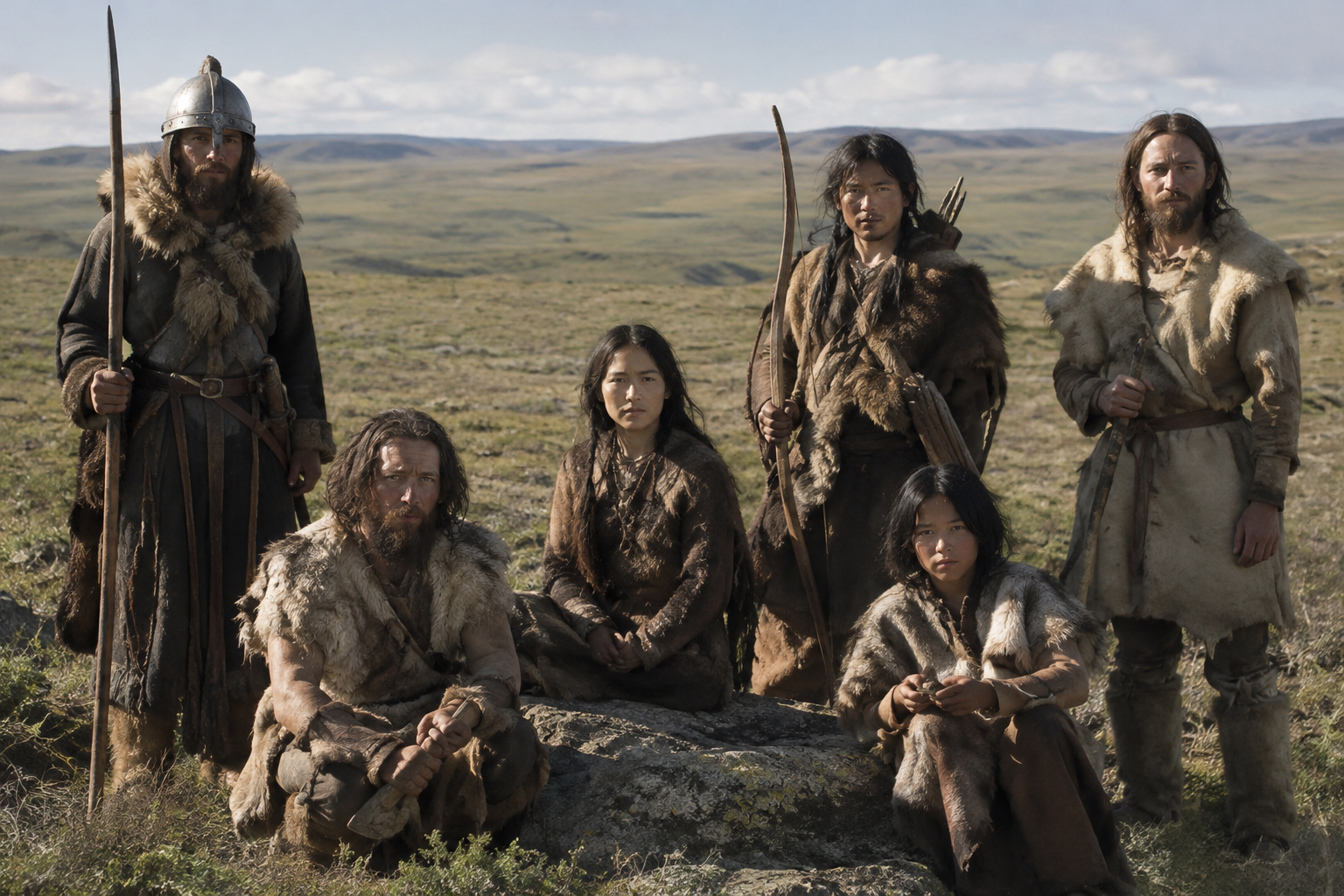
At Leobersdorf in Lower Austria, one early medieval grave stands out not because it was royal or lavishly described, but because it helps pin a very old paternal line to a very mobile world. The man catalogued as LEO008, dated to about AD 720 and identified with an Avar-period burial, is reported in connection with Y-DNA haplogroup C2a1a. That matters because C2 branches are far more often associated with Inner Asian and northern Eurasian histories than with the heart of early medieval Austria.
So C2a1a is not, in this case, a grand label floating above history. It appears in actual archaeological contexts: a burial in Avar Austria, Bronze Age individuals at Rostovka in southwestern Siberia, and much older Neolithic and early Holocene men around the Altai and Baikal regions. Put simply, this is a paternal line that appears in the record of northern Eurasia over a very long span. Y-DNA traces one direct male line only, not a person's whole ancestry, but that single line can still be an unusually sharp historical clue.
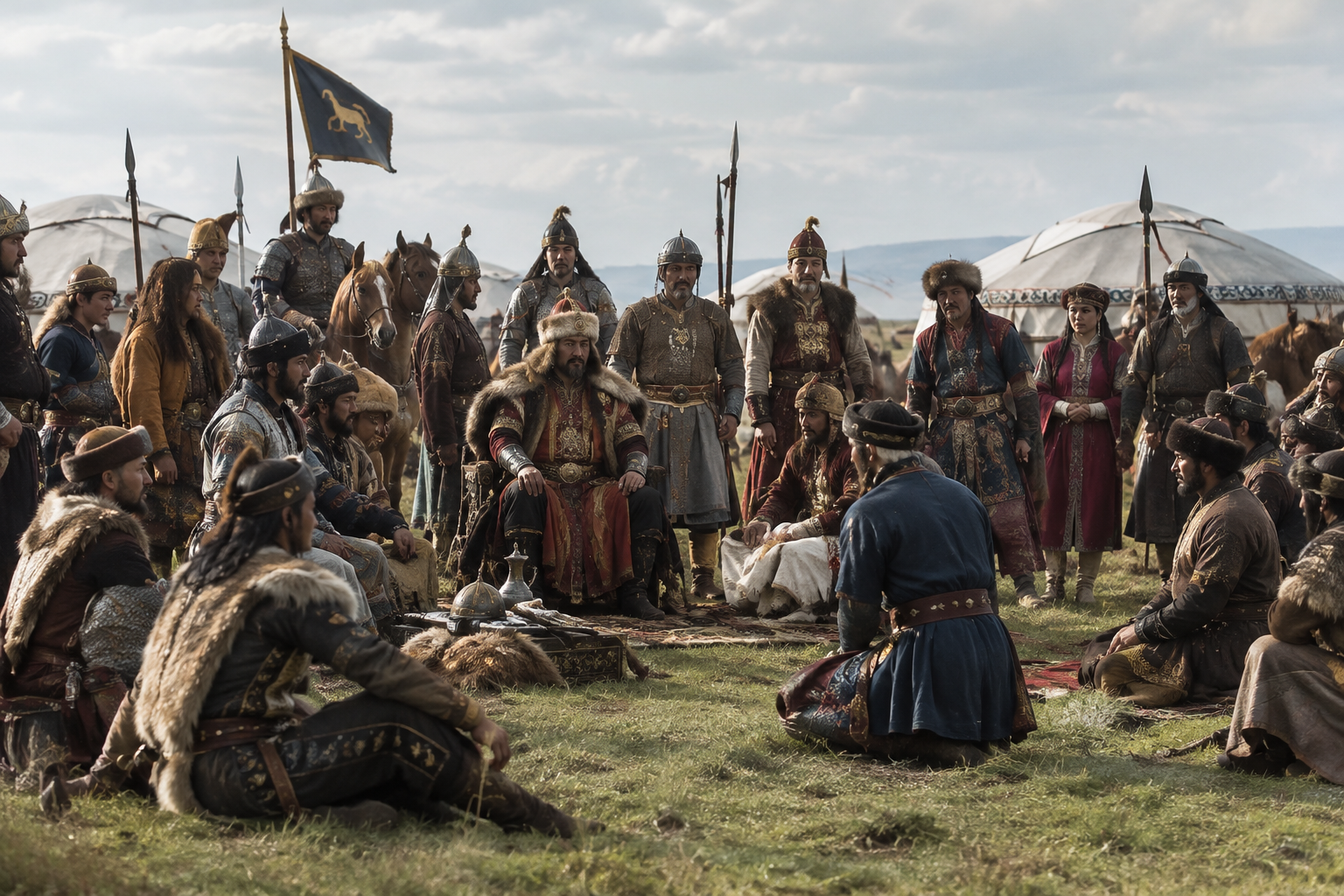
The Leobersdorf sample LEO008 belongs to the early medieval Avar horizon in what is now Austria. That setting is historically important in its own right. The Avar Khaganate was one of the great powers of the Carpathian Basin and its fringes, and its cemeteries often reveal just how mixed and connected that world had become after the fall of Roman authority in central Europe.
For haplogroup C2a1a, LEO008 is significant because it shows this paternal branch in a western steppe frontier context rather than deep in Siberia or eastern Inner Asia. That does not mean every Avar man carried it, nor that one burial can define the whole polity. But it does fit a broader pattern in which steppe-linked male lines sometimes appear far to the west, carried by movements of people, military retinues, and frontier communities that were anything but isolated.
Austrian research on Avar-period material has helped establish the archaeological setting for cemeteries of this kind, and Leobersdorf belongs in that larger conversation about mobility and mixture in the early medieval Danube zone. For the historical background to these excavations, see the Natural History Museum Vienna research page here: https://www.nhm-wien.ac.at/jart/prj3/nhm-resp/main.jart?rel=en&reserve-mode=reserve&content-id=1288702477099&mitarbeiter_id=1288170458831.
European Huns and steppe origins
If Leobersdorf shows the western reach of the lineage, the Rostovka finds show its deeper steppe and forest-steppe background. Two individuals in your ancient matches are tied to this setting: I32816, dated around 1925 BC, and I25555, dated around 1825 BC and described as belonging to the Bronze Age Western Siberian Plain, Seima-Turbino, Rostovka.
Rostovka has long attracted archaeological attention because it lies in a zone where mobile pastoral worlds, forest communities, and long-distance metal exchange overlapped. The Seima-Turbino phenomenon, in particular, is famous for the rapid spread of metalworking styles and prestige objects across a vast Eurasian space. One should be careful here: a Y-haplogroup is not the same thing as an archaeological culture. Still, the presence of C2a1a-linked men in this setting is exactly the sort of evidence that reminds us how much Bronze Age northern Eurasia depended on movement.
What Rostovka adds to the story is chronology. By the early second millennium BC, this paternal branch was already present in a region that connected the Urals, Siberia, and the wider steppe. That makes the later appearance of related lineages farther west less surprising. Not inevitable, certainly, but historically intelligible.
Recent ancient DNA research on northern Eurasia has sharpened this broader picture of long-term population structure and change across Siberia and adjacent regions; one major study relevant to these deep northern contexts is available here: https://www.nature.com/articles/s41586-025-09189-3.
Ancient DNA of the Mongolian steppe
The older samples are, in some ways, the most striking of all. I20312 comes from Itkul Kostenkova-Izbushka in Altai-Krai, dated to about 6061 BC. I2134 comes from Sosnovy-Mys in the Irkutsk region of Russia, dated to about 5550 BC. These are not late imperial horsemen or medieval conquerors. They belong to a much earlier northern Eurasian landscape of hunter-gatherers and early regional populations.
That depth matters. It suggests that the paternal ancestry represented here was established in northern Eurasia thousands of years before the historical steppe empires that usually dominate popular imagination. When people see a lineage like C2a1a turn up in an Avar burial, the temptation is to leap straight to famous mounted confederations and named nomadic powers. But the older evidence warns against such shortcuts. This branch has a prehistory far older than the Avars, the Huns, or the Mongols.
The Altai and Baikal regions are exactly the places where archaeologists expect to find long-term continuity mixed with repeated episodes of contact and replacement. They are crossroads, but crossroads in a prehistoric sense: river corridors, ecological transition zones, and meeting places between forest and steppe worlds. C2a1a's appearance in these early samples gives the haplogroup a credible deep northern anchor.
With a haplogroup like C2a1a, the important point is scale. The parent family, haplogroup C, is ancient and widespread in Asia and beyond. C2a1a is a narrower branch within that much larger story, and the evidence here should be kept at that level. These samples do not justify sweeping claims about a single migration route, a single ethnicity, or a single historical people.
What they do support is a pattern: this branch appears in very old northern Eurasian contexts, then in Bronze Age western Siberia, and later in an early medieval Avar-period burial in Austria. That is a remarkable geographical and chronological spread. It suggests that at least some lines within C2a1a participated in the vast networks that linked Siberia, the Inner Asian steppe, and eventually the European frontier zones of the early Middle Ages.
There is also a useful corrective here for family historians. A paternal match to C2a1a is not just a label pointing vaguely eastward. In the ancient record, it appears in real places with very different histories: Neolithic Baikal, early Holocene Altai, Bronze Age Rostovka, and Avar-period Austria. That variety is the point. The lineage's history was not static.
Ancient Y chromosomes in East Asia
The most distinctive thing about C2a1a in the ancient evidence is not prestige, and not a single dramatic migration, but endurance across very different worlds. It appears first in deep northern Eurasian prehistory, then among Bronze Age communities on the western Siberian plain, and later in an Avar-period burial far inside early medieval Europe. For someone researching this paternal line today, that is the sober and fascinating takeaway: your Y-DNA may preserve one thread from a history of movement across the great northern zone of Eurasia, from prehistoric hunter-gatherer landscapes to the mobile societies of the steppe frontier.

Comments