Haplogroup C1a2a

– 5 min read


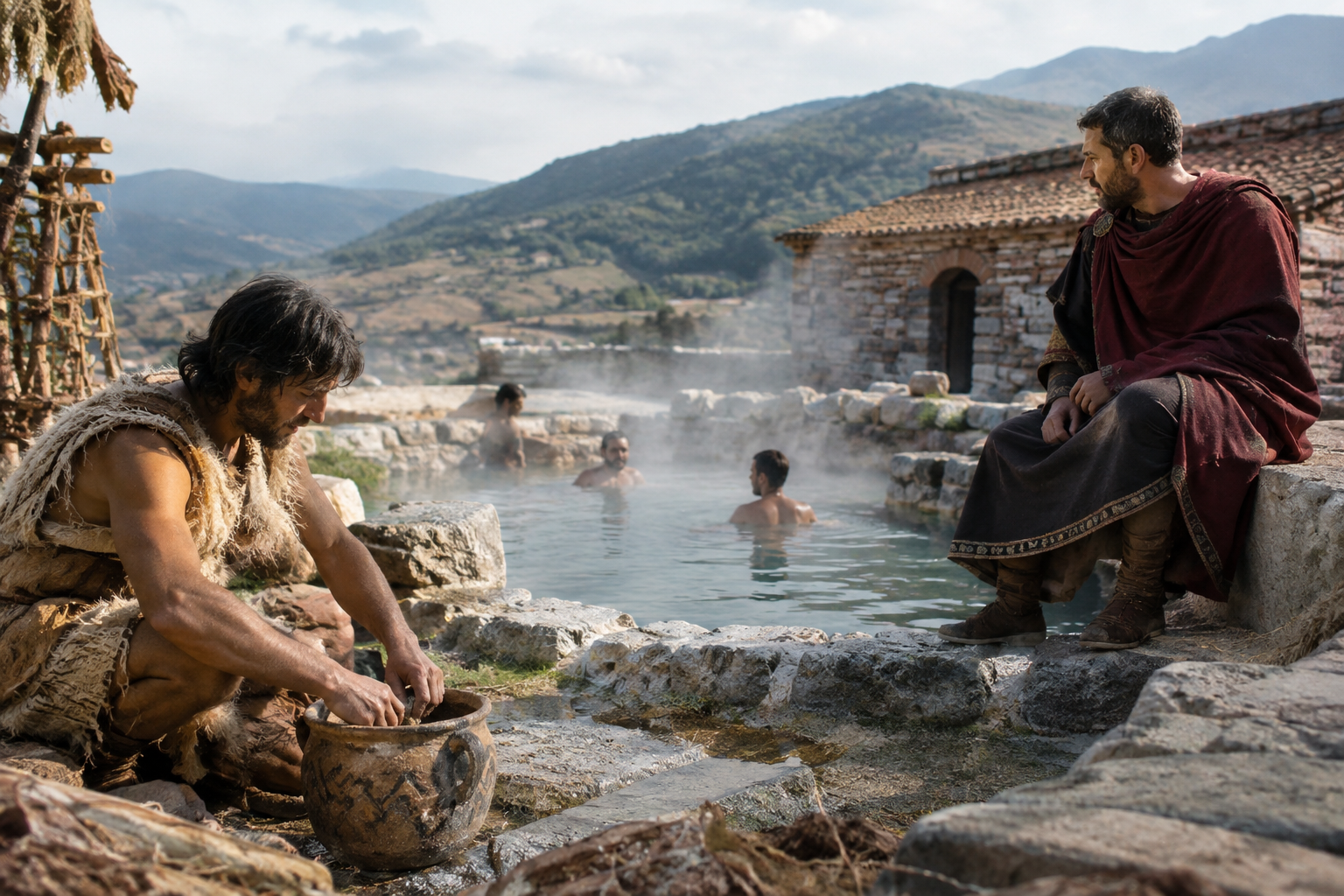
At Aquae Calidae, near modern Burgas on the Black Sea coast of Bulgaria, one late Roman man dated to around AD 350 was identified as sample I41135. On its own, that might sound like a tiny footnote in the vast paperwork of ancient DNA. But for Y-DNA haplogroup C1a2a, it is exactly the sort of find that matters: a rare paternal line turning up in a place where Roman, local Balkan, and wider imperial worlds met.
C1a2a is not one of the big headline European Y-chromosome branches that dominate later prehistory. That is what makes these scattered appearances so interesting. Y-DNA follows one direct paternal line only, not a person's whole ancestry, yet even a small number of securely identified ancient males can show how unexpectedly long some lineages endured, and how far they could survive beyond the periods where we first tend to notice them archaeologically.
The two ancient individuals linked here to C1a2a sit at opposite ends of an enormous time span. One is I18116, from Urziceni-Bodrogkeresztúr in Romania, dated to around 3700 BC in a Neolithic setting. The other is I41135 from late Roman Aquae Calidae in Bulgaria, around AD 350. That is not a neat little family tree. It is something far more archaeologically compelling: the same paternal branch appearing in two sharply different historical landscapes, separated by more than four millennia.
That matters because C1a2a is generally thought of as an old and uncommon West Eurasian paternal lineage, with a particularly intriguing ancient footprint. It appears only patchily in later European contexts, which means every well-provenanced burial counts. Rather than suggesting a simple march of one people across the map, these samples hint at long survival, local persistence, and the uneven way paternal lines can pass through history.
Balkan hunter-gatherer background
The earlier sample, I18116, comes from Urziceni-Bodrogkeresztúr in Romania and is dated to about 3700 BC. That places him in the later Neolithic or Copper Age horizon of the Carpathian Basin, a region where farming communities, inherited local traditions, and broader movements across southeastern Europe all met and mixed. Even without embellishing the grave with details we do not have, the context alone is important: this was a world of settled communities, developed mortuary customs, and increasingly complex social landscapes.
Here C1a2a appears not in an Upper Palaeolithic cave, where some early branches of haplogroup C are better known, but in a much later farming-era individual. That is the striking point. It suggests that at least some paternal lines with very deep roots in Europe or its near margins did not simply vanish when agriculture spread; they could be absorbed into later village societies and continue within them.
An ancient DNA study examining populations of this wider region is available at https://www.biorxiv.org/content/10.1101/2020.08.19.256412v1. For readers interested in how Neolithic and Copper Age populations of southeastern Europe are being reconstructed, that broader research setting is essential: individual Y-chromosome assignments are most meaningful when placed inside the larger population picture.
It is also worth being careful here. A man with Y-DNA C1a2a in Neolithic Romania is not, by that fact alone, a representative of an entire archaeological culture, nor proof that this haplogroup was common. Ancient Y-DNA can be brutally patchy. What we can say is narrower, but still valuable: C1a2a had not disappeared from the Carpathian zone by the 4th millennium BC.
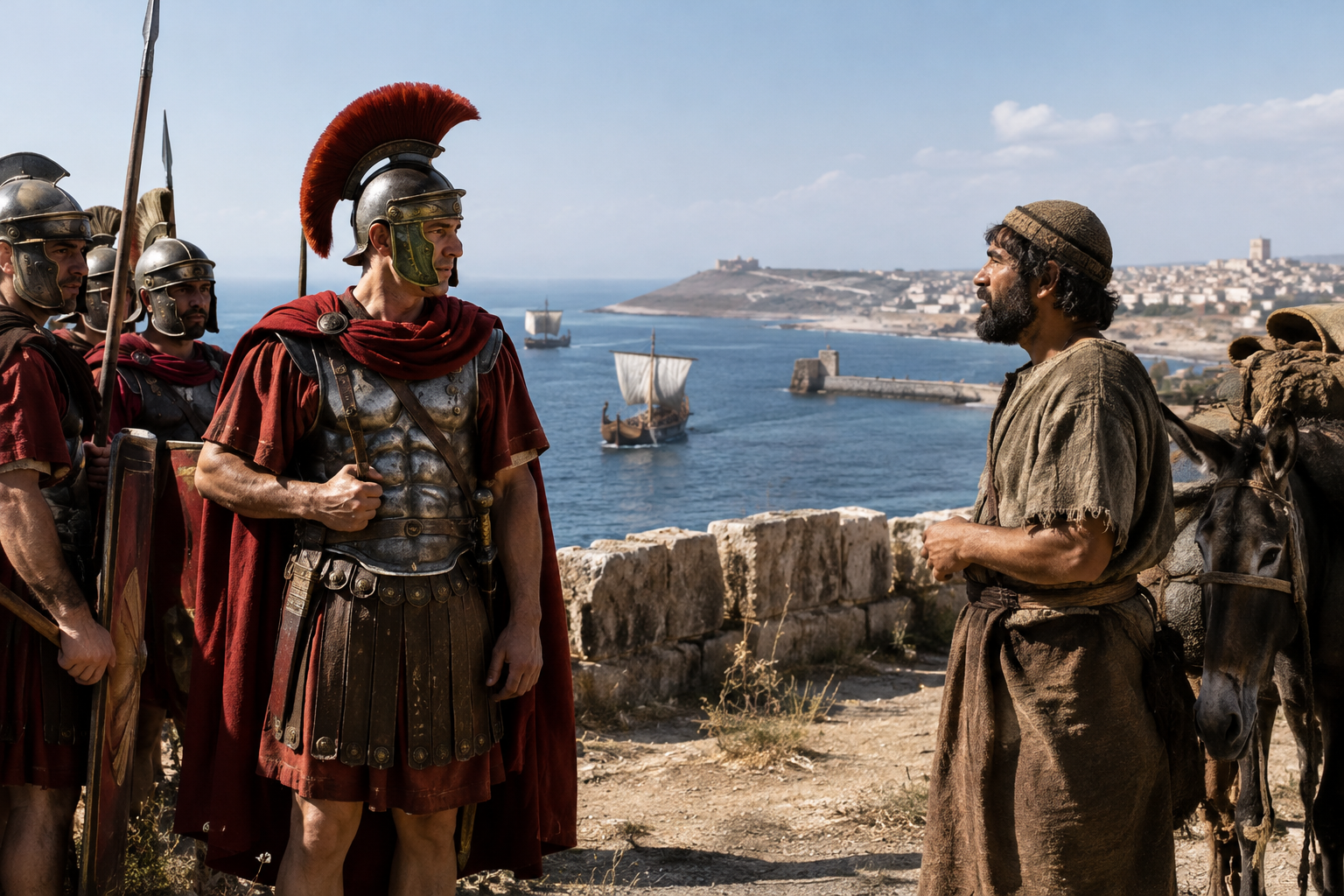
The later sample, I41135, comes from Aquae Calidae, a famous thermal-spring site in what is now Bulgaria, and dates to around AD 350. By then this was part of the late Roman world: administratively imperial, culturally mixed, and connected to Black Sea routes as well as inland Balkan networks. The fascination of a C1a2a male here lies precisely in that setting. This is not prehistory now, but the crowded and complicated human traffic of late antiquity.
Aquae Calidae had a long life as a place of movement and encounter. In a Roman and late Roman context, that means we must imagine not a single population frozen in place, but civilians, veterans, traders, families, local inhabitants, and newcomers circulating through a durable settlement landscape. A rare Y-line turning up there reminds us that the Roman Empire did not iron out human diversity into a single genetic profile. It often concentrated diversity instead.
Research published on late antique Bulgaria and adjacent populations can be followed through https://www.biorxiv.org/content/10.64898/2026.03.03.709317v1. In this kind of context, the value of one sample is not that it tells us everything about Aquae Calidae, but that it adds another documented paternal strand to the already intricate biological history of the Balkans in late antiquity.
And the Balkans are the right place to be alert to such complexity. Roman provinces in this region were shaped by very long local continuities as well as military transfer, colonization, and post-Roman change. A lineage like C1a2a surviving into this period does not require a dramatic migration tale. Survival itself, in a region of constant historical layering, may be the more interesting story.
There is a temptation with rare haplogroups to turn every appearance into a lost tribe, a hidden migration, or a vanished aristocracy. Archaeology usually asks for a steadier nerve than that. With C1a2a, the stronger interpretation is not a grand single route from one point to another, but a pattern of persistence in Europe across very different eras.
The Neolithic Romanian case and the late Roman Bulgarian case do not prove direct descent from one excavated man to the other, nor do they show that C1a2a was widespread. What they do show is temporal depth. This paternal branch could survive through the farming world of the 4th millennium BC and still be present in the Balkans during the final centuries of Roman rule.
That alone places C1a2a among those lineages that complicate easy historical storytelling. Europe's paternal past was not built only by the major later Bronze Age and Iron Age expansions. Some much older lines remained in circulation, sometimes at low frequency, quietly passing from father to son while languages, empires, and burial customs changed around them.
If your direct paternal line belongs to C1a2a, these ancient finds offer something more interesting than a simple label. They suggest a lineage with unusual depth in Europe's archaeological record, present in at least one Neolithic individual from Romania and one late Roman individual from Bulgaria. That is not a promise of descent from any named ancient person, but it is a real clue that your paternal branch belongs to one of the older and rarer threads woven through southeastern Europe's long human history.
For family historians, that makes C1a2a less a badge of one people than a reminder of continuity through change: farmers, provincial Romans, and many generations between them, most now invisible except for the DNA they left behind.
Comments