Haplogroup A1b(xA1b1b2a)
– 4 min read


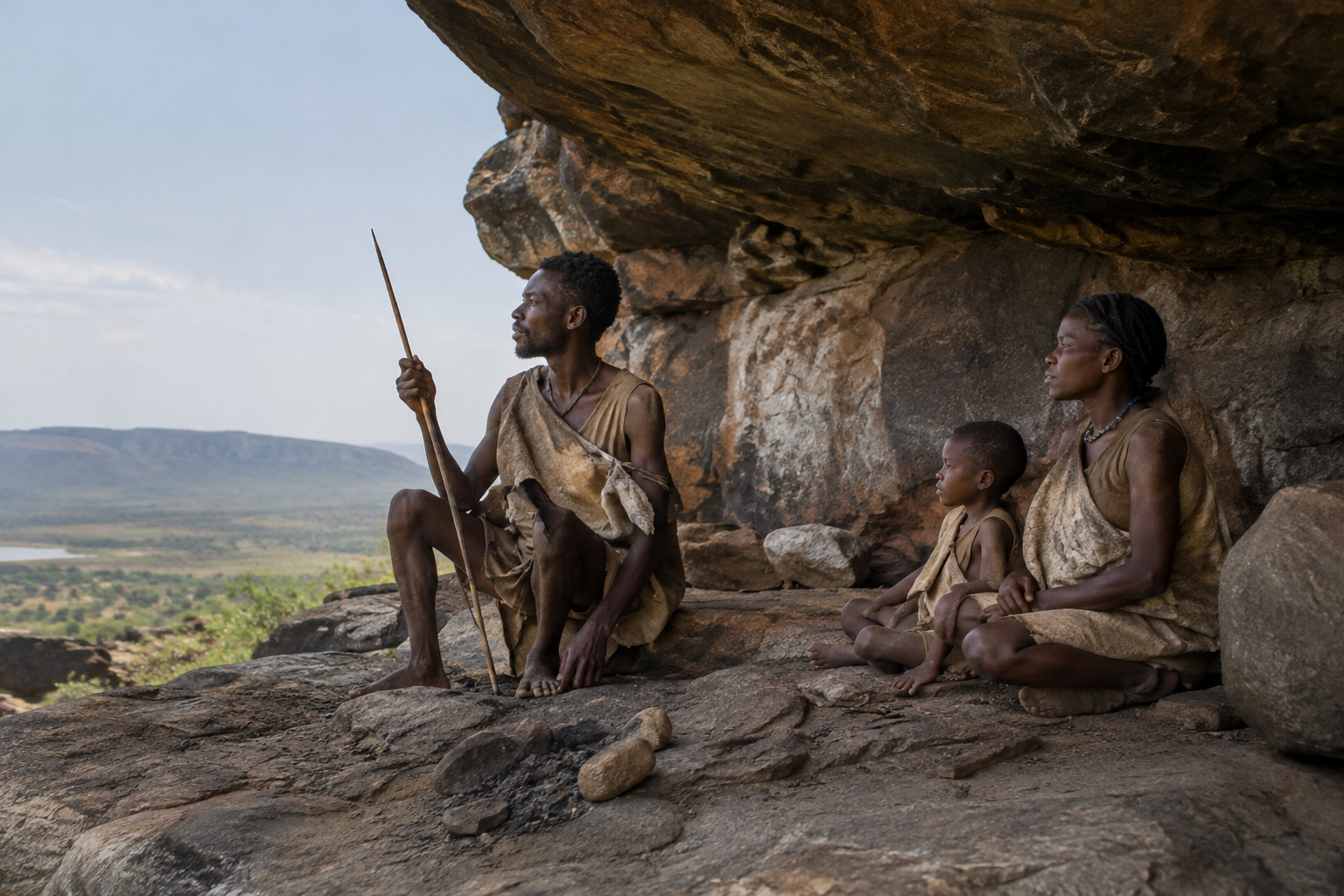
At Naishi Rockshelter in Kenya, one ancient male sample stands out for anyone interested in very deep paternal history: I8758, dated to around 500 BC and described as Pastoral Neolithic Cushitic. He is associated here with the Y-DNA haplogroup A1b(xA1b1b2a), a designation that immediately tells us we are dealing with an old and uncommon paternal branch in the archaeological record, and one rooted in Africa rather than in the later Eurasian lineages that dominate many ancient-DNA headlines.
That matters because ancient Y-chromosome results from eastern Africa are still far rarer than they ought to be. So when a named ancient individual from a known site in Kenya can be linked with a branch like A1b(xA1b1b2a), the interest is not grandeur or dynasty. It is something better: a chance to place one paternal line inside a real archaeological landscape of herding, mobility, and cultural change.
Naishi Rockshelter belongs to the long and complicated story of eastern Africa's Pastoral Neolithic, a period when herding communities spread across parts of Kenya and neighboring regions, carrying livestock economies into landscapes that had earlier been used by foragers. The label "Cushitic" in this context refers to a broad archaeological and population-historical interpretation used in ancient-DNA discussions of eastern African pastoralists; it is not a shortcut for a complete identity, language, or ethnicity of any one man.
Sample I8758 gives us a direct paternal clue within that world. Y-DNA follows one narrow line of descent, father to son, so it never describes a person's whole ancestry. But that narrowness is precisely why it can be so useful. In a site like Naishi Rockshelter, it offers one fixed line through a much wider human story of livestock, movement, local interaction, and changing populations.
An ancient DNA study of eastern Africa published in Science helped bring this broader pastoralist history into sharper focus. Even without forcing every detail onto one individual, the bigger pattern is clear enough: eastern Africa's ancient populations were neither static nor simple, and herding societies formed through mixture, movement, and regional adaptation.
How archaeogenetics reads the past
The notation A1b(xA1b1b2a) is a careful one. It places the paternal line within A1b, while excluding one downstream branch, A1b1b2a. In plain English, this means the sample is being kept at a broader resolution rather than assigned to a more specific terminal twig. That is a perfectly normal situation in ancient DNA, especially where coverage is limited or reporting conventions are conservative.
It is worth lingering on that caution, because deep African Y-chromosome branches have often been flattened into oversimplified stories. This sample does not license a sweeping claim that all Pastoral Neolithic men belonged to this lineage, nor does it mean that one branch maps neatly onto one language family or one migration pulse. What it gives us is narrower and more valuable: a securely ancient occurrence of a very old African paternal background among pastoralists in Kenya.
In other words, the interest here is not that I8758 somehow stands outside history. Quite the opposite. He shows that the making of eastern African pastoral societies involved paternal diversity as well as cultural change. The archaeological label and the Y-chromosome label are not the same sort of evidence, but together they make the site much more intelligible.
For many readers, African genetic history is too often pushed into crude oppositions: "indigenous" versus "incoming," foragers versus farmers, local versus foreign. The archaeology of Kenya refuses that simplicity. By the middle and late Holocene, communities in the region were already participating in long processes of exchange, ecological adjustment, and population contact. Herding was one of the great transformations, but it did not wipe the slate clean.
That is where a sample like I8758 becomes especially useful. Around 500 BC is late enough to sit well after the first introduction of herding into eastern Africa, yet early enough to preserve a view of these societies before later historical states and written traditions dominate the picture. A paternal lineage such as A1b(xA1b1b2a) surviving in this setting reminds us that pastoralism in Kenya was not simply a matter of replacement by some uniform outside population. It was lived by real communities with deep and varied African roots.
Archaeology has been making that point for years through pottery, settlement patterns, animal remains, and rock-shelter use. Ancient DNA now adds a different sort of evidence: biological relationships and lineages that can be compared, carefully, with those material traces. The result is not a single master narrative but a better map of complexity.
Human settlement and disease in Africa
Some haplogroup articles can lean on dozens of graves spread across centuries. This one cannot, and that is precisely the point. When evidence is sparse, each well-identified ancient individual matters more, not less. I8758 is not important because he can be turned into a mascot for a whole continent, but because he anchors a rare paternal signal in a specific archaeological context: Naishi Rockshelter, Kenya, Pastoral Neolithic, around 500 BC.
That sort of anchor is invaluable for future comparisons. As more eastern African male samples are published, researchers will be able to ask better questions. Was this branch common among some pastoral groups and absent in others? Did it persist locally through later periods? Was paternal diversity greater than older models expected? At the moment, the honest answer to many of these questions is that we need more data. But thanks to I8758, the conversation starts from evidence, not guesswork.
There is also a wider historical lesson here. Ancient DNA has sometimes encouraged readers to hunt only for famous rulers, warrior burials, or spectacular migration events. Yet much of the real work of population history comes from quieter finds: a rockshelter, a date, a male lineage, a regional label, and the patience to connect them carefully. Eastern Africa's past deserves that patience.
African population history through DNA
If your Y-DNA falls within A1b(xA1b1b2a), this ancient Kenyan individual does not prove descent from one named archaeological culture, still less from one excavated man. What it does suggest, more modestly and more usefully, is that your direct paternal line belongs to a very deep African branch already present in the world of eastern African pastoralists by around 500 BC. That is a meaningful historical foothold.
The most distinctive thing about this haplogroup, in the evidence we have here, is not conquest or courtly pedigree. It is continuity within change: an old African paternal lineage appearing inside a pastoral society that was itself part of major transformations in eastern Africa. That is often how the past really works - not as a neat replacement of one people by another, but as communities forming, mixing, adapting, and carrying ancient lines forward into new ways of life.





Comments