Haplogroup A1b

– 6 min read


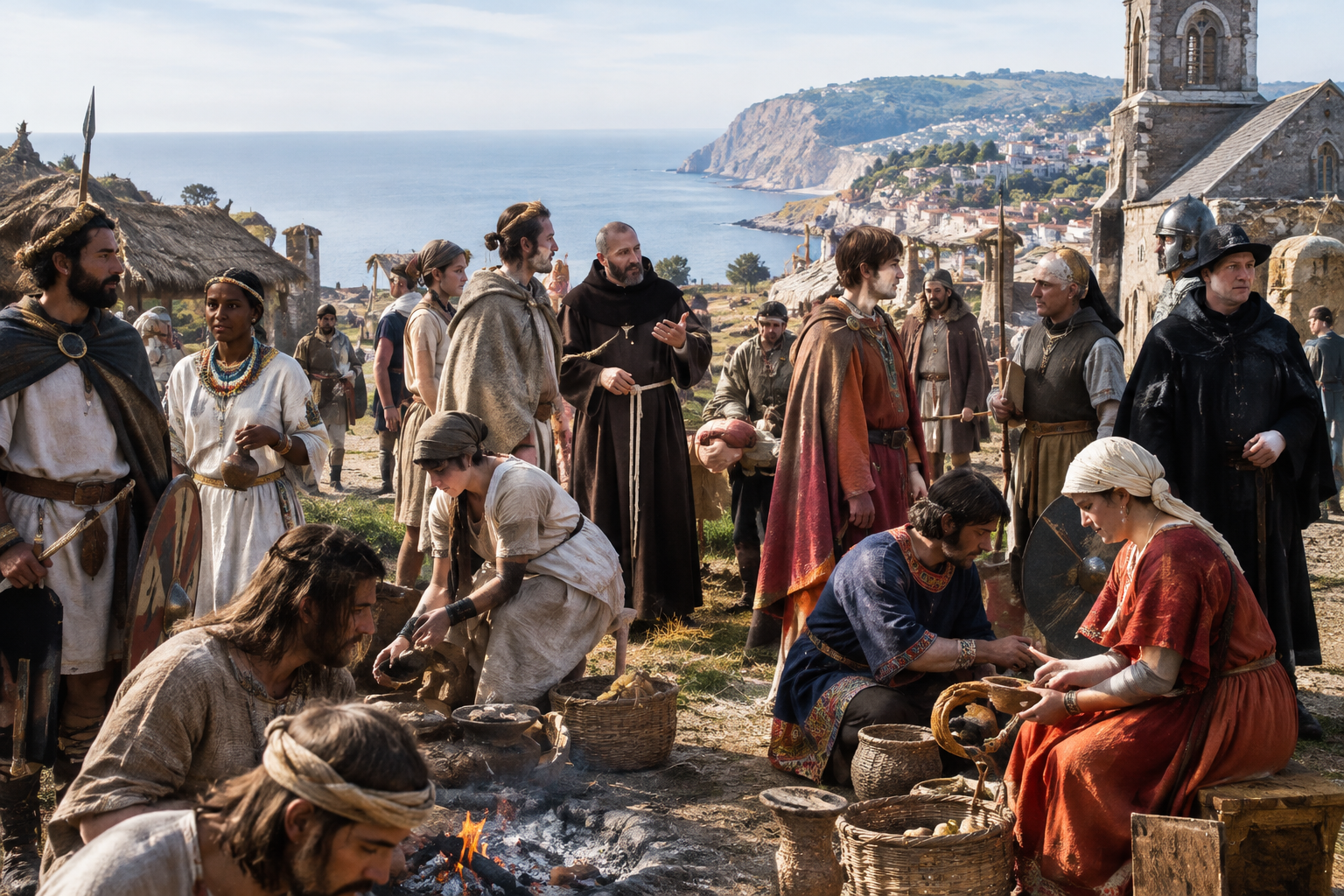
One of the strangest things about haplogroup A1b is that it turns up where many readers would least expect it. Take sample ATP_PSN_935 from Cherry Hinton in medieval England, dated around AD 1055. Or THE006 from Luxor in Egypt, around 690 BC. Or, going much further back, OAK014_A0101 from Oakhurst in the Western Cape of South Africa, around 3400 BC. That is not a neat little regional story. It is a reminder that very ancient paternal branches can survive in scattered ways across very different worlds.
That is the right way to approach A1b. It is a Y-DNA lineage, so it traces only one direct paternal line out of the many thousands that make up a person's ancestry. But precisely because it is such a deep and unusual branch in many ancient-DNA contexts, each appearance matters. The value here is not in pretending that all these men belonged to one people, or one migration, but in asking why a lineage with deep African roots appears in burials ranging from southern Africa to Egypt, Iron Age Italy, medieval England, and Viking-age northern Europe.
The clearest place to begin is OAK014_A0101, an ancient individual from Oakhurst in the Western Cape of South Africa, dated to about 3400 BC. In a discussion of A1b, this matters because southern Africa gives us the most plausible deep context for such an early branch. Here, A1b does not look like an intrusive curiosity. It looks like part of the older paternal landscape of Africa.
That does not mean every later A1b case outside Africa can be explained by a single route or event. Quite the opposite. It means that when the lineage appears in later Mediterranean or European settings, we should read it against a background of long human mobility rather than as a label for one ethnicity. Research on ancient African population history has repeatedly shown how old and structured these lineages can be, and how badly simplistic maps fail to capture them.
A useful parallel on the broader African genetic background comes from work on deep African population structure, including material linked to Shum Laka in Cameroon, where ancient DNA helped clarify that old African lineages do not map tidily onto later linguistic or ethnic identities. One such study can be found here: https://www.nature.com/articles/nature25738.
Once A1b appears in the Mediterranean world, the story becomes historically awkward in the most interesting way. Sample THE006 from Luxor, dated to around 690 BC in Egypt's Third Intermediate Period, places the lineage in the Nile Valley during a time when Egypt was connected to Nubia, the Levant, and the wider Mediterranean. That is not surprising in itself; Egypt was never isolated. What is striking is that an A1b signal survives clearly enough to be noticed in this context at all.
Then there is I28503, an Ancient Carthage Outlier from Tunisia, dated around 387 BC. The word "outlier" is doing a lot of work here. Carthage was a famously cosmopolitan city, Phoenician in origin but embedded in North Africa and tied into trade networks spanning Iberia, Sicily, Sardinia, and beyond. A rare paternal lineage appearing there is not some puzzle box waiting for a single answer; it is exactly the sort of result that reminds us ancient port cities were full of people whose backgrounds were mixed, mobile, and not always visible from artifacts alone.
These North African and Egyptian cases do not prove one continuous A1b corridor into Europe. But they do show that the lineage was present in connected Mediterranean settings long before the medieval period. That matters when later European examples appear.
Two more samples add texture rather than certainty. PSD4, from Sirolo-Numana in Ancona, belongs to an Iron Age Piceni setting around 650 BC. I22114, from Tharros in Sardinia, is dated to around 297 BC in the Roman era. Neither sample allows us to write a grand tale about "the" spread of A1b into Italy. But together they show the lineage appearing in two very different Italian contexts: Adriatic Iron Age society on the one hand, and a western Mediterranean island world with Punic and later Roman entanglements on the other.
That distinction matters. Ancient Italy was never genetically uniform. Piceni communities on the Adriatic coast had their own local trajectories and overseas contacts; Sardinia, meanwhile, sat in the middle of maritime exchange between North Africa, Iberia, and the peninsula. If A1b appears in both places, the safest reading is not that one population carried it everywhere, but that several historical settings could preserve or introduce rare paternal lines.
Recent archaeogenetic work on Italian regions and islands has made exactly this broader point: peninsula and island populations often show continuity in some respects and striking diversity in others. The lineages in the record are not clean badges of language or political allegiance.
If the ancient Mediterranean examples are intriguing, the early medieval and Migration-period cluster is downright provocative. A1b is reported among samples from Rakoczifalva in Hungary (RKF119, RKF252), Hajdunanas (HNJ001), Bruecken and Deersheim in Saxony-Anhalt (BRC038x, BRC064x, BRC018x, DRH028, DRH047, DRH049), Obermollern (OBM003, OBM016, OBM050), and even a Gothic grave in Bulgaria, I41200, from Han Krum village around AD 400. There are also late Roman and medieval Polish examples such as PC1004, PC1005, and Skoki_S51.
Now, one must be careful. A cemetery label such as "Saxon," "Thuringii," "Gothic," or "Sarmatian outlier" is an archaeological or historical frame, not a pure genetic identity. Still, the cluster tells us something important: by late antiquity and the early Middle Ages, A1b had become part of the human mix found in frontier zones, military landscapes, and post-Roman communities across central and eastern Europe.
A recent ancient-DNA study on post-Roman communities in the Carpathian Basin and neighboring regions has emphasized just how mixed these societies could be, with people of varied ancestry buried within the same broad historical horizons. One relevant paper is here: https://www.nature.com/articles/s41559-024-02532-3. That does not specifically turn every A1b sample into a migrant from the same source. What it does do is make it easier to see why an old paternal branch could appear in cemeteries associated with several different groups.
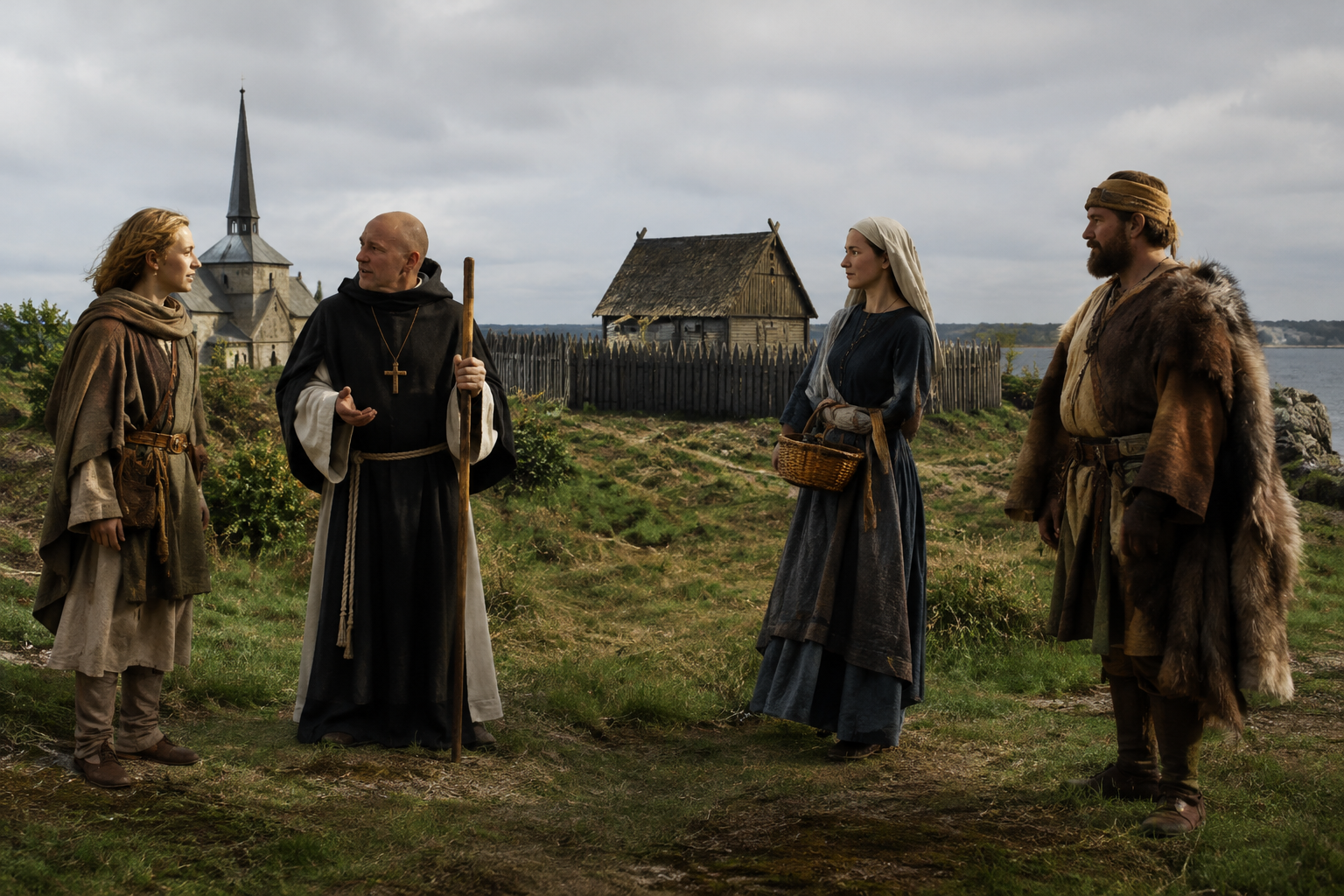
The English samples are among the most arresting for modern genealogists because they sit in places and periods many users know well. At least five medieval English individuals in this set are associated with A1b: ATP_PSN_935 from Cherry Hinton around AD 1055; ATP_PSN_497 from Cambridge Benet Street around AD 1250; ATP_PSN_504 and ATP_PSN_524 from Augustinian Friars in Cambridge around AD 1290 and AD 1340; and ATP_PSN_1203 from Clopton, Cambridgeshire, around AD 1561. There is also S16383 from early medieval Cornwall, around AD 700.
That distribution is worth pausing over. It suggests not a single fleeting arrival, but a lineage that could persist in Britain across several centuries and social settings. Some of these men may have had recent overseas ancestry; others may have belonged to paternal lines that had already been in Britain for generations. The Y chromosome alone cannot decide between those possibilities, but it certainly rules out any complacent picture of medieval England as genetically simple.
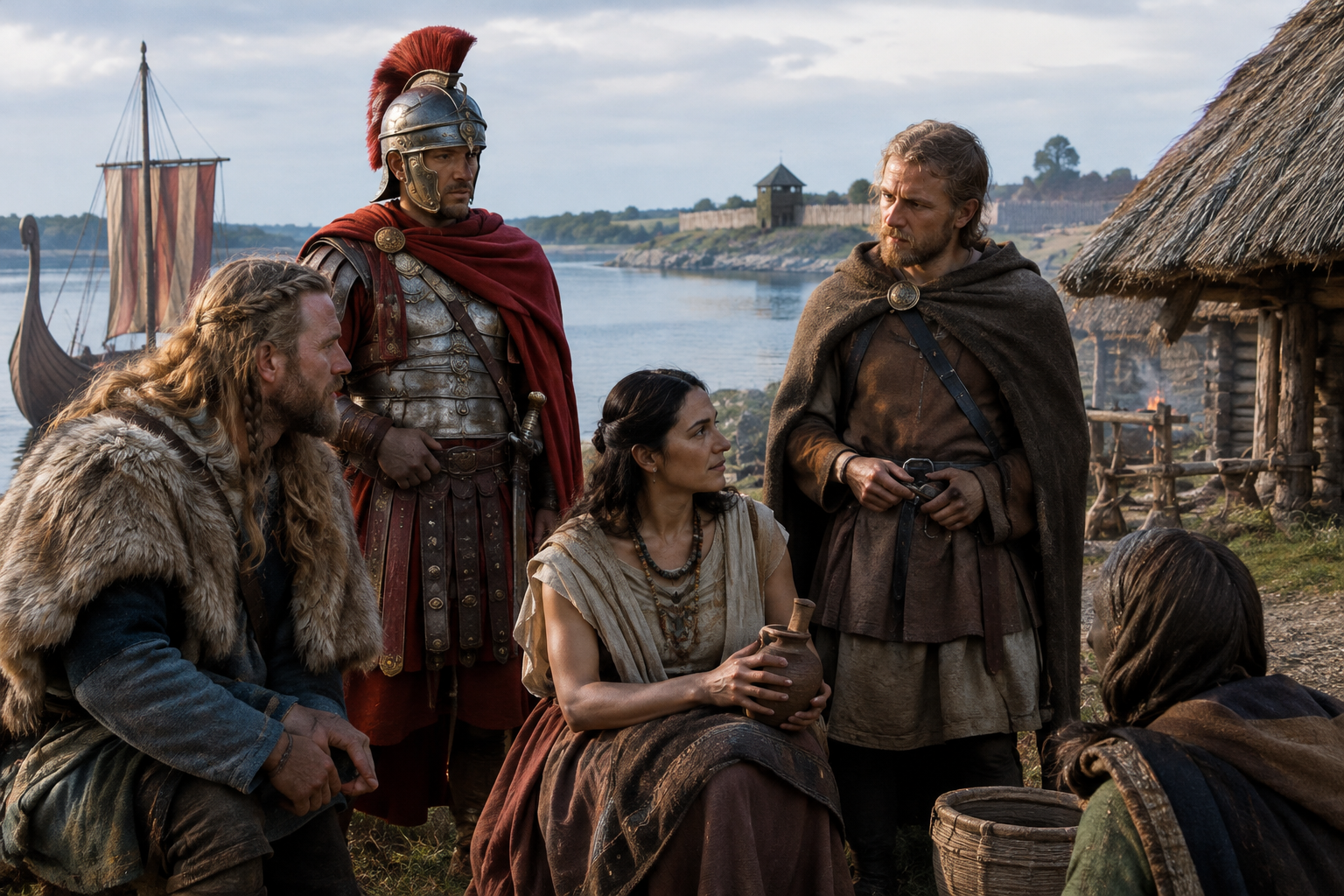
The wider North Sea world adds yet another layer. A1b-associated samples also appear in Denmark, Norway, Sweden, Greenland, and Viking-linked contexts such as VK182, VK185, VK222, VK467, and VK164. Again, this does not make A1b a "Viking haplogroup" in any straightforward sense. It shows that the Viking Age, like Roman and post-Roman Europe before it, moved people and paternal lines around a vast connected zone from the British Isles to the Baltic and beyond.
The most distinctive thing about A1b in this ancient record is not a single kingdom, tribe, or dynasty. It is the combination of deep African antiquity and later appearances in very mixed archaeological settings: Egypt, Carthage, Iron Age Italy, post-Roman central Europe, medieval England, and the Viking world. In other words, this is a paternal line that refuses tidy historical boxes.
If you belong to haplogroup A1b, the responsible takeaway is a good one. Your direct paternal line points to a very old branch of human history, and the ancient evidence shows that such a line could survive, travel, and reappear in surprisingly diverse societies. It does not assign you one ethnicity or one heroic origin story. It gives you something better: a lineage old enough, and mobile enough, to have passed through more than one historical world.
Comments