Haplogroup A1

– 5 min read


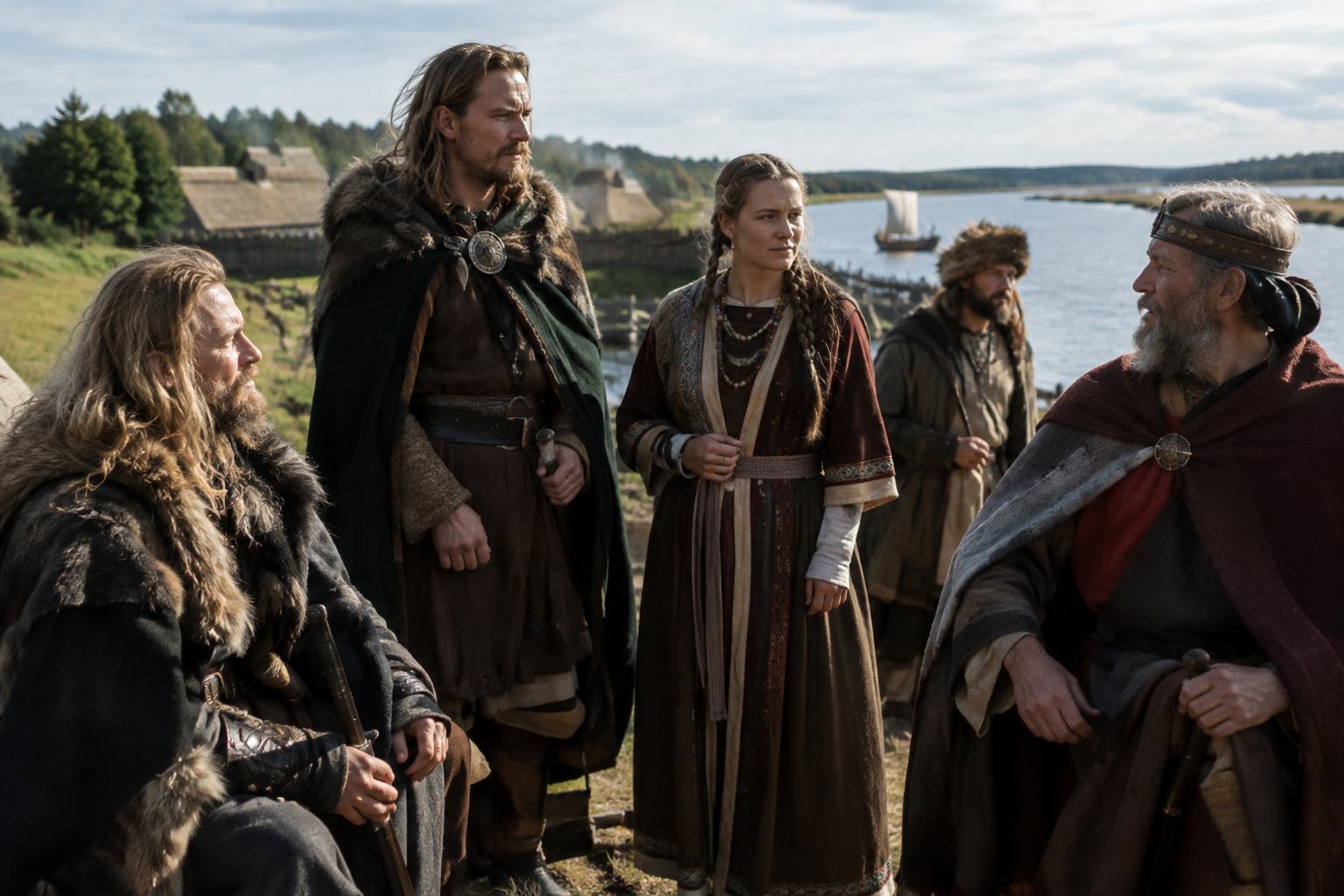
At Masłomęcz in eastern Poland, a Late Roman-period cemetery associated with the Goths has produced one of the more striking reminders that ancient communities were rarely as uniform as old-fashioned history books liked to imagine. Among the individuals from around AD 300 are two men, PCA0091 and PCA0093, reported here under Y-DNA haplogroup A1 - a lineage that sits very near the root of the human Y-chromosome tree and is far better known in African deep population history than in European archaeological contexts.
That is precisely what makes these finds interesting. Y-DNA traces only one direct paternal line, not a person's whole ancestry or identity, but even so, an A1 signal in Gothic-period Poland is unusual enough to force a useful question: what did a Gothic-associated community on the Roman world's northern fringe actually look like in biological and social terms?
The Masłomęcz group has become increasingly important in debates about Goths, mobility, and cultural mixture in Late Iron Age Barbaricum. Archaeology had long linked the cemetery and settlement complex to Gothic traditions, yet ancient DNA has shown that people buried there did not belong to a single neat biological package. The site is better approached as a community shaped by movement, marriage, and contact across a broad frontier zone.
That wider point is explored in MyTrueAncestry's own discussion of Cosmopolitan Goths: Archaeogenomic Evidence for a Genetically Diverse Masłomęcz Community in Late Iron Age Barbaricum.
An ancient DNA study examining this community, published in Genome Biology, has helped underline that point. Without pretending that one lineage explains an entire people, the reported presence of A1 in PCA0091 and PCA0093 fits a broader picture in which Gothic-associated groups were not sealed-off tribes marching across Europe with fixed biological boundaries. They were, rather, communities assembled in history.
Haplogroup A1 is not a "Gothic haplogroup" in any simple sense, nor should anyone read these Polish burials as proof that Goths originated in one particular region because of a single paternal branch. The sensible point is narrower and more interesting. A1 is a very old Y-chromosome lineage, and when it appears in a European archaeological setting like this, it highlights the extraordinary longevity and geographic complexity of human paternal lines.
In other words, the surprise is not that one lineage somehow defines the Goths. The surprise is that men buried in a community archaeologists connect with the Goths could carry such an uncommon paternal signal in this region, reminding us that cultural affiliation, language, ancestry, and paternal descent are different things. Ancient societies knew this in practice, even if modern labels sometimes blur it.
The Masłomęcz cases are not entirely isolated. Two earlier individuals from northern Poland also appear in the sample set: PCA0527, described as an Early Goth individual from Pruszcz Gdański, Pruszcz Wielbark, dated around AD 200, and PCA0474, from Iron Age Pomerania at Gdańsk Wielbark, also around AD 200. These burials belong to the broader Wielbark cultural horizon, often discussed in connection with Gothic movements and northern exchange networks along the Baltic.
Now, one must be careful here. A handful of A1-linked records in Wielbark and Masłomęcz contexts does not mean the lineage was common, dominant, or diagnostic of those populations. But the repetition matters because it shows that the Masłomęcz evidence is not a lone curiosity detached from regional history. Instead, it hints that unusual paternal lines could already be present within connected communities in Pomerania before or during the development of Gothic-linked networks farther south and east.
For a broader look at how ancient DNA has complicated the old picture of Gothic identity, see the related discussion of Goths as a Multi-Ethnic Community: Ancient DNA.
There is also a wider European backdrop here. Research published in Nature on population history in the Migration Period and early medieval world has shown again and again that frontiers, warbands, and post-Roman societies drew in people from varied backgrounds. The Polish A1 cases sit comfortably within that larger lesson, even if each cemetery has its own local history.
The latest sample in this set, PCA0318, comes from medieval Poland, identified as a Piast Dynasty individual from Płońsk in Masovia and dated around AD 1100. That is a very different world from the Gothic-associated cemeteries of the Roman frontier: Christian, dynastic, and tied to the formation of the medieval Polish state. Yet the appearance of the same broad haplogroup label here is a useful reminder that paternal lines can persist through enormous cultural changes.
That persistence should not be overread. A shared broad haplogroup does not by itself demonstrate a direct genealogical chain from Wielbark or Masłomęcz men to a medieval Piast-period individual. It does, however, make the point that Y-lineages outlast kingdoms, burial customs, and ethnic names. The map changes faster than the chromosome.
Readers interested in the royal and dynastic side of this story may want the companion piece on Genetic Origins and Dynastic Connections of the Medieval Polish Piast Rulers.
There is a temptation, whenever a rare lineage appears, to turn it into a grand migration tale with arrows sweeping across continents. Better to resist that. What the evidence from PCA0527, PCA0474, PCA0091, PCA0093, and PCA0318 really offers is something subtler: a glimpse of how surprisingly diverse paternal histories could be within communities that archaeology names as Wielbark, Gothic, or Piast.
That makes these A1 results especially valuable for family historians. If your paternal line falls into A1, the ancient evidence here does not assign you a ready-made ethnicity or a heroic tribe. What it does suggest is that this lineage, though rare in many European settings, could persist within historically mixed societies and appear in places where older narratives would never have expected it.
Another useful comparison comes from MyTrueAncestry's article on Ancient DNA Reveals Mixed Origins of Gothic Communities in Late Antique Bulgaria, which shows the same general lesson in a different Gothic-world setting.
The most distinctive thing about haplogroup A1 in this set is not grandeur but contrast. A lineage with extremely deep roots in the human paternal tree appears in burials from Gothic-period and medieval Poland, crossing worlds that archaeologists usually keep in separate chapters. That does not collapse those chapters into one story - but it does remind us that paternal ancestry can thread quietly through them.
For someone exploring A1 today, these samples suggest a past that is old, rare in this regional record, and unexpectedly present in communities shaped by movement and mixture. That is often the real gift of ancient DNA: not certainty, but a sharper, stranger, and more human past.




Comments