Clan Mac Gobhann

– 3 min read


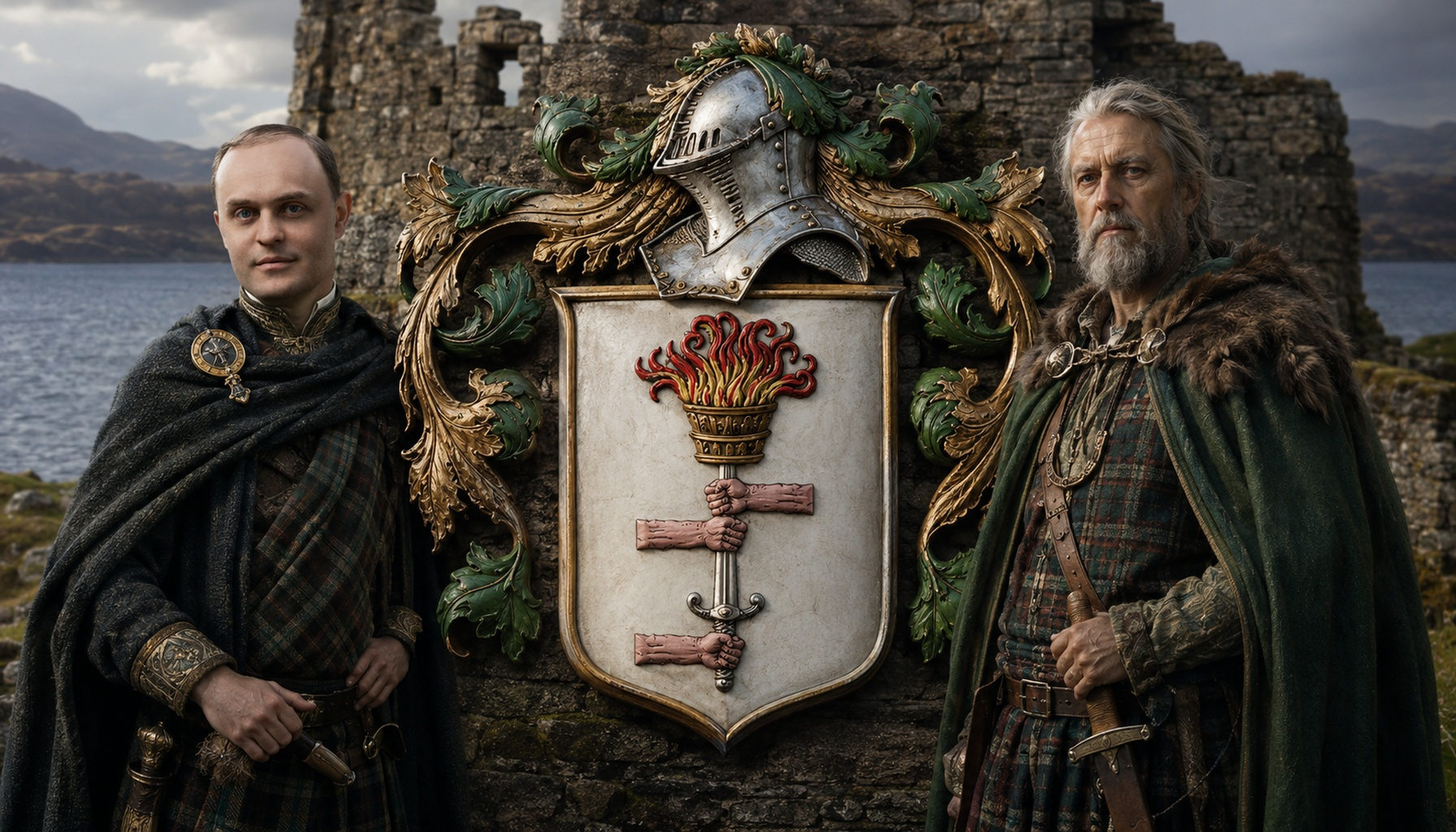
Clan Mac Gobhann was a Gaelic family tradition rooted in both Ireland and Scotland, with a name that tells you exactly where it began: Mac Gobhann means "son of the smith." That matters, because in older Gaelic communities the smith was not some decorative village figure but a vital worker at the center of everyday life, shaping tools, repairing ironwork, fitting horses, and keeping farming and fighting alike in working order. The family heritage is therefore bound up with practical skill, local service, kinship identity, and the long survival of a surname that carried both an occupation and an ancestry. In haplogroup terms, the primary family line here is linked with R1b1a1b1a1a2c1a1d3b1b2, a branch within the wider Atlantic-facing paternal landscape often seen across parts of the British Isles.
What makes Mac Gobhann especially interesting is that it sits in that very Gaelic overlap between family and function. A surname like this is not merely a job label frozen in time; it became a hereditary badge of belonging. In Ireland and western Scotland, where kin, land, and local reputation mattered enormously, such names endured through social upheaval, anglicisation, migration, and changing political worlds. The clan story is therefore not simply about smithcraft, but about cultural resilience: a family remembered through work, community usefulness, and continuity across generations. One notable figure often connected into this broader Gaelic world is Neil Gow, born in 1727, the celebrated Scottish fiddler whose very life evokes the enduring cultural texture of Highland and Perthshire society in which craft, lineage, and local identity remained deeply entangled.
A useful place to anchor this heritage is Castle MacEwan in Argyll, on the west coast of Scotland, traditionally associated with Clan MacEwen and perched above Loch Fyne near Otter Ferry. The site is not a grand palace sort of ruin, but a more intimate and revealing kind of stronghold: a rocky, strategic, medieval seat that speaks of lordship on a local scale, of sea routes, kin control, and the rough practicalities of west Highland power. The surviving remains are fragmentary, yet that is part of their charm. One can still make sense of why such a place mattered, commanding the landscape and reminding us that Gaelic families were tied not only to names but to defensible places, negotiated loyalties, and a world where status was constantly asserted in stone. Castle MacEwan can still be visited as a ruin, reasonably accessible to those exploring the area, and it offers exactly the sort of atmospheric encounter that brings clan history out of genealogy charts and back into the land itself.
From the ancient DNA side, the Mac Gobhann haplogroup tag R1b1a1b1a1a2c1a1d3b1b2 can be set alongside a number of related or linked samples from Britain and northern Europe. These include Medieval England Augustinian Friars samples ATP_PSN_512 and ATP_PSN_520, Medieval Vasterhus Sweden sample mbv151, the Celtic Briton from Yarnton in Oxfordshire sample I21182, and the Late Bronze Age individual from Raven Scar Cave in North Yorkshire sample I16469. These are not evidence of direct descent from a named Mac Gobhann ancestor, and it would be quite wrong to pretend otherwise. What they do offer is a broader genetic and historical frame: they show this paternal line, or closely related branches, moving through the same kind of northwestern European world in which Gaelic surnames later emerged, endured, and acquired their local identities.
Explore ancient DNA in post-Roman Britain
If you carry Mac Gobhann heritage, or a related smith-name from Ireland or Scotland, uploading your DNA can help place your family story into this wider tapestry of Gaelic kinship, occupational identity, and ancient population history. It is a chance to see whether you match the family tradition, or show connections to related ancient DNA samples linked with the same deeper paternal branch.

Comments