Clan Le Poer

– 3 min read


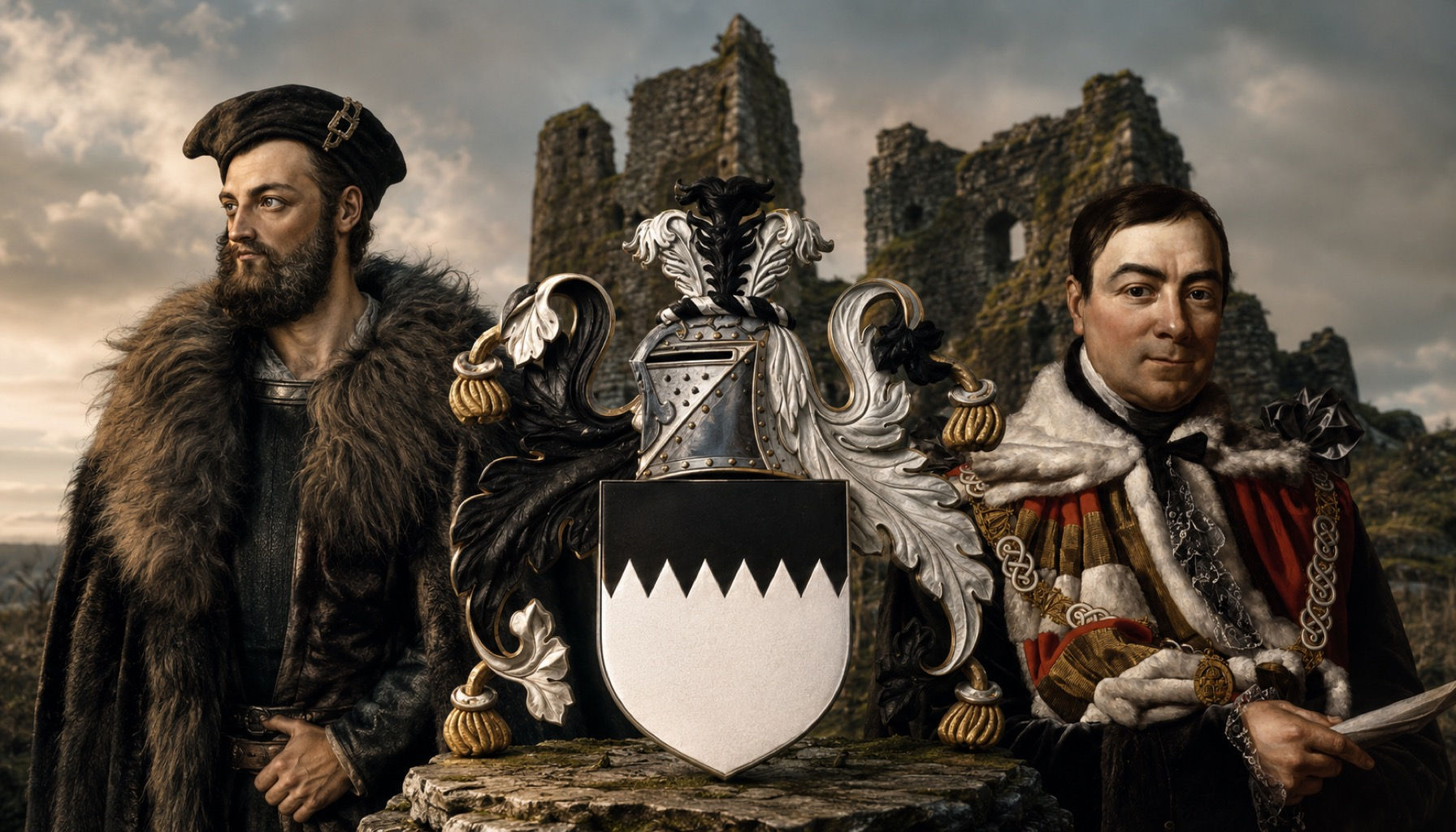
Clan Le Poer was one of the great Norman-Irish noble families of medieval Ireland, rooted especially in County Waterford, and remembered today as much through the later surname Power as through the older French form. In broad historical terms, they belong to that very recognisable conquest-era story: a family arriving in the wake of Norman expansion, taking land through royal grant and military service, building castles, establishing lordship, and then, over generations, becoming deeply woven into Irish political and social life. Haplogroup tags associated with this family tradition include I1a3g, treated here as the primary family haplogroup marker.
The Le Poers came from the world of the Norman aristocracy, a frontier society where lordship was not an abstract title but something built in stone, defended by followers, marriages, and armed obligation. Their rise in Ireland was tied to the great reshaping of the island after the Anglo-Norman intervention of the late 12th century. In Waterford and the surrounding districts, the family became associated with estates, heraldry, noble standing, and regional influence. Over time the line was thoroughly integrated into Irish life, and the surname evolved into Power, a useful reminder that names may change their dress while preserving a long continuity underneath. Older legendary material sometimes reaches much further back, even invoking figures such as Conmore, Count of Poher, dated to 490, though that belongs to an earlier and more shadowy historical landscape than the documented medieval Le Poers of Ireland.
Dunhill Castle is one of the great location anchors for Le Poer history in County Waterford, and it is exactly the sort of place that makes medieval aristocratic power feel tangible. Perched on elevated ground with commanding views over the surrounding countryside, the castle was strategically placed to watch roads, territory, and people. Its history is not merely architectural but political: this was a stronghold in a contested landscape, associated with the Le Poer family and with the long struggle to maintain authority in a region where local rivalry, rebellion, and shifting loyalties were part of everyday noble life. The site later saw violence, destruction, and decline, which is often the fate of castles once central power changes and old lordships weaken. Even in ruin, though, Dunhill still speaks clearly of the Le Poers' world: military lordship, control of land, and the hard-edged reality behind noble prestige. It can still be visited today as a historic ruin, making it an especially vivid stop for anyone tracing Le Poer or Power heritage in Waterford.
Explore the House of de Courcy
From a DNA perspective, the Le Poer tradition is tagged here to haplogroup I1a3g, and while no claim of direct descent should be made from ancient or historic samples without specific evidence, there are many related or linked finds that help place this lineage in a wider northwestern European story. I1a3g-linked samples appear across an impressive span of time and geography: from Nordic Bronze Age Scandinavia, including Falkoping 5 in Sweden and sites in Denmark such as Bybjerg, Vasagard, Stroby Ladeplads, Magleo, Lollikehuse, and Toftum Mose; to Iron Age and Gothic-associated contexts in Poland and the Baltic sphere; to Roman and post-Roman finds in England, Germany, Hungary, Serbia, and Flanders. Later examples include medieval Cambridge St John's Hospital individuals, Augustinian Friars in England, late medieval Cambridgeshire, Viking Age Sweden and Denmark, the St. Brice massacre victims at Oxford, and even colonial-era lineages such as Sir Ferdinando Wainman of Jamestown Colony, Virginia, and a historic burial from St. Mary's City, Maryland. What this shows is not a neat single-family trail, but a broad genetic backdrop linking the Le Poer haplogroup tag to the long movement of northern and northwestern European paternal lines through Bronze Age, Roman, medieval, and early modern history.
If you carry the surname Le Poer or Power, or simply suspect a connection to the Norman-Irish world of Waterford, castles, and medieval lordship, DNA can add another layer to the story. Upload your DNA to MyTrueAncestry to see whether you match Clan Le Poer, the I1a3g-linked network, or related ancient DNA samples from medieval Britain, Scandinavia, and continental Europe.


Comments