Clan Fraser
– 3 min read


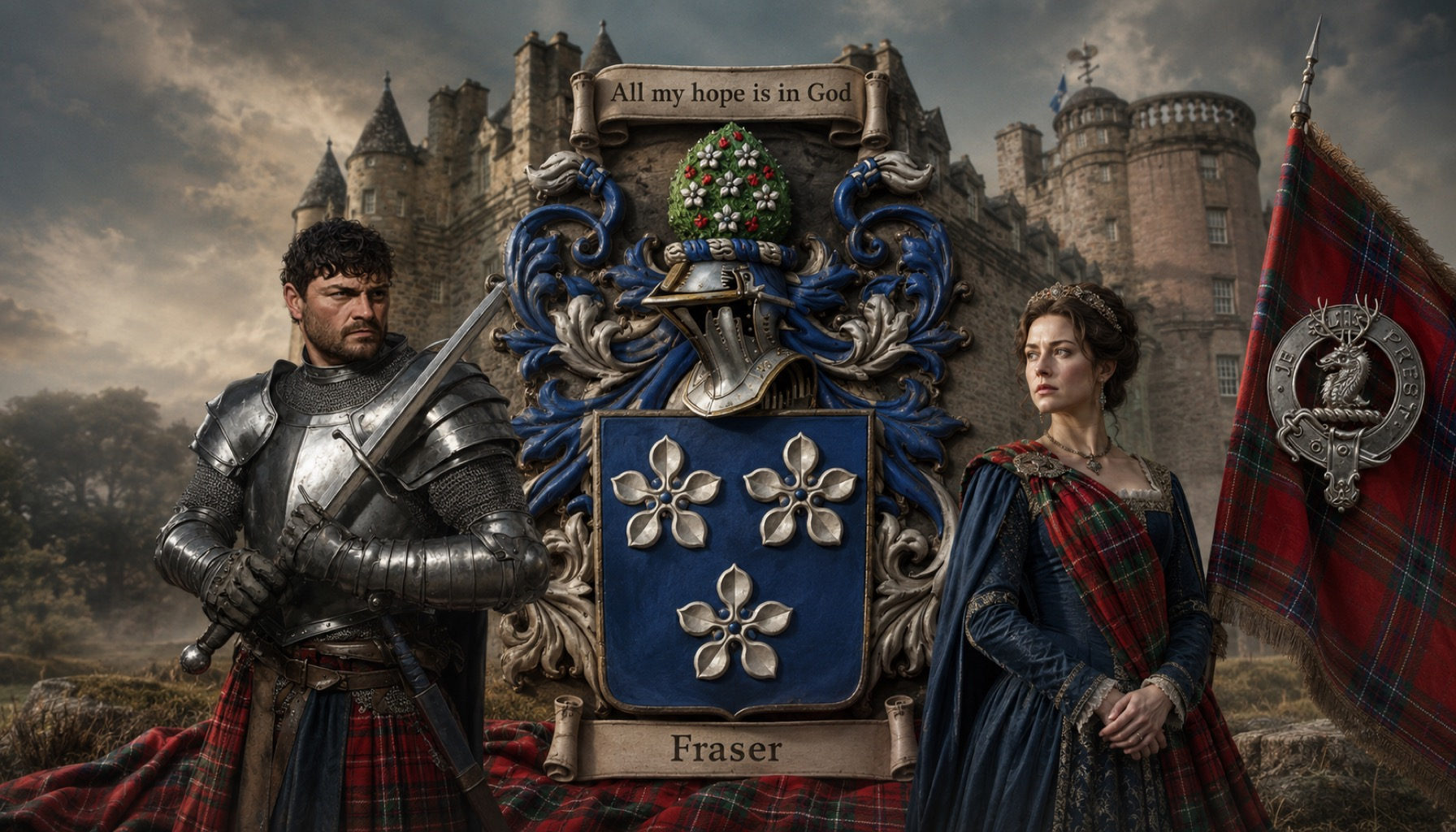
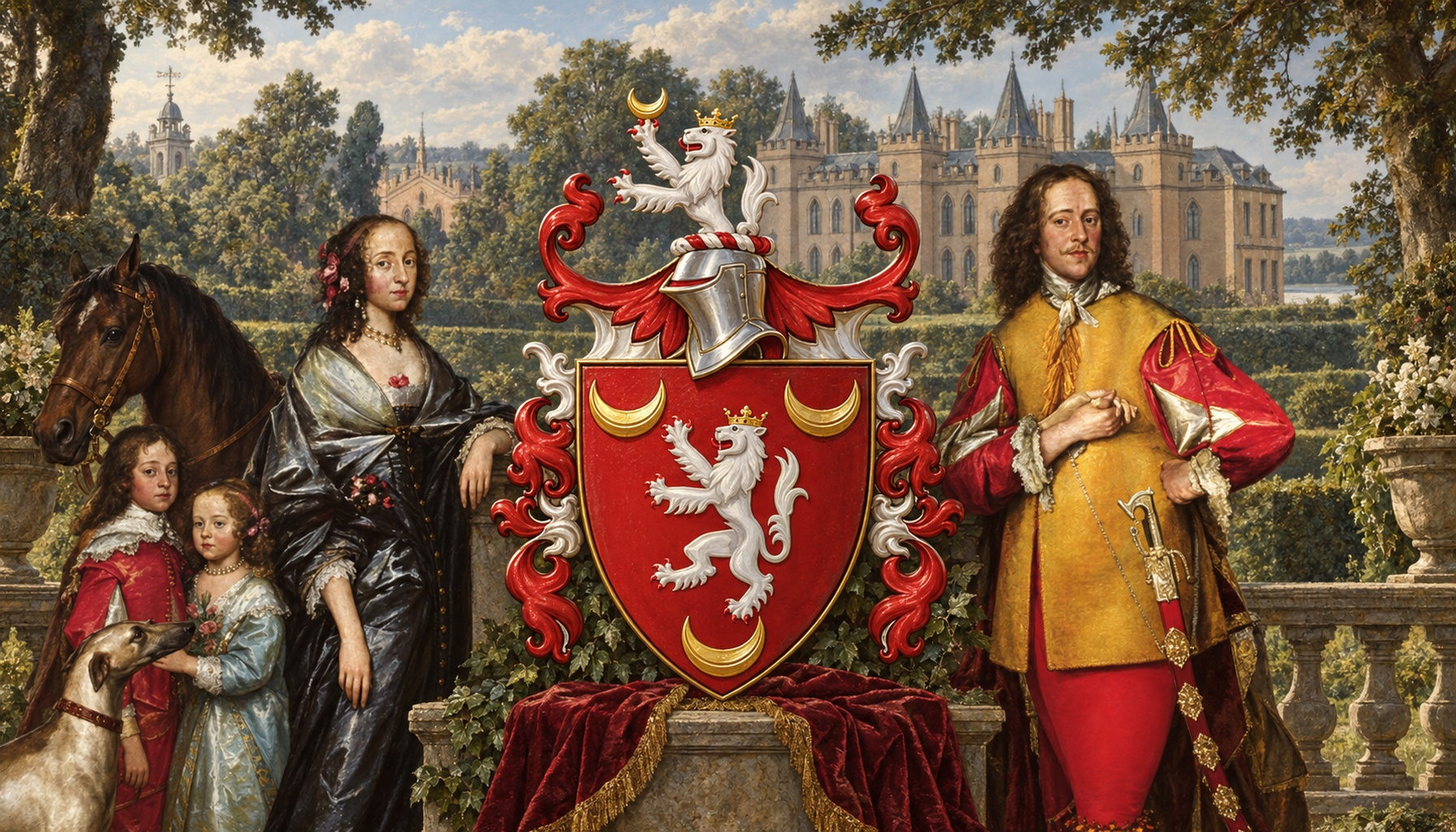
Clan Fraser was one of the great families of Scotland, with roots stretching across both Highland and Lowland worlds, and with a long record of lordship, warfare, marriage strategy, office-holding, and political importance. The name is especially tied to the Frasers of Lovat in the Highlands and the Frasers of Philorth in the northeast, two branches that show how a single kin-group could operate in very different Scottish settings while still preserving a shared sense of rank, heraldry, and family continuity. In genetic tagging terms often associated with Fraser research, the primary family haplogroup is R1b1a1b1a1a2c1a1e1, part of the wider R1b paternal landscape so common across later prehistoric and historic western Europe.
The family likely emerged in medieval Scotland within the world created by feudal land grants, crown service, and the steady knitting together of regional lordships after the twelfth century. Like several major Scottish houses, the Frasers appear in a context where names, lands, and loyalties mattered every bit as much as blood. They became a classic magnate-clan: territorial, martial, status-conscious, and politically adaptable. Their history is not just tartan romance, but the harder business of keeping castles standing, followers loyal, and influence intact through war, dynastic crisis, and changing royal regimes. Among the notable early figures is Sir Simon Fraser, active in the age of the Wars of Independence and executed in 1306, remembered as one of the hard-fighting nobles who moved through the dangerous orbit of William Wallace, Robert Bruce, and Edward I.
Read more about Clan Mackenzie
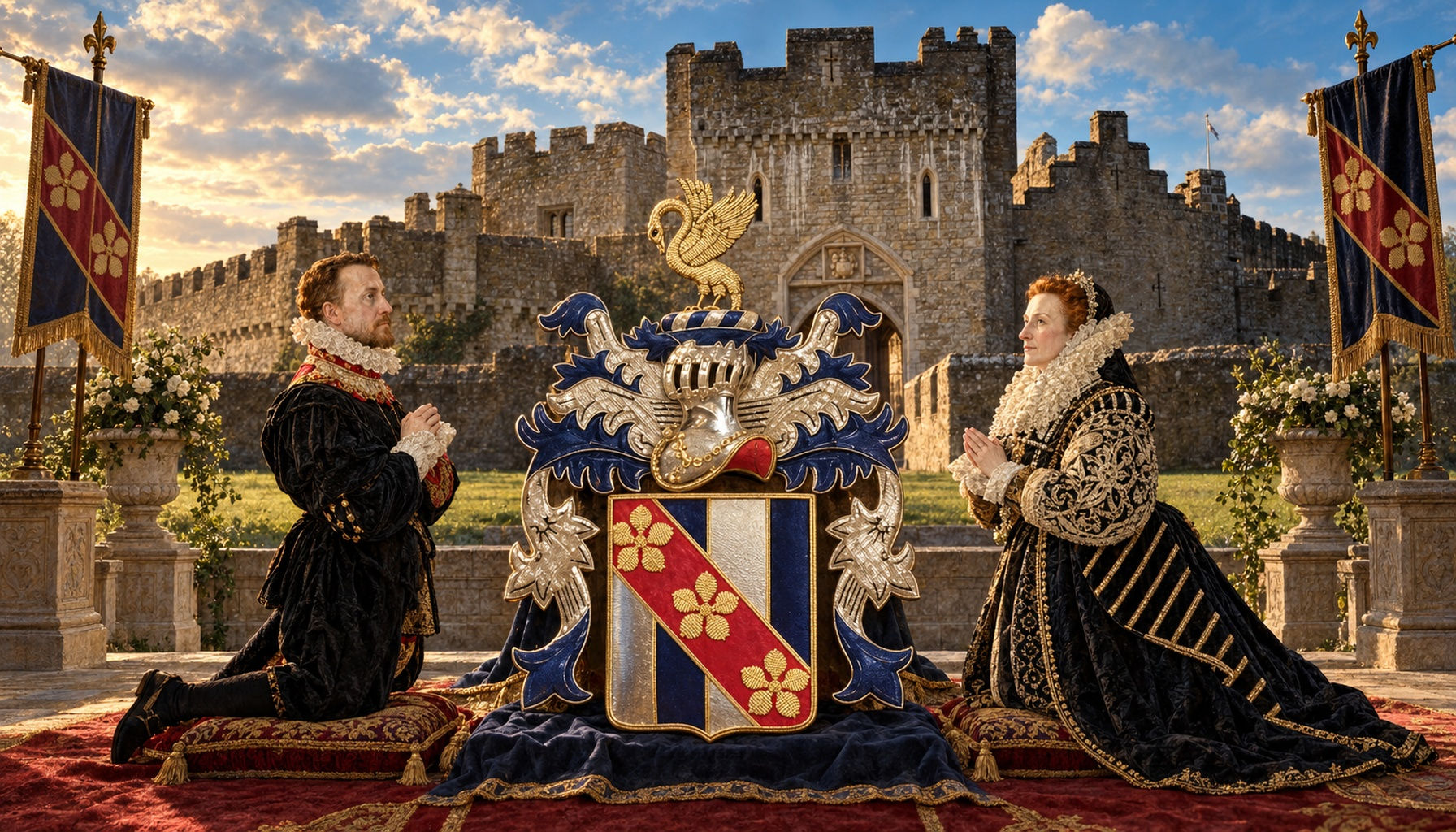
One of the great place-anchors for Fraser history is Castle Fraser in Aberdeenshire, near Kemnay, a splendid and rather theatrical example of Scottish baronial architecture with a strong Z-plan tower-house core. The site is associated with the Frasers of Muchalls and later the Frasers of Castle Fraser, and the present building was developed mainly from the later sixteenth century into the seventeenth. What makes it so memorable is that mixture of fortress and showpiece: thick walls and defensive form on the one hand, but on the other a residence designed to proclaim status, taste, and permanence. It is one of the largest tower houses in Scotland, with elaborately finished interiors, landscaped grounds, woodland, and a kitchen garden, all of which give a sense of how noble life worked beyond the battlefield. In other words, this was not just a place to hide in bad times, but a stage for hospitality, local authority, and family memory. Happily, Castle Fraser is still standing and can be visited today, which means Fraser heritage is not merely a matter of documents and legend but something you can walk through, stair by stair.
From an ancient-DNA point of view, the Fraser-linked paternal tag R1b1a1b1a1a2c1a1e1 belongs to a very old and widely distributed branch found in related or linked samples across Britain and Europe. These do not prove direct descent from Clan Fraser, and it is important not to pretend they do. But they do place the lineage in a deep historical landscape that includes Roman Era England at Knobbs Farm, Somersham (KNF006); multiple Celtic Durotriges samples from Duropolis, Winterborne Kingston in England, including WBK12, WBK20, WBK29, WBK41, WBK05, WBK30, WBK43, WBK06, WBK08, WBK18, and WBK191; Bronze Age Orkney at Links of Noltland on Westray (KD061); Bronze Age Boatbridge Quarry, South Lanarkshire, Scotland (I5473); Iron Age and Celtic Briton samples from Yarnton (I21182), Worlebury (I11991), Battlesbury Bowl (I21309), Hinxton (HI2), Trumpington Meadows (I3256), Amesbury Down (I2417), Upavon (I4950), Canada Farm Dorset (I5379), Bedfordshire (I7576 and I7577), and Early Bronze Age Thames England (I5377). Related examples also turn up farther afield, from Zadar in Roman Croatia (I26776) to Savaria in post-Roman Hungary (SZL013), Sint-Truiden in Belgium (ST2025 and ST1308), Maisey-le-Duc and Parancot in Gaul, Worth Matravers in Dorset (I11580), Alt-Inden in Germany (IND013), Klosterneuburg in Austria (R10656), Conimbriga in Portugal (R10488), Calabria in Italy (GMO015), Copper Age Ireland at Rathlin2B, and even a Viking Age linked sample from Iceland (STT-A2). Taken together, these linked finds suggest a paternal line with deep roots in the Bell Beaker, Bronze Age, Iron Age, Celtic, Roman, and early medieval worlds that helped shape the ancestry of later families in Britain, including Scottish kindreds such as the Frasers.
Explore the Royal House of Stewart
If you carry Fraser ancestry, or simply suspect a connection to the wider historic populations of Scotland and Britain, DNA can add another layer to the story. Uploading your results can help you see whether you match Clan Fraser, its associated haplogroup R1b1a1b1a1a2c1a1e1, or any of the related ancient samples linked to the same deeper paternal line. It is a rather wonderful way of putting family legend, local history, and archaeology into one conversation.
Comments