Clan Farquharson
– 3 min read


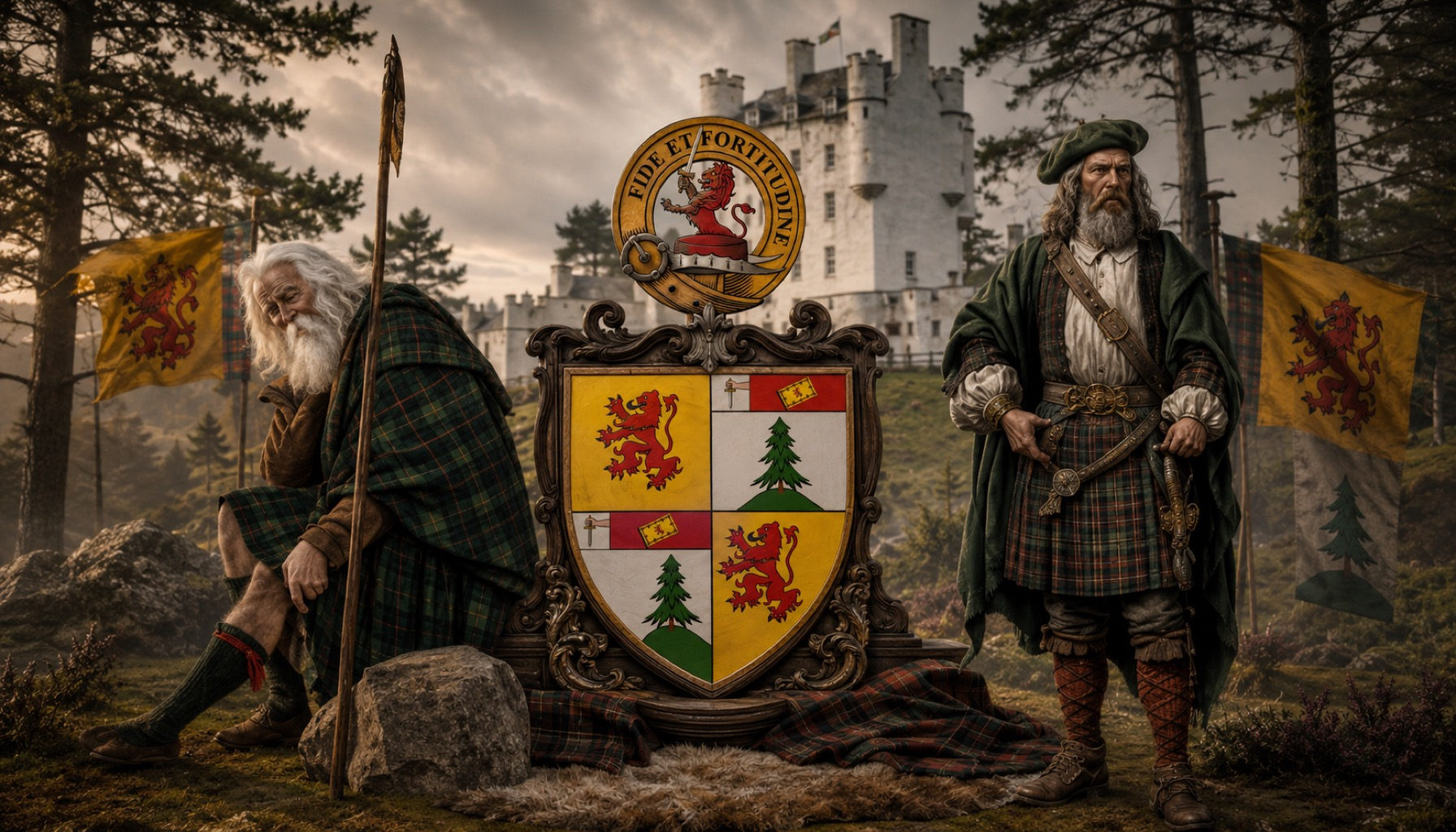
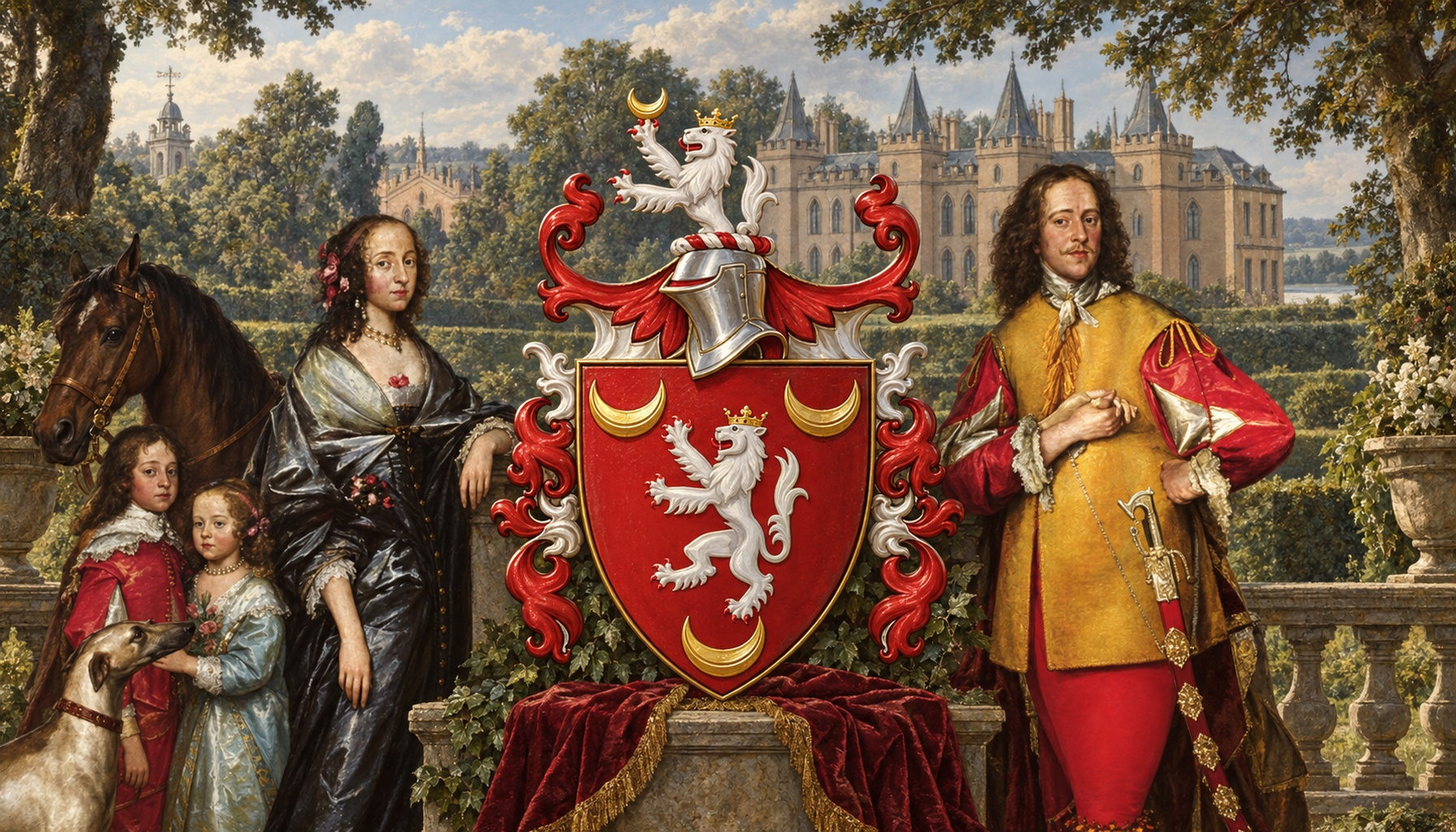
Clan Farquharson was a Highland Scottish clan rooted above all in Aberdeenshire, Braemar, and the eastern Highlands, a family shaped by Gaelic kinship, territorial loyalty, and the hard politics of Highland survival. Their story belongs to that classic Highland pattern in which descent, land, military service, and allegiance to a chief all mattered at once. The Farquharsons grew within a world of mountain passes, deer forests, river crossings, and guarded loyalties, with ties into the wider Clan Chattan sphere and the network of alliances that held Highland society together. Their primary associated Y-DNA haplogroup is R1b1a1b1a1a2c1a4b3, a lineage tag that connects the modern family story to a much deeper paternal past.
The clan name itself preserves an older Gaelic personal ancestry, and the family rose not as abstract heraldry on parchment but as a real kindred in a very specific landscape. By the 16th century the Farquharsons were already notable in Deeside, and figures such as Finla Mor, active in 1547, stand out as markers of the clan's emergence into firmer historical view. Over time the Farquharsons became known for martial reputation, Jacobite loyalty, and a particularly stubborn attachment to Highland ground and memory. Even after the political shocks that transformed the Highlands, the clan's identity endured through chiefs, oral tradition, heraldic continuity, and the sheer persistence of the name itself.
If one wants a place that anchors the Farquharson story, it is Invercauld Castle, near Braemar on Deeside. This is not some fantasy Highland ruin perched for the benefit of postcard sellers, but the historic seat long associated with the chiefs of Clan Farquharson. The present castle is largely a 19th-century baronial rebuilding and enlargement of an earlier house, standing in a magnificent setting near the River Dee and close to the routes that made Braemar strategically and symbolically important in Highland history. The estate around it has long been part of the Farquharson inheritance, tying the family not just to a building but to a lived territory of woods, hills, stalking ground, and communication routes through the eastern Highlands. It remains one of those places where landscape and lineage feel properly joined up. Invercauld Castle itself is not generally open as a normal drop-in house museum, but the wider Braemar and Invercauld area can certainly be visited, and that alone gives a strong sense of the clan's historic home ground.
From an ancient DNA point of view, the Farquharson-associated haplogroup R1b1a1b1a1a2c1a4b3 sits within a broad and rather fascinating western European story. Related or linked samples carrying this branch or close connections to it appear across a wide chronological and geographic spread: Celtic Durotriges burials from Duropolis at Winterborne Kingston in England such as WBK12, WBK20, WBK29, WBK41, WBK05, WBK30, WBK43, WBK06, WBK08, WBK18, and WBK191; Medieval England Cambridge St Johns Hospital ATP_PSN_192; Imperial Roman Era Zadar Croatia I26776; Bronze Age Orkney Links of Noltland KD061; Bronze Age Calabria GMO015; Early Medieval and Medieval Belgium samples ST2025 and ST1308; Gallic France CGG023699; Post Roman Dorset I11580; Merovingian Germany IND013; Late Roman Austria R10656; Late Roman Portugal R10488; Iron Age Somerset I11991; Iron Age Battlesbury Bowl I21309; Bronze Age Cambridge I3256; Bronze Age Amesbury Down I2417; Bell Beaker Upavon I4950; Bronze Age Bedfordshire I7576 and I7577; Bronze Age South Lanarkshire I5473; Iron Age Hinxton HI2; Early Bronze Age Thames I5377; and Copper Age Ireland Rathlin2B. None of that proves direct descent from any one individual, of course. What it does show is that the Farquharson-linked paternal line belongs to a lineage with deep roots in the Atlantic and northwestern European world, including prehistoric and later Britain, which is exactly the sort of long background one might expect for a Highland clan of enduring Gaelic identity.
Read more about Clan MacKintosh
If you carry Farquharson heritage, or suspect a connection to Deeside, Braemar, or the eastern Highlands, DNA can add an intriguing extra layer to the paper trail and family story. Uploading your DNA to MyTrueAncestry lets you see whether you match Clan Farquharson connections or related ancient DNA samples from Iron Age, Roman, and medieval Britain and Europe.
Comments