Clan Falconer
– 3 min read


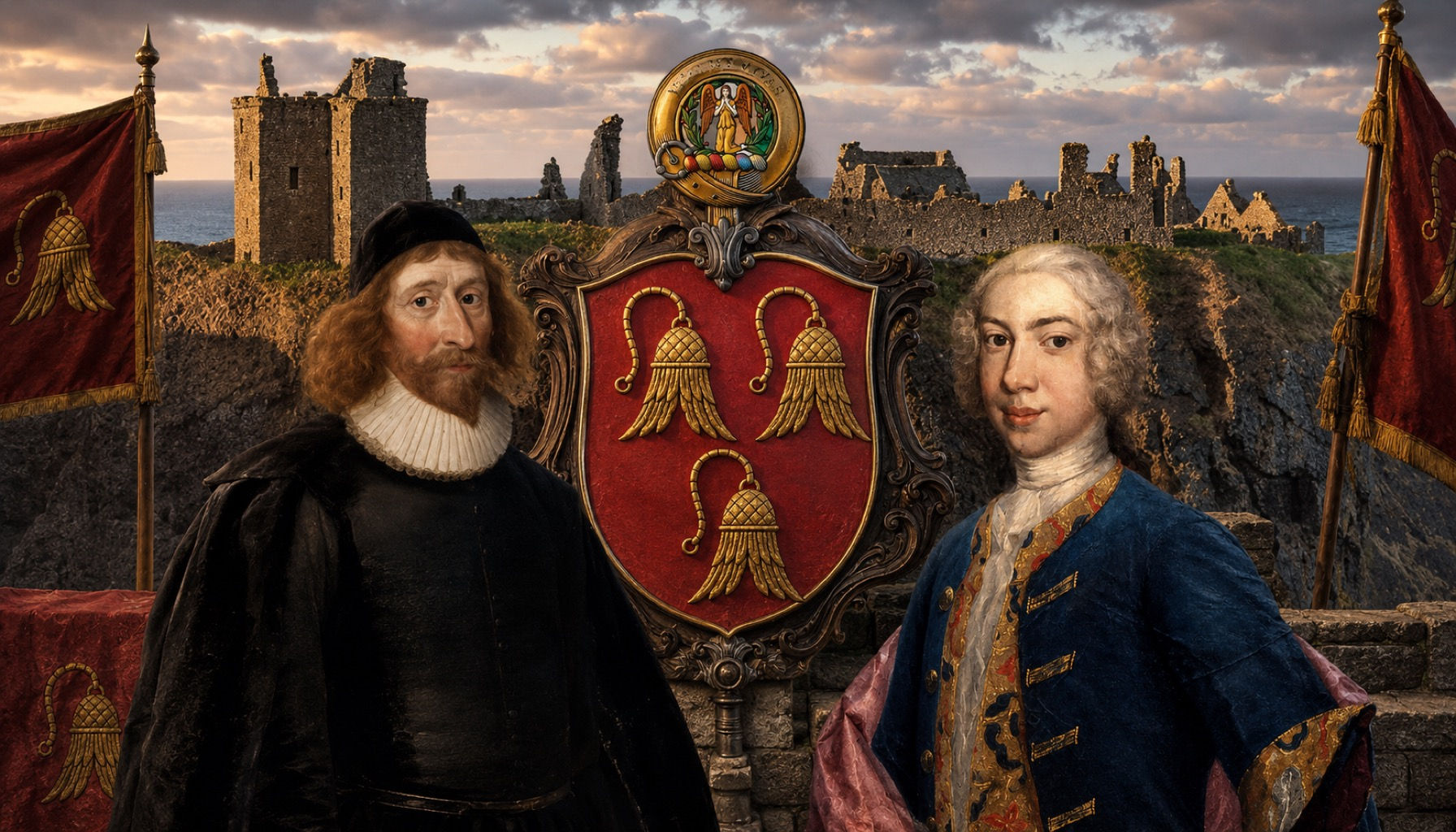
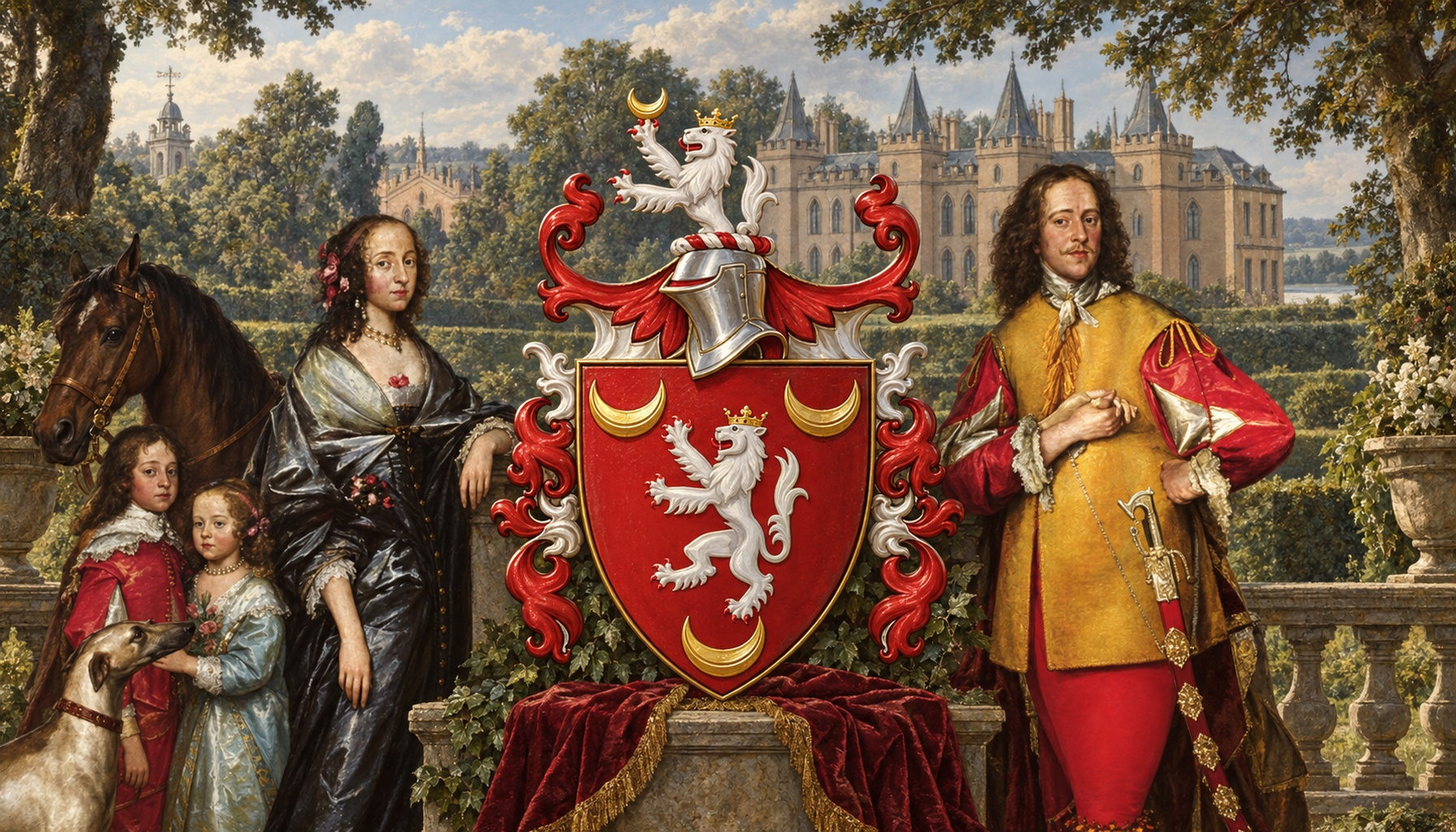
Clan Falconer was a Scottish noble family tradition rooted above all in Angus and in the world of royal and noble service, with the primary family haplogroup tagged here as I1a2a1a1a. The name itself tells the story rather neatly: a falconer was not just someone fond of birds, but an officer of skill, trust, and status, attached to a courtly household where hunting, display, and discipline all mattered. In Scotland, that gave the Falconers a distinctly service-noble character, the sort of family whose reputation grew through office, land, and steady usefulness to power.
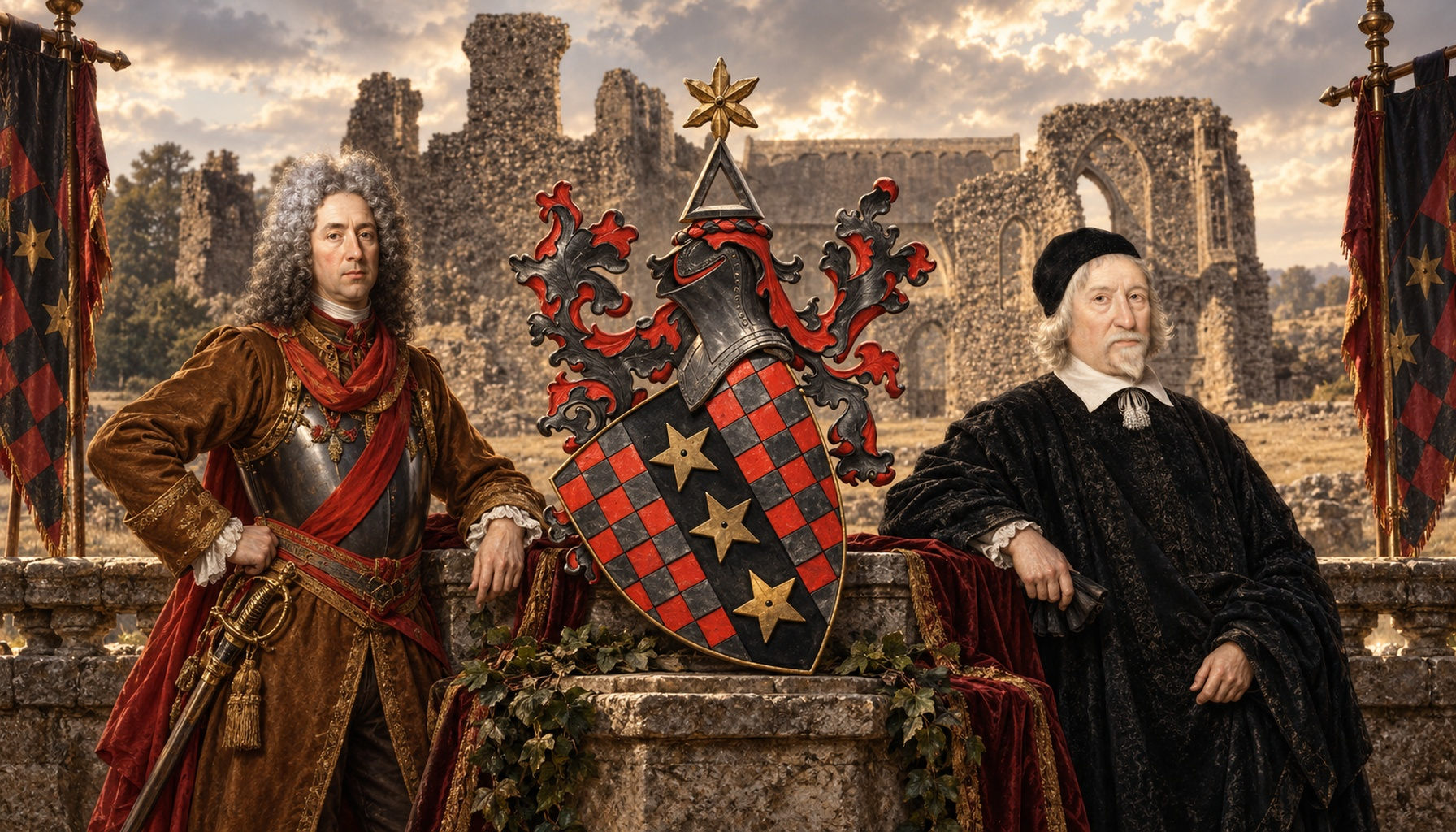
That matters because Falconer history fits a recognisably Lowland Scottish pattern. This was not simply a clan in the later romantic Highland sense, but a family identity built through inherited duty, public standing, heraldry, estate continuity, and regional influence. By around 1200 we already find William the Falconer on record, a reminder that the surname had become fixed early and was tied to a real social function. From there the Falconers developed as a landed and reputable Scottish house, their standing shaped by proximity to noble or royal households and by the durable prestige that came from serving them well.
A strong location anchor for Falconer heritage is Dunnottar Castle, one of the most dramatic strongholds in Scotland. Set on a steep rocky headland on the northeast coast near Stonehaven, it is almost absurdly theatrical: cliffs on three sides, a narrow approach, and the North Sea forever battering below. What survives today mostly belongs to the fifteenth and sixteenth centuries, but the site itself is much older and appears in early medieval history as a place of fortification and conflict. Dunnottar became associated with the Keith earls Marischal and played its part in major national events, including the sheltering of the Honours of Scotland from Cromwell's army in the seventeenth century. It was also a place of imprisonment and political strain, which rather reminds us that castles were not only symbols of romance but engines of authority. As a setting for families of service, office, and regional standing in eastern Scotland, it makes excellent historical sense. Better still, Dunnottar Castle can still be visited today, and it remains one of the great historic sites of the Scottish coast.
For those exploring the Falconer line through genetic history, the primary family haplogroup is tagged as I1a2a1a1a. That does not prove direct descent from any ancient individual, of course, but it does place the family within a wider paternal network seen in a striking spread of related ancient samples. Linked or related I1a2a1a1a-associated finds include Migration Period Hungary Rakoczifalva (RKF280) and (RKO002), Imperial Roman Serbia Svilos Krusevlje (R6693), Merovingian Period Frankish Buettelborn Germany (Btb71), Medieval Denmark Tjrby Randers Municipality (CGG100679), Medieval Belgium Sint-Truiden Groenmarkt (ST2819), Thuringii Tribe German Obermoellern (OBM005), Nordic Tribe Denmark Southern Sjaelland Praesto Endegaarde (CGG107416), Danii Tribe Denmark Sjaelland Kalundborg Simonsborg (CGG106721), Iron Age Denmark West Sjaelland Jerslev Ubby (CGG107505), Danii Tribe Denmark Sjaelland Vester Egesborg Vordingborg (CGG107507), Danii Tribe Denmark Sjaelland Espe (CGG107515), Saxon Settler Frisii Netherlands Hogebeintum (CGG024694), Danii Tribe Denmark Sjaelland Juellinge (CGG106773), Viking Age Denmark Odense Norrebjerg (CGG105541), Viking Age Denmark Bogovej (CGG106777), Bronze Age Southwest Ukraine Bereminay Komarow (poz643), Viking Age Sweden Stockholm Gorla (gor164), Migration Period Scitarjevo Croatia (R3660), Gothic Kecskemet-Mindszenti Transtisza Hungary (A181015), and Medieval Tarquinia Lazio Italy (TAQ009). The broad pattern is fascinating: this is a lineage cluster with deep roots in northern and central Europe and visible movement across the Roman, Migration Period, Viking, and medieval worlds, a reminder that Scottish family history often sits inside a much larger North Sea and continental story.
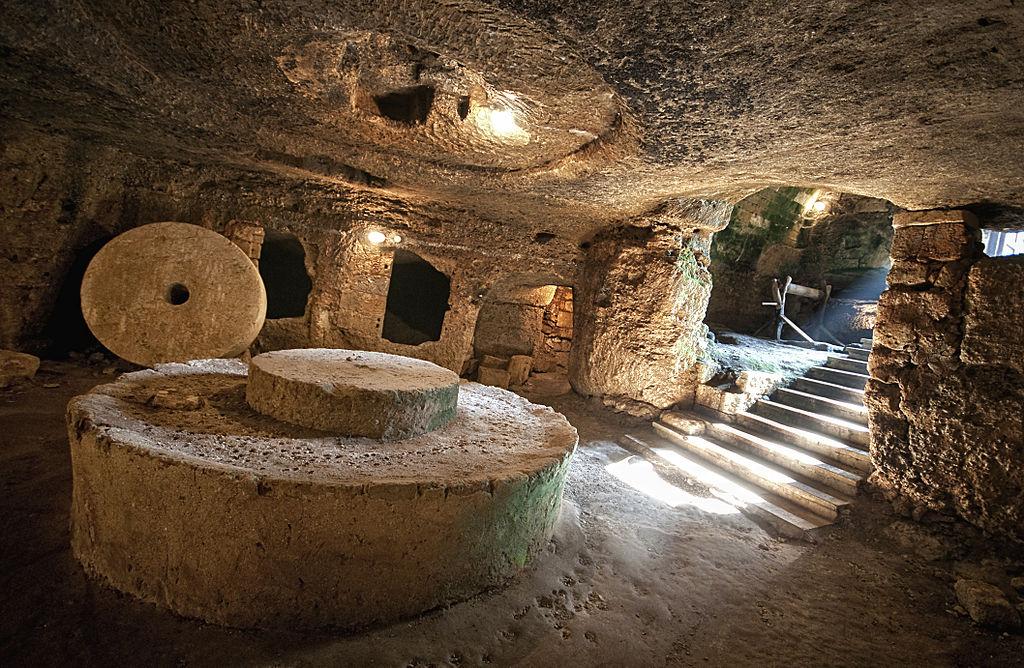
Explore medieval Sint-Truiden DNA
If you are researching Falconer heritage, the most interesting question is not whether history can be reduced to a single line of descent, because it cannot, but how family memory, place, records, and DNA illuminate one another. Upload your DNA to MyTrueAncestry to see whether you match Clan Falconer, the I1a2a1a1a haplogroup network, or related ancient samples from the wider North Sea and European world.
Comments