Clan Hunter
– 3 min read


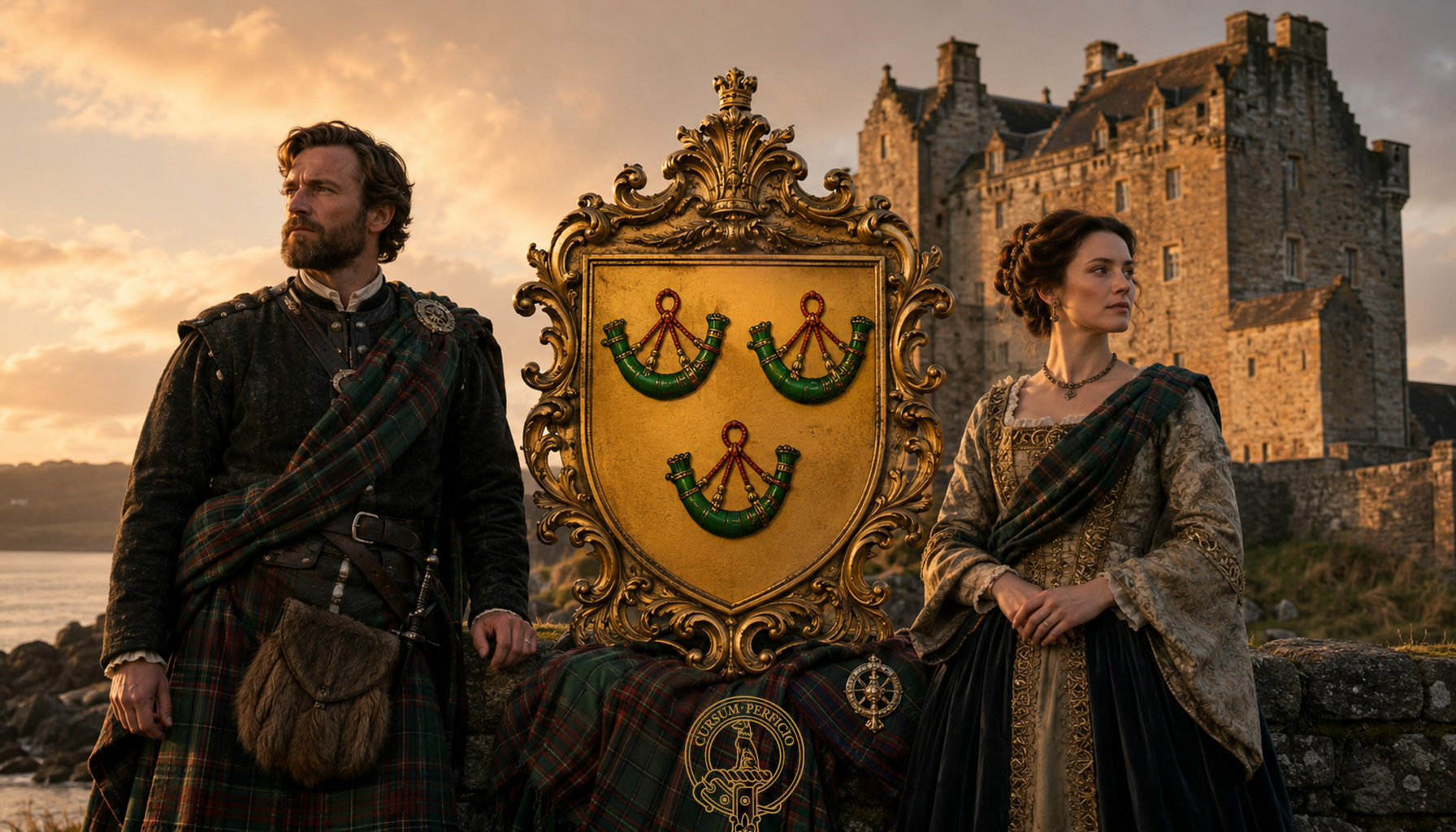
Clan Hunter was a historic Scottish Lowland family rooted above all in Ayrshire, with its long story tied to service, landholding, and the practical business of power. Traditionally, the Hunters are associated with Norman or Anglo-Norman origins, arriving in the orbit of the Scottish crown and gaining lands through duties connected with hunting, woodland oversight, and forest management. That background matters, because this was not a clan identity built only on battlefield legend, but on a very medieval kind of usefulness: skilled men entrusted with forests, game, estate order, and royal service. In that sense, the Hunter name is almost occupational memory turned into lineage. Their primary family haplogroup is tagged here as R1b1a1b1a1a2b1a1, placing the family within a wider paternal line often found across western and central Europe.
As the family established itself in southwest Scotland, the Hunters became known as hereditary keepers of the royal forests, a role that neatly explains both the surname and the heraldic identity that followed. They belonged to the world of lairds, archery, mounted hunting, estate defense, and crown loyalty in a Scotland that was constantly renegotiating power between kings, regional lordship, and older local networks. One early named figure is Aylmer le Hunter, recorded in 1296, a reminder that by the late 13th century the family was already visible in the documentary landscape of medieval Scotland. Over time, Clan Hunter came to represent a distinctly Lowland form of continuity: not the biggest clan in Scotland, perhaps, but one deeply anchored in land, duty, and the culture of stewardship.
The great location anchor of the family is Hunterston Castle in Ayrshire, near West Kilbride, and it is difficult to separate the history of Clan Hunter from that building and its setting. Hunterston Castle is a tower house with origins going back to the later medieval period, expanded over time as the family seat developed. It stands close to the Firth of Clyde, in a landscape that connected local lordship to sea routes, agricultural estates, and wider Scottish politics. The castle became the enduring emblem of the clan because it represented more than residence: it was the physical center of Hunter authority, kinship, and memory. The old tower and later additions show the usual Scottish pattern of adaptation rather than static grandeur, a lived-in stronghold shaped by generations. Hunterston Castle is generally recognized as a historic site associated with the clan and, with arrangements or through heritage access where available, it has been possible to visit, making it one of those rare places where family tradition still has stone walls around it.
For readers interested in deep ancestry, the primary Hunter haplogroup tag given here, R1b1a1b1a1a2b1a1, belongs to a broad and well-traveled paternal branch with linked ancient DNA appearances across Iron Age, Roman, medieval, and Bronze Age Europe. These are not claims of direct descent from any one excavated individual, but rather examples of related or linked lineages that help show the deep time backdrop behind a family like Hunter. Among the many relevant linked samples are Celtic Durotriges England Duropolis Winterborne Kingston (WBK13), Gallo-Celtic Switzerland Pont de Cornaux-Les-Sauges (3429, 3431, 3439), Etruscan Tarquinii Italy (TAQ018A, TAQ018B, TAQ018x, and TAQ018), Bronze Age Unetice Thuringia Leubingen Sommerda Germany (LEU025, LEU055, LEU056, LEU051, LEU060, LEU015, LEU012, LEU041, LEU026), Gallic Cenomani Tribe Italy Verona Seminario Vescovile (3220 and US3159), Iron Age Hillfort Broxmouth East Lothian Scotland (I16422), Celtic Briton Pocklington Yorkshire England (I13758), Amesbury Archer Bronze Age England (I14200), Late Iron Age North Yorkshire Scorton Quarry (I14097), and Longniddry Bronze Age Scotland (I2656). Taken together, these linked samples sketch a paternal horizon stretching from Bronze Age central Europe into Iron Age Celtic worlds and onward into the historic populations of Britain and the Continent, a fitting genetic backdrop for a Lowland Scottish family whose identity was shaped by service, mobility, and medieval state formation.
If you have Hunter roots, Ayrshire ancestry, or simply want to see how your DNA may connect with the ancient populations behind families like Clan Hunter, upload your DNA to MyTrueAncestry and explore the deeper story for yourself.
Comments