Anne Wolseley Calvert
– 5 min read


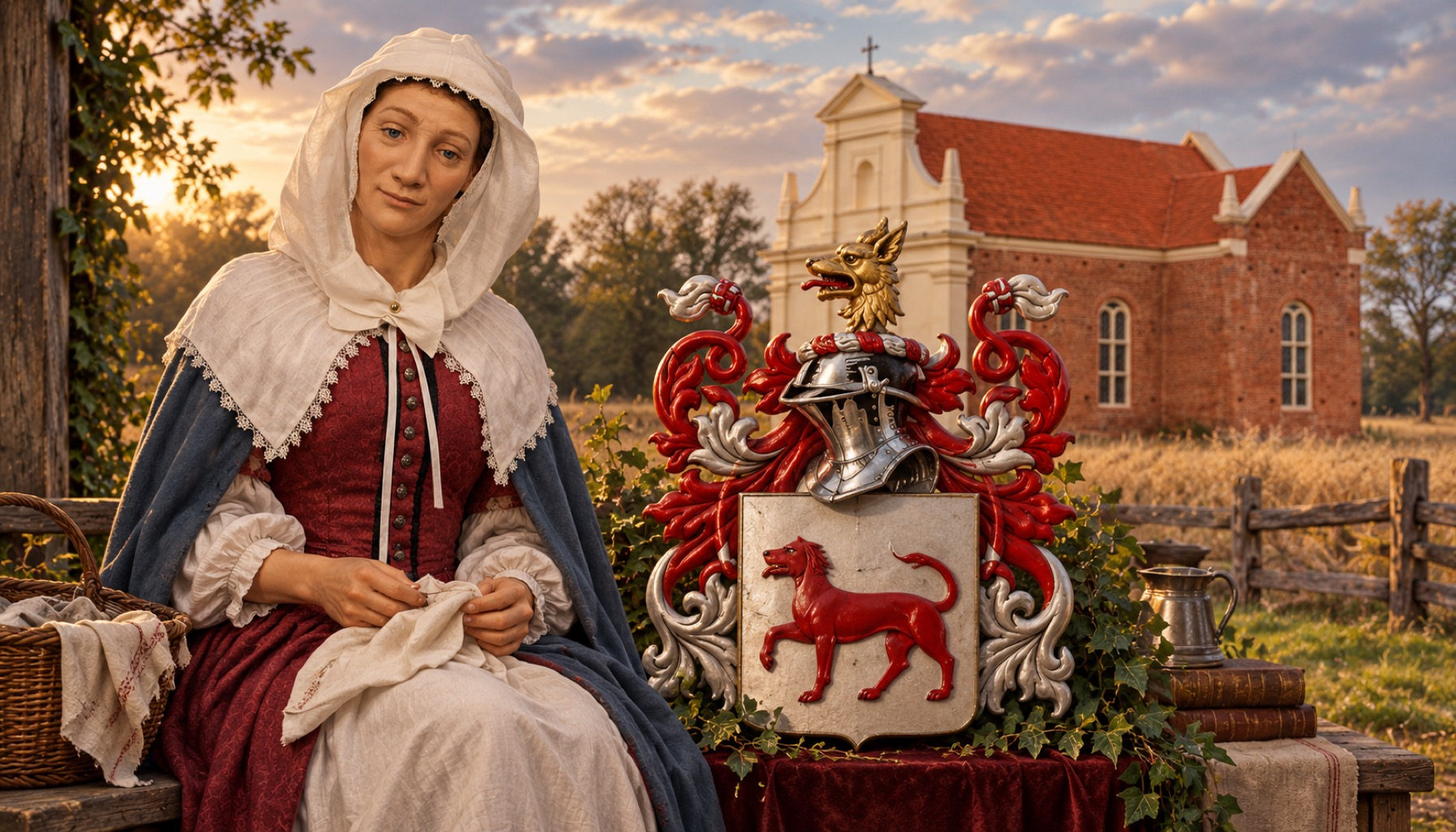
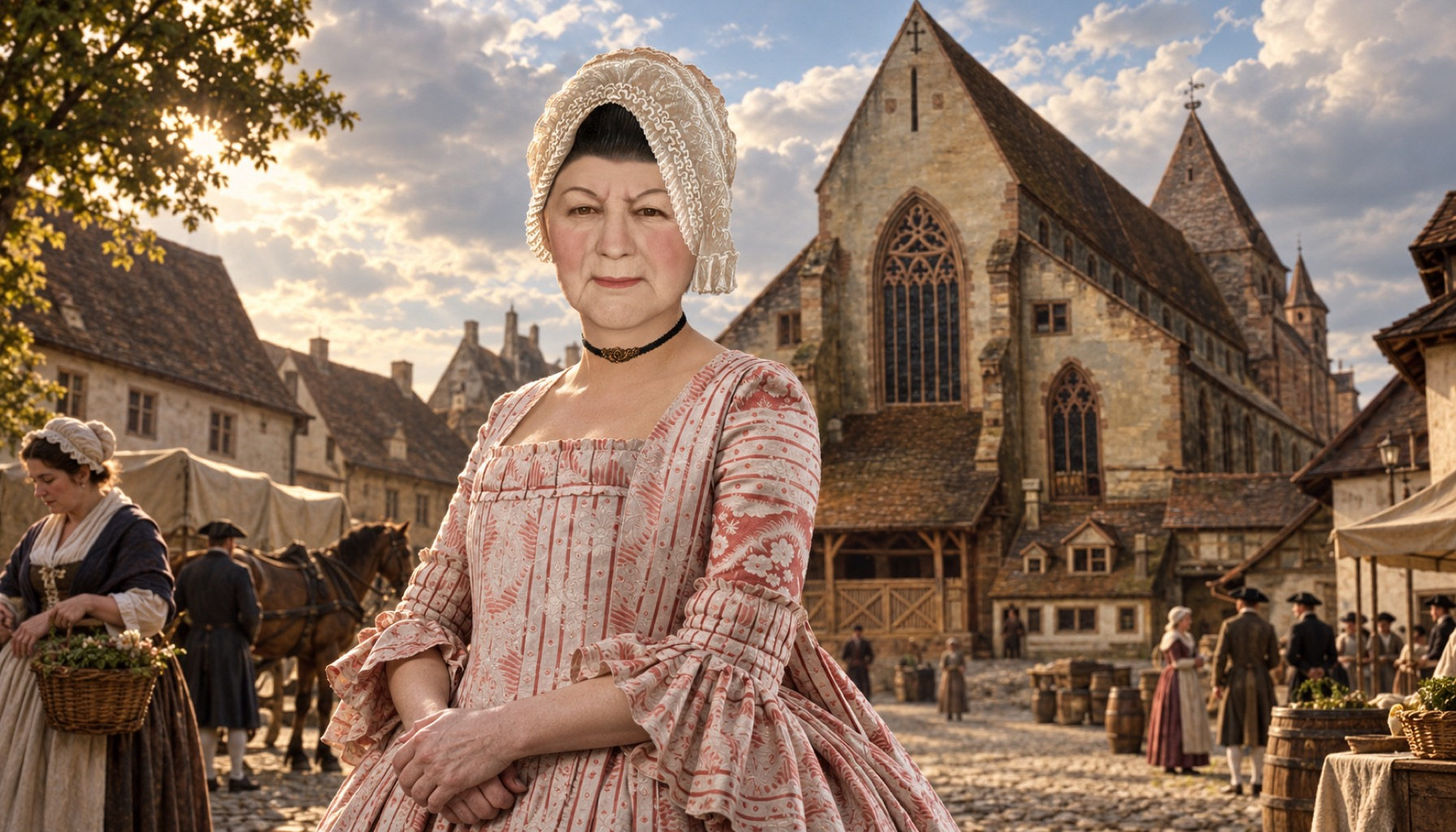
Anne Wolseley Calvert was an English gentlewoman of the seventeenth century who became part of the ruling family of colonial Maryland through her marriage to Philip Calvert. Born into the prominent Wolseley family of Staffordshire, she belonged to the sort of well-connected English world in which kinship, confession, land, and office all mattered enormously. By marriage she entered the Calvert family, founded by George Calvert, 1st Baron Baltimore, whose proprietary colony of Maryland was one of the most ambitious colonial projects in English North America.
That makes Anne historically interesting already. But what makes her quite exceptional is that she is not known only from paper trails. Her remains were discovered at St. Mary’s City, Maryland’s first capital, in a burial context associated with the colony’s historic chapel. In other words, Anne stands at that rare point where written history, archaeology, and genetics all meet in the same person.
Anne lived during a formative phase in the history of English America, when Maryland was still an experiment in proprietary government under the Calverts. Her husband Philip Calvert, the youngest son of George Calvert, became one of the most important political figures in the colony, serving as Governor and Chancellor of Maryland and helping to maintain Calvert authority in a world of faction, imperial uncertainty, and religious tension. St. Mary’s City was then not merely a settlement but the political heart of the province, a place where law, religion, trade, and family strategy overlapped in very practical ways.
For women of Anne’s rank, formal office was closed off, but that should not make us imagine passivity. Elite colonial households were political institutions in themselves. Marriage tied together English family networks and colonial power, and a woman like Anne would have lived at the intersection of domestic management, social display, religious life, kin-making, and inheritance. Her presence in Maryland also reminds us that the early English Atlantic was not built only by governors, charter-holders, and soldiers, but by families transplanting themselves, imperfectly and sometimes precariously, into a new world.
The genetic legacy of the 17th-century colonial capital of St. Mary's City
The sample associated with her is listed as Anne Wolseley Calvert Historic St. Mary City Maryland, with an approximate date of 1680 AD. According to the supplied historical description, Anne’s remains were discovered together with those of Philip Calvert and their infant son in lead coffins connected with the historic chapel at St. Mary’s City. That context matters. Lead coffins were costly and socially marked burials, entirely in keeping with an elite Calvert-family context.
In terms of identification, Anne should be treated as a strongly supported historical identification on the basis of the supplied description: the burial grouping, the chapel association, and the fit with the documented Calvert family network make the case unusually persuasive. Still, it is sensible to keep the wording disciplined. Archaeology and genetics can support identification powerfully, but unless every step of the chain is explicitly laid out in the published evidence, one should distinguish a historically well-supported identification from a mathematically absolute one.
What makes this burial so important is not simply that it is grand, but that it anchors a named woman in the earliest capital of Maryland. St. Mary’s City was a place of governors, assemblies, chapels, legal experiments, and contested authority. To recover Anne there is to recover not a vague “colonial lady” but a person situated inside a known household at the centre of provincial rule.
For Anne Wolseley Calvert, the Y-DNA haplogroup is not applicable because Y-DNA follows the direct paternal line through the Y chromosome, which females do not carry. The mtDNA haplogroup, which traces the direct maternal line through mitochondrial DNA, is listed here as unknown or not yet determined. That means we should not guess it, and we should not fill the silence with assumptions based on her English origin, social rank, or family name.
This is worth stressing because haplogroups are often misunderstood. A mitochondrial haplogroup would tell us something about Anne’s direct mother-to-mother line only. It would not sum up her whole ancestry, and it certainly would not define her identity as English, colonial, elite, or Calvert by marriage. Those are historical and social facts, not things reducible to one genetic lineage marker.
The real value of Anne’s DNA lies less in a single haplogroup label than in the fact that genome data from a named woman in seventeenth-century Maryland can be connected to a documented family network and a precise archaeological context. That is the sort of case scholars dream about: a burial that is not anonymous, not prehistoric in the dark, but tied to letters, offices, kinship, and a specific colonial world.
Thomas Jefferson’s DNA and the Sally Hemings Paternity Question
Anne’s sample also sits within a much wider comparative genetic landscape. Linked historic material from St. Mary’s City includes Historic St. Mary City Chapel Field Cemetery Maryland (I15317), (I35262), (I35265), (I35268), (I15288), and (I15289), while a related ?-linked sample is Anne Wolseley Calvert Historic St. Mary City Maryland (I35273). Comparisons of this kind do not turn distant or local samples into “ancestors” of Anne in any direct sense. Rather, they help place her biologically within the broader web of early modern Atlantic populations and older West Eurasian genetic variation.
For deeper background, researchers often compare post-medieval individuals against long runs of earlier genomes from Britain and Europe, such as Roman Era England Knobbs Farm Somersham (KNF005), Roman Era Fenstanton Cambridgeshire (FEN006), Roman Era Fenstanton Cambridgeshire (FEN020), Roman Era Cambridge Vicars Farm (VIC013), Roman Era Cambridgeshire Arbury Wooden Coffin (ARB005), and Iron Age or Celtic-period individuals like Celtic Durotriges England Duropolis Winterborne Kingston (WBK104) and (WBK193). One might also note elite continental comparanda such as Princely Grave Elite Celtic Burial Germany Magdalenenberg Villingen-Schweningen (MBG001), Elite Celtic Burial Germany Magdalenenberg Villingen-Schweningen (MBG002), and (MBG014). The point is not that Anne “matches” these people in a genealogical sense, but that her genome can be studied against the long-term population history from which early colonial English settlers ultimately emerged.
The fascination of Anne Wolseley Calvert is that her DNA does not float free of history. It belongs to a woman whose life touched the governing family of Maryland, whose body was buried in a high-status chapel setting, and whose remains were recovered in one of the best-known early colonial sites in North America. Genetics here does not replace history; it sharpens it. It helps confirm that colonial America is not only a story of documents and buildings, but of actual people whose bodies still carry evidence of family, mobility, and biological connection.
Ancient DNA Preservation in the Caribbean
With MyTrueAncestry, you can compare your DNA to ancient populations and archaeological samples from the worlds that shaped people like Anne Wolseley Calvert: Britain, Europe, and early colonial America. It is a way to explore genetic connections to the deeper past and to the populations that stood behind the Atlantic world she inhabited, without pretending that a shared lineage marker alone can prove direct descent from her.



Comments