The Noble House of OQuinn
– 2 min read


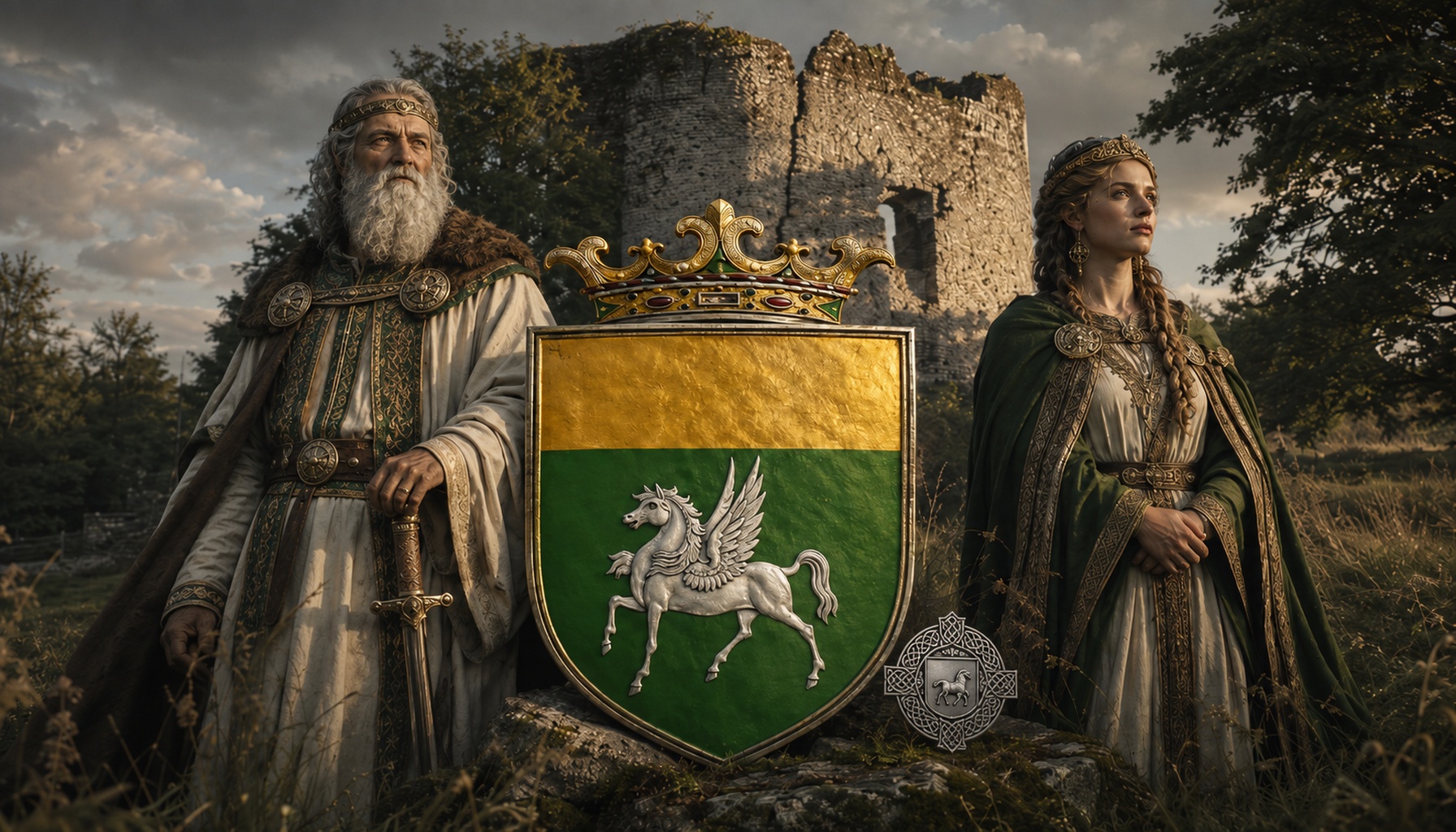
The House of OQuinn was a Gaelic Irish noble house of western Ireland, rooted in Thomond and closely associated with Inchiquin, regional lordship, and the wider heritage of Munster. In the older Gaelic pattern, a family like OQuinn was not simply a surname in the modern sense. It was a working political house: chiefs, fighting men, landholders, patrons, allies, and rivals, all tied to a remembered territory. For those exploring paternal line associations, the primary family haplogroup linked here is R1b1a1b1a1a2c1a5d3a, a branch that sits within one of the great Y-chromosome lineages of Atlantic and Gaelic Europe.
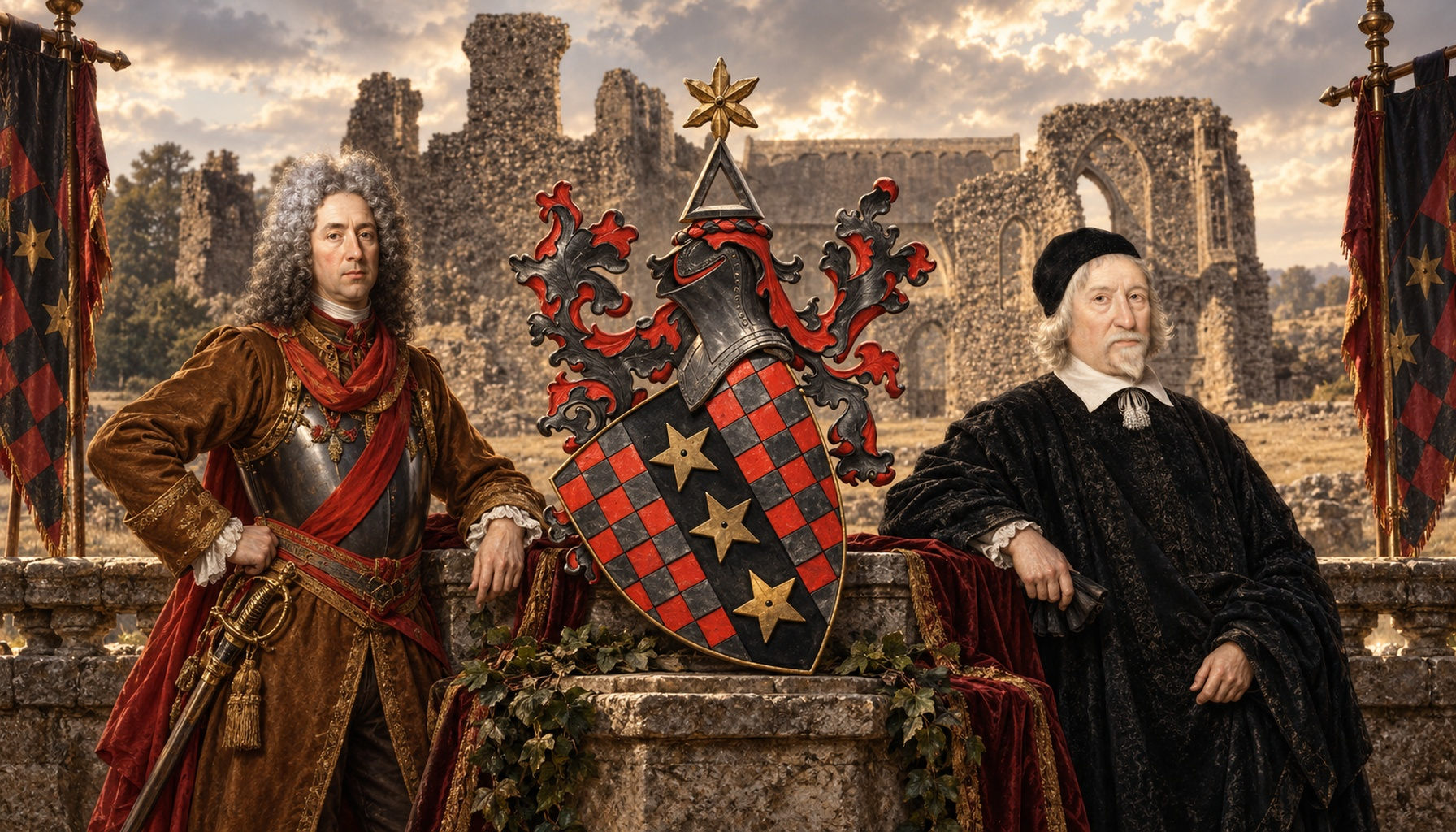
Historically, the OQuinn story belongs to the world of clan authority and local power. Their tradition reaches back to Conn, remembered as an ancestor of the OQuinn dynasty, and forward to figures such as Niall OQuinn, Chief of Muintir Ifernain. The family appears in the familiar structure of Gaelic lordship: chiefs of Muintir Ifernain, OQuinn Lords of Inchiquin, land-based authority strengthened by marriage alliances, military service, and participation in the political life of Ireland before and during the great upheavals of the late medieval and early modern periods. What makes the house especially evocative is that it preserves so many classic features of the Gaelic noble model at once: territorial identity, martial reputation, heraldic memory, and a striking sense of continuity anchored in place.
Inchiquin Castle gives the House of OQuinn its strongest physical anchor in the landscape. Set in County Clare in the old sphere of Thomond, the site stands in that haunting west-of-Ireland way where stone, water, and lordship seem to belong together. Historical descriptions of Inchiquin emphasize both its strategic position and its visual drama, rising from the shore near Lough Inchiquin and tied to a wider district of power rather than to an isolated building alone. This is exactly how a Gaelic noble seat worked: not just as a residence or a fortress, but as a marker of authority over people, pasture, routes, and memory. Even in ruin, the castle still speaks of a world in which the OQuinn Lords of Inchiquin would have been known through landholding, defense, and regional standing. Yes, the site can still be visited today as a visible historic ruin, and for anyone interested in family history it is one of those rare places where surname tradition and actual landscape still meet face to face.
From a DNA perspective, the OQuinn-associated haplogroup is tagged here as R1b1a1b1a1a2c1a5d3a. As always, ancient DNA cannot be used to claim direct descent from named medieval families unless that evidence actually exists, but it can show a broader web of related paternal lineages across time. Useful linked examples include sample I11586 from the Early Anglo Saxon cemetery at West Heslerton in Yorkshire, I12775 from Celtic Briton Carsington Pasture Cave in Derbyshire, I12783 from Celtic Briton Lechlade-on-Thames in Gloucestershire, I11156 from Celtic Briton Bradley Fen in Cambridgeshire, I12785 from Iron Age Greystones Farm in Gloucestershire, and the famous Irish Copper Age individual Rathlin1B. These are not OQuinn ancestors in any provable documentary sense, but they help place the family's paternal signature within a much deeper Atlantic and Insular story stretching across prehistoric and historic Britain and Ireland.
Read more about the Royal House of OReilly
If the House of OQuinn speaks to your own Irish family story, this is where history becomes personal. Upload your DNA to MyTrueAncestry and see whether you match the OQuinn family profile or show links to related ancient DNA samples connected with the wider R1b1a1b1a1a2c1a5d3a lineage across Ireland and Britain.
Comments