The Noble House of De Vere

– 2 min read


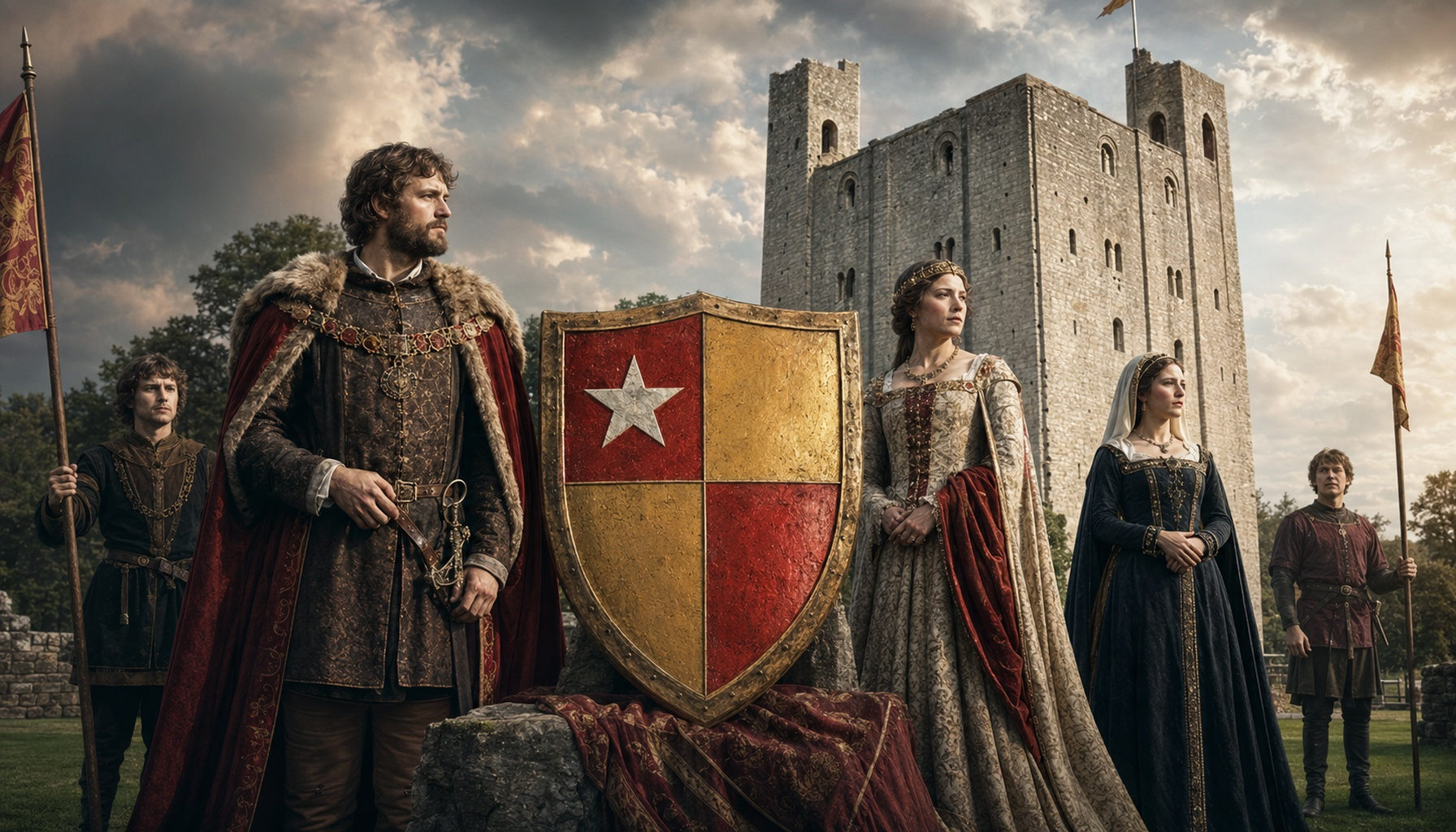
The de Vere family was one of the great Norman noble houses of England, best known as the Earls of Oxford, and remembered for the long, durable sort of power that shaped medieval England from court to battlefield. Their roots lay in Normandy, almost certainly linked to the place-name Ver in northern France, before the family established itself firmly in England in the aftermath of the Norman Conquest. Over time, they became thoroughly English in identity while keeping the classic marks of a high noble house: hereditary title, royal service, strategic marriages, military duty, landed wealth, and a strong presence in the political life of the realm. In haplogroup tagging terms, the primary family haplogroup associated here is I1a1b1a1e1a.
That arc from continental newcomers to deep-rooted English aristocracy is exactly what makes the de Veres so historically interesting. This was not a family known for a single dramatic moment and then disappearance, but for continuity. They built status through service to kings, influence at court, and control of major estates, while their heraldry, titles, and castle anchors helped make their prestige visible. Among the early named figures, Aubrey de Vere I, active by 1112, stands out as one of the foundation stones of the house in England, part of the generation that turned Norman conquest into settled noble power. From there, the family developed into one of the best-known aristocratic lines in the English peerage.
The great location anchor for the de Vere story is Hedingham Castle in Essex, one of the most important surviving Norman sites associated with the family. The castle is especially famous for its remarkably well-preserved stone keep, generally dated to the late 12th century, and it remains one of the best examples of Norman architecture in England. Set within a much older earthwork and later landscape, Hedingham was more than a fortress: it was a statement of rank, continuity, and lordship, the kind of place that told tenants, rivals, and royal visitors exactly who the de Veres were. As the seat of the Earls of Oxford, it became inseparable from the family's public identity. Happily, Hedingham Castle still survives and can be visited today, which makes it one of those rare places where the long story of a Norman-English noble house can still be felt in the physical landscape.
From a DNA perspective, the haplogroup tag linked here is I1a1b1a1e1a, a branch with a wider northern European background rather than something exclusive to one medieval noble line. Related or linked ancient samples help give that deeper context: Iron Age Pommerania, Gdansk Wielbark (PCA0480); Early Viking Age Hundstrup, Sealand, Denmark (VK296 and VK297); and Vendel Age Saaremaa, Salme II-J (VK549) and Salme II XXVIII (VK511). These do not prove direct descent from the de Vere family, and they should not be read that way. What they do offer is a useful long-view glimpse into the older genetic landscape connected to the same broader paternal line, stretching across Iron Age and early medieval northern Europe before families such as the de Veres emerged in the written record of Norman and English history.
If the de Veres, Norman England, and the deeper story behind haplogroup I1a1b1a1e1a spark your curiosity, upload your DNA to MyTrueAncestry and explore how your own results may connect with the ancient and historic world.


Comments