The Kingdom of Mann
– 3 min read


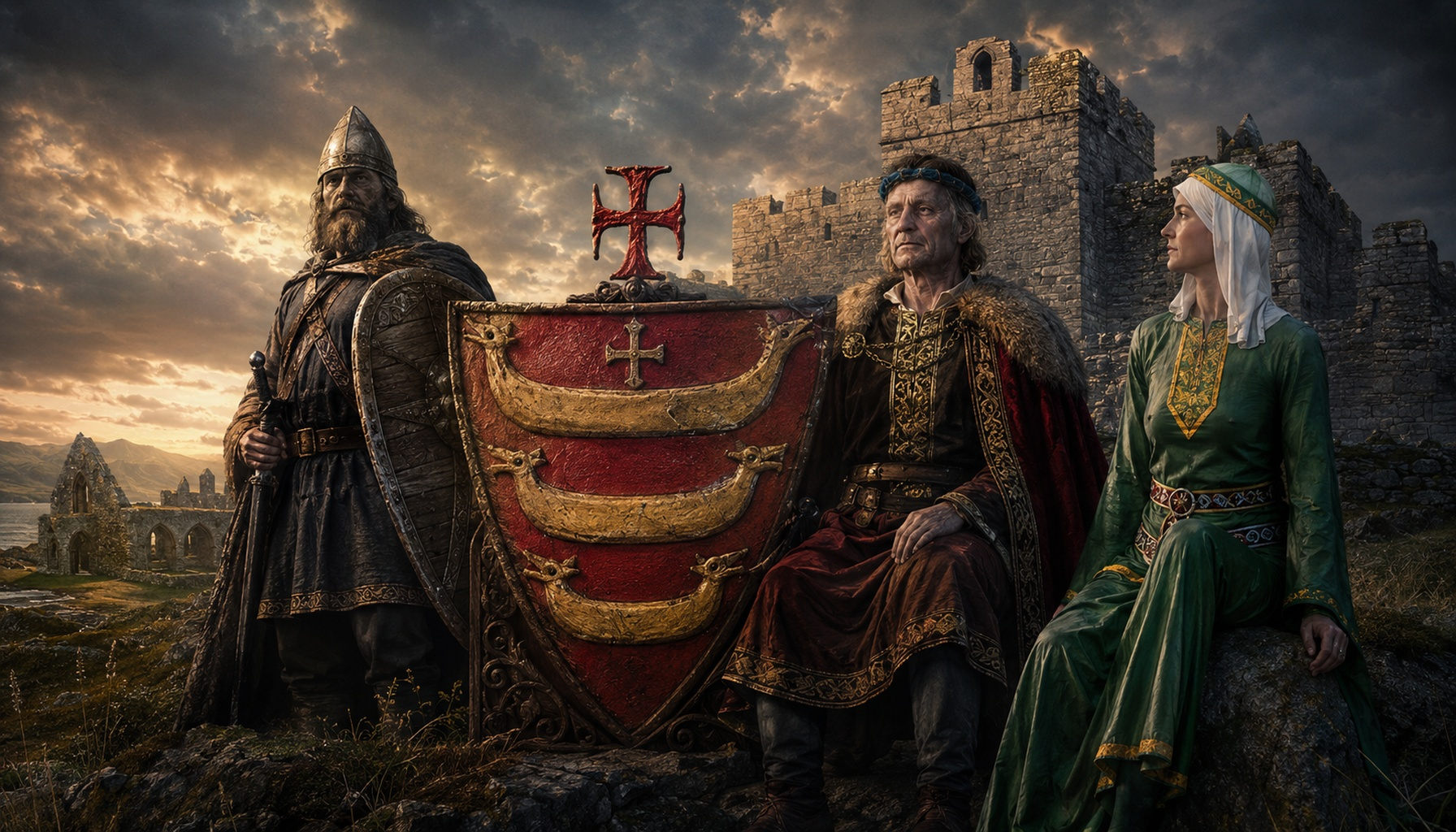
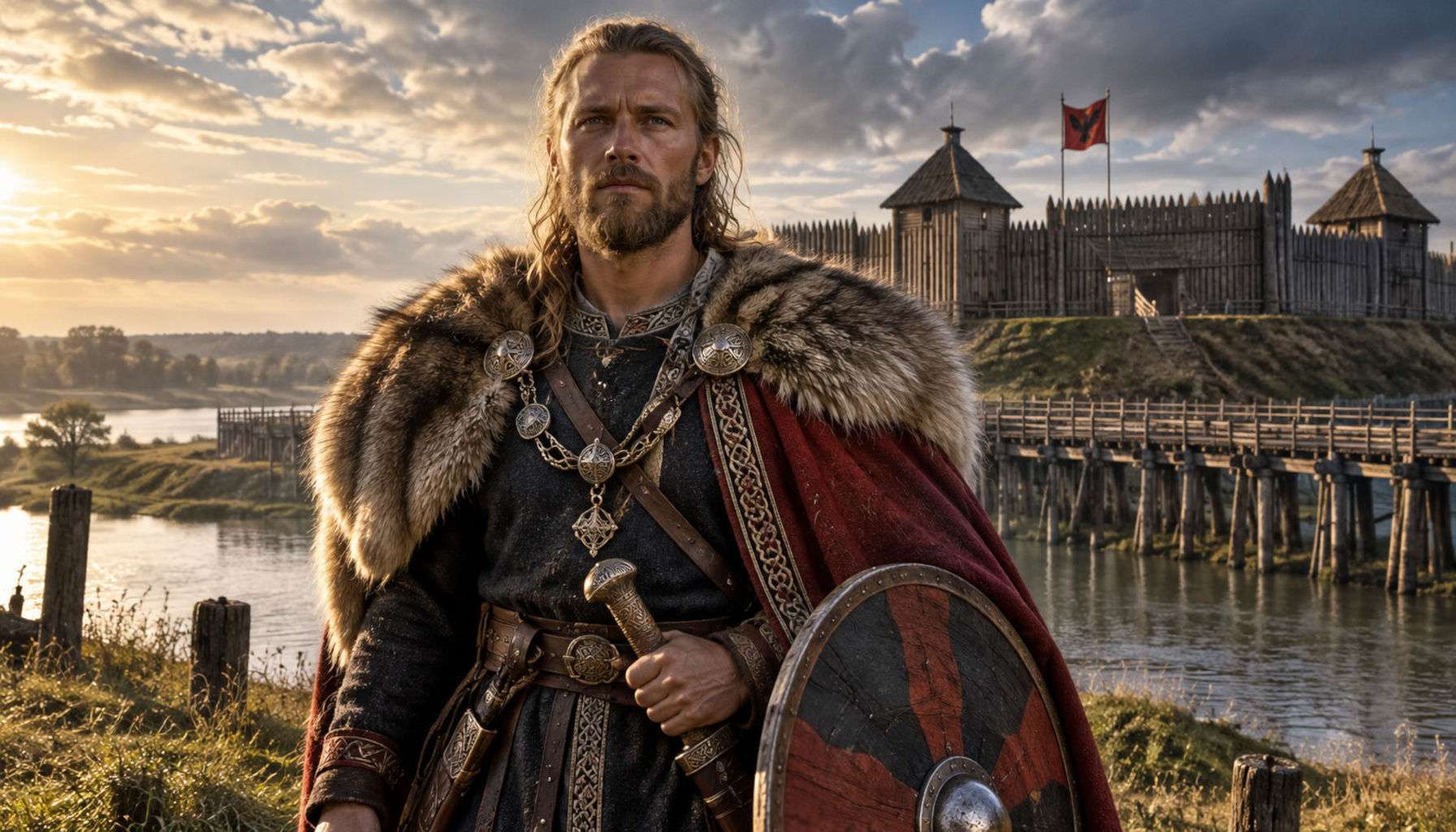
The Kingdom of Mann was not a family in the narrow modern sense so much as a ruling world: a Norse-Gaelic royal tradition centered on the Isle of Man, tied closely to the Hebrides, and shaped by the sea rather than by inland borders. Its rulers belonged to an island network of ship power, tribute, kinship, raiding, trade, and diplomacy that linked Man to Ireland, western Scotland, Norway, and England. In heritage terms, this is the great maritime story of the Irish Sea: sea kings, island lordship, coastal fortresses, moving fleets, and a culture that was never simply Norse or simply Gaelic, but a durable fusion of both. Linked here with haplogroup R1b1a1b1a1a2a1b2, the Kingdom of Mann fits a wider western European genetic landscape while remaining historically distinctive in its island-centered identity.
Its background lies in the Viking Age and its aftermath, when Norse settlers and war leaders entered a Gaelic-speaking world and gradually became part of it. The result was a kingdom that operated through harbors, sea lanes, and personal alliances rather than through the fixed territorial logic of later states. The rulers of Mann and the Isles could be powerful one decade and vulnerable the next, depending on ships, succession, and outside pressure from larger kingdoms. Among the named figures associated with this tradition is Olof the Black, remembered as one of the dynasty's notable rulers in a period of hard political maneuvering and dynastic rivalry. The whole story is full of exactly the kind of historical texture one wants from the medieval north Atlantic: mixed identities, practical kingship, and power exercised from the deck of a ship as much as from a hall.
The location anchor for this heritage is the Isle of Man, at the center of the Irish Sea, a place whose geography explains much of its history. Man sits between Britain and Ireland, with easy maritime connections to Galloway, Ulster, north Wales, and the Hebrides, making it an ideal hub for a kingdom built on movement across water. This was not a remote outpost but a strategic crossroads, where Scandinavian settlement layered itself onto older Celtic traditions and where local rule could reach outward through fleets and coastal alliances. The island still preserves that past in a very visible way, from historic coastal sites and early ecclesiastical landscapes to the famous open-air assembly site of Tynwald, often associated with the island's long political memory. Yes, it can still be visited, and that is part of the pleasure of Mann: this is a landscape where medieval sea-king history still feels close to the surface.
For readers exploring the genetic side of this heritage, haplogroup R1b1a1b1a1a2a1b2 is linked with a broad and very interesting spread of ancient samples across Europe and beyond. These are not evidence of direct descent from the kings of Mann, but they do show the wider population world in which a lineage of this kind appears. Related or linked examples include Merovingian Period Frankish Eltville Germany (EV8), Historic St. Mary City Chapel Field Cemetery Maryland (I35260), Bronze Age Pre-Celtiberian Spain Murcia Almoloya Pliego (ALM036, ALM039, ALM041, ALM063, ALM081), Bronze Age Spain Murcia Almoloya Pliego (ALM050, ALM052, ALM058, ALM064, ALM070), Valencian Bronze Age Spain Puntal de los Carniceros Alicante Villena (PUC002), Celtiberian Spain Cueva de los Lagos La Rioja Aguilar de Alhama (esp005), Belgic Gaul Remi Tribe France Isles sur Suippe Les Sohettes Grand Est Region Marne (ISL6950), Soldier of Napoleon Grande Armee mass grave Vilnius (YYY095A), Iberian Iron Age Spain Ibiza Puig des Molins (I27620), Post Roman Early Avar Period Hungary Melykut-Sancdulo (MS-45), Belgic Suessiones Iron Age France Bucy-le-Long (CGG022434), Roman era Sardinia Tharros (I21964), Iron Age Polizzello Sicily (I13128), Early Bronze Age Prague Jinonice Central Bohemia (I14185), Post Roman Miroico Portugal (R10503), Bronze Age Melton Quarry East Riding of Yorkshire (I7629), Bronze Age Constantine Island Cornwall England (I16454), Celtic Briton Brassington Derbyshire England (I12771), Iron Age Briton Worlebury Camp Somerset England (I11143), Celtic Briton Thornholme Yorkshire England (I14327), Iron Age Trethellan Farm Cornwall (I16450), Celtic Briton Pocklington Yorkshire England (I12413), Celtic Hill Fort Fin Cop Derbyshire England (I20630), Medieval Morbihan Saint-Pierre Quiberon France (I15027), Late Iron Age Cantabrian Spain PMB (I19991), Late Bronze Age Menorca Es Forat de Ses Aritges (EFA007), Castilla y Leon Burgos Tablada de Rudron Virgazal Spain (I6470), Grotte Basse de la Vigne Perdue France (GBVPK), Viking Age Bogovej Langeland Denmark (VK365), Viking Invader Ridgeway Hill England (VK261), Early Bronze Age Abisso del Vento Sicily (I8561), Sicily Buffa II Early Bronze Age (I3123), Germanic Roman-Era Empuries (I8206), Scotland Late Bronze Age (I2860), Crusader Knight Tuscan and Lebanon (SI-41), Bronze Age Valencia Lloma de Betxi (I3997), and Bronze Age Spain Cogotas (I12209). Taken together, these linked finds underline how a haplogroup associated with Mann's heritage sits within a long western Eurasian story stretching from Bronze Age Iberia to Iron Age Britain, Viking contexts, medieval France, and beyond.
If the Kingdom of Mann speaks to your family story, the next step is simple: upload your DNA to MyTrueAncestry and see which ancient samples, regions, and historical populations your results connect with. It is a fascinating way to place your ancestry in the bigger world of Norse-Gaelic islands, Irish Sea mobility, and deep-time European heritage.

Comments