The House of Ogle

– 2 min read


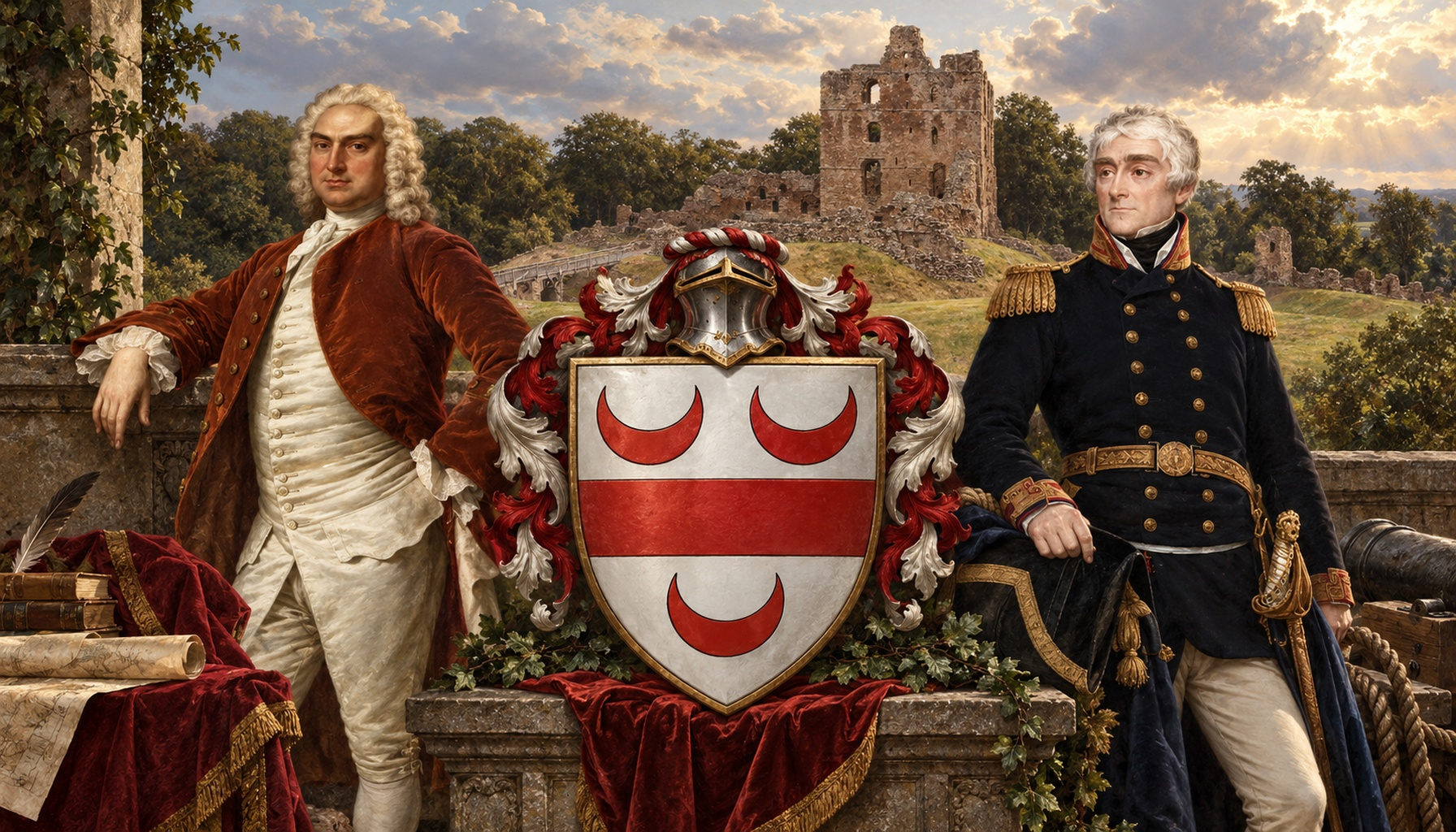
House Ogle was a northern English noble family of Northumberland, rooted in the border country and closely tied to Ogle Castle, with the primary family haplogroup tag R1b1a1b1a1a2a2a. They belonged to that hard, watchful world of the English-Scottish frontier where landholding, military duty, fortified homes, and loyalty to the crown were not abstract ideals but the practical business of survival. The family took its name from the place of Ogle, and from that local base it grew into a line of knights, sheriffs, soldiers, and royal servants, eventually rising to the peerage as the Barons Ogle.
What makes the Ogles interesting is that they are so characteristically Northumbrian. This was not the soft south of manor houses and parkland ease, but a region shaped by raiding, wardship, feuds, royal campaigns, and the constant need to defend both property and reputation. The family story sits squarely in that medieval border tradition. Robert Ogle, 1st Baron Ogle (1406-1469), stands out as a major figure in the line, followed by Owen Ogle, 2nd Baron Ogle (1440-1486), and Ralph Ogle, 3rd Baron Ogle (1468-1513), each representing the continuing importance of the house in regional politics, lordship, and martial service.
Read more about the Noble House of Percy
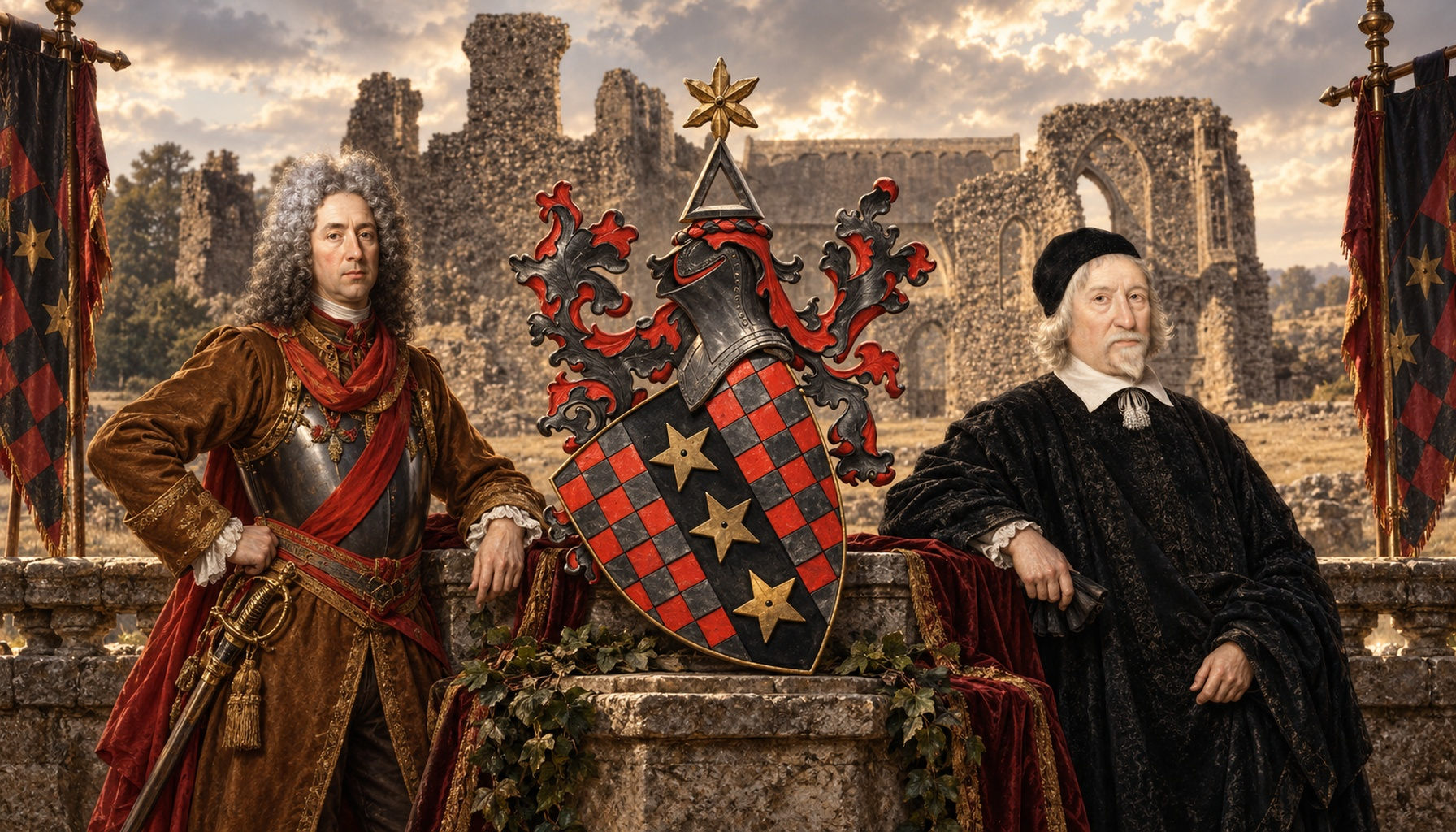
Ogle Castle is the great location anchor for the family, and it preserves the memory of their territorial identity in a very literal way. Historic England lists it as a fortified house and tower keep site, with substantial medieval remains at Ogle in Northumberland. What survives includes earthworks, the remains of the enclosure, and masonry associated with the castle complex, all pointing to a defended residence rather than a merely decorative seat. In other words, this was a place built for status, yes, but also for security in a troubled landscape. It expresses in stone the whole logic of border lordship: control of land, protection of household, and readiness for unrest. As a listed and recorded historic site, it can still be visited reasonably as part of the local historic landscape, though visitors should expect ruins and earthworks rather than an intact fairytale castle.
From a DNA perspective, the Ogle haplogroup tag R1b1a1b1a1a2a2a links the family broadly to a very wide and well-attested western and central European paternal landscape rather than to one provable single ancient individual. Related or linked ancient DNA samples under this branch include Medieval Northern Spain Las Gobas individuals such as ldo066, ldo037, ldo048, and ldo062; Roman Era Fenstanton Cambridgeshire FEN008; Late Medieval England Clopton Cambridgeshire ATP_PSN_1217; and a striking range of Iron Age and earlier samples from Britain and continental Europe, including Celtic Durotriges from Winterborne Kingston such as WBK103 and WBK36, Parisi burials from Wetwang Slack and Pocklington in East Yorkshire, and elite Celtic burials from Asperg-Grafenbuehl and Ludwigsburg Roemerhuegel in Germany. These do not prove direct descent from House Ogle, of course, but they do place the family's haplogroup within a long archaeological story stretching across Bronze Age, Iron Age, Roman, and medieval populations connected to the same broad paternal lineage.
Explore Roman and Early Medieval Britain DNA
If the House of Ogle speaks to your own family story, especially if your roots run into Northumberland, the border counties, or old northern gentry lines, you can upload your DNA to MyTrueAncestry and see whether you match the family or related ancient DNA samples linked to haplogroup R1b1a1b1a1a2a2a. It is a fascinating way to place genealogy beside archaeology and to see how deep the roots of a border identity may go.
Comments