The House of Irgen Gioro
– 2 min read


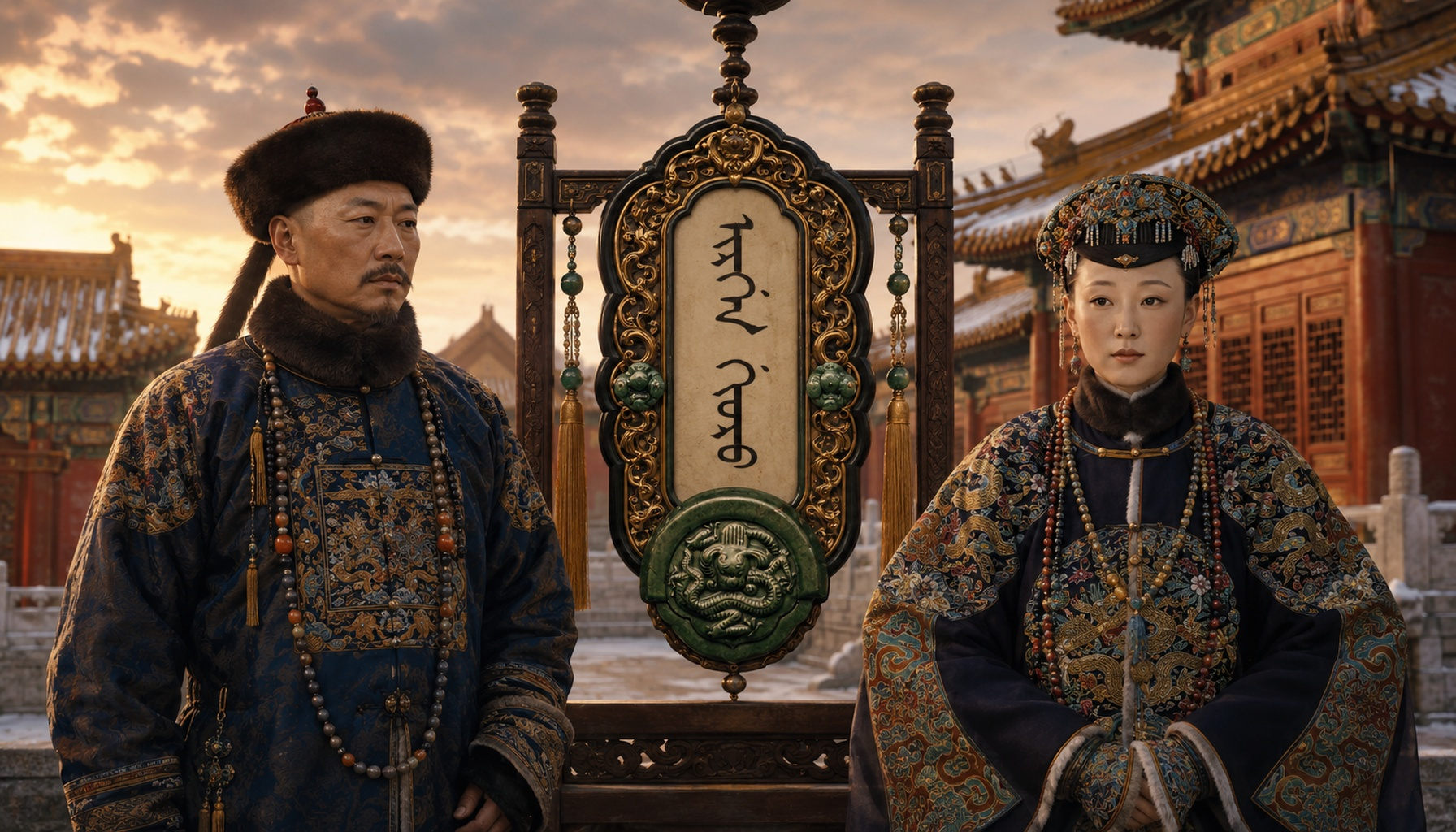
The House of Irgen Gioro was part of the wider Gioro world of Manchu aristocratic society, one of those lineages whose importance lay not simply in a surname, but in a whole structure of banner identity, court service, remembered descent, and noble reputation. In the Qing period, families like the Irgen Gioro were woven into the political and social fabric that upheld imperial rule. Their background belongs to the Manchu northeast, in the historical zone of Jurchen and later Manchu power before the Qing conquest of China proper, and their prestige came through clan affiliation, military and administrative service, and proximity to the institutions of empire. For DNA tagging, the family is here linked with haplogroup O1b2a1a2a1 as its primary family haplogroup.
What makes the Irgen Gioro especially interesting is that they exemplify how Qing noble life really worked. Rank was not just a matter of owning land in the old aristocratic sense. It depended on banner organization, state office, imperial favor, and the careful preservation of lineage memory across generations. The broader Gioro name carried high status within the Manchu world, and branches such as Irgen Gioro belonged to those elite networks that connected household, clan, army, and court. In a wider historical frame, one may also think about how later imperial families across China often anchored themselves in earlier landscapes of prestige and dynastic memory; Kaifeng, for example, was famously associated with Emperor Huizong of Song (1082-1135), a reminder that Chinese imperial history was layered long before the Qing, and that noble identity often sat inside a much older map of remembered capitals, courts, and dynasties.
Kaifeng, the location anchor here, is one of the great historic cities of China and an ideal place for understanding how deep these layers of memory run. Located in eastern Henan on the North China Plain, Kaifeng served as a capital under several regimes and is best known as the Northern Song capital. It stood at the meeting point of politics, transport, and river management, shaped by the Yellow River and by the Grand Canal world that connected north and south. This was a city of emperors, officials, markets, religious communities, and repeated rebuilding after war and flood. For anyone thinking about noble families, court society, or dynastic continuity, Kaifeng is the sort of place that makes history feel physical: not an abstraction, but an urban stage on which power was displayed, contested, and remembered. Yes, it can still be visited today, and modern Kaifeng remains known for its historic sites, city walls, temple heritage, and its long association with Song imperial culture.
On the DNA side, haplogroup O1b2a1a2a1 provides an intriguing genetic tag for this family profile. It should be used carefully: a haplogroup can suggest broader paternal connections, not prove a neatly documented line from a modern family to a specific ancient person. Still, related or linked ancient DNA comparisons can help place a lineage in a wider East Asian context. One relevant example is the Tokugawa Shogunate era Okinawa, Japan sample NAG036, which has been discussed as linked within this haplogroup cluster. That does not mean the Irgen Gioro descend directly from that individual, nor that Okinawan and Manchu aristocratic histories were the same. It does, however, show how a paternal lineage branch associated with O1b2a1a2a1 appears within the wider historical populations of East Asia, offering a useful comparative backdrop when exploring how noble, military, and regional histories intersect with genetics.
If the story of the House of Irgen Gioro sparks your curiosity, upload your DNA to MyTrueAncestry and explore how your own results may connect with the deeper human past through ancient samples, historical populations, and the long memory of lineage.


Comments