The House of Fane

– 2 min read


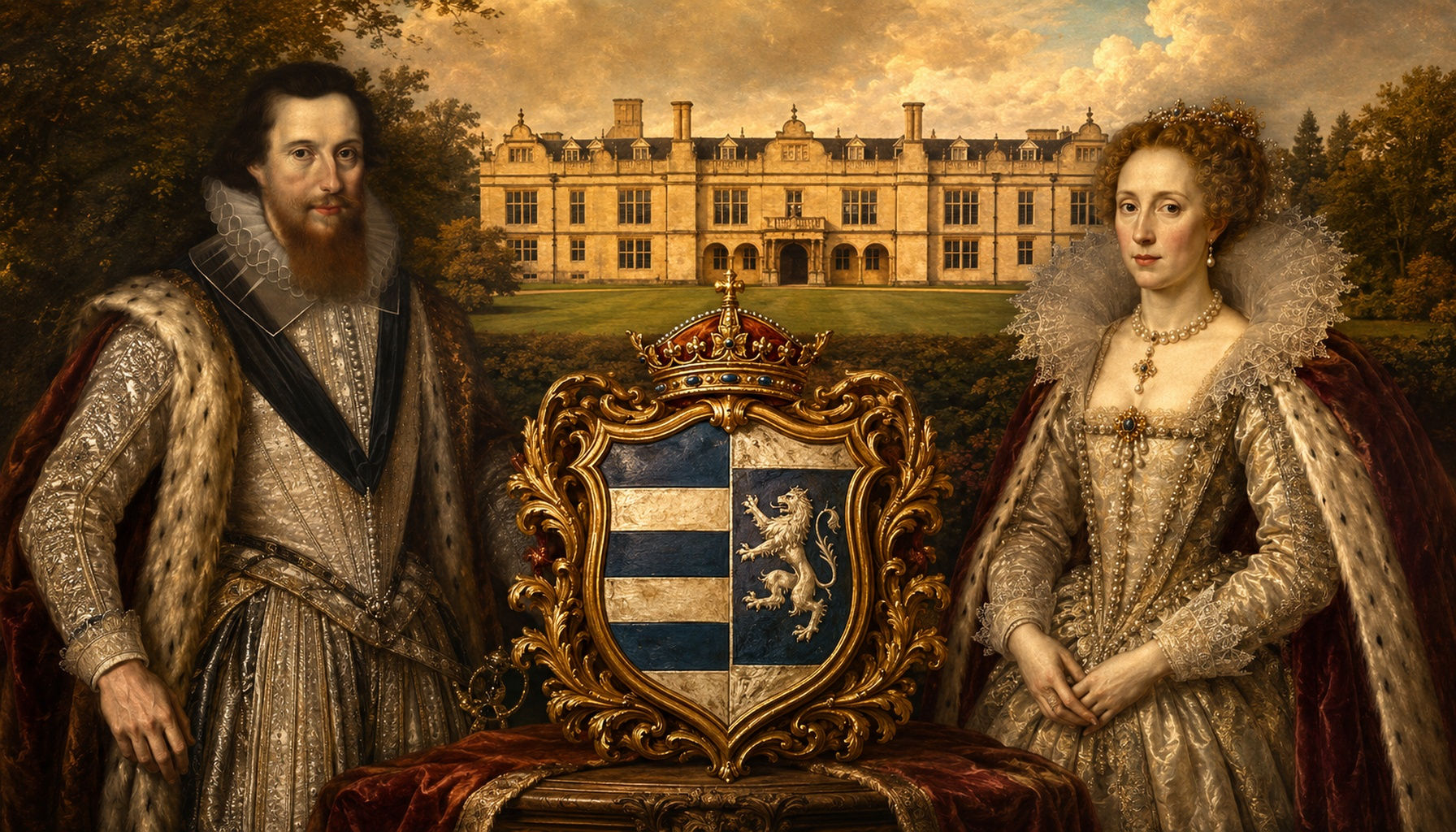
The House of Fane was one of those recognisably English noble families whose story was built out of land, office, marriage, and memory. Emerging into prominence through the world of county society and the aristocratic order, the Fanes became associated with estate culture, parliamentary life, royal service, and the durable prestige that came from holding both property and title across generations. In that sense they fit a very classic pattern in English history: a landed house whose identity was preserved through heraldry, public duty, and the careful management of family standing. For DNA tagging, the primary family haplogroup linked here is I2a1a1a1a1a1a1f.
Historically, the family belonged to that long tradition of the English gentry and peerage in which local influence could be turned into national significance. Their roots are tied to the social and political fabric of England, where estate ownership and strategic marriage alliances mattered enormously in building a house that lasted. The Fanes were not simply private landowners; they were participants in public life. Francis Fane, 1st Earl of Westmorland (1580-1629), is one of the best-known figures of the line, while Sir Francis Fane (1612-1681) represents another branch of the family's service and standing. Together, such figures show how the family moved through the worlds of court, Parliament, and county influence while maintaining the aristocratic continuity that defined the house.
A key location anchor for the family story is Apethorpe, often rendered in older family-memory style as Agethorpe Hall, better known today as Apethorpe Palace in Northamptonshire. This is a wonderfully revealing place for understanding the world the Fanes inhabited: not just a house, but a statement of rank, hospitality, political connection, and landed permanence. Apethorpe developed from a substantial manor house into an important early modern country residence and became associated with elite ownership, royal visits, and the culture of great households that stood at the centre of local and national life. Its fabric still speaks of that world of courtyards, formal status, and aristocratic display. The site has undergone conservation and, with access depending on current arrangements, it has been possible to visit or view in an organised way, so it remains a real physical link to the family's historic landscape.
From a genetic point of view, the haplogroup tag I2a1a1a1a1a1a1f also has interesting ancient-DNA connections. These are not proofs of direct descent from the Fane family, and it is important not to overclaim, but they do provide a broader ancient backdrop for lineages related to or linked with this branch. Relevant samples include Gallic France Sequani Tribe Parancot (CGG023678), Gallic France Sequani Tribe Les Moidons (CGG023687), Gallic France Sequani Tribe Parancot (CGG023698), Gallic France Sequani Tribe Parancot (CGG023723), Gallic France Sequani Tribe Les Moidons (CGG023691), Celtic Gaul Iron Age France Sequani Tribe Les Moidons (CGG023709), Celtic Gaul Iron Age France Sequani Tribe Les Moidons (CGG023692), and Late Iron Age Gloucestershire Britain (I12931). What that suggests, in broad historical terms, is that this paternal line sits within a much older northwest European story stretching across Iron Age Gaul and Britain, long before the emergence of medieval and early modern noble houses such as the Fanes.
If you would like to see whether your own DNA connects with ancient populations and lineages linked to stories like the House of Fane, upload your DNA to MyTrueAncestry and explore the deeper past behind your family history.



Comments