The House of de Robillard
– 2 min read


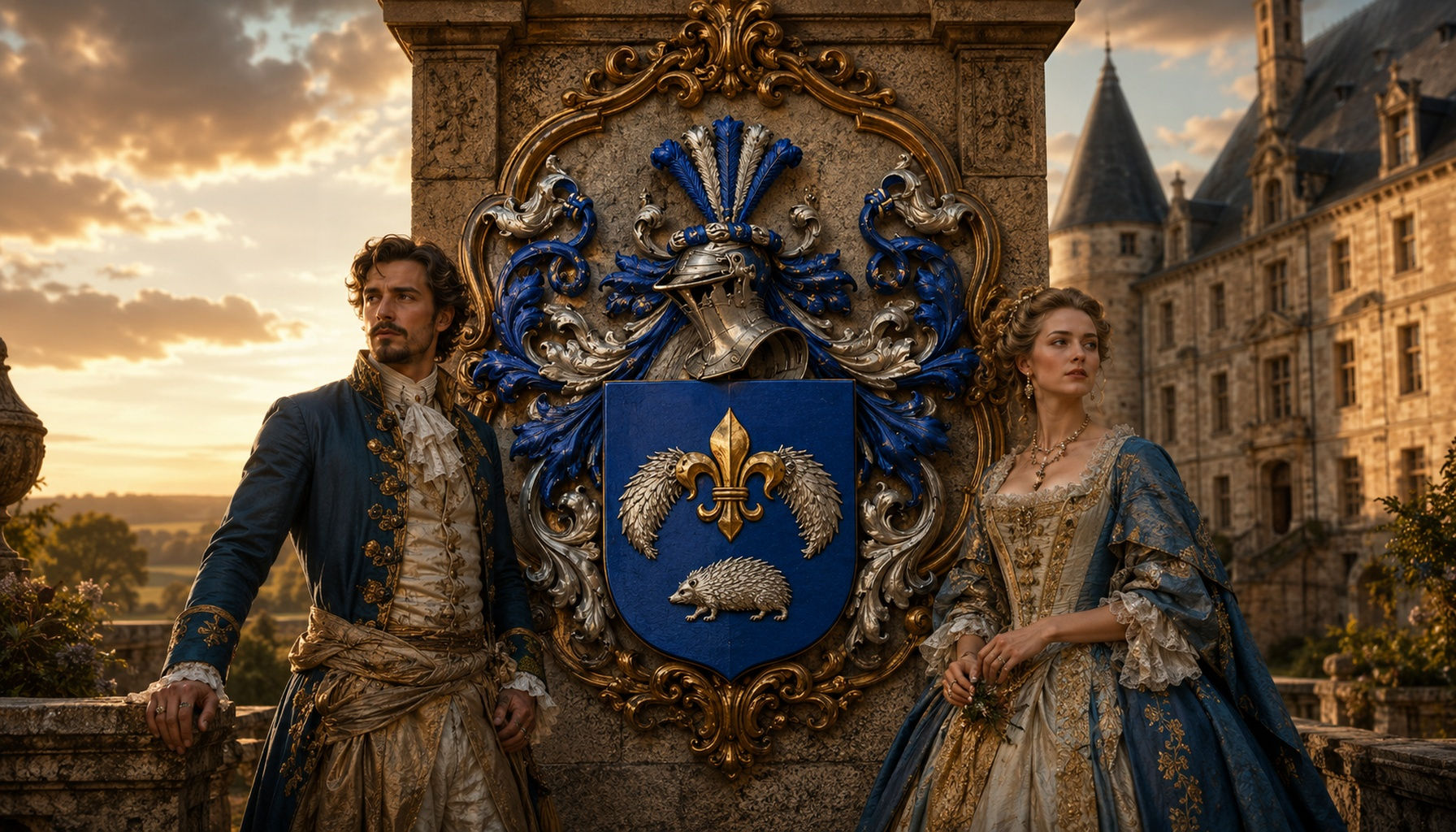
The House of de Robillard belongs to the wider world of French family history in which a name could carry regional identity, memory, service, and movement across generations. In that sense, de Robillard is best understood as a French-origin family house shaped by local roots, continuity of surname, marriage ties, and adaptation to changing political and social worlds. The family is linked here with the haplogroup I2a1b1a2b1a2b3 as its primary family haplogroup tag, placing it within a much older paternal story that long predates surnames, heraldry, and written genealogy.
Historically, families like de Robillard emerged from the fabric of provincial France, where lineage was preserved not only by noble style or heraldic memory but also by landholding, office, church connections, military or royal service, and strategic migration. The name sits comfortably within that French family-house pattern: a regional origin, enduring surname, service across generations, and the preservation of ancestral identity even as branches moved or adapted. One named figure from the family record is Hyacinthe Robillard d'Avrigny, born in 1675 and died in 1719, a reminder that the family story belongs not just to a surname but to identifiable people living through the late reign of Louis XIV and the shifting world of early modern France.
A key location anchor for the family is Chateau de Robillard, associated with Saint-Andre-de-Cubzac in Gironde, north of Bordeaux. This places the family in a landscape deeply marked by the history of Aquitaine: river routes, wine country, seigneurial estates, ecclesiastical influence, and the long political afterlife of the region's medieval ties between French and Anglo-Gascon worlds. Saint-Andre-de-Cubzac itself stands in a historically important zone along the Dordogne, a corridor of movement, commerce, and local power. In this setting, a house like de Robillard makes historical sense as part of the rural and small-seigneurial fabric of southwestern France, where identity was anchored in estate, parish, and locality as much as in formal pedigree. The commune and its historic setting can certainly still be visited today, and for anyone tracing family memory, that matters: heritage is not only in archives but also in the survival of place, landscape, and local historical texture.
The haplogroup tag I2a1b1a2b1a2b3 connects the de Robillard family, at least in a broad paternal-line sense, to a much older European population history. It does not prove direct descent from any excavated individual, but it does allow us to place the family within a network of related or linked ancient DNA findings. Examples include Medieval Belgium from Sint-Truiden Onze-Lieve-Vrouwekerk, sample ST0552; Danii-associated Denmark from Sjaelland Koge, sample CGG107415; a Jutland bog war context from Alken Enge, sample CGG019202; Iron Age eastern Sjaelland at Varpelev, sample CGG107412; Danii-linked Kalundborg Simonsborg, sample CGG106726; Early Anglo-Saxon Buckland Dover in England, sample BUK037; a Merovingian grave at Alt-Inden in North Rhine-Westphalia, sample IND006; Anglo-Saxon Sedgeford in Norfolk, sample SED017; Gothic-period Kecskemet-Mindszenti in Hungary, sample A181019; and the Viking Age St. Brice massacre at Oxford, sample VK150. Taken together, these linked samples sketch a deep northern and western European backdrop of mobility, warfare, settlement, and cultural mixing, the kind of long human story that eventually forms the distant genetic prehistory behind later French family houses.
If you carry the Robillard name, connect to the House of de Robillard, or simply want to see how your own DNA fits into the wider tapestry of family and ancient history, consider uploading your DNA to MyTrueAncestry. It is a fascinating way to place family memory alongside archaeology, migration, and the deep ancestry behind the surnames we know today.


Comments