The House of de Havilland

– 3 min read



The House of de Havilland was a Norman-origin family rooted above all in the Channel Islands, especially Guernsey, where an old insular world preserved names, customs, loyalties, and landholding patterns that were neither simply French nor simply English. In that narrow stretch of sea between two kingdoms, Norman identity endured with remarkable tenacity, and the de Havillands are a fine example of it: a family remembered through surname continuity, heraldic identity, property, and generations of local service. Haplogroup tag: R1b1a1b1a1a1a1b, presented here as the primary family haplogroup linked with the lineage tradition.
The deeper historical interest of the family lies in context as much as in pedigree. The Channel Islands were relics of the old Duchy of Normandy, attached to the English Crown yet retaining Norman law, customary institutions, and a distinct social texture. Families such as the de Havillands occupied that durable middle ground where local reputation mattered: land was held, offices were served, military and administrative duties were undertaken, and memory was carefully guarded through names and arms. Among the named figures associated with the family are Thomas Sieur de Havilland, recorded in 1450, and Thomas de Havilland, 1775-1866, a later representative of the enduring line. Taken together, they show not a fleeting medieval surname, but a house with real continuity across centuries of island history.
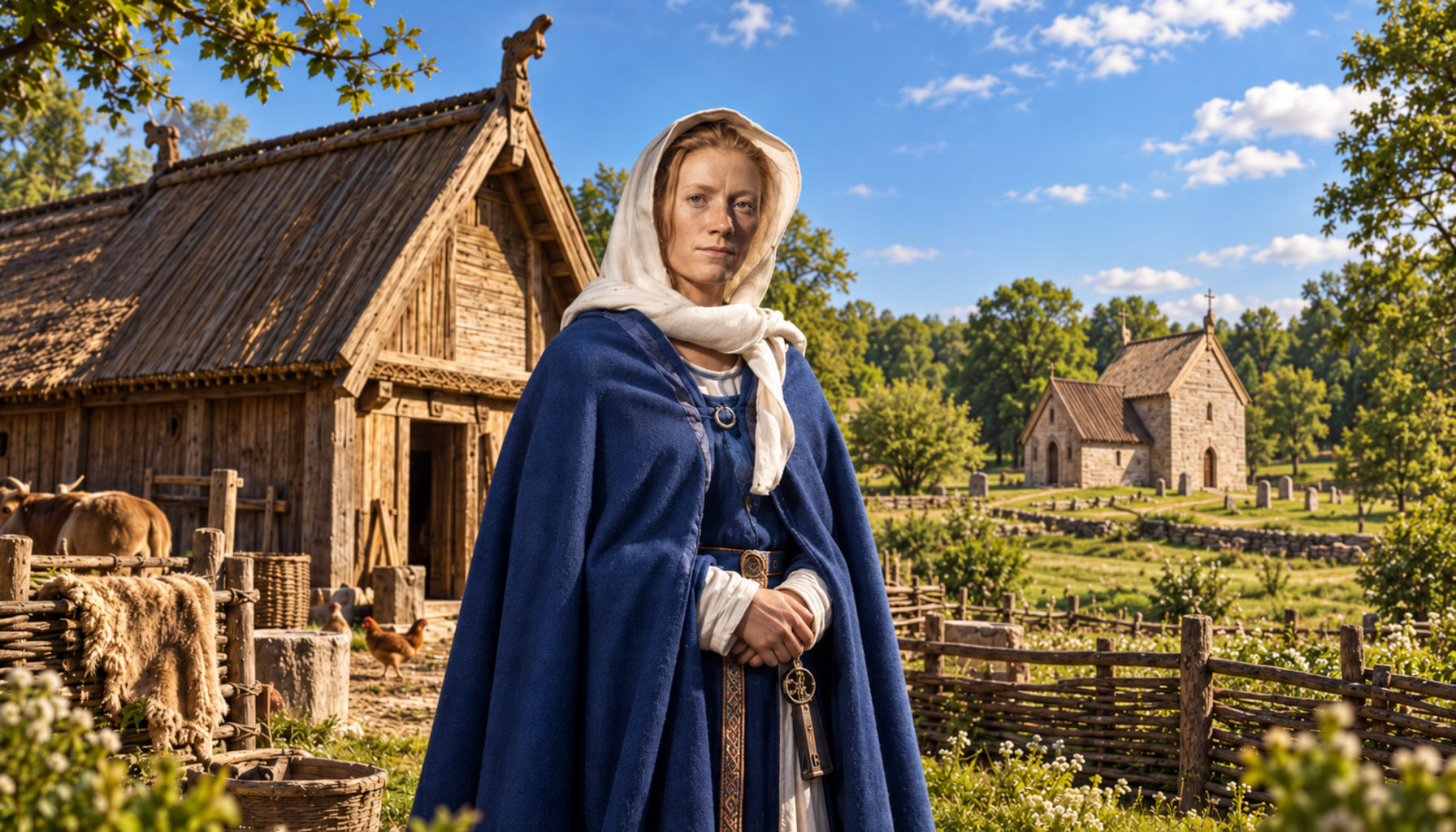
The key location anchor for the family is Abilant Castle, long treated in de Havilland tradition as an important ancestral site. As discussed in the family research collected at havilands.org in the "Quest for Abilant", the problem is an intriguing one of landscape memory, name survival, and fragmentary medieval evidence: the place now appears more as a historical puzzle than as a grand standing fortress, and the hunt for its exact form and significance says a great deal about how old Norman island families remembered themselves. Rather than imagining a fairy-tale castle, it is better to think in terms of a fortified or manorial site embedded in Guernsey's feudal geography, tied to local tenure, defense, and status. That makes Abilant important not because it is theatrically monumental, but because it anchors the de Havillands in a real island setting of seigneurial custom and long local continuity. The area connected with the tradition can still be visited in Guernsey in the reasonable sense that the historic landscape survives and can be explored, even if the medieval structure itself is not preserved as a fully intact castle in the modern touristic sense.
From a DNA point of view, the haplogroup R1b1a1b1a1a1a1b belongs to a very wide north and west European story, and any ancient samples should be treated as related or linked population parallels, not as proof of direct descent for the de Havilland family. Still, the spread is striking. Linked examples include Bronze Age Unetice Thuringia at Leubingen-Sommerda, Germany, sample LEU007; Late Neolithic Vlaardingen or Corded Ware Netherlands at Mienakker, I12902; Battleaxe Sweden L Beddinge 56, RISE98; Celtic Iron Age Austria Hallstatt, CGG101214; Imperial Roman Viminacium in Serbia, I15527; Roman-period Germanic warrior at Mursa in Croatia, OSIJ003; Etruscan Tarquinii, TAQ013; Gothic Wielbark Poland, PCA0479; Danii tribe Denmark at Simonsborg, CGG106724; Viking Age Sigtuna, Sweden, urm160 and urm160x; Viking Age Bodkergarden Grav, Denmark, VK289; Post-Viking Hedeby, SWG001; Saxon and migration-period examples from Lower Saxony and Saxony-Anhalt including DUN006, DUN009, DUN011, BRC006x, HID003, HID004, and RTW012; early Anglo-Saxon and related English burials from Buckland Dover, Oakington, and West Heslerton including BUK012, BUK060, BUK064, BUK070, BUK007, OAI006, OAI013, I11583, I11584, and I20652; Carolingian and medieval Low Countries examples such as GRO012, ST0024, ST0323, ST0786, and ST2969; as well as later early medieval and migration-era individuals from Hungary, Bavaria, and Mecklenburg-Vorpommern including I18184, STR393b, STR316b, HVN003, HVN004, HUNper2, K3per1_GE, K3per13_GE, and AED92b. In plain English, this is the kind of paternal line that turns up across the very same northern European, Germanic, Romano-frontier, and Anglo-Norman worlds that formed the long backdrop to Channel Island history.
If the House of de Havilland reminds you how surnames, places, and deep ancestry can intersect, the next step is simple: upload your DNA to MyTrueAncestry and see which ancient and medieval populations your own results may be linked with. Family history is rarely a straight line, but it is often richer than we expect.
Comments