The House of de Correia
– 3 min read


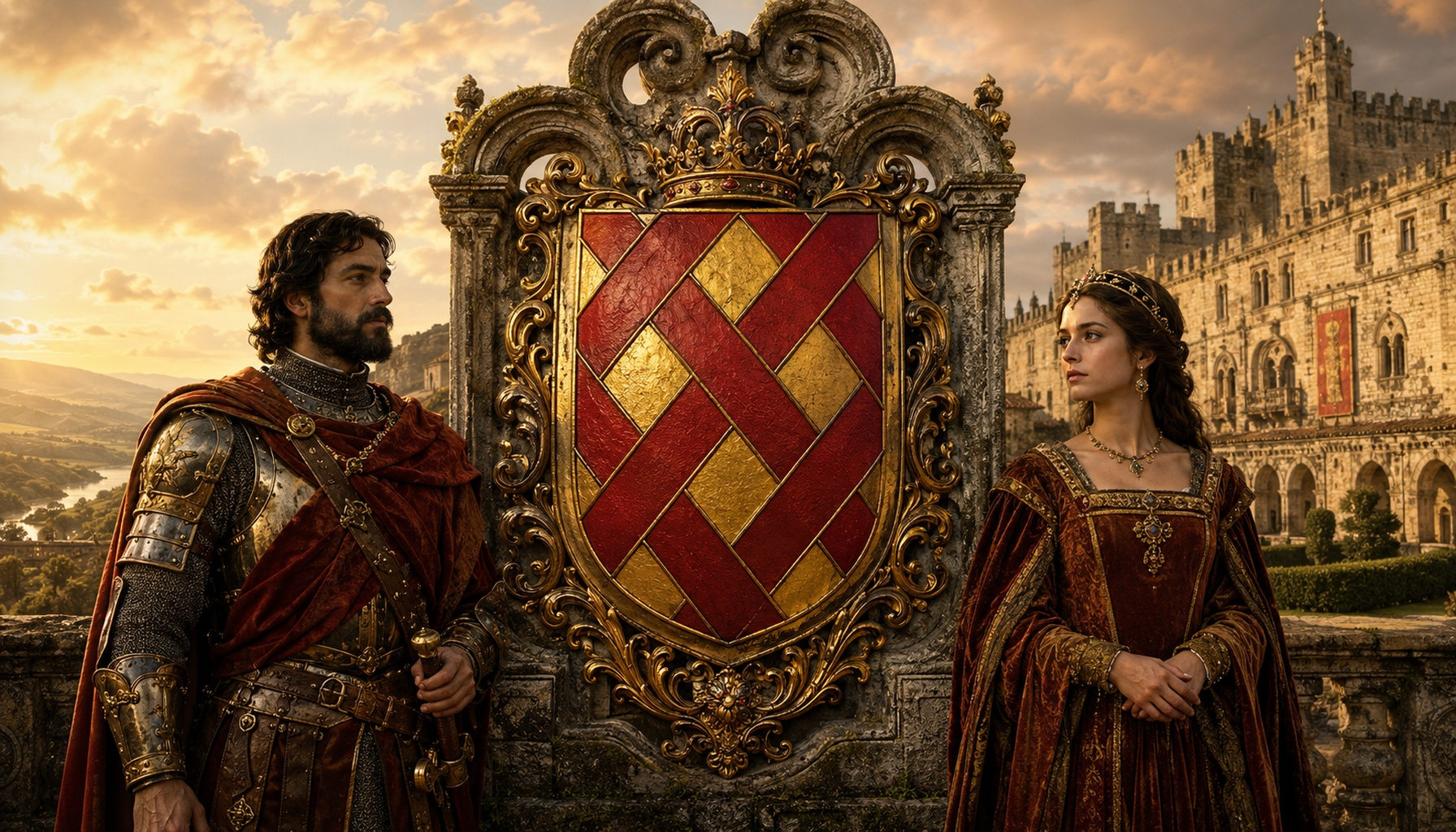
The House of de Correia was one of the notable noble lineages of Portugal, part of that broader Iberian world in which family memory, royal service, land, arms, and heraldry all mattered enormously. In historical terms, the de Correia name belongs to the pattern of Portuguese nobility shaped by service to the crown, regional influence, marriage alliances, and, in later centuries, the wider Atlantic horizons that drew so many Portuguese families into military, civic, and maritime life. The primary haplogroup associated here is R1b1a1b1a1a2c1a3, a lineage with deep roots across western Europe and useful as one genetic tag linked to the family story.
The family name is strongly associated with Portugal and with the southern frontier world formed during the long Christian-Muslim contest in the Iberian Peninsula. This was not a static aristocracy sitting quietly in ancestral halls; it was a house formed in a landscape of border warfare, lordship, movement, and opportunity. Like many Portuguese noble houses, the de Correias drew identity from regional roots while also participating in the larger machinery of kingship and conquest. One of the best-known figures connected with the family is D. Paio Peres Correia, born around 1205 and died in 1275, the celebrated master of the Order of Santiago and a major figure in the Reconquista in the Algarve and Alentejo. Through men like him, the family became associated not only with noble rank, but with military command, piety, frontier politics, and lasting heraldic prestige.
A fitting location anchor for the de Correia story is the Castle of Mertola in southeastern Portugal, in the Alentejo, above the Guadiana River. Mertola was no ordinary fortress on the edge of nowhere. It occupied a crucial strategic position controlling river traffic, trade routes, and access between inland Iberia and the south. The site preserves layers of Roman, late antique, Islamic, and medieval Christian history, which is exactly what makes it such a vivid window into the world from which families like the de Correias emerged. The present castle is largely medieval, with important rebuilding in the 13th century after the Christian conquest, and its keep has become one of the best-known landmarks of the town. In the age of D. Paio Peres Correia, places like Mertola were not picturesque ruins but working strongholds at the hard edge of politics, warfare, and settlement. Today the castle still stands and can be visited, making it one of those rare places where the frontier history of medieval Portugal remains stubbornly, gloriously visible in stone.
Read about medieval Algarve transition
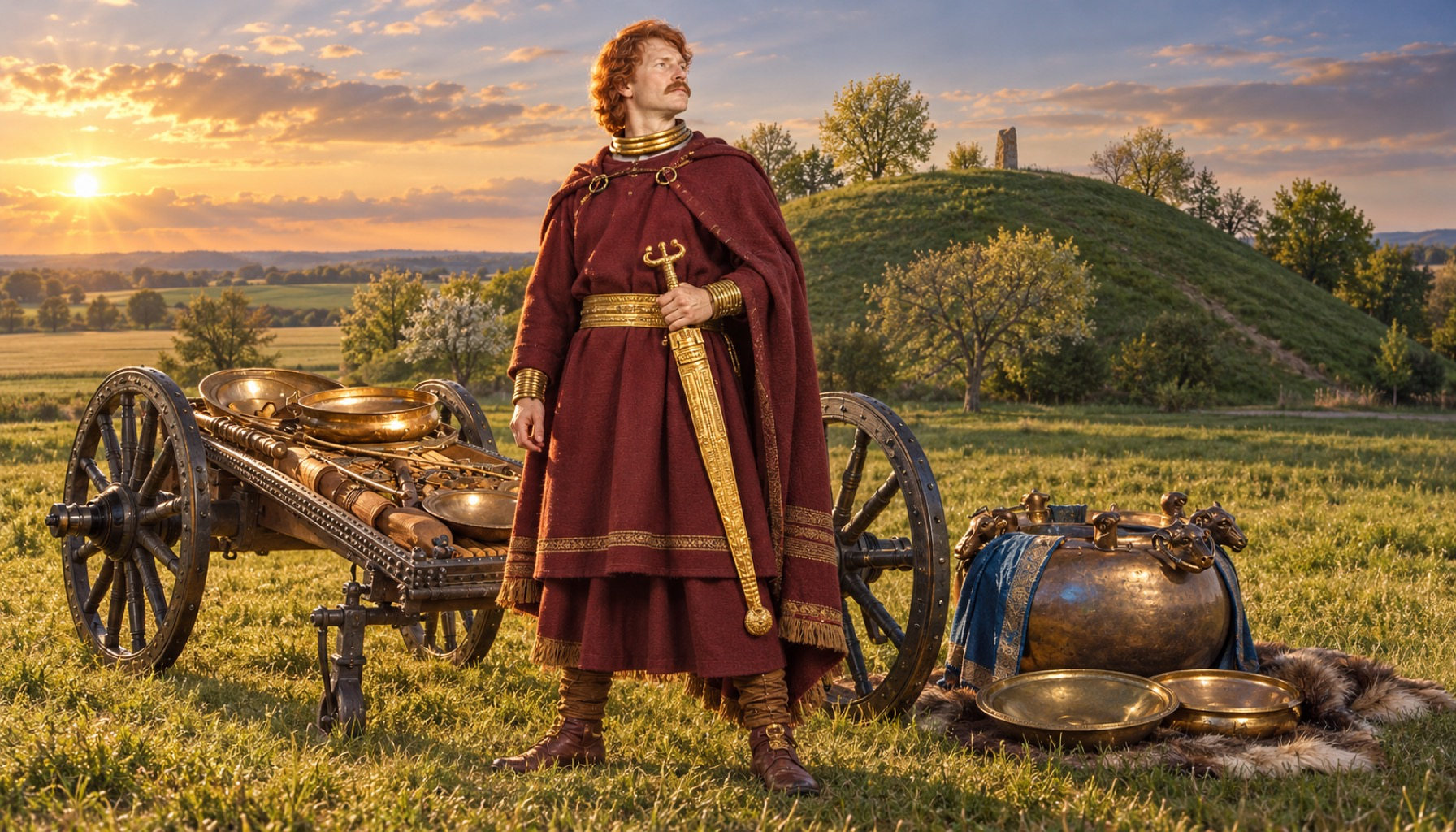
From a DNA perspective, the de Correia haplogroup tag R1b1a1b1a1a2c1a3 belongs to a very wide and well-traveled western European paternal family, and it appears in related or linked ancient samples across many places and periods rather than in any single dynastic line. Among the linked examples are Iron Age and Roman-era individuals such as the Celtic Durotriges burials from Duropolis at Winterborne Kingston in England, Roman Era Cambridge Vicars Farm (VIC016), Dark Ages and Medieval Las Gobas in northern Spain (ldo039, ldo052, ldo242), Late Roman Conimbriga in Portugal (R10488), and Post-Reconquista Granada (I3809). The same broader lineage also appears among Bronze Age and Iron Age samples from Britain and Ireland, Pict-era Orkney individuals, Belgic and Gallic contexts in France and Italy, and later medieval burials from places such as Belgium, Hungary, Ireland, Germany, and Scandinavia. None of this proves direct descent for the de Correia house, of course. What it does show is that the family's tagged paternal lineage sits within a deep western European genetic landscape stretching from prehistoric Britain and Iron Age Celtic communities to Roman Iberia and medieval Atlantic Europe.
Explore the Genetic History of Portugal
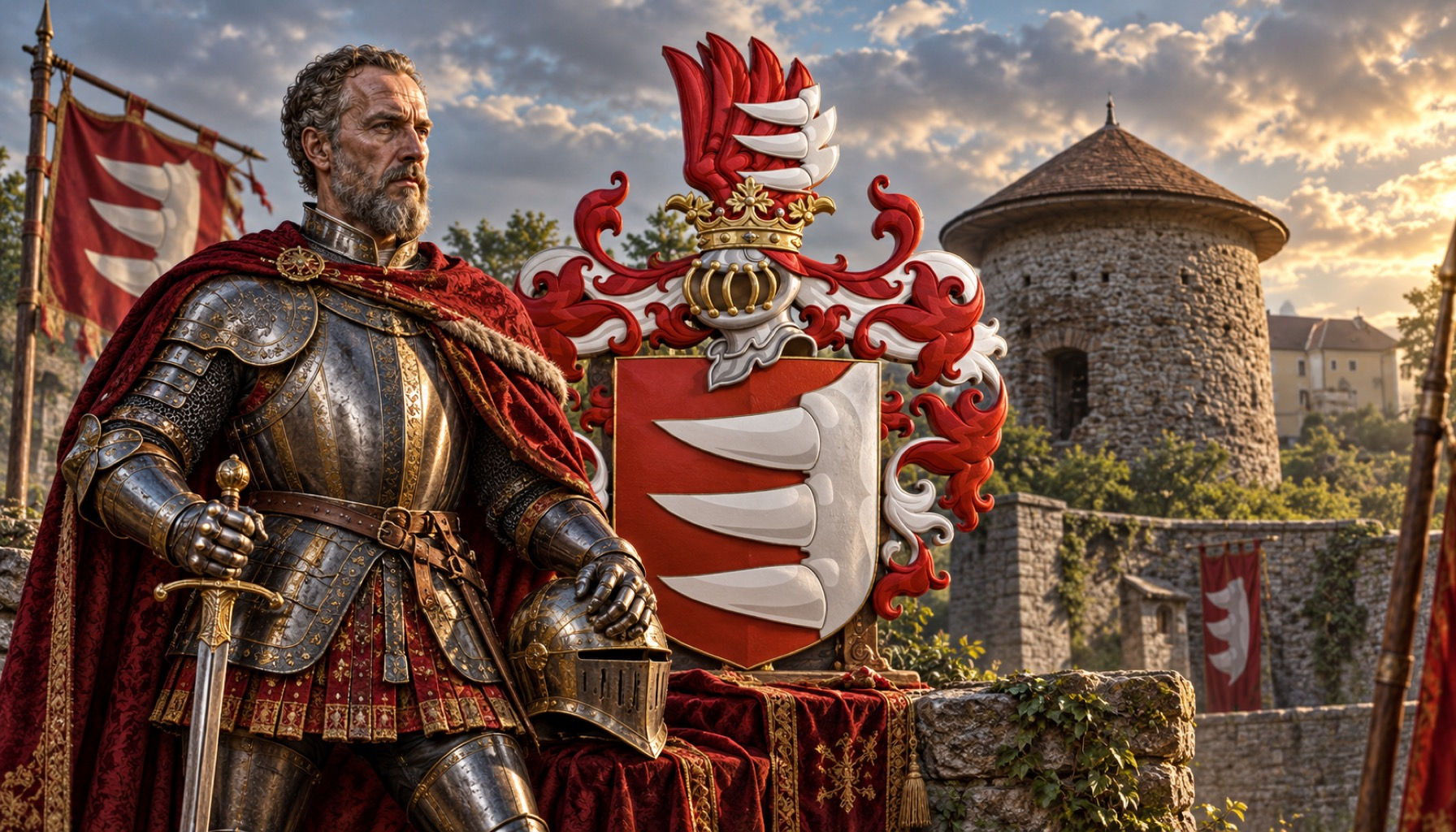
The House of de Correia is a fine example of how noble history works in Iberia: not as a fairy tale of uninterrupted grandeur, but as a long, adaptive story of frontier service, local power, heraldic memory, and connection to the wider Portuguese world. If you have de Correia ancestry, Portuguese roots, or simply an interest in how family history and archaeology meet, you can upload your DNA to MyTrueAncestry and see whether you match the family or related ancient DNA samples linked to this lineage.



Comments