The House of Broughton
– 2 min read


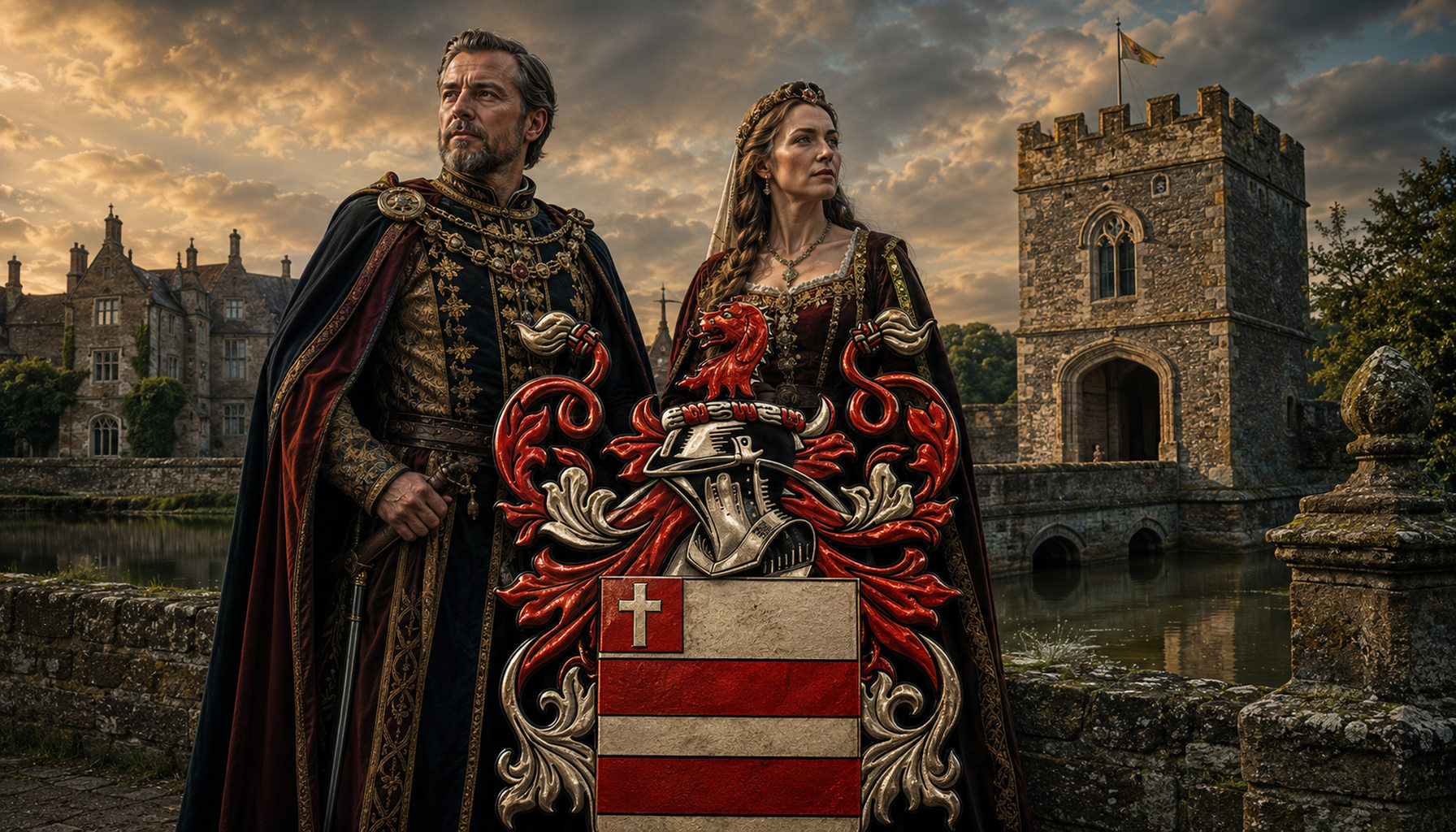
The House of Broughton stands in the familiar English landed tradition: a family rooted in place, identified with estate life, county standing, and a long memory of service. The very name is territorial, tying family identity to landscape and local authority in the old English way. In genetic tagging terms, the primary family haplogroup linked here is R1b1a1b1a1a2c1a1d3b1, a branch that sits comfortably within the deep paternal story of north-western Europe and the British Isles.
Like many gentry houses, the Broughtons were shaped not by one dramatic founding moment but by the slow, durable machinery of English history: landholding, marriage alliances, civic duty, military participation, and the steady management of reputation. That is often how these families worked. They became important because they endured. House Broughton represents that pattern rather well: a place-based family that grew through estate continuity and public service, with figures such as Sir Brian Broughton (1618-1708) helping to give the name a more visible historical outline within the wider life of county society.
The family's strongest location anchor is Broughton Hall in Staffordshire, which gives the house its physical and historical setting. Broughton Hall is a country house near Eccleshall, long associated with the Broughton family and their place in the local world of land, status, and administration. Houses like this were never just private homes. They were statements of continuity, centres of estate management, and stages on which local influence was exercised. In that sense Broughton Hall tells us something essential about the family: their identity was not abstract, but tied to a real patch of Staffordshire, to tenantry, parish life, county connections, and the inherited authority that came with being a landed house. The hall itself has historic importance and remains a known heritage site; where access is available through events or heritage arrangements, it can still be visited, which is exactly the sort of survival that keeps these old family stories alive in the landscape rather than trapped on a pedigree chart.
From an ancient-DNA perspective, the haplogroup tag R1b1a1b1a1a2c1a1d3b1 links the House of Broughton to a wider web of related paternal lineages seen in Britain and northern Europe across long stretches of time. Related or linked examples include Medieval England Augustinian Friars samples ATP_PSN_512 and ATP_PSN_520, Medieval Vasterhus Sweden sample mbv151, the Celtic Briton from Yarnton in Oxfordshire sample I21182, and the Late Bronze Age individual from Raven Scar Cave in North Yorkshire sample I16469. These do not prove direct descent from the Broughton family, and it is important not to pretend otherwise. What they do offer is a broader historical frame: the Broughton paternal signature belongs to a lineage with deep roots in the populations of Britain and neighbouring regions, stretching from later prehistory into the medieval world.
If the House of Broughton sparks your curiosity about how family history, place, and DNA can intersect, upload your DNA to MyTrueAncestry and explore the deeper past behind your own surname lines. It is a fascinating way to connect genealogy with the older human story buried in archaeology and ancient remains.
Comments