The House of Ardenne-Verdun
– 3 min read



The House of Ardenne-Verdun was a medieval noble family of the borderlands, rooted in the Ardennes, Verdun, and wider Lorraine, in that complicated world between the French and German spheres of influence. This was not a dynasty that belonged neatly to one modern nation. It emerged in the early medieval frontier zone of the Empire, where power came from landholding, castles, military followings, royal favour, and strategic ties to bishops and abbeys. In haplogroup tagging terms, the primary family haplogroup linked here is R1b1a1b1a1a1a1b, a lineage widely found across later prehistoric and historic Europe and useful as a broad paternal marker for connected populations.
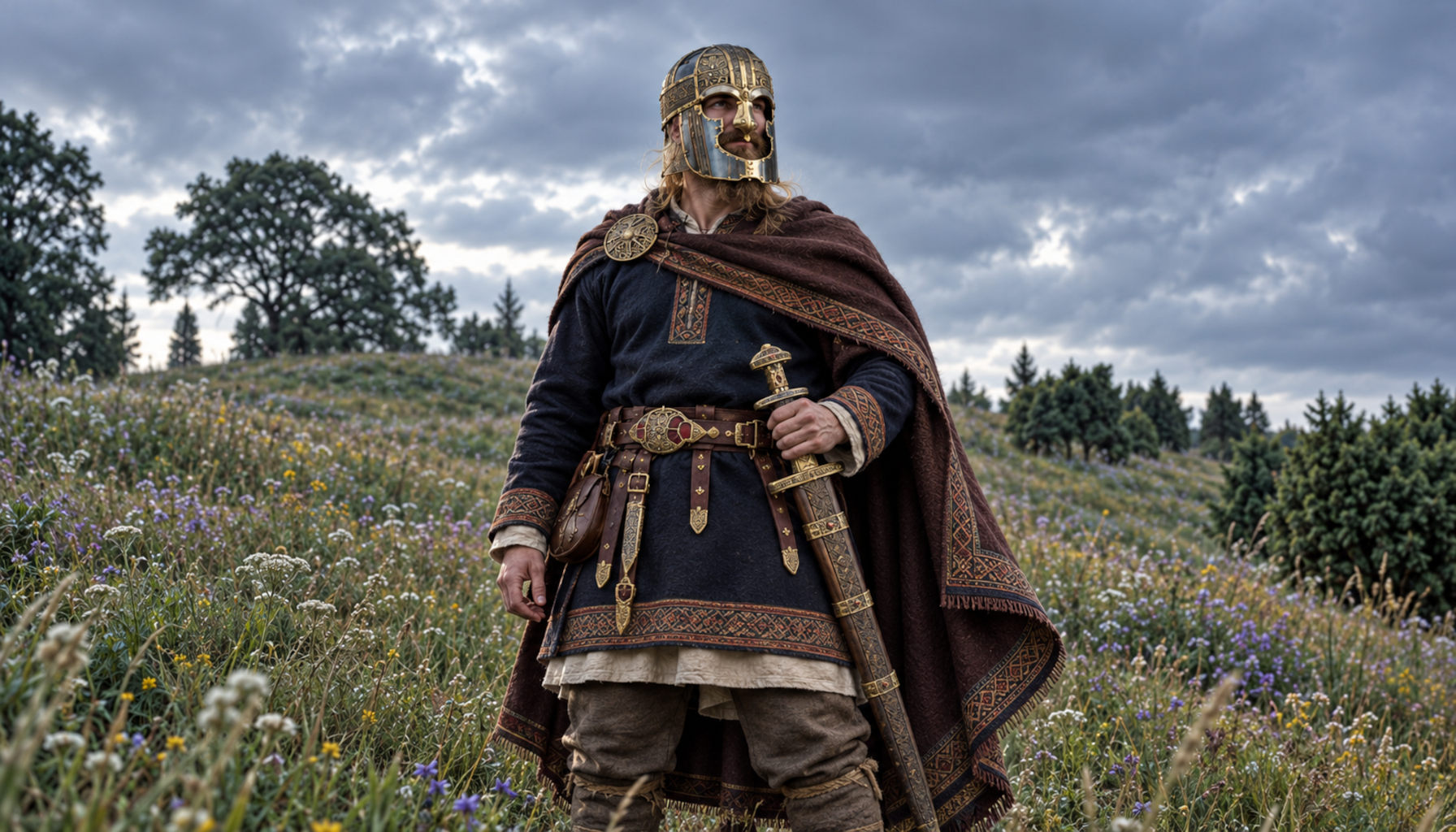
The family heritage is best understood as a classic example of early medieval aristocratic power. The Ardenne-Verdun house grew within a landscape of county rule, ecclesiastical politics, and dynastic alliance, where noble authority had to be negotiated as much as inherited. Their story belongs to the making of frontier lordship in the early Holy Roman Empire: service to kings and emperors, influence through bishoprics, marriage into neighbouring elites, and a long afterlife in regional memory. Among the named figures associated with this tradition are Goblin (911-942), Adalbero, Bishop of Metz (929), and the much later Thomas de Verdun (1421), each reflecting in different ways how aristocratic identity could stretch across generations, titles, and changing political worlds.
A key location anchor for this family world is Bouillon Castle, one of the most striking fortresses in the Ardennes region. Set above the town of Bouillon on a rocky spur overlooking a loop of the Semois River, the castle occupies a position that is almost theatrical in its command of the landscape. That is exactly the point: medieval castles were not simply residences, they were statements of control, surveillance, and legitimacy. Bouillon developed over centuries, with major medieval and later rebuilding phases, and became famous as one of the great strongholds of the region. It is closely associated in public memory with the wider aristocratic and crusading world of Lotharingia and the Ardennes. The site still stands and can be visited today, which makes it unusually valuable for anyone trying to imagine how noble power actually looked on the ground: not abstract genealogy, but stone walls, steep approaches, river crossings, and a horizon full of contested territory.
For DNA context, the haplogroup tag R1b1a1b1a1a1a1b links the Ardenne-Verdun profile to a broad network of ancient and medieval paternal lines found across Europe. These are not proofs of direct descent from the family, and they should not be read that way. Rather, they are related or linked comparison samples showing the long historical spread of this lineage in populations that shaped the same wider world. Among them are Bronze Age Unetice Thuringia Leubingen Sommerda Germany (LEU007), Late Neolithic Vlaardingen or Corded Ware Netherlands Mienakker (I12902), Battleaxe Sweden L Beddinge 56 (RISE98), Celtic Iron Age Austria Hallstatt (CGG101214), Gothic Wielbark Poland Pommerania Gdansk (PCA0479), Imperial Roman Viminacium Serbia Pecine Necropolis (I15527), Imperial Roman Era Isola Sacra (R11121), Etruscan Tarquinii Italy (TAQ013), Roman-period Germanic Warrior Mursa Croatia Third Century Crisis (OSIJ003), Saxon England North Yorkshire West Heslerton Vale of Pickering (I11583), Early Anglo Saxon Cemetery West Heslerton Yorkshire (I20652, I11584), Early Anglo Saxon Period Buckland Dover England (BUK012, BUK060, BUK064, BUK070, BUK007), Anglo Saxon Oakington England (OAI006, OAI013), Saxon Coast Lower Saxony Germany Dunum (DUN011, DUN006, DUN009), Saxon Migration Period Saxony-Anhalt Bruecken (BRC006x), Migration Period Germany Rathewitz Saxony-Anhalt (RTW012), Migration Period Lower Saxony Germany Hiddestorf (HID003, HID004), Viking Age Sigtuna Sweden (urm160, urm160x), Viking Age Bodkergarden Grav Denmark (VK289), Danii Tribe Denmark Sjaelland Kalundborg Simonsborg (CGG106724), Post Viking Age Hedeby Schleswig Rathausmarkt Southern Jutland (SWG001), Carolingian Belgium Sint-Truiden Groenmarkt (ST2969), Medieval Belgium Sint-Truiden Onze-Lieve-Vrouwekerk (ST0024, ST0323, ST0786), Carolingian Era Groningen Netherlands (GRO012), Celto-Longobard Haeven Mecklenburg-Vorpommern (HVN003), Longobard Haeven Mecklenburg-Vorpommern (HVN004), Germanic Tribe Bavaria Straubing-Bajuwarenstrasse (STR393b, STR316b), Hun nobility Hungary Kecskemet-Mindszentidulo (HUNper2), Early Medieval Hungary Holt-Tisza-part (I18184), Hungarian Conqueror Karos III (K3per1_GE), Hungarian Late Conqueror (K3per13_GE), and Germanic Tribe (AED92b). Taken together, these linked samples sketch the deep background of the same broad European paternal landscape from which medieval frontier aristocracies like Ardenne-Verdun emerged.
If the world of the House of Ardenne-Verdun speaks to you, with its frontier castles, imperial loyalties, and tangled noble networks, you can explore whether your own DNA connects to similar ancient and medieval populations. Upload your DNA to MyTrueAncestry and see which historic samples, regions, and lineages may be part of your deeper story.

Comments