The Dál gCais Dynasty
– 2 min read


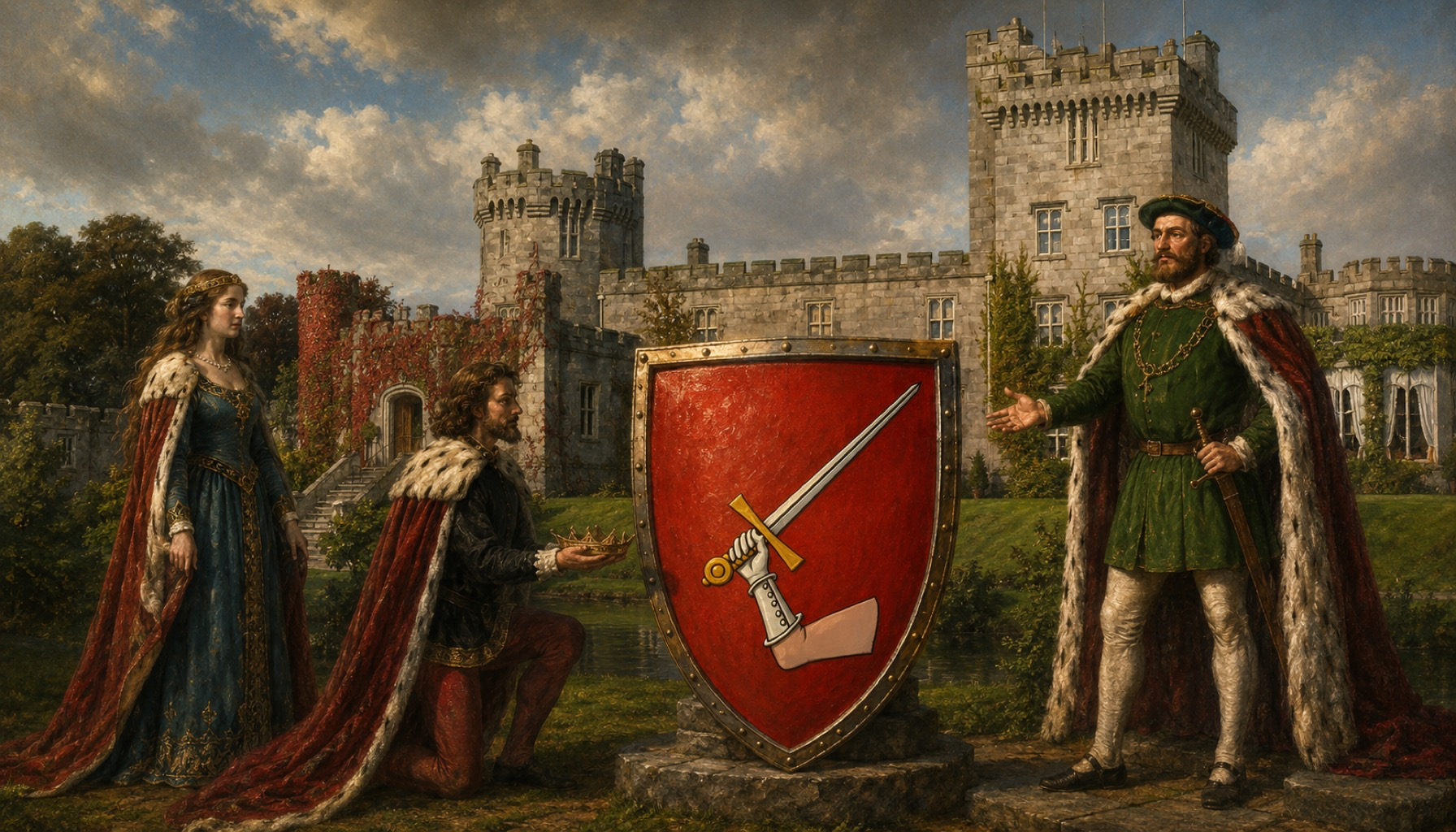
The Dal gCais Dynasty was one of the great royal Gaelic Irish kindreds: a rising power from the west of Ireland that came to dominate Thomond, shape the politics of Munster, and leave a mark on the whole island through the career of Brian Boruma mac Cennetig, better known as Brian Boru (941-1014). In the broad pattern of Irish history, the Dal gCais story is a classic one: local kingship turned into regional command, then pressed onward by military force, marriage ties, church patronage, and sharp dynastic ambition. In genetic tagging terms, this family is linked here with haplogroup R1b1a1b1a1a2c1a4b2a1a1, treated as the primary family haplogroup for this heritage profile.
The dynasty emerged in the region that would become closely associated with County Clare and the kingdom of Thomond, in a landscape of river routes, church foundations, cattle wealth, and fiercely defended lordship. This was not a family that appeared from nowhere. The Dal gCais grew in the centuries when Irish political life was built around competing overkingships, kin-groups, and rival provincial dynasties. Their rise involved chieftainship, battlefield leadership, and the ability to turn family power into something larger and more durable. Brian Boru is the most famous name, of course, but he stands within a wider lineage of rulers and power-brokers whose authority rested on kinship, armed followings, and the prestige of ruling in a recognisably Gaelic Irish way.
A strong location anchor for the later memory of the dynasty is Dromoland Castle in County Clare, near Newmarket-on-Fergus. The site is associated with the O'Brien family, the leading descendants of Brian Boru, and it preserves that long afterlife of Gaelic royal identity in stone, landscape, and ancestry. The present castle is largely a 19th-century rebuilding, replacing earlier structures on an estate long tied to the O'Briens, who were among the most important noble families in Ireland and heirs to the old Dal gCais tradition. In other words, Dromoland is not Brian Boru's own fortress dropped unchanged into the modern world; it is something more interesting in a way, a later aristocratic expression of a much older dynastic memory. Today it is well known as a historic castle estate and can still be visited, giving a tangible connection to the region where Dal gCais power and O'Brien prestige remained deeply rooted.
From the DNA angle, the haplogroup tag linked here, R1b1a1b1a1a2c1a4b2a1a1, helps place Dal gCais heritage within a broader network of related paternal lines rather than serving as proof of any one documented pedigree. A useful comparison point is a related medieval sample from England, Cambridge St John's Hospital, listed as ATP_PSN_192. That individual should not be described as a direct ancestor of the Dal gCais or of later O'Brien lines without evidence, but as a related or linked sample it shows how these paternal branches circulated across the medieval populations of the islands. This is a good reminder that dynasties are historical families with political identities, while haplogroups trace deep male-line connections that may be much older and much wider than any one named royal house.
If you are curious whether your own DNA shows connections to the wider world of Gaelic Irish dynasties, medieval Britain, and linked ancient samples, you can upload your DNA to MyTrueAncestry and explore how your genetic story may sit alongside the history of families like the Dal gCais.
Comments