Princess of Urdzhar
– 4 min read


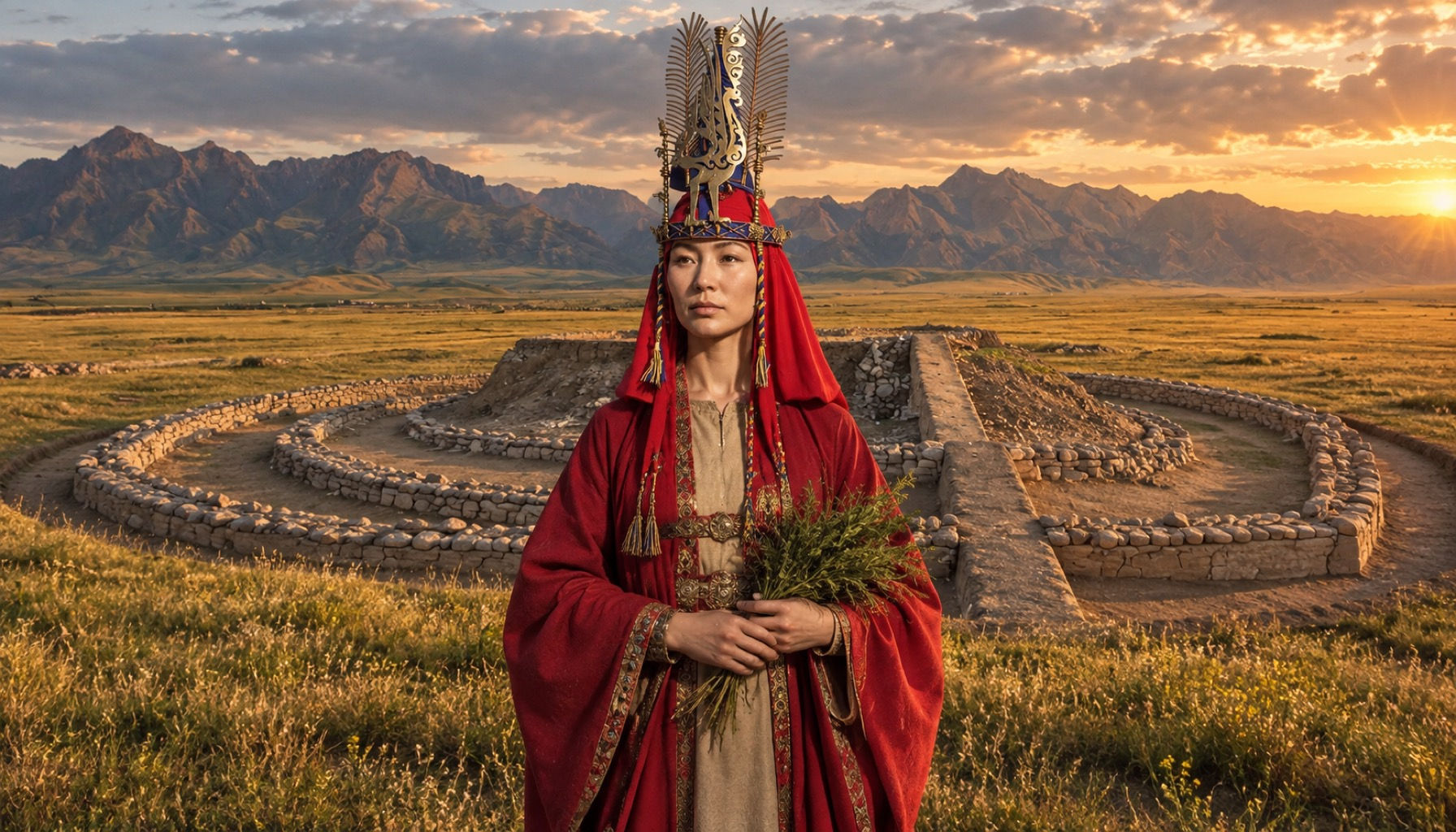
The so-called Princess of Urdzhar was an elite Iron Age woman buried in eastern Kazakhstan around 423 BC, in the broad cultural world archaeologists call Saka, part of the wider Scythian horizon of the Eurasian steppe. She matters not because we know her personal name, but because her grave speaks so clearly about rank, ceremony, and the place of women in steppe society. Richly furnished burials like hers are among the clearest reminders that prestige on the steppe was not reserved to men alone.
She lived in a world of mobility and connection: mounted pastoralists, metalwork of astonishing refinement, and exchange routes running across Central Asia toward Persia, Siberia, and beyond. The Saka were not an isolated people at the edge of history. They stood within a great web of movement stretching across the grasslands, and burials such as Urdzhar show how wealth, symbolism, and political authority could be displayed in death as carefully as in life.
The title “princess” is modern shorthand rather than a securely attested ancient office, but it captures the essential point: this woman was buried with exceptional status. Her grave goods reflected wealth, skilled craftsmanship, and the ceremonial habits of nomadic societies whose power rested not on cities and palaces in the Mediterranean sense, but on herds, horses, kinship networks, and command of movement across enormous distances. In that respect the burial is historically valuable. It shows that high-status female graves were part of the social reality of the Iron Age steppe, and that women could occupy prominent social, and perhaps ritual, positions within these communities.
We should be careful, though. The archaeology lets us say she was an elite woman associated with the Saka cultural sphere; it does not let us reconstruct a biography in the intimate sense. We do not know her personal deeds, her household, or whether she led, mediated, or officiated. What we do know is enough to be significant: she belonged to a society famed in ancient sources and archaeology alike for horsemanship, ornate dress, animal-style art, and long-distance links across Inner Asia.
The sampled remains are described as Elite Scythian Grave Princess of Urdzhar Saka Iron Age East Kazakhstan, dated approximately to 423 BC. That places the burial in the Iron Age, when Saka groups formed part of a dynamic steppe world interacting with neighboring regions in multiple directions. The archaeological identification is therefore strong as an elite burial from the Saka cultural milieu, but the label “Princess of Urdzhar” should still be read as an interpretive name based on status and context, not as a personally identified historical figure in the way one might identify a named ruler from an inscription.
The supplied material does not specify in detail whether the ancient DNA came from tooth, petrous bone, or another skeletal element, so it is best not to invent that detail. What matters is that the sample ties a real human genome to one of the most visually striking mortuary traditions of Iron Age Central Asia. This is where archaeology and genetics meet rather neatly: grave goods tell us about social performance, while DNA helps place the buried woman within broader biological histories of the Eurasian steppe.
The Princess of Urdzhar’s mitochondrial DNA, or mtDNA, belongs to haplogroup H. Mitochondrial DNA is passed down through the direct maternal line, from mother to child, so this lineage tells us about one narrow branch of her ancestry: her mother, her mother’s mother, and so on far back in time. Her Y-DNA haplogroup is not available, which is entirely expected, because Y-DNA follows the direct paternal line and can only be obtained from male individuals.
Haplogroup H is a maternal lineage found widely across western Eurasia in both ancient and modern populations. That does not mean the Princess of Urdzhar was “western” in any simple ethnic sense, nor does it define her as less Saka, less steppe, or less Central Asian. Haplogroups are lineages, not peoples. One maternal line can travel great distances over many generations, especially in worlds as mobile as the Eurasian steppe. So the mtDNA result is interesting precisely because it fits the broader picture of steppe societies as genetically mixed and historically connected, rather than neatly bounded tribes with sealed biological identities.
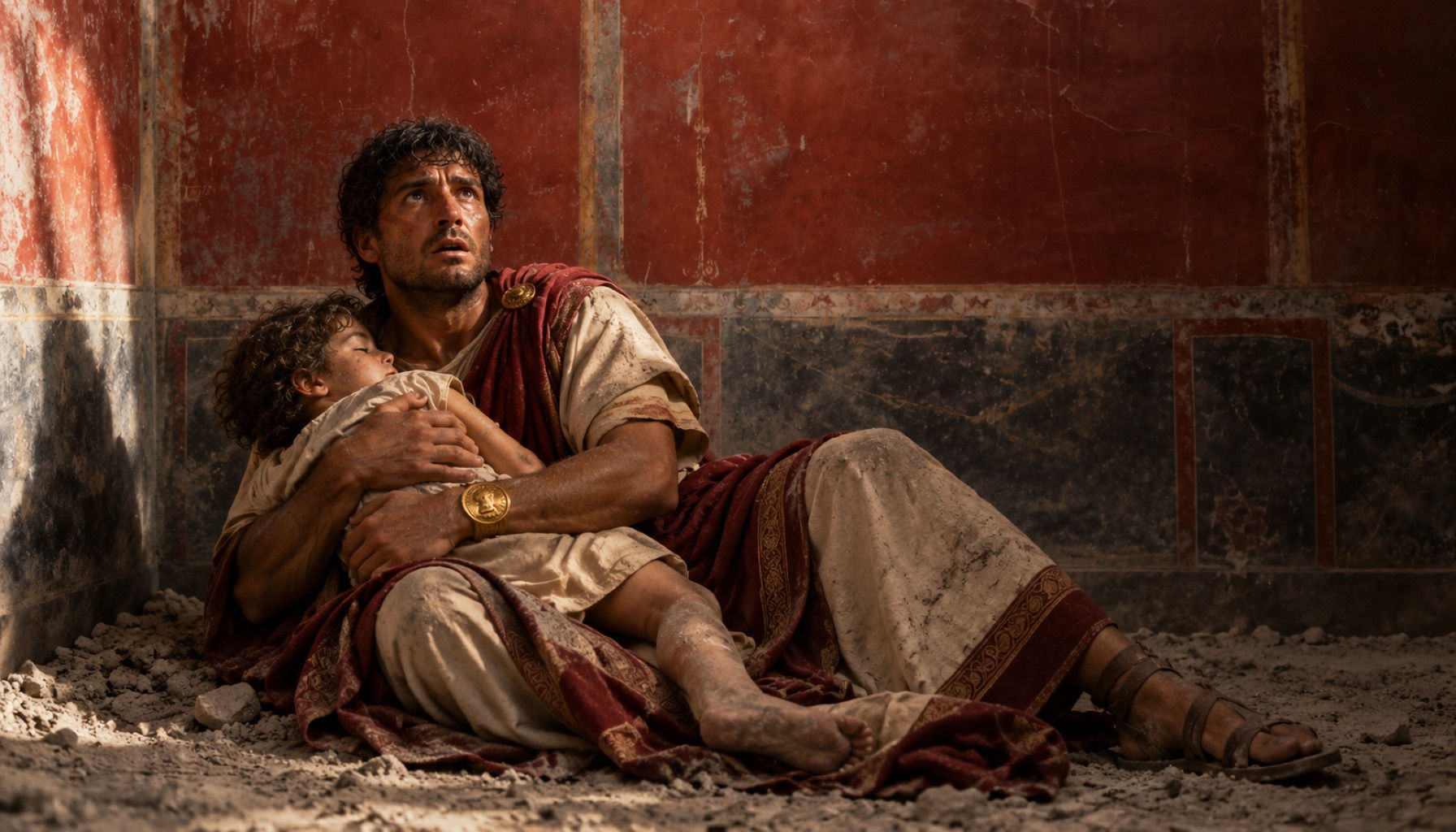
A short ancient-DNA comparison helps underline the point. The Princess of Urdzhar sample, Elite Scythian Grave Princess of Urdzhar Saka Iron Age East Kazakhstan (URD002), carries mtDNA H, a lineage also seen in many other ancient individuals across Eurasia, from Neolithic Anatolia samples such as Catalhoyuk (cch102) and (cch226) to later historical burials like Roman Era England Knobbs Farm Somersham (KNF004) and Roman Pompeii Vesuvius Victim Villa of the Mysteries (I3682). That does not make these people close relatives in any meaningful genealogical sense; rather, it shows how a maternal lineage can persist and appear in very different societies over thousands of years. In the Urdzhar case, the value lies not in claiming descent or identity from haplogroup H alone, but in adding one more piece to the puzzle of how steppe populations were connected to wider Eurasian population histories.
Explore Scythian genetic origins
The main historical importance of the Princess of Urdzhar is still archaeological: the grave, the objects, and the social message of elite female burial in the Saka world. DNA does not tell us her title, beliefs, language, or political role. It does, however, add a biological dimension to the story. Studies such as the one published in Science Advances show that Iron Age populations of the Eurasian steppe were often the result of earlier mixtures and ongoing contact across large regions. In that setting, the Urdzhar genome helps place this elite woman within the lived human diversity of steppe history rather than leaving her as a glittering but anonymous figure in a tomb.
In other words, her burial shows the pageantry of status; her DNA helps reveal the deeper population background of the world that produced that pageantry. Together they make her one of the more compelling figures from Iron Age Central Asia: not because genetics solves everything, but because it lets us ask better questions about mobility, ancestry, and the social worlds behind spectacular graves.
Discover Saka DNA in Central Asia
With MyTrueAncestry, you can compare your DNA with ancient populations and archaeological samples from the Eurasian steppe and far beyond, exploring possible genetic links to the wider world of Saka, Scythian, and other ancient peoples. It is a way to place your own results in deep historical context without claiming direct descent from any one famous burial.
Comments