Neolithic Farmers, Foragers, and Plague on Gotland: Ancient DNA Reveals Ancestry, Admixture, and Disease

– 9 min read


Neolithic Farmer–Forager Encounters on Gotland
The Baltic island of Gotland, positioned strategically in the middle of the sea, became the stage for one of Europe's most fascinating cultural encounters between 3300–2800 BCE. Here, two fundamentally different ways of life overlapped for more than 500 years: the farming communities of the Funnel Beaker culture and the sea-oriented hunter-fisher-gatherers of the Pitted Ware culture. This comprehensive analysis reveals not merely their coexistence, but the intimate details of their DNA, burial practices, family structures, and even the diseases they carried across ancient networks spanning northern Europe.
Through advanced ancient DNA analysis, archaeologists have uncovered an extraordinary story of human interaction that challenges simple narratives of cultural replacement or isolation. The evidence shows sophisticated social networks, selective intermarriage, shared disease burdens, and distinct yet occasionally overlapping burial traditions that persisted across centuries.
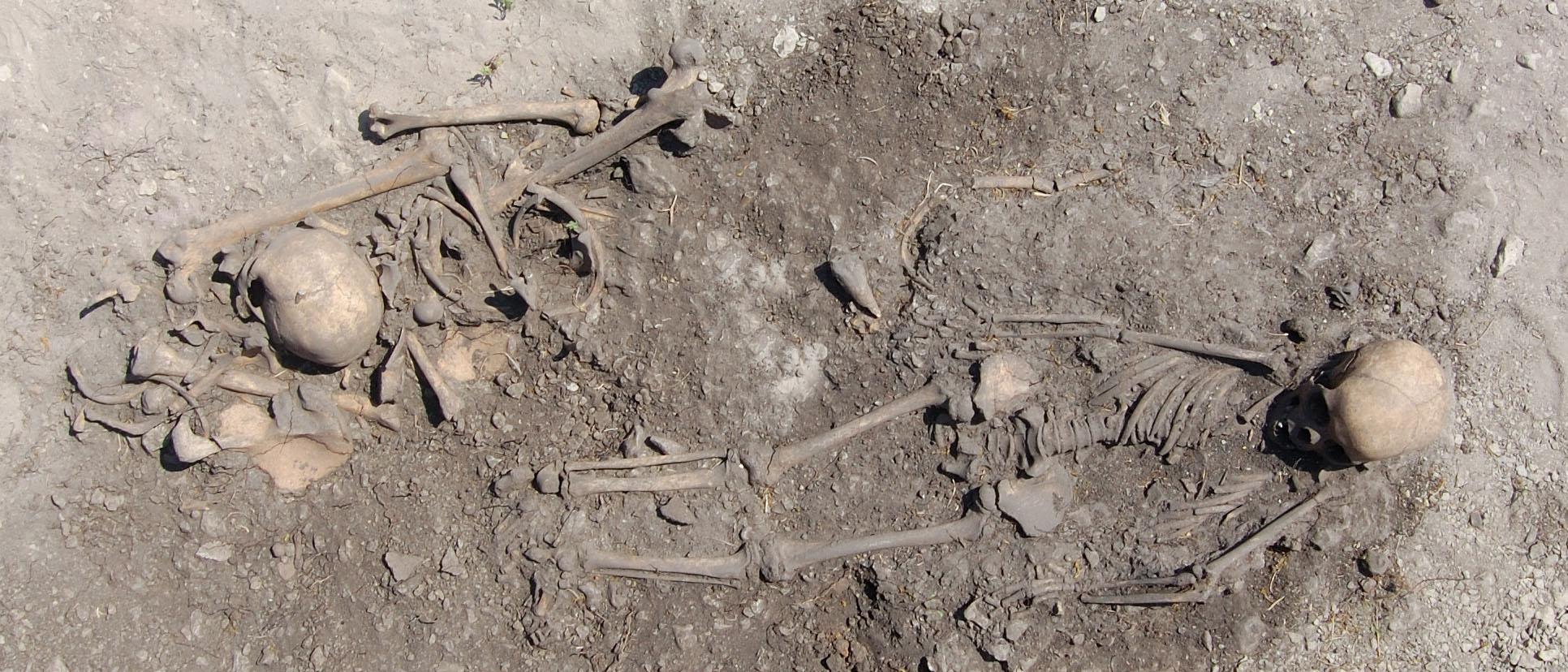
Standing as the sole confirmed megalithic tomb of the Funnel Beaker farmers on Gotland, the Ansarve dolmen represents far more than a simple burial site. This stone-built chamber tomb, constructed of massive slabs on a windswept coastal terrace, echoes the monumental graves found throughout southern Scandinavia, Denmark, and northern Germany. The structure served as a family crypt for an extended kinship group over several centuries, housing approximately thirty individuals with at least fifteen dating to the Middle Neolithic period.
The genetic analysis reveals that those buried at Ansarve were not random community members, but formed a closely related extended family. DNA evidence shows repeated use by related male lineages, suggesting a patrilocal society where descent through the male line held particular significance. Two early women, ans003 and ans005, demonstrate third-degree kinship, likely representing cousins or great aunt and niece relationships. The tomb's occupants cluster genetically with Funnel Beaker groups from Sweden, Denmark, and Poland, confirming their place within the broader megalith-building network stretching across northern Europe.
Among the most remarkable individuals is SE_TRB_ans017, a juvenile male whose genome provides unprecedented insight into this ancient community. Sequenced to exceptionally high coverage, his DNA reveals that his parents were closely related, approximately first cousins, resulting in notable inbreeding coefficients. His ancestry represents a complex mixture: roughly 38% hunter-gatherer heritage blended with farming ancestry originally derived from Anatolia and central Europe. This genetic profile demonstrates that even before reaching Gotland, these farming communities had absorbed substantial forager ancestry through generations of contact and intermarriage.
The earliest woman buried in the dolmen, ans003, carries particular historical significance beyond her family connections. Within her remains, researchers detected traces of an ancient strain of Yersinia pestis, the bacterium responsible for plague. This discovery links Gotland directly to the continent-wide spread of "Neolithic plague" that affected communities across Scandinavia and central Europe during this period, demonstrating that even seemingly remote islands participated in broader disease networks.
The latest Funnel Beaker individual, ans016, presents another fascinating case study. Dating to approximately 2810–2580 BCE, he carries the highest proportion of local Scandinavian hunter-gatherer ancestry among the group, comprising roughly one-fifth of his genome. Strontium isotope analysis reveals he was not born on Gotland, suggesting his hunter-gatherer ancestry was acquired elsewhere, possibly on the Swedish mainland where farmer-forager interactions were more common.
Contrasting sharply with the monumental Ansarve tomb, the Pitted Ware culture manifested through at least twenty coastal settlements with associated flat-grave cemeteries. These communities specialized in marine exploitation, particularly seal hunting and fishing, while maintaining extensive networks across the Baltic region. Their burial practices favored flat graves within settlement areas, often accompanied by rich grave goods including tools, ornaments, and animal remains that reflect their intimate relationship with maritime resources.
The genetic analysis of nineteen individuals from three major sites—Ajvide, Hemmor, and Västerbjers—reveals a interconnected network of related families. Kinship analysis demonstrates grandparent-grandchild relationships within sites and extended family connections spanning multiple locations. At Västerbjers, individuals vbj001 and vbj008 represent a likely grandparent-grandchild pair, while vbj006 and vbj013 show great-grandparent-grandchild relationships. These patterns indicate that Pitted Ware groups maintained genetic diversity through movement and intermarriage across coastal sites rather than forming isolated, inbred communities.
The Pitted Ware people of Gotland descended primarily from Scandinavian hunter-gatherers, themselves representing a mixture of western and eastern European forager populations. However, their genetic profile includes approximately 30% ancestry related to farming populations, suggesting substantial prehistoric contact with agricultural communities. Most of this farmer-related ancestry appears to predate their settlement on Gotland, likely acquired during earlier interactions on the Scandinavian mainland.
Several individuals show evidence of more recent farmer admixture that could represent direct contact with Funnel Beaker communities on Gotland itself. Individuals ajv36, ajv54, vbj001, vbj013, and vbj018 all carry genetic signatures suggesting relatively recent farmer ancestry, possibly acquired through intermarriage or other forms of social interaction during the period of cultural coexistence.
The Ajvide site provides particularly compelling evidence for long-distance connections. Individual ajv58 carried an ancient strain of Yersinia pestis closely related to that found in a hunter-fisher-gatherer from Riņņukalns in Latvia. This genetic similarity suggests that disease, like material culture and genetic ancestry, moved along maritime routes connecting Gotland to broader Baltic networks stretching into the eastern Baltic region.
Perhaps the most striking aspect of the Gotland evidence is how two fundamentally different cultural systems maintained their distinct identities while sharing the same island for over five centuries. Despite genetic evidence for occasional intermarriage and clear archaeological evidence for trade and cultural exchange, the Funnel Beaker farmers and Pitted Ware foragers never merged into a single unified population.
The farmers continued their megalithic burial traditions, agricultural practices, and pottery styles characteristic of the broader Funnel Beaker world. Meanwhile, the Pitted Ware communities maintained their coastal settlements, marine-focused subsistence, distinctive pottery with characteristic pit decorations, and flat-grave burial customs. Material culture shows some cross-cultural influence, with occasional "farmer-style" objects appearing in Pitted Ware contexts and vice versa, but the fundamental cultural boundaries remained intact.
This pattern suggests a form of cultural boundary maintenance that allowed for selective interaction while preserving group identity. The genetic evidence indicates that intermarriage occurred but remained limited, perhaps governed by specific social rules or circumstances that permitted some gene flow without threatening cultural distinctiveness.
The story of Gotland's Neolithic takes an intriguing turn with the appearance of individual ans010, buried in the ancient Ansarve dolmen around 2030–1890 BCE, long after the original Funnel Beaker culture had disappeared from the archaeological record. This individual carries strong Steppe-related ancestry associated with the Battle Axe and Corded Ware cultural horizon that was transforming much of northern Europe during the Late Neolithic period.
Strontium isotope analysis confirms that ans010 grew up outside Gotland, marking him as a newcomer who somehow gained access to the island's most prestigious burial monument. His genetic profile places him firmly within the Steppe-derived populations spreading across Scandinavia, making him the earliest known individual with such ancestry on Gotland. His burial in an ancient Funnel Beaker tomb suggests complex social negotiations, possibly involving marriage alliances, territorial claims, or ritual appropriation of ancestral monuments.
Remarkably, ans010 carried not only a later strain of plague (Yersinia pestis of the Late Neolithic–Bronze Age lineage) but also Yersinia enterocolitica, suggesting he suffered from multiple infections. This disease burden, combined with his non-local origin and Steppe-related ancestry, positions him as part of the mobile networks that characterized Late Neolithic Europe, possibly representing a trader, migrant, or alliance partner who died on Gotland and was accorded burial in its most ancient and prestigious monument.
The presence of various Yersinia strains among Gotland's populations provides remarkable insight into ancient disease networks and population movements. The early Funnel Beaker woman ans003 carried a basal plague strain similar to those found in Neolithic farmers across continental Europe, demonstrating that Gotland participated in the continent-wide spread of early agricultural diseases despite its island location.
The Pitted Ware individual ajv58 from Ajvide carried a plague strain most closely related to that found in a hunter-gatherer from Latvia, suggesting that disease transmission followed maritime routes connecting hunter-gatherer communities across the Baltic. This pattern aligns with archaeological evidence for cultural connections between Pitted Ware groups and eastern Baltic Late Comb Ware cultures.
The later individual ans010 introduced yet another plague lineage associated with Steppe-derived populations and the Late Neolithic–Bronze Age period. His co-infection with Yersinia enterocolitica represents a pattern also observed in mainland Scandinavia, suggesting that multiple pathogen exposure was a recurring feature of prehistoric life, particularly among mobile populations engaged in long-distance travel and trade.
The genetic evidence reveals significant differences in population structure and social organization between the two cultural groups. The Ansarve farmers show signs of a patrilocal society with some degree of inbreeding, particularly evident in individual ans017 whose parents were approximately first cousins. This pattern suggests a relatively closed community where marriage within extended family networks was acceptable or even preferred, possibly to maintain control over land, monuments, and social status.
Effective population size estimates indicate that the farming community was larger than contemporary hunter-gatherer groups but smaller than early farming populations in central Europe. This intermediate position reflects the challenges of establishing agricultural communities on islands with limited arable land and restricted immigration from mainland farming populations.
The Pitted Ware communities show evidence of smaller effective population sizes but maintained genetic diversity through interconnected family networks spanning multiple coastal sites. The pattern suggests a series of small but related communities that avoided extreme inbreeding through careful marriage practices and population movement along the coast.
Kinship analysis reveals that both cultural groups maintained multigenerational connections to specific burial locations, suggesting strong territorial attachments and ancestral continuity. However, the scale and nature of these connections differed significantly, with farmers focusing on monumental tombs serving extended patrilineal groups and foragers emphasizing distributed cemeteries serving flexible coastal networks.
The material culture associated with each group reflects their distinct economic adaptations and cultural preferences. Funnel Beaker farmers produced characteristic pottery styles, stone axes, and other implements associated with agricultural activities and megalithic construction. Their subsistence focused on crop cultivation and livestock management, requiring substantial landscape modification and long-term territorial investment.
Pitted Ware communities developed sophisticated maritime technologies including specialized harpoons, fishing equipment, and sea-worthy vessels necessary for seal hunting and inter-island travel. Their distinctive pottery, decorated with characteristic pits, appears throughout coastal sites and shows remarkable consistency across the Baltic region, suggesting shared technological traditions and cultural exchange networks.
Both groups produced high-quality stone tools, but raw material preferences and tool types reflect their different subsistence focuses. Farmers emphasized implements for land clearance, construction, and crop processing, while foragers prioritized hunting weapons, fishing gear, and marine processing tools.
The archaeological evidence suggests that both groups were capable of sophisticated craft production and maintained exchange relationships extending far beyond Gotland. Imported materials and finished objects appear in both cultural contexts, indicating participation in regional trade networks despite their different subsistence strategies.
The distribution of sites across Gotland reveals distinct but complementary landscape use patterns. Funnel Beaker farmers established settlements and monuments on elevated areas suitable for agriculture, with the Ansarve dolmen positioned prominently on a coastal terrace visible from both land and sea. This placement suggests territorial marking and the establishment of enduring claims to agricultural land.
Pitted Ware communities concentrated along the coastline, establishing settlements and cemeteries on beaches, headlands, and other locations providing access to marine resources. The distribution of at least twenty known sites suggests intensive coastal exploitation and sophisticated understanding of seasonal resource availability and optimal hunting locations.
The two cultural groups appear to have developed a form of resource partitioning that minimized direct competition while allowing for beneficial exchange. Farmers controlled interior agricultural areas and established permanent territorial markers through megalithic monuments, while foragers dominated coastal zones and maintained flexible settlement patterns adapted to marine resource cycles.
This territorial arrangement may have facilitated the long period of cultural coexistence by reducing direct resource competition while creating opportunities for beneficial exchange of agricultural products for marine resources and exotic materials acquired through long-distance maritime trade.
The Gotland evidence provides crucial insights into the nature of cultural interaction and population dynamics during the Neolithic transformation of northern Europe. Rather than simple replacement of hunter-gatherers by farmers, the island demonstrates how different cultural systems could maintain distinct identities while engaging in selective interaction and genetic exchange.
The presence of both cultural groups on the same island for over five centuries challenges models of rapid cultural transformation and suggests that the Neolithic transition involved complex negotiations between different ways of life. The maintenance of distinct burial practices, subsistence strategies, and material culture traditions indicates that cultural boundaries could be remarkably persistent even in contexts of close geographic proximity and occasional intermarriage.
The disease evidence reveals that Gotland participated in continent-wide pathogen networks despite its island location, demonstrating the extent and intensity of prehistoric population movements and exchange systems. The different plague strains carried by farmers and foragers suggest that disease transmission often followed cultural and economic networks rather than simple geographic proximity.
The later appearance of Steppe-related ancestry in the context of an ancient Funnel Beaker monument illustrates the complex ways that incoming populations negotiated relationships with existing communities and appropriated or were granted access to ancestral sites and territories.
The comprehensive analysis of ancient DNA, archaeological evidence, and pathogen remains from Neolithic Gotland reveals a level of social complexity and cultural sophistication that transforms our understanding of prehistoric life in northern Europe. Rather than simple cultural categories or inevitable evolutionary sequences, the evidence demonstrates how different human communities developed sophisticated strategies for coexistence, exchange, and boundary maintenance.
The Ansarve dolmen and Pitted Ware cemeteries represent more than burial sites; they constitute archives of family history, cultural identity, and social organization that illuminate the human dimensions of one of Europe's most significant cultural transitions. Through individual life stories embedded in DNA and disease remains, we gain unprecedented insight into how real people navigated the challenges and opportunities of cultural diversity in the prehistoric Baltic.
The Gotland evidence ultimately demonstrates that the Neolithic transformation involved not the replacement of one way of life by another, but the emergence of new forms of social complexity based on cultural diversity, selective interaction, and adaptive flexibility. This island in the Baltic Sea thus provides a remarkable window into the sophisticated social worlds that emerged as farming and foraging communities learned to share the landscapes of Neolithic Europe.
Original source article:
https://www.biorxiv.org/content/10.64898/2025.12.07.692553v1.full.pdf

Comments