King Ladislaus I of Hungary

– 5 min read


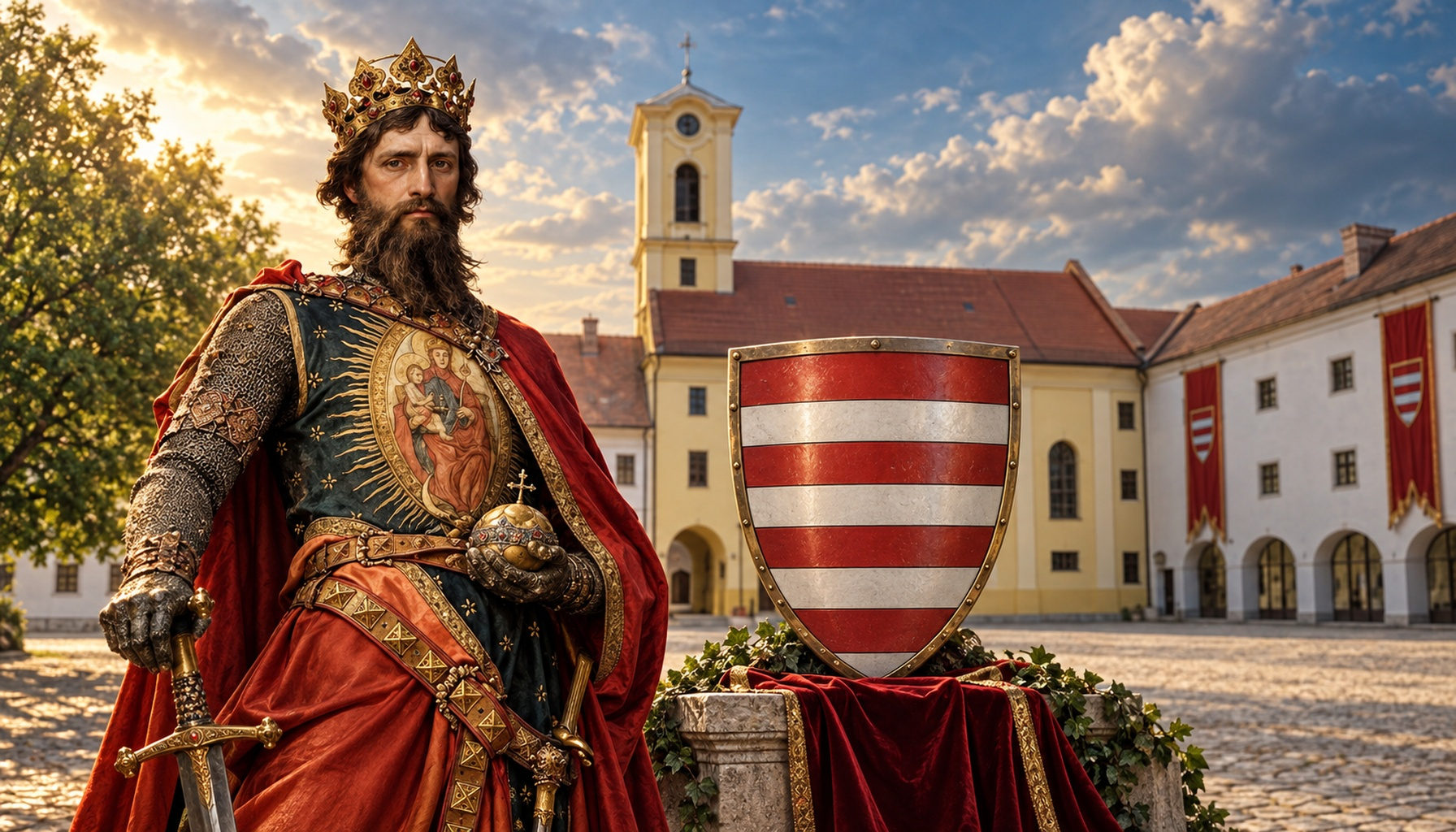
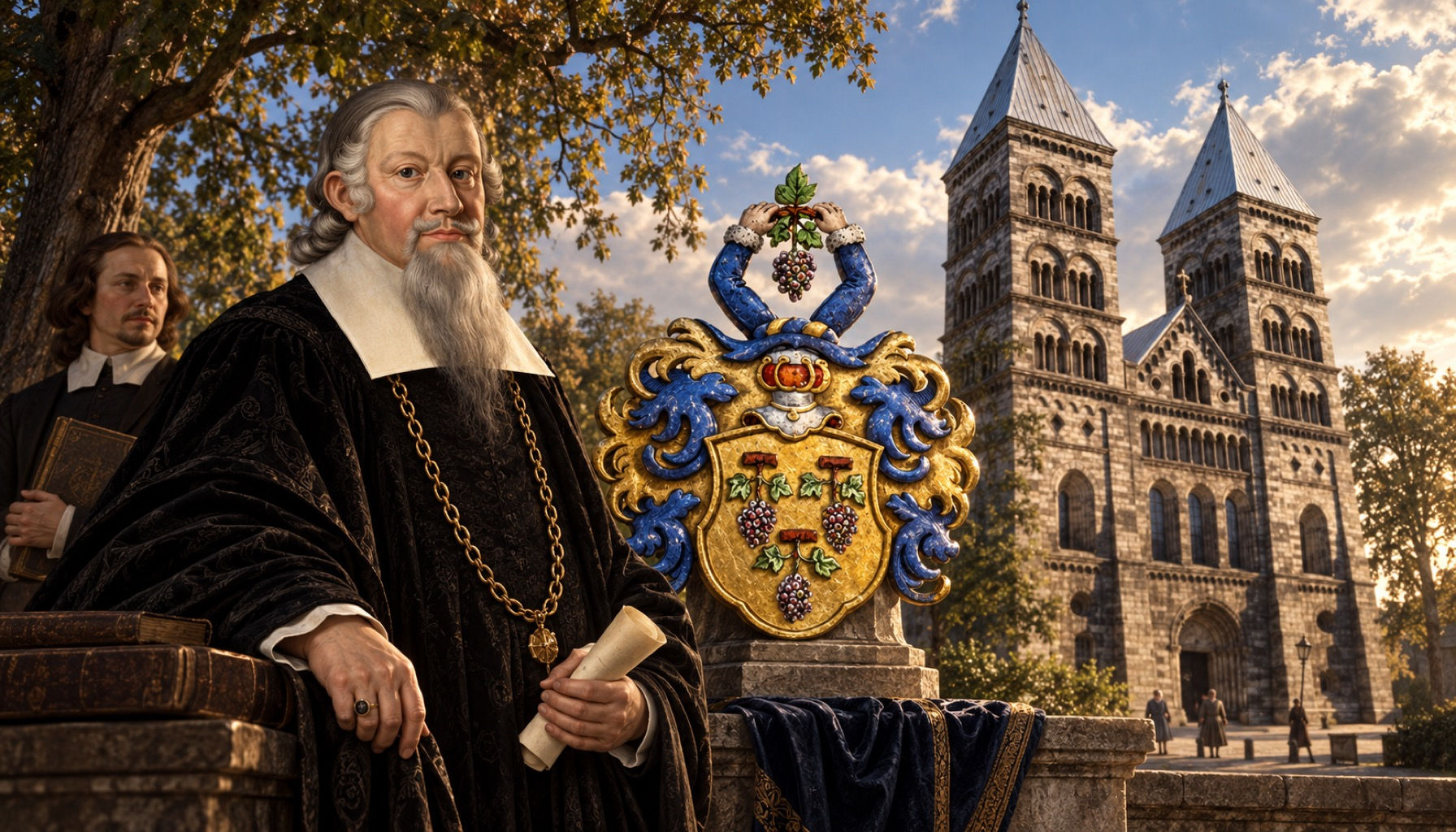
Ladislaus I of Hungary, who ruled from 1077 to 1095, stands at the meeting point of history, kingship, and later legend. A member of the Árpád dynasty and son of King Béla I, he emerged from a bruising period of dynastic struggle to become one of the most admired rulers of medieval Hungary. By the time later generations remembered him as a saintly warrior-king with axe in hand, the historical Ladislaus had already done something rather more difficult: he had helped stabilize a kingdom that sat on one of Europe’s great frontier zones.
Eleventh-century Hungary was not an isolated realm at the edge of Christendom, but a kingdom deeply entangled with the politics of the Latin West, the Holy Roman Empire, the papacy, Byzantium, and the steppe world to the east. Ladislaus ruled in that crowded and often violent landscape. He restored royal authority, issued famously severe laws aimed at order and property protection, defended the eastern frontier from raiders, and in 1091 intervened in Croatia, opening a durable phase of Hungarian influence to the south. He also promoted the cult of Hungary’s first Christian rulers, overseeing the canonization of King Stephen I and Prince Emeric. Ladislaus himself was canonized in 1192, which tells us a great deal about how power, memory, and sanctity worked in the medieval kingdom.
What makes Ladislaus so interesting is that the man and the memory are both historically important. The historical ruler inherited a kingdom still feeling the aftershocks of succession disputes among the descendants of Stephen I. His reign helped reassert monarchy after decades when kingship could seem dangerously contingent. The later memory of Ladislaus turned him into the model Hungarian knight-king: just, martial, Christian, and physically imposing. Medieval art and legend delighted in this image, but it was rooted in real political achievement. He was a defender of borders, a lawgiver, and a ruler who understood that dynastic legitimacy could be strengthened not only through force, but through sacred history. By sponsoring the cults of Stephen and Emeric, he placed the Árpád monarchy inside a holy narrative of Hungarian statehood.
The genetic sample associated here is listed simply as King Ladislaus I Hungary, with an approximate date of 1095 AD, the year of his death. That is a tantalizingly direct label, but good history requires a distinction between a named sample and a fully explained chain of identification. Based on the information supplied here, the individual is presented as a securely attributed historical figure in the research tradition surrounding Ladislaus, but the exact archaeological pathway by which the tested material was isolated and linked to him is not described in the supplied brief. So the safest formulation is this: the sample is associated with King Ladislaus I of Hungary in published or database usage, but without further excavation history or forensic detail provided here, we should avoid inventing a stronger identification narrative than the evidence supplied allows.
That caution matters especially with medieval royal remains. Tombs were opened, translated, reburied, venerated, and sometimes disturbed over centuries. Saints, above all, could acquire a complicated posthumous history. In other words, an ancient DNA result can be immensely valuable, but only when read together with archaeology, osteology, documentary evidence, and the history of the burial itself. The study context linked here, including the reference article in Archaeological and Anthropological Sciences, is part of that larger effort to connect dynastic history with biomolecular evidence rather than letting one replace the other.
The reported Y-DNA haplogroup for Ladislaus is R1a1a1b2a2a1, while his mitochondrial DNA haplogroup is T2. These two markers illuminate different slices of ancestry. Y-DNA is inherited along the direct paternal line, from father to son, so it speaks only to Ladislaus’s strictly male-line lineage. mtDNA, by contrast, is inherited through the direct maternal line, passed from mothers to their children, and so it traces only one maternal thread among many ancestors.
The paternal lineage R1a1a1b2a2a1 belongs to a broader Y-chromosome family with deep roots across large parts of Eurasia and a long history in both prehistoric and historic populations. That does not make it an “ethnic signature” of any one people, still less a proof of identity as Hungarian, Árpád, steppe, Slavic, or anything else of that kind. What it does provide is a lineage marker that can be compared with other ancient males. In that respect Ladislaus’s result is historically interesting because related R1a1a1b2a2a1-linked samples appear across a wide and varied archaeological landscape, including the named sample of King Ladislaus I Hungary (SZTL), Prince Andras of the Árpád dynasty (HU52), King Béla III (BelaIII), and other medieval or earlier individuals from Hungary and beyond, such as HUASper85 from the Aba-related context, RKF231 from Migration Period Hungary, GYS060 from Late Roman Pannonia, and more distant examples stretching from Ukraine and Romania to Anatolia, Sweden, Sicily, and Kazakhstan. That broad spread does not mean all these people were close kin. It means the lineage, or nearby branches of it, had a long and geographically expansive history before and after Ladislaus.
His mtDNA haplogroup T2 tells a similarly narrow but useful story on the maternal side. T2 is a well-known West Eurasian mitochondrial lineage found in both ancient and modern populations. In this case the specifically supplied T2-linked comparison is again King Ladislaus I Hungary (SZTL). That sounds obvious, but it reminds us of a basic point: maternal haplogroups often travel widely across regions and centuries. T2 helps define one direct maternal line in Ladislaus’s ancestry, but it cannot summarize the total ancestry of the king, his dynasty, or medieval Hungary.
It is tempting to treat royal DNA as if it were a shortcut to national origins. It is not. What these haplogroups can do is help test biological continuity within elite burials, compare lineages among historically connected remains, and place one medieval ruler inside the much deeper population history of Eurasia. What they cannot do, on their own, is prove cultural identity, language, or personal loyalty. Ladislaus was not made king by a haplogroup. He was made king by inheritance, conflict, politics, military success, and sanctified memory.
For Ladislaus, the genetic result is most valuable when paired with the historical record of the Árpád realm. Here is a ruler who helped consolidate Christian monarchy in Hungary while governing a kingdom shaped by earlier migrations, frontier warfare, and constant contact with neighboring worlds. A paternal lineage such as R1a1a1b2a2a1 and a maternal lineage such as T2 fit well within the kind of complex, layered ancestry one might expect in medieval Central Europe, but they do not reduce that complexity. Instead, they give us a rare biological data point for a man usually known through chronicles, hagiography, law codes, and art. In other words, DNA does not replace the crowned figure with the axe; it lets us ask better questions about the real body behind the image.
Explore the Royal House of Hunyadi
MyTrueAncestry lets you compare your DNA with ancient populations and archaeological samples from the worlds that shaped rulers like Ladislaus I of Hungary. You may discover genetic connections to medieval Europeans, steppe-linked populations, or deeper ancient lineages connected to the Carpathian Basin and beyond.


Comments