House La Zouche
– 3 min read


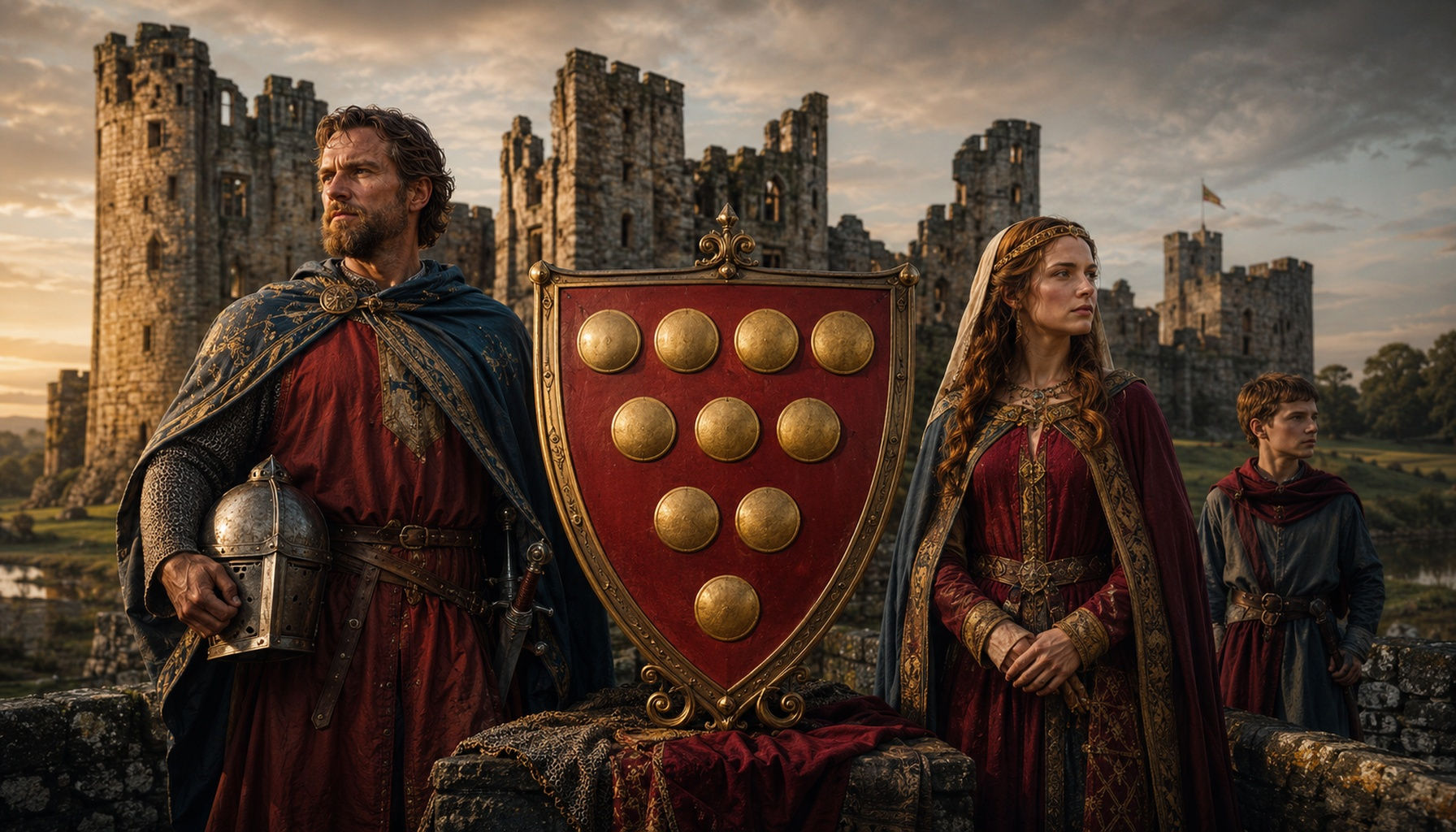
The La Zouche family was one of the notable Anglo-Norman noble houses that rose to prominence in medieval England, with its deeper roots in the Norman and Angevin world of northern France. Their surname points back to a place-name origin in the continental aristocratic landscape from which so many post-Conquest families emerged, and their story fits that great medieval pattern: knightly service, royal favor, landholding, marriage alliance, and the gradual turning of military success into hereditary rank. In haplogroup terms, the primary family line is here tagged with R1b1a1b1a1a2b3c, a lineage with a long and widespread history across western and central Europe. Haplogroups: R1b1a1b1a1a2b3c.
What makes House La Zouche so recognizably medieval is not simply its title, but its whole social world. This was a family shaped by feudal duty, heraldry, estate management, political service, and the constant need to secure influence through loyalty and advantageous marriage. Among the better-known figures are Alan de la Zouche (1136-1190), associated with the family's early establishment in England; Roger la Zouche (1175-1238), part of the generation that consolidated its standing; and Alan la Zouche (1205-1270), a major baronial figure in the reign of Henry III, active in politics and remembered in connection with the turbulence of thirteenth-century England. In historical terms, the La Zouches represent the Anglo-Norman aristocratic tradition at full stretch: castle and manor culture, baronial identity, service to kings and magnates, and a durable place in the medieval English peerage.
The family's great location anchor is Ashby de la Zouch Castle in Leicestershire, one of those sites where the stone still does a good deal of the talking. The manor of Ashby became associated with the La Zouche family in the later Middle Ages, and the place itself took the family name, which tells you at once how completely lordship and landscape could fuse in medieval England. The castle known today was developed substantially in the fifteenth century by William, Lord Hastings, on the site of an earlier fortified manor linked to the La Zouches, and it later saw action in the English Civil War before being partly slighted. What survives is still striking: the great tower, substantial ruins, and the sense of a noble residence built not only for defense but for status, hospitality, and display. It is very much a place of noble memory rather than merely bare masonry, and yes, it can still be visited today, which gives modern visitors a rare chance to stand inside a landscape tied to the long afterlife of the La Zouche name.
From a DNA perspective, the La Zouche family's tagged haplogroup, R1b1a1b1a1a2b3c, sits within a broad European paternal story rather than something unique to one medieval house. Related or linked ancient DNA samples assigned within this wider branch appear across an impressively large span of time and geography: for example Medieval Northern Spain Las Gobas samples ldo066, ldo037, ldo048, and ldo062; Celtic Durotriges England Duropolis Winterborne Kingston samples WBK35, WBK36, WBK39; Roman Era Fenstanton Cambridgeshire FEN008; elite Celtic burials in Germany such as APG001, APG003, and LWB001; Bronze Age Leubingen Sommerda Germany LEU024 and LEU025; Gallo-Roman Metz Lunette Sablon samples R2055a through R2055e; Late Medieval England Clopton Cambridgeshire ATP_PSN_1217; medieval and Carolingian Belgium samples from Sint-Truiden; Iron Age and Celtic examples from Britain, Gaul, Bohemia, Iberia, and the Low Countries; and later medieval princely and noble contexts such as the Piast dynasty lineages from Masovia. None of this proves direct descent from any one ancient individual, and it should not be read that way. What it does show is that the haplogroup linked here to House La Zouche belongs to a very old western Eurasian paternal network that appears among Bronze Age communities, Iron Age Celtic groups, Roman-era populations, early medieval elites, and later medieval populations across the same broad regions from which Anglo-Norman aristocratic society ultimately drew much of its ancestry.
If House La Zouche sparks your interest in how family history, medieval identity, and ancient DNA can meet, you can explore your own links by uploading your DNA to MyTrueAncestry. It is a fascinating way to place your results beside real archaeological samples and see how your story fits into the larger human past.


Comments