House de Gournay

– 3 min read


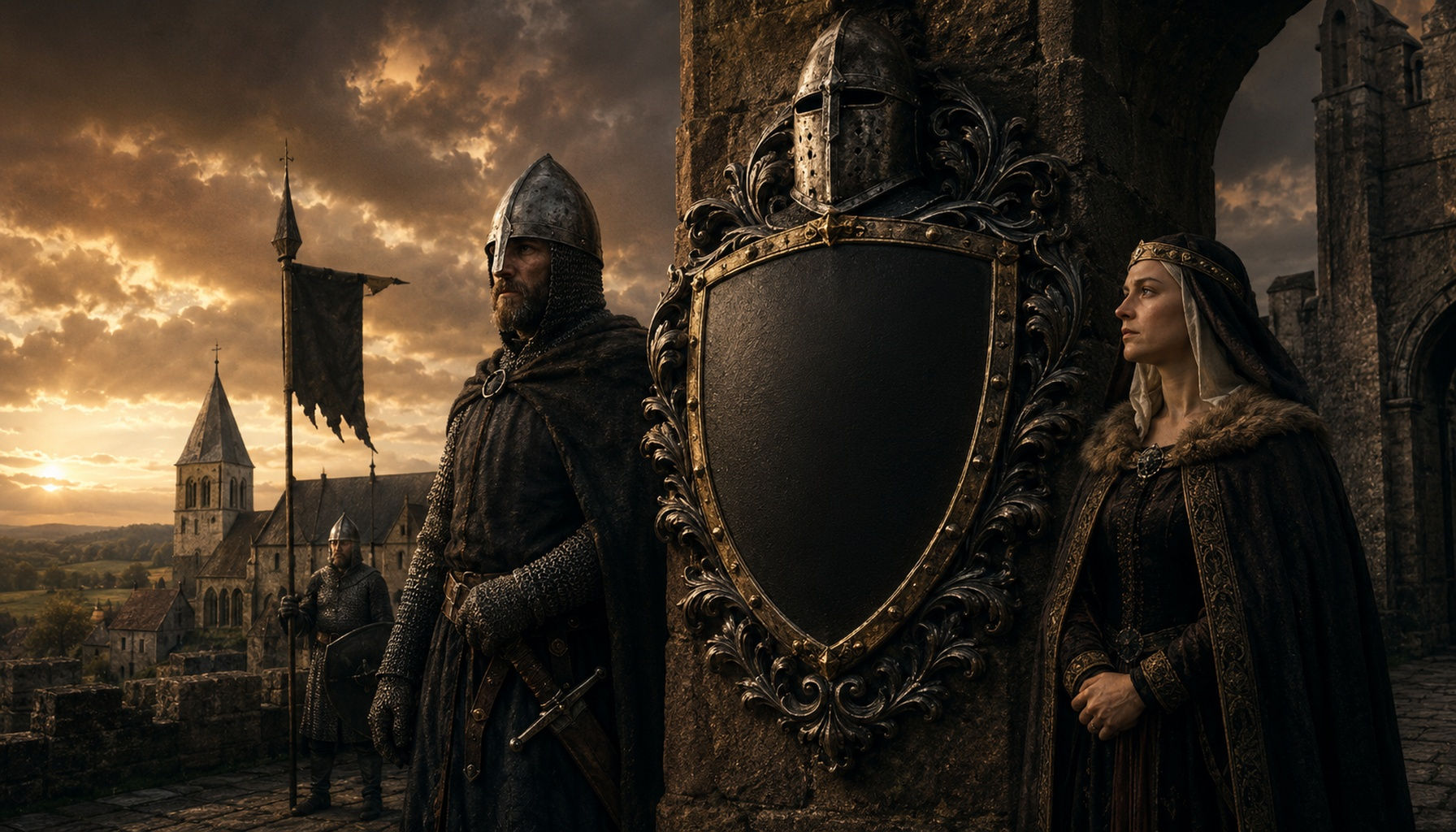
The House de Gournay was one of those unmistakably Norman noble families whose story begins with a place, a castle, and a frontier. They took their name from Gournay-en-Bray in Normandy, a strategic stronghold on the edge of ducal power, where local lordship and military duty went hand in hand. In that sense they were a classic border family of the Norman world: rooted in a defended landscape, shaped by warfare and feudal service, and then carried into the wider Anglo-Norman realm after 1066. For DNA-tagging purposes, the primary family haplogroup linked here is I1a3a1a2a1, with related lineages placing the family in a broader northwestern European and early medieval context.
What makes the de Gournays interesting is not simply that they were nobles, but that they belonged to that energetic generation of Norman families who operated on both sides of the Channel. Their lordship in Normandy mattered because it guarded the duchy against neighboring powers, yet their history also spread into England, especially through Norfolk and other landed connections. Across the medieval record, the family appears as lords, landholders, crusading participants, and marriage allies of other noble houses. Among the better-known figures are Hughues de Gournay (1020-1093), active in the great age of Norman expansion; Gerard de Gournay (1040-1104), part of that same cross-Channel aristocratic world; and much later Sir Matthew de Gurney (1310-1406), a reminder that the name endured well beyond the first generation of conquest.
The family anchor was Chateau de Gournay at Gournay-en-Bray, in a part of Normandy where geography and politics made fortification indispensable. This was not a decorative seat in a peaceful countryside, but a frontier castle in the Bray region, tied to the defense of the Norman border and to the authority of local lords who held their lands through military obligation as much as inheritance. The de Gournays drew both their name and their status from this place. Historically, that matters, because Norman noble identity was very often territorial before it was anything else: a family was its castle, its lordship, its riders, and its ability to hold the line. The site and town of Gournay-en-Bray remain part of the historic landscape today, and the town can certainly be visited; while the medieval fortress itself survives only in altered or fragmentary form rather than as a fully intact Norman stronghold, the location still offers a real sense of the setting from which the family emerged.
From an ancient-DNA perspective, the haplogroup I1a3a1a2a1 has useful early medieval echoes across central and eastern Europe, though these should be treated as related or linked comparanda rather than direct ancestors of the de Gournay line. Examples include Migration Period Hungary Rakoczifalva (RKF054), Early Avar Elite Grave Hungary Kunpeszer (KUP014), Late Antique Roman Viminacium in Moesia, Serbia (VIM5), Gothic Grave Aul of Kan Omurtag, Bulgaria, Han Krum Village (I41203), Gothic-associated Wielbark culture samples from Maslomecz in Poland (PL057, PL059, PL062, PL071), Migration Period Poland Grodek nad Bugiem (GRK021), and a Frankish Empire era Post-Avar sample from Hungary Tiszafured-Majoros-halom (TMH-509). Taken together, these linked samples suggest that the wider paternal background of this lineage was present in the moving, mixing warrior societies of Late Antiquity and the Migration Period, before later branches became woven into medieval Norman aristocratic history.
If the House de Gournay story sounds like your kind of history, frontier castles, Norman lords, and DNA threads reaching back into the early medieval world, you can explore your own deeper connections by uploading your DNA to MyTrueAncestry. It is a great way to see how your genetic story may intersect with the peoples and periods behind families like this one.


Comments