House Andrade

– 3 min read


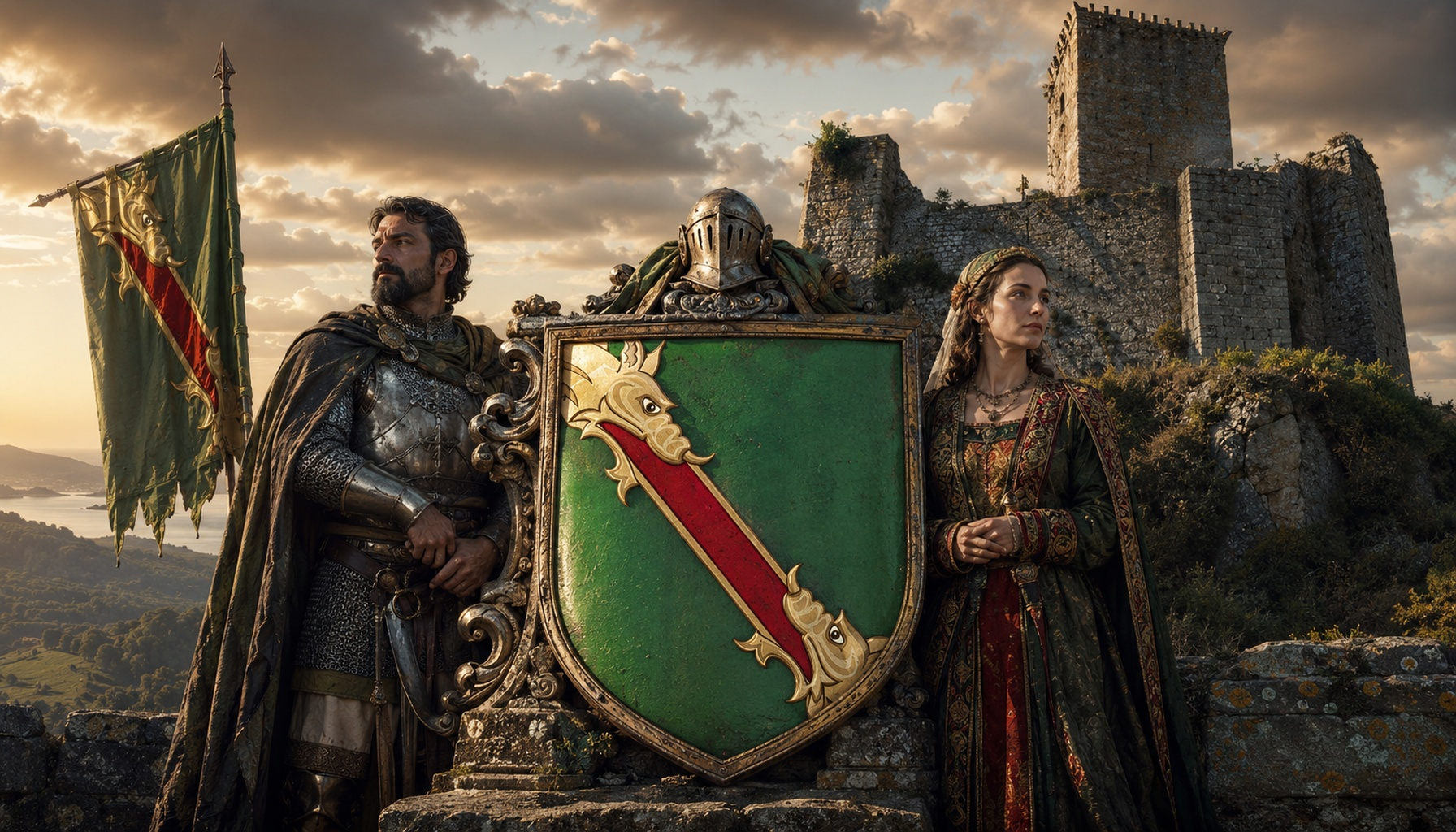
House Andrade was one of the notable noble lineages of north-western Iberia, rooted above all in Galicia and closely connected with Portugal and the wider aristocratic world of the peninsula. In genetic tagging terms, the primary family haplogroup associated here is R1b1a1b1a1a2a1b3, a branch within the great western European R1b story. Historically, though, what made the Andrades matter was not DNA in isolation, but land, lordship, arms, marriage strategy, and the careful cultivation of a family identity that could endure across centuries.
The family emerged from a frontier-shaped world where Galicia and northern Portugal were never neatly sealed compartments, but zones of constant movement, alliance, rivalry, and service. This was a landscape of fortified houses, river valleys, monasteries, and local jurisdictions, where ambitious nobles rose by controlling estates, backing kings or magnates, and turning military usefulness into hereditary authority. The Andrades fit that pattern beautifully. Their name became tied to regional power and to the sort of enduring noble reputation built not just on battle, but on property management, heraldry, patronage, and the ability to marry into other powerful houses. Among the best-known figures are Fernan Perez de Andrade The Good, 1330-1397, remembered as one of the most distinguished members of the line, and Nuno Freire de Andrade, attested in 1431, another figure who reflects the family's continuing political and military weight in late medieval Galicia.
The great location anchor for the family is the Castle of Andrade in Galicia, in the municipality of Pontedeume, province of A Coruna. This is exactly the sort of place that explains how a noble house worked in practice. The castle was not simply a picturesque residence. It was a statement in stone: a fortified seat from which authority could be seen, defended, and projected across the surrounding countryside. The surviving structure is especially known for its imposing keep, a tall tower associated with the late medieval strengthening of the site, and with the Andrade family's consolidation of regional standing. Like many Iberian castles, it reflects phases of rebuilding and adaptation rather than one single moment of construction, which is often the real story of noble power anyway: not instant grandeur, but continual reinforcement. The castle still stands as a historic monument and, as a well-known heritage site, it can still be visited, giving modern visitors a direct glimpse of the landscape in which the Andrades fashioned their identity.
Read the Genetic History of Portugal
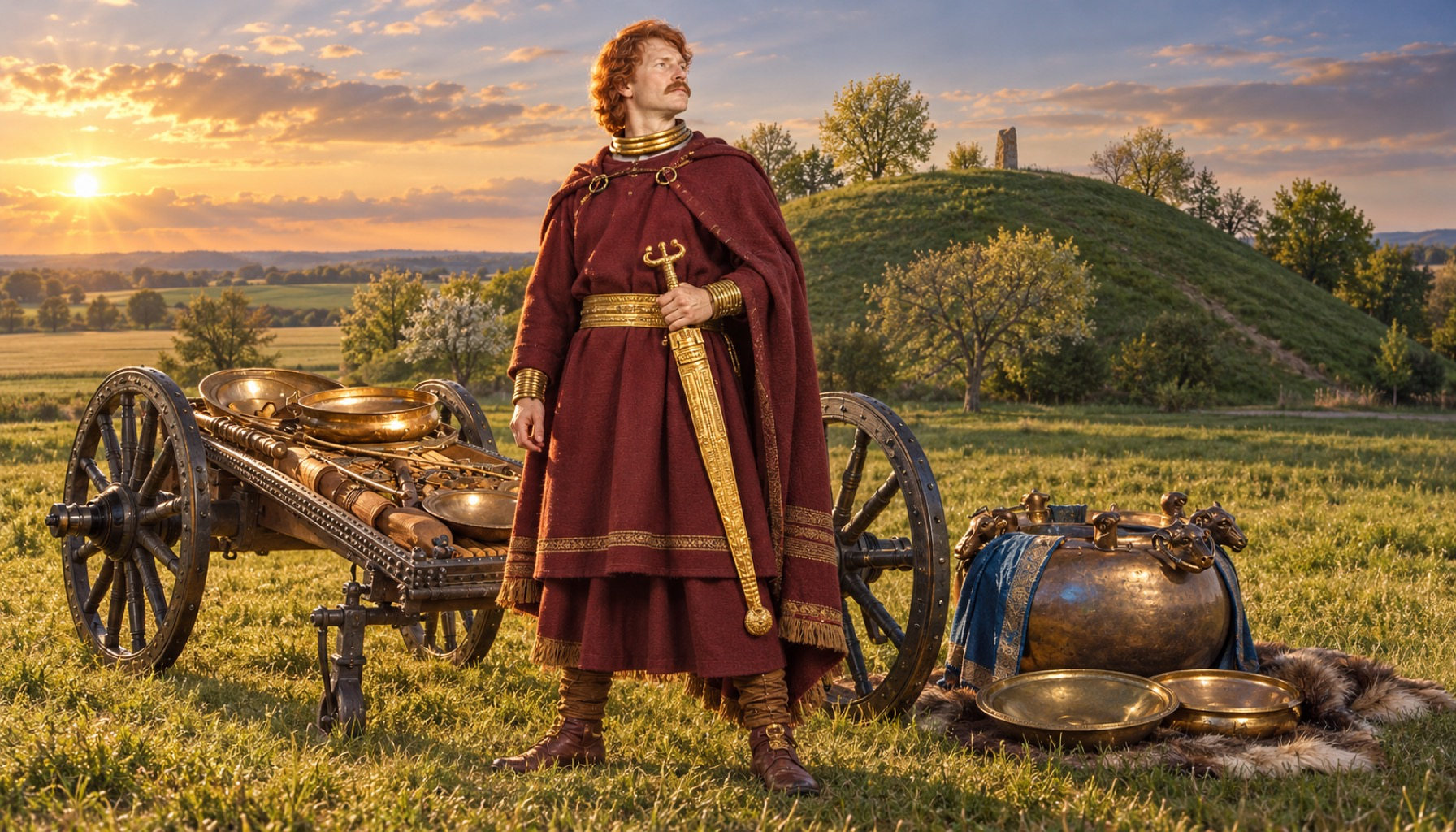
For those looking at the deeper genetic backdrop, R1b1a1b1a1a2a1b3-linked ancient DNA samples provide a wide and intriguing web of related evidence rather than proof of direct descent. These linked samples appear across a remarkably broad span of time and place, including Bronze Age and Iron Age Iberia such as Almoloya Pliego in Murcia, Lloma de Betxi in Valencia, Cogotas, Cantabrian Spain PMB, and Cueva de los Lagos in La Rioja, as well as later individuals from Miroico in Portugal, Roman-era Sardinia, Iron Age Sicily, Belgic Gaul, Merovingian Germany at Eltville EV8, Viking Age Denmark, medieval France, Britain, and even later historical burials such as St. Mary City Chapel Field Cemetery in Maryland and a soldier from Napoleon's Grande Armee. What that tells us is not that House Andrade descends from any one of these named people, but that the paternal line tagged here belongs to a long-lived western European genetic landscape with especially strong roots in Iberia and later branches spread across Atlantic, Celtic, Roman, post-Roman, and medieval worlds. In other words, the Andrade story sits very comfortably inside the larger genetic history of western Europe.
If you are curious whether your own family might connect with House Andrade, or with related ancient DNA samples linked to R1b1a1b1a1a2a1b3, the next step is to test it against the evidence. Upload your DNA to MyTrueAncestry and see whether your results point toward this Galician-Portuguese noble world, its wider Iberian networks, or the deeper ancient populations that help frame its story.


Comments