Haplogroup R2a2b1

– 5 min read


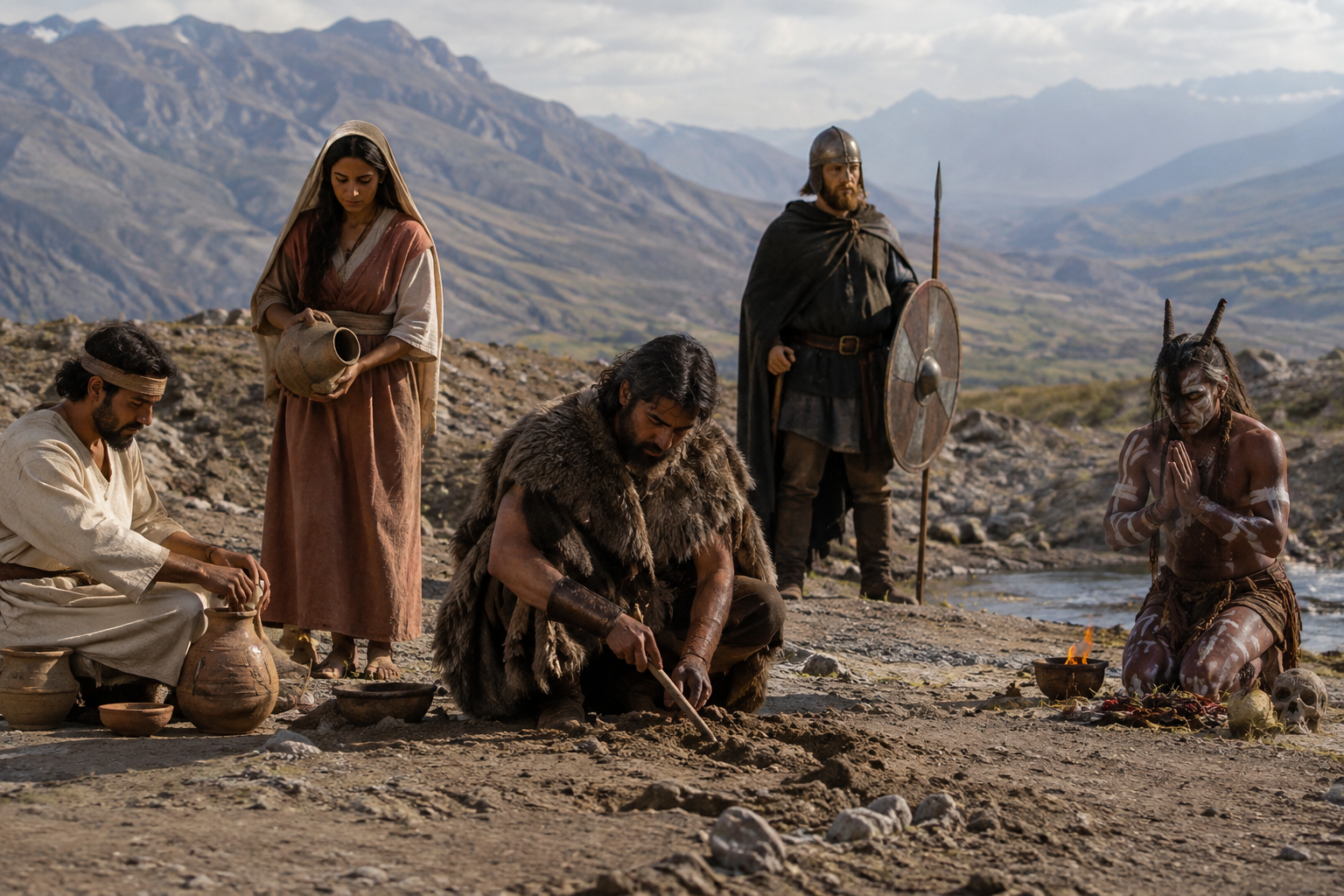
At Gol-Afshan Tepe near Semirom in Iran's Isfahan province, three closely labeled records - IRN24, IRN24a, and IRN24b - point to the same striking archaeological horizon: the Proto-Elamite period, around 3740 BC. That is already enough to make Y-DNA haplogroup R2a2b1 interesting. Instead of appearing first in a medieval pedigree or a modern surname study, it turns up here in one of the earliest urbanising worlds of the Iranian plateau, in a landscape tied to the growth of administration, exchange, and regional complexity.
That does not mean one man from Semirom can explain the whole branch. Y-DNA traces only a direct paternal line, not a person's total ancestry or identity. But when the same haplogroup is also reported in later individuals as far apart as Iron Age Butkara, Viking Age Iceland, and the famous remains from Skeleton Lake, it gives us something better than a slogan: a set of archaeological sightings that force us to think carefully about durability, movement, and the long afterlife of male lines.
The earliest anchor in this group is the Proto-Elamite-associated individual from Gol-Afshan Tepe, recorded as IRN24 and repeated in variant labels IRN24a and IRN24b. The key point is not that these are three different men marching through prehistory, but that this record preserves an early association between the article's branch and southwestern-central Iran in the late 4th millennium BC.
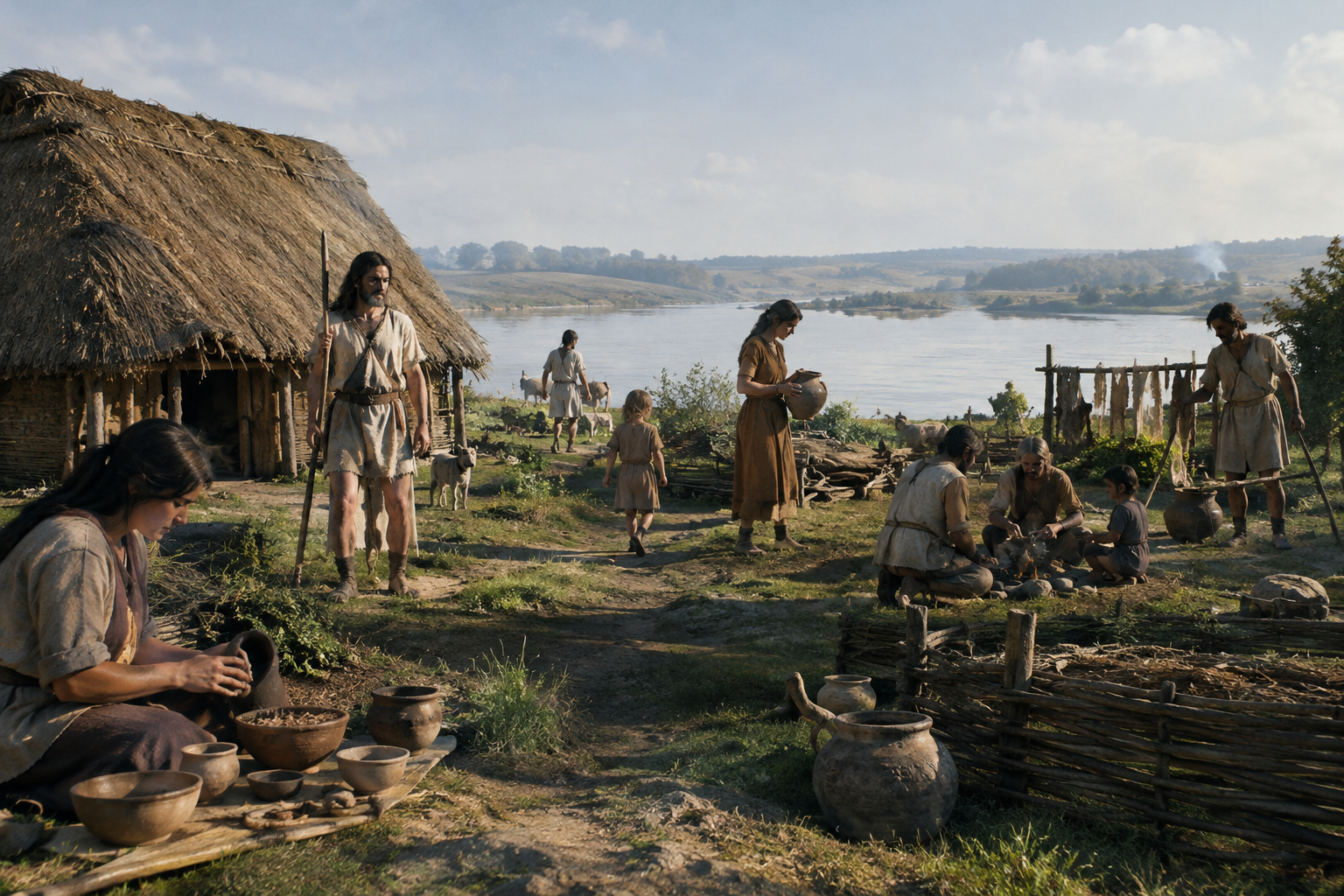
Proto-Elamite Iran belongs to that maddeningly fascinating moment when villages, craft production, accounting systems, and larger political formations were being transformed. We must be cautious: a Y-chromosome label cannot tell us what language this man spoke, what office he held, or whether he identified with anything we would later call Elamite. Still, the setting matters. This is not an isolated cave burial on the fringe of nowhere; it is part of a broader zone where early complex societies were taking shape.
A recent ancient DNA study touching Iran's long population history helps frame why such finds matter, even when individual sample details remain limited in short records: paternal lineages can persist through enormous cultural change while the surrounding population history shifts repeatedly in scale and composition. For that wider Iranian background, see this research on long-term genomic continuity and change on the Iranian plateau.
R2a2b1 is a narrow branch within the broader Y-DNA haplogroup R2. That distinction matters. The parent lineage has a deeper and wider history across parts of South and Central Asia, but it would be sloppy to pour all of that background straight into this specific subclade as though nothing changed along the way. The article's evidence concerns only reported occurrences linked to R2a2b1, and those occurrences are still sparse.
Even so, sparse does not mean useless. Rarely discussed branches can be especially revealing because they show up in places that do not fit easy ethnic or national stories. Here, the pattern runs from prehistoric Iran to the northwest of the Indian subcontinent, then to medieval contexts far from its likely main zone of distribution. That is exactly the sort of pattern archaeology likes: untidy, human, and resistant to tidy myths.
The sample I12968 comes from Iron Age Butkara, dated around 900 BC. Butkara, in the Swat region of present-day Pakistan, sits in one of the great crossroads of ancient Asia. This was a zone where upland routes, inner South Asia, and the Iranian-Afghan world met, mixed, and separated again over many centuries.
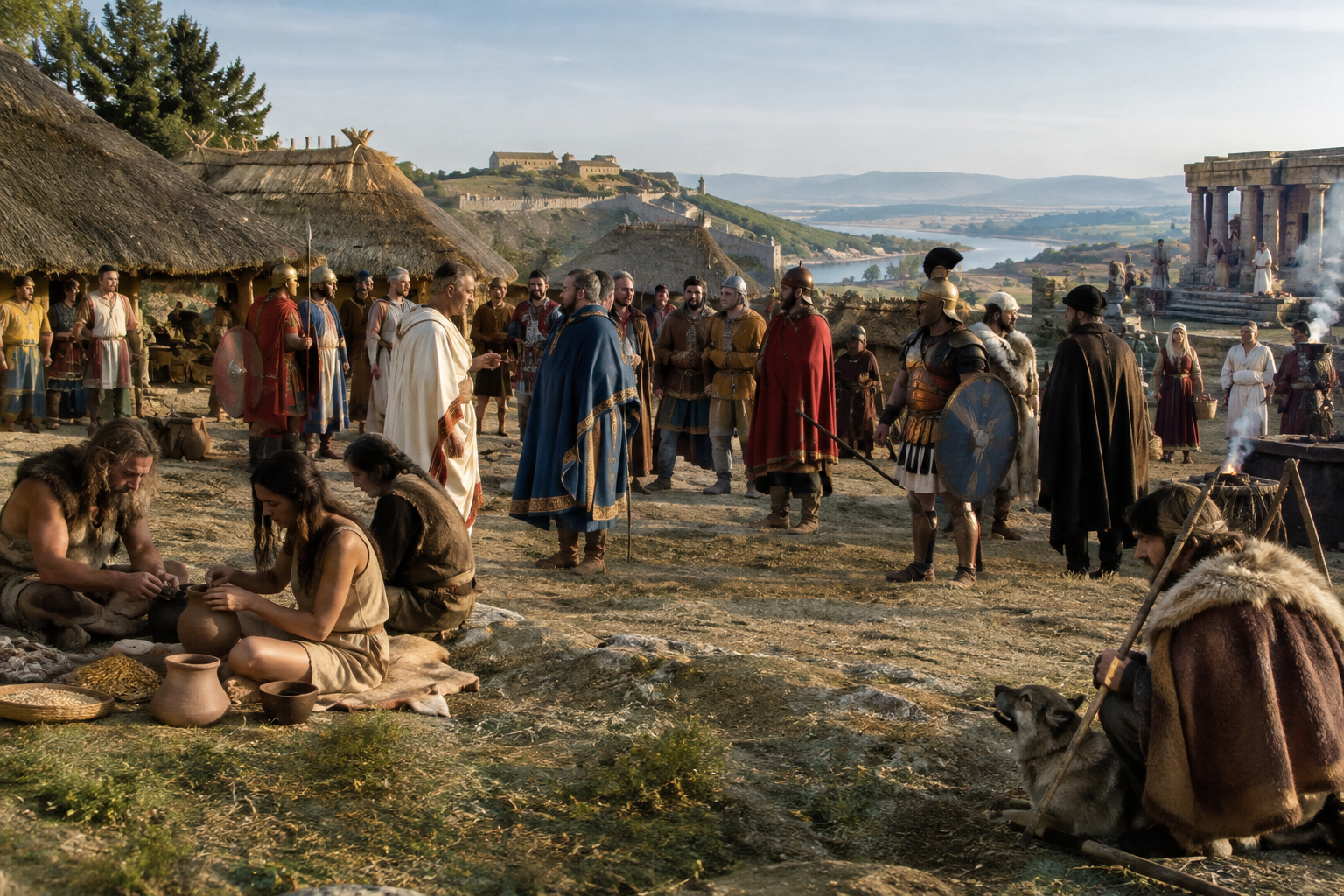
In that setting, a reported R2a2b1 lineage makes historical sense without becoming historically simple. It does not prove a straight-line migration from Proto-Elamite Semirom to Iron Age Swat, let alone a named people carrying the branch like a flag. What it does suggest is that this paternal line belonged to the broad human traffic linking Iranian plateau populations and the northwestern subcontinent long before the classical empires wrote their own versions of the story.
That is worth lingering over. Archaeology in this region often shows continuity and exchange rather than neat replacement. A haplogroup like R2a2b1 may therefore be less a marker of one dramatic invasion than evidence of old male lines persisting through changing cultural worlds.
Then there is I7036, listed as a Hindu worshipper from Skeleton Lake, dated to AD 885. Roopkund, or Skeleton Lake, has become famous precisely because it refuses to be reduced to one event or one population. The dead there do not all belong to the same historical episode, and that complexity is part of the site's importance.
A study of these remains, available here as an ancient DNA investigation of Skeleton Lake, showed that the site contains individuals of different ancestries and periods rather than one single disaster-struck group. In that light, the reported R2a2b1 assignment for I7036 is significant not because it solves Skeleton Lake, but because it places this paternal branch within a real medieval South Asian pilgrimage setting. That is a very different kind of context from Proto-Elamite Iran or Iron Age Butkara: not early state formation, not frontier exchange, but religious movement across mountain landscapes.
There is something very revealing in that change of setting. The same direct paternal branch can pass through entirely different social worlds - village, town, shrine, caravan route, or court - without leaving a neat written trail. Ancient DNA gives us a few flashes of light, and sometimes those flashes are enough to show continuity where the documents are silent.
The most surprising entry in the set is VK123 from Hofstadir in Iceland, dated around AD 1050. On the face of it, this looks almost absurdly distant from the earlier Iranian and South Asian finds. Yet this is exactly why one should not read haplogroups as ethnic badges. A man in Viking Age Iceland could carry a paternal line whose deeper history lay well outside Scandinavia, whether through slavery, trade, migration, marriage, or earlier population mixing elsewhere in the North Atlantic world.
Hofstadir is one of the best-known Viking Age sites in Iceland, and late Viking Iceland was not a sealed genetic box. The population emerged from movement across the British Isles, Scandinavia, and beyond. So VK123 does not turn R2a2b1 into a "Viking haplogroup," which would be nonsense. What it does show is that by the 11th century this paternal line had reached the far North Atlantic, carried there by one of the many human stories that made the Viking world so connected and so socially mixed.
That broader context fits well with recent discussions of Icelandic and Viking Age population complexity.
If we put these sightings together, R2a2b1 looks less like a lineage of one empire or one ethnos and more like a durable paternal thread with especially deep roots somewhere across the Iranian plateau and the northwestern part of South Asia. The strongest early signal in this set comes from Proto-Elamite Iran; the clearest later concentration of meaning comes from South Asian-linked contexts such as Butkara and Skeleton Lake; and the Icelandic case shows how far such lines could travel when historical networks widened.
For anyone researching this haplogroup today, that is probably the most responsible takeaway. R2a2b1 is not a shortcut to a single tribe, caste, kingdom, or heroic migration. It is a paternal lineage with ancient visibility in Iran, later presence in South Asian archaeological settings, and at least one striking medieval appearance in the Viking North Atlantic. In other words: not a legend, but a real and complicated historical footprint.
Comments